
Welding Positioners
Tilt & Rotate Welding Positioners for Precision Welding & Fabrication
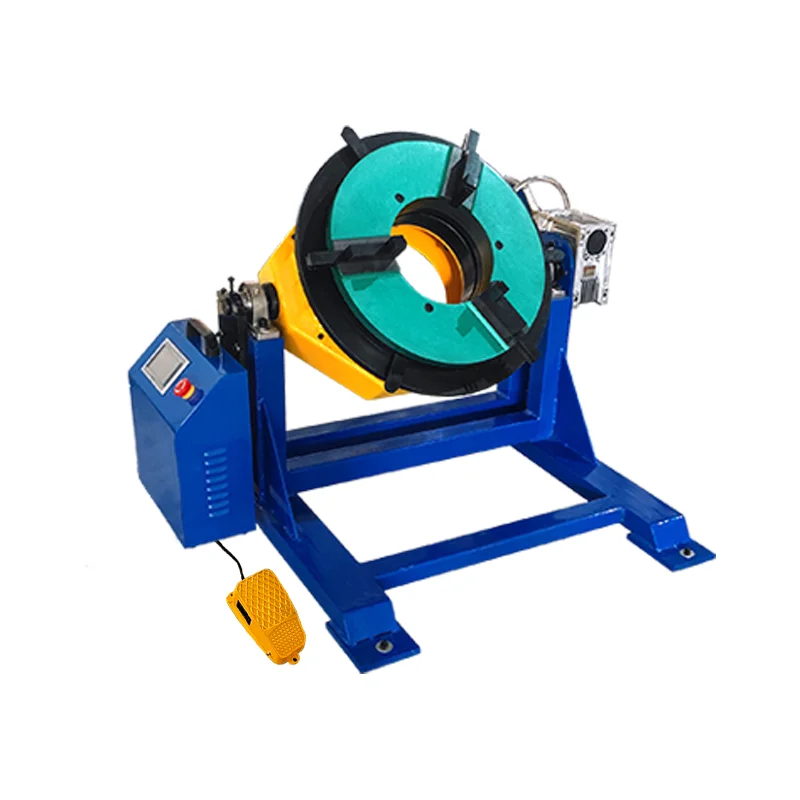
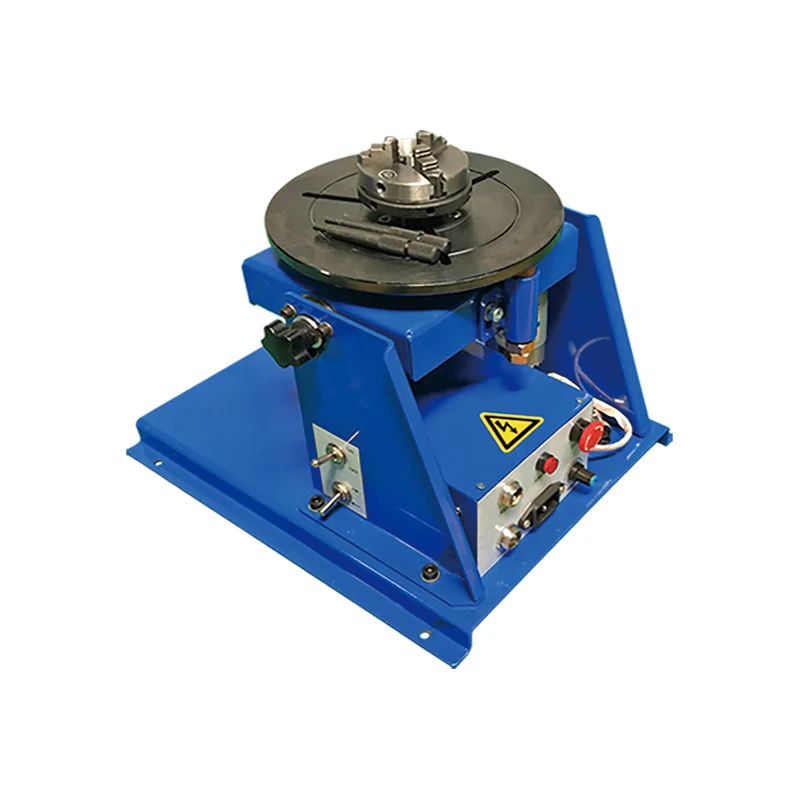
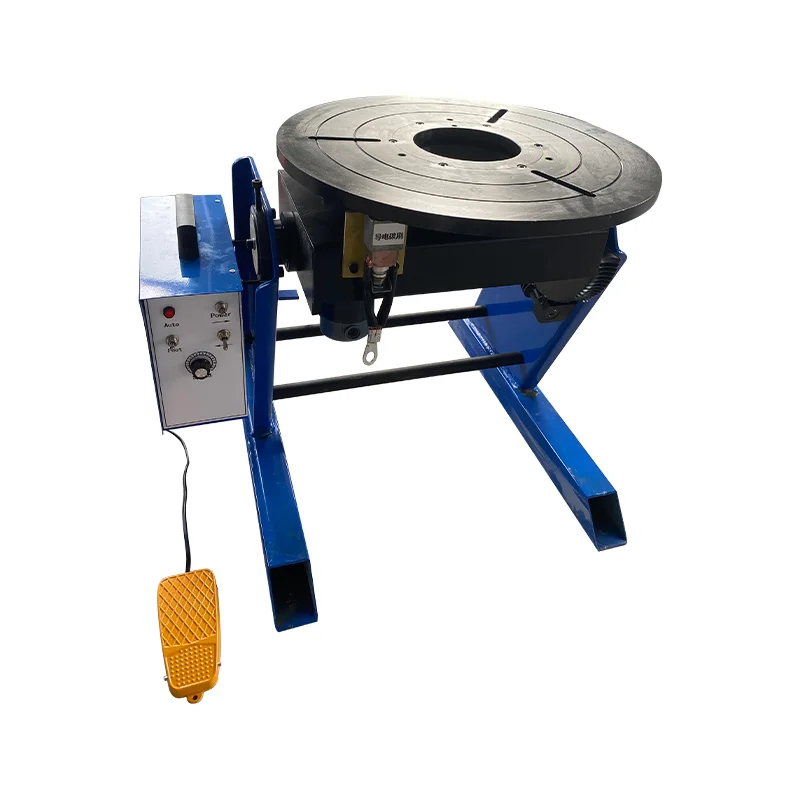
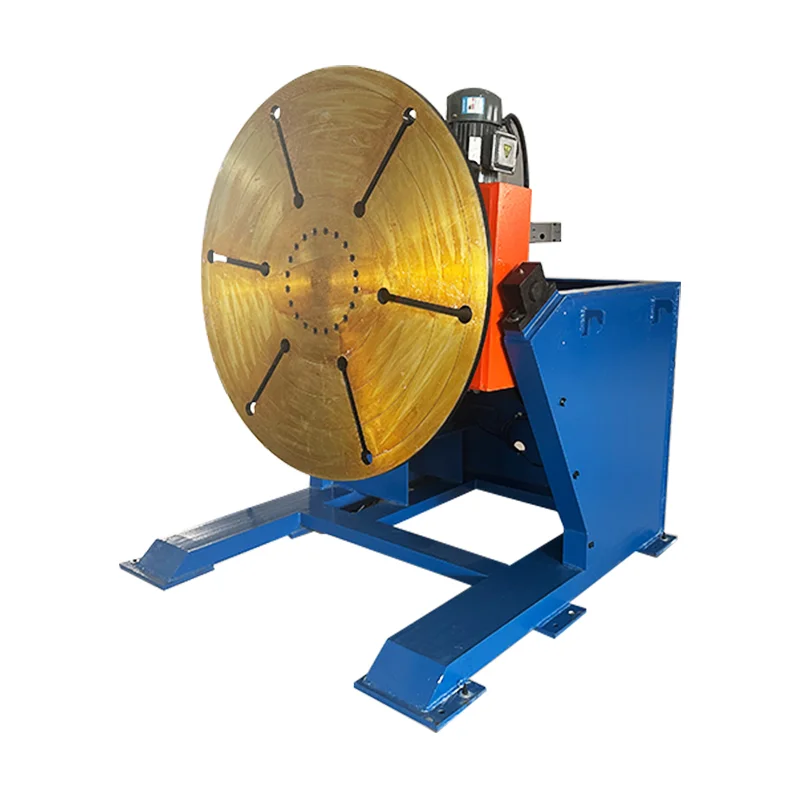
MecBase Welding Positioners are designed to rotate and tilt workpieces into suitable welding positions, helping improve welding accessibility, rotational control and production efficiency.
Our range covers compact positioners for small pipes and flanges, through-hole positioners for long pipe workpieces, and heavy-duty industrial positioners for large fabricated components.
Available configurations range from approximately 10 kg to 20 tons, with options for welding chucks, through-hole tables, variable-speed rotation, PLC control and automated welding integration.
LOAD CAPACITY: 10 KG – 20 TONS
TILTING: UP TO 0–90° / 120° depending on model
OPTIONS: CHUCK / THROUGH-HOLE / PLC / AUTOMATION
What Is a Welding Positioner?
A welding positioner is a workholding and positioning machine that rotates and tilts a workpiece during welding.
Instead of requiring the welder or welding torch to continuously move around the workpiece, the positioner can rotate the workpiece at a controlled speed and place the weld joint at a more suitable welding angle.
A typical system consists of:
Rotary Table + Tilting Mechanism + Drive System + Controller + Workholding Fixture
For pipe and flange applications, a welding chuck can be mounted on the rotary table to clamp and center the workpiece.
Welding Positioner Types
Compact Welding Positioners
10–30 kg Compact Positioners for Small Parts
Compact welding positioners are designed for small pipes, flanges, fittings and fabricated components.
Typical features include variable-speed rotation, 0–90° manual tilting and optional welding chucks.
Typical Models: BWJ-10 / BWJ-30
Typical Applications: Small Pipe / Flange / Fittings
Chuck Options: Available
PLC Version: Available on selected models
Through-Hole Welding Positioners
Large-Bore Positioners for Pipe & Flange Welding
Through-hole welding positioners feature a center opening that allows long pipes or cylindrical workpieces to pass through the rotary table.
This configuration is particularly suitable for pipe welding, flange welding and circumferential welding where a conventional solid worktable would limit the workpiece length or diameter.
Typical available configurations include:
200 kg Positioner — Ø100 / Ø140 / Ø170 mm through-hole
300 kg Positioner — Ø140 / Ø170 mm through-hole
600 kg Positioner — Ø240 / Ø365 mm through-hole
Heavy-Duty Welding Positioners
Industrial Tilt & Rotate Positioners for Heavy Workpieces
Heavy-duty welding positioners are designed for larger fabricated components requiring higher load capacity, powered rotation and controlled tilting.
Depending on configuration, available features can include:
- Powered table rotation
- Powered tilting
- Variable-speed control
- PLC control
- T-slot worktables
- Chuck mounting
- Welding automation integration
Available load capacities extend from hundreds of kilograms to 20 tons, depending on series and configuration.
Welding Positioner Selection Guide
| Required Capacity / Application | Positioner Type | Typical Configuration |
| 10 kg | Compact | BWJ-10 |
| 30 kg | Compact | BWJ-30 |
| 200 kg | Through-Hole | Ø100 / 140 / 170 mm bore |
| 300 kg | Through-Hole | Ø140 / 170 mm bore |
| 300 kg | Heavy-Duty | Compact heavy-duty configuration |
| 600 kg | Through-Hole | Ø240 / 365 mm bore |
| 600 kg | Heavy-Duty | Powered industrial positioner |
| 1–2 Tons | Heavy-Duty | Large fabrication |
| 3–5 Tons | Heavy-Duty | Large structural components |
| 10–20 Tons | Heavy-Duty | Very large fabrication |
Not sure which model you need? Send us the workpiece weight, dimensions, center of gravity and required welding position for selection assistance.
Compact vs. Through-Hole vs. Heavy-Duty
| Feature | Compact | Through-Hole | Heavy-Duty |
| Typical Capacity | 10–30 kg | 200–600 kg | 300 kg–20 T |
| Rotation | Yes | Yes | Yes |
| Tilting | Yes | Yes | Yes |
| Center Through-Hole | Small / Model dependent | Large | Model dependent |
| Welding Chuck | Optional | Recommended | Optional |
| Long Pipe Workpieces | Limited | Excellent | Depends on configuration |
| Powered Tilting | Usually No | Model dependent | Available |
| PLC Control | Optional | Available | Available |
| Main Application | Small parts | Pipe & flange | Heavy fabrication |
How a Welding Positioner Works
1. Mount the Workpiece
The workpiece is mounted directly to the rotary table or secured using a welding chuck or custom fixture.
2. Tilt to the Required Welding Angle
The worktable is tilted to place the weld joint in a suitable position.
3. Set the Rotation Speed
Select a suitable rotational speed according to the workpiece diameter and welding process.
4. Start Welding
The positioner rotates the workpiece while the welding torch remains at the required welding location.
5. Complete the Circumferential Weld
Controlled workpiece rotation allows continuous welding around pipes, flanges and cylindrical components.
Welding Positioner with Chuck
Complete Workholding Solution
A welding positioner provides the movement, while the welding chuck provides workpiece clamping and centering.
Welding Positioner → Welding Chuck → Workpiece
For pipe and flange applications, MecBase can provide positioners together with compatible welding chucks according to the required diameter and load.
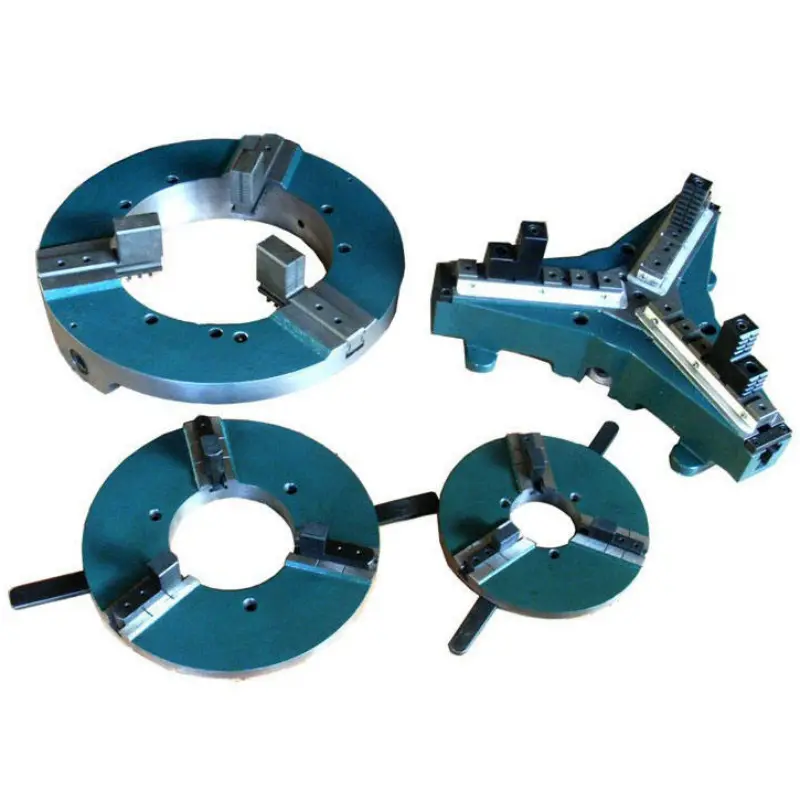
Available Welding Chucks
- WP Series
Lightweight self-centering welding chucks - WPS Series
Large through-bore self-centering welding chucks - WPT Series
Wide-range welding positioner chucks - K11 Series
3-jaw heavy-duty welding chucks - K12 Series
4-jaw heavy-duty welding chucks - K13 Series
6-jaw heavy-duty welding chucks
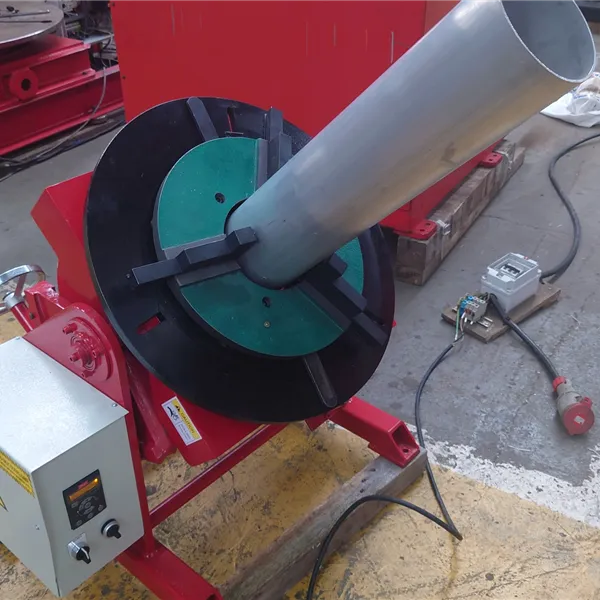
Through-Hole Welding Positioners for Long Pipes
A conventional welding positioner supports the workpiece in front of the rotary table.
A through-hole welding positioner allows the pipe to extend through the center of the positioner.
Long Pipe → Chuck → THROUGH-HOLE → Positioner
This design is especially useful for:
Long Pipes
Pipe-to-Flange Welding
Pipe Fittings
Circumferential Welding
Tubular Components
When selecting a through-hole positioner, both the workpiece diameter and required through-hole diameter must be considered.
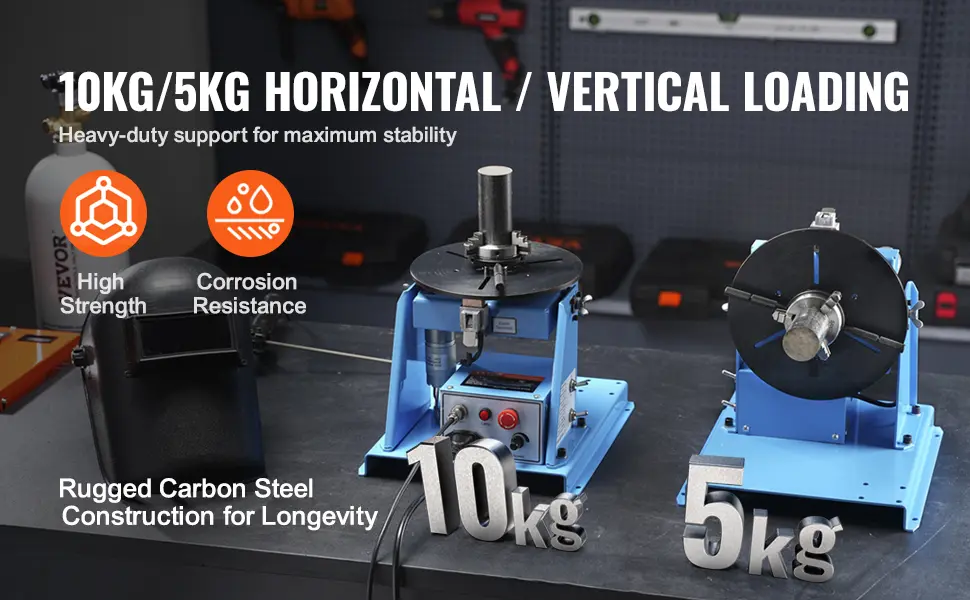
Horizontal Load vs. Vertical Load
Why Are the Two Load Ratings Different?
A welding positioner may have different load capacities depending on table orientation.
For example:
Horizontal Load: 300 kg
Vertical Load: 150 kg
When the table is horizontal, the workpiece load acts mainly downward onto the table.
When the table is tilted toward the vertical position, the workpiece creates a greater bending and overturning moment on the positioner.
Therefore:
Do not select a welding positioner based on workpiece weight alone.
The workpiece center of gravity and eccentricity must also be considered.
How to Select a Welding Positioner
Workpiece Weight
Determine the maximum total weight including the workpiece, chuck and fixture.
Workpiece Dimensions
Provide diameter, length, width and height.
Center of Gravity
For large or offset workpieces, provide the distance from the workpiece center of gravity to the rotary table.
Eccentricity
Heavy-duty positioner selection should consider the offset between the workpiece center of gravity and the rotational axis.
Required Tilting Angle
Determine whether the application requires 0–90°, 0–120° or another tilting range.
Through-Hole Requirement
For long pipes, confirm the minimum center through-hole diameter required.
Welding Chuck
Specify the workpiece clamping diameter if a chuck is required.
Welding Process
Provide the intended welding process and required rotational speed.
Welding Positioner Applications
- Pipe Welding
Controlled rotation for circumferential pipe welds. - Flange Welding
Suitable for pipe-to-flange circumferential welding. - Fitting Welding
Positioning of elbows, tees and other fittings. - Tank & Cylinder Fabrication
Rotational positioning of suitable cylindrical workpieces within the positioner’s rated capacity. - Structural Fabrication
Heavy-duty models can position larger fabricated assemblies. - Automatic Welding
PLC-controlled models can be integrated with welding torches and automated welding systems.
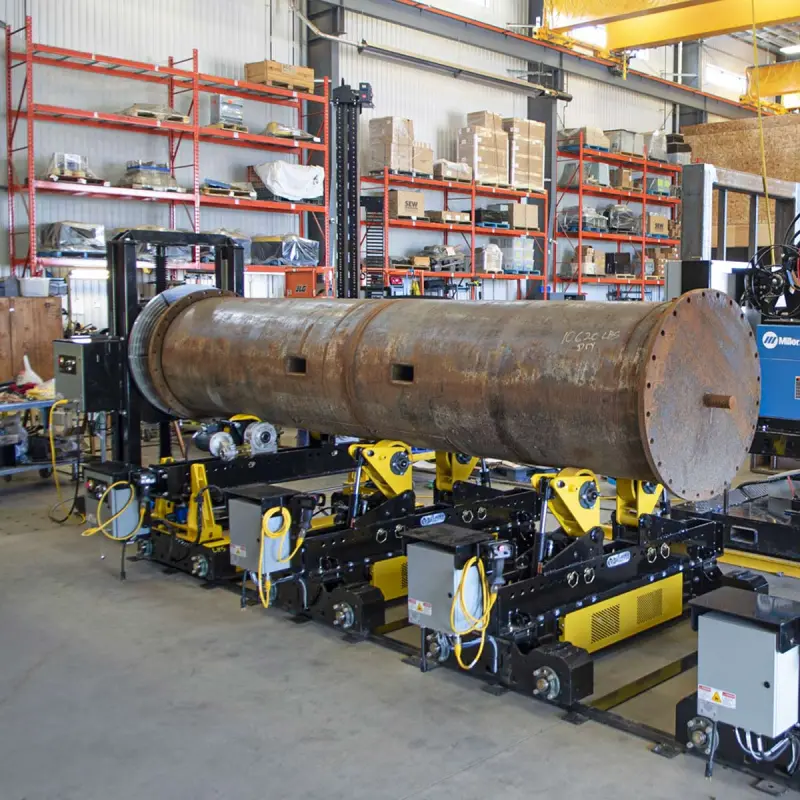
Welding Positioner vs. Welding Rotator
| Welding Positioner | Welding Rotator | |
| Workpiece Support | Rotary table / chuck / fixture | Roller beds |
| Rotation | Driven table | Driven rollers |
| Tilting | Usually available | Normally no |
| Typical Workpiece | Pipe, flange, assembly | Large tank / vessel / cylinder |
| Long Large-Diameter Vessel | Limited | Ideal |
| Chuck Compatible | Yes | Normally no |
Use a welding positioner when the workpiece needs to be clamped, rotated and/or tilted. Use a welding rotator when a large cylindrical workpiece needs to rest on rollers and rotate around its own axis.
Welding Positioner vs. Welding Chuck
| Welding Positioner | Welding Chuck | |
| Main Function | Move the workpiece | Clamp the workpiece |
| Rotation | Powered by positioner | Follows positioner |
| Tilting | Yes, depending on model | No |
| Self-Centering | Not normally | Yes, depending on chuck |
| Holds Workpiece | Via table/fixture/chuck | Yes |
The positioner moves the workpiece; the chuck holds and centers it.
Welding Automation Integration
Build a Complete Automatic Welding System
A welding positioner can be integrated with additional welding equipment to create a semi-automatic or automatic welding workstation.
Welding Chuck
↓
Welding Positioner
↓
Torch Holder / Welding Manipulator
↓
Welding Power Source
↓
PLC Control
Automatic Circumferential Welding System
Request a Quote
Need Help Selecting a Welding Positioner?
Send us your workpiece information and welding requirements. We can evaluate a suitable positioner and chuck configuration.
| Required Information | Customer Input |
| Workpiece Type | |
| Workpiece Diameter | mm |
| Workpiece Length | mm |
| Workpiece Weight | kg |
| Center of Gravity Distance | mm |
| Eccentricity | mm |
| Required Tilting Angle | ° |
| Required Through-Hole | mm |
| Chuck Required | Yes / No |
| Clamping Diameter | mm |
| Welding Process | |
| Automation Required | Yes / No |
| Quantity |
Please send workpiece drawings, weld joint details and production requirements with your RFQ.
Frequently Asked Questions
A welding positioner is a machine used to rotate and tilt a workpiece into a suitable position during welding.
Selection depends on more than workpiece weight. Workpiece dimensions, center of gravity, eccentricity, table orientation and fixture/chuck weight should also be considered.
Yes. Welding chucks are commonly mounted on positioner tables for clamping pipes, flanges and round workpieces.
A through-hole positioner has a center opening that allows a pipe or cylindrical workpiece to extend through the rotary table.
Yes. Suitable models can be integrated with welding torches, torch holders, PLC controls and welding power sources to create automated welding systems.
Horizontal load refers to the rated capacity with the table in the corresponding horizontal operating position, while the allowable load can be lower when the table is tilted or vertical because of the increased moment acting on the positioner.
Related products
-
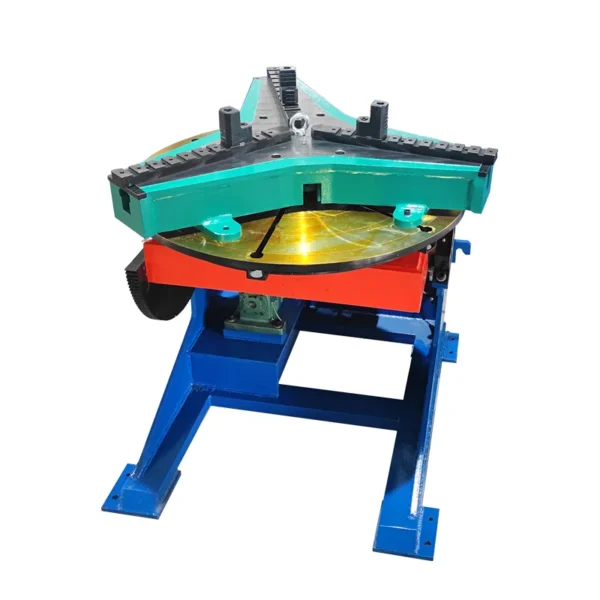 Welding Positioner
1 Ton Heavy Duty Welding Positioner – 1000kg Electric Tilting Rotary Table
-
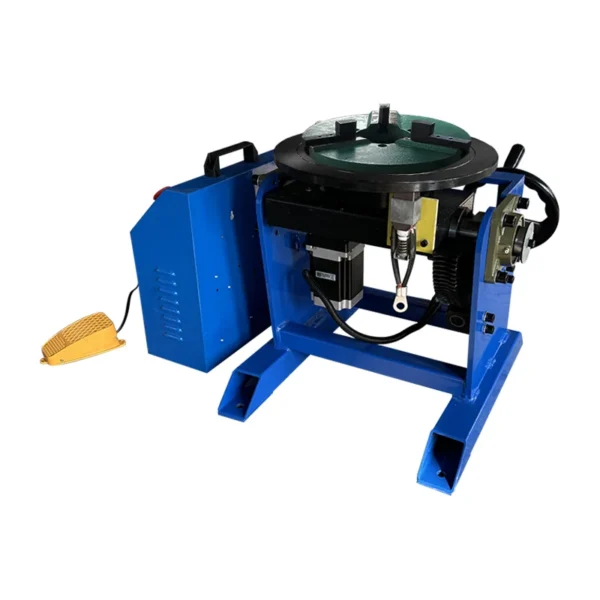 Welding Positioner
300kg Heavy Duty Welding Positioner – Rotary Welding Table
-
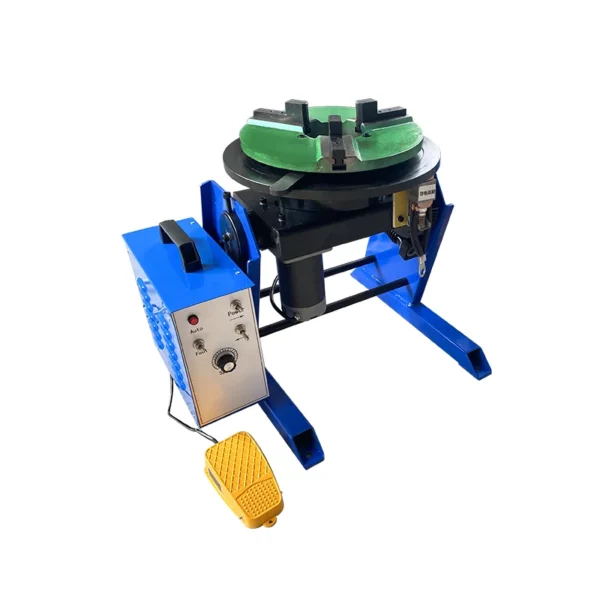 Welding Positioner
100kg Welding Positioner – Heavy Duty Rotary Welding Table
-
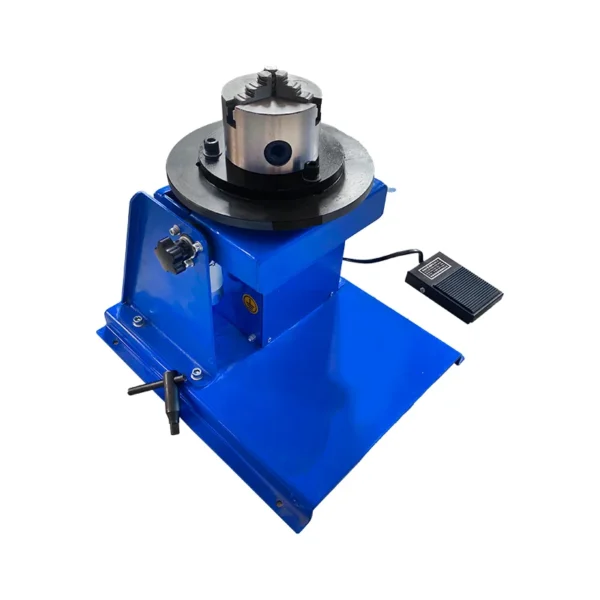 Welding Positioner
10kg Welding Positioner – Compact & Precision Turntable