Overhead crane inspection is a systematic process used to evaluate the safety, condition, and performance of a crane’s structural, mechanical, electrical, and safety components. A proper overhead crane inspection helps identify defects, prevent failures, and ensure compliance with standards such as OSHA and ISO 9927.
Definition of Overhead Crane Inspection
Overhead crane inspection is a structured process used to assess the condition, safety, and functionality of crane systems. A proper overhead crane inspection ensures compliance with safety standards and reduces operational risks.
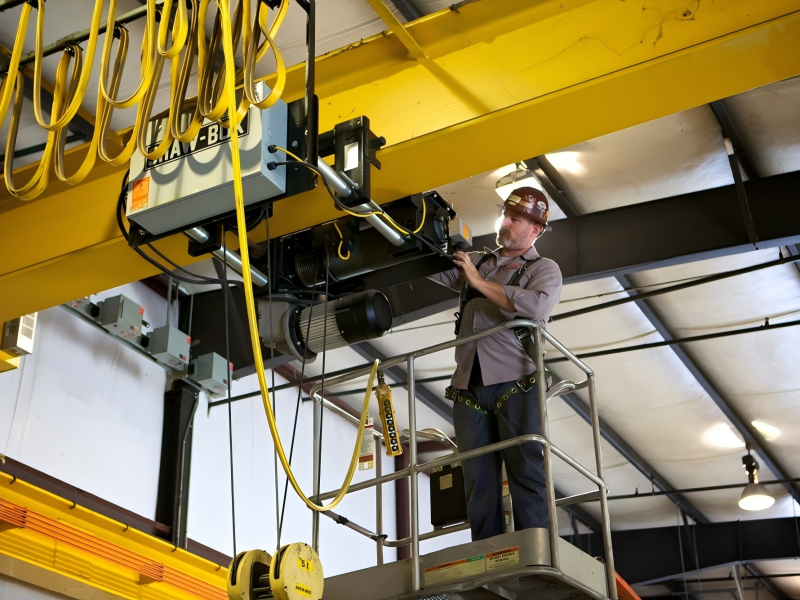
| Term | Explanation |
| Overhead Crane Inspection | A systematic evaluation of crane components to ensure safety and performance |
| Purpose | Identify defects, prevent failure, ensure compliance |
| Scope | Structural, mechanical, electrical, safety systems |
| Result | Inspection report + condition assessment |
What Is Included in an Overhead Crane Inspection
An overhead crane inspection typically covers all critical systems that affect crane performance and safety. This includes structural components, lifting mechanisms, travel systems, electrical controls, and safety devices. Each system is checked to ensure it operates correctly under normal working conditions.
| System | Components Covered | Inspection Focus |
| Structural | Girder, end carriage | Deformation, cracks |
| Hoisting | Wire rope, hook, drum | Wear, damage |
| Travel | Wheels, rails | Alignment, wear |
| Electrical | Motor, control panel | Functionality |
| Safety | Brake, limit switch | Reliability |
Detailed Component Inspection Breakdown
A detailed overhead crane inspection is divided into multiple categories to ensure no critical component is overlooked. Each part of the crane is evaluated using appropriate inspection methods such as visual checks, measurements, and functional testing to determine its operational condition.

Structural Components
Structural inspection focuses on the integrity of the crane’s load-bearing parts. Inspectors check for cracks, deformation, misalignment, and weld defects that could compromise the crane’s ability to safely handle loads.
| Item | Check Method | Acceptable Condition |
| Main Girder | Visual / measurement | No cracks, minimal deflection |
| Welds | Visual / NDT | No visible defects |
| End Carriage | Visual | No deformation |
| Runway Beam | Alignment tools | Proper alignment |
Hoisting System
The hoisting system is one of the most critical parts of an overhead crane inspection, as it directly handles the load. Inspection includes checking wire ropes, hooks, drums, and chains for wear, deformation, and damage.
| Item | Check Method | Acceptable Condition |
| Wire Rope | Visual | No excessive broken strands |
| Hook | Measurement | No deformation beyond limit |
| Drum | Visual | Smooth surface |
| Chain | Measurement | No elongation |
Travel System
Travel system inspection ensures that the crane can move smoothly and safely along its rails. This includes checking wheels, rails, bearings, and alignment to prevent derailment or uneven movement.
| Item | Check Method | Acceptable Condition |
| Wheels | Visual | No excessive wear |
| Rail | Visual / alignment | Straight and clean |
| Bearings | Sound / vibration | Smooth operation |
Electrical System
Electrical inspection focuses on ensuring reliable control and power distribution. This includes examining motors, control panels, wiring, and electrical connections for faults or degradation.
| Item | Check Method | Acceptable Condition |
| Motor | Operation test | Stable performance |
| Control Panel | Functional test | No faults |
| Cables | Visual | No damage |
Safety Devices
Safety devices are essential in any overhead crane inspection, as they prevent accidents. Inspectors verify that brakes, limit switches, overload protection systems, and emergency stops are fully functional.
| Device | Check Method | Requirement |
| Brake | Load test | No slipping |
| Limit Switch | Function test | Stops correctly |
| Emergency Stop | Functional | Immediate stop |
Types of Overhead Crane Inspection
There are several types of overhead crane inspection, each designed for different levels of detail and frequency. These range from daily operator checks to comprehensive annual inspections conducted by certified professionals.
| Type | Frequency | Description |
| Daily Inspection | Before use | Quick visual check |
| Monthly Inspection | Monthly | Basic system check |
| Quarterly Inspection | 3 months | Detailed component check |
| Annual Inspection | Yearly | Full inspection |
| Special Inspection | As needed | After repair/incident |
Why Overhead Crane Inspection Is Important
Regular overhead crane inspection is critical for maintaining safe operations. It helps detect issues before they become failures, reduces downtime, prevents accidents, and ensures compliance with safety regulations.
| Risk Without Inspection | Consequence |
| Equipment failure | Production downtime |
| Structural damage | Costly repairs |
| Load drop | Safety hazard |
| Electrical fault | Fire risk |
| Non-compliance | Legal penalties |
Overhead Crane Inspection Checklist
A standardized crane inspection checklist helps ensure consistency and completeness during inspections. It provides a structured way to verify each component and document the condition of the crane.
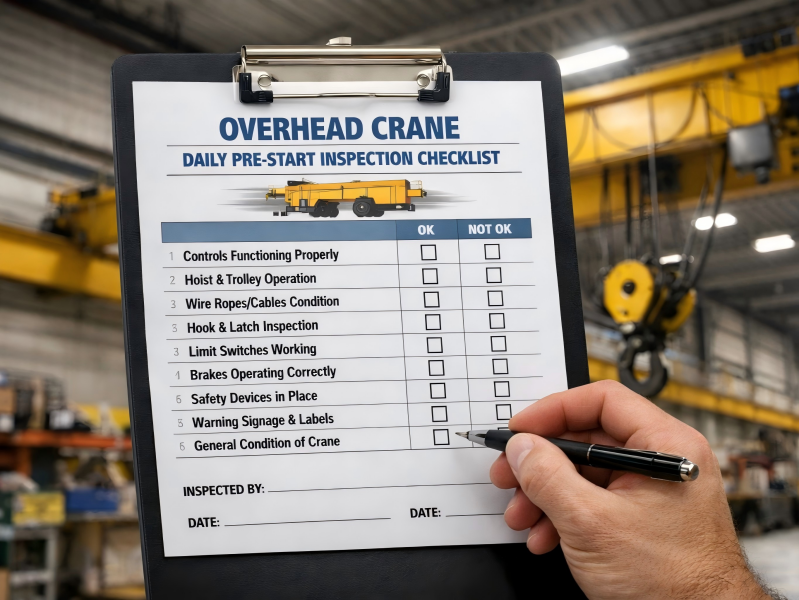
| Area | Item | Status |
| Hook | Crack / wear | OK / NG |
| Wire Rope | Broken strands | OK / NG |
| Brake | Holding capacity | OK / NG |
| Wheels | Wear | OK / NG |
| Rail | Alignment | OK / NG |
| Motor | Noise | OK / NG |
| Control | Operation | OK / NG |
Common Defects Found During Inspection
During an overhead crane inspection, several common defects are frequently identified, including worn wire ropes, damaged hooks, brake failures, and electrical issues. Identifying these defects early helps prevent serious failures.
| Defect | Cause | Risk Level | Action |
| Wire rope damage | Wear / overload | High | Replace |
| Hook deformation | Overload | High | Replace |
| Brake failure | Wear | Critical | Repair |
| Rail misalignment | Installation error | Medium | Adjust |
| Electrical failure | Aging | High | Replace |
Standards for Overhead Crane Inspection
Overhead crane inspections must follow recognized standards to ensure consistency and safety. Common standards include OSHA regulations, ISO guidelines, and regional industrial standards that define inspection requirements.
| Standard | Region | Purpose |
| OSHA 1910.179 | USA | Safety compliance |
| ISO 9927 | International | Inspection guidelines |
| FEM | Europe | Crane standards |
| GB Standards | China | Industrial compliance |
Inspection vs Maintenance
Inspection and maintenance are closely related but serve different purposes. Inspection identifies problems, while maintenance resolves them, making inspection a key part of preventive maintenance strategies.
| Aspect | Inspection | Maintenance |
| Purpose | Identify issues | Fix issues |
| Timing | Scheduled | As needed |
| Type | Preventive | Corrective |
| Output | Report | Repair |
Inspection Frequency by Component
Different crane components require inspection at different intervals depending on usage and risk level. High-risk components such as hooks and wire ropes require more frequent checks.
| Component | Daily | Monthly | Quarterly | Annual |
| Hook | ✔️ | ✔️ | ✔️ | ✔️ |
| Wire Rope | ✔️ | ✔️ | ✔️ | ✔️ |
| Brake | ✔️ | ✔️ | ✔️ | ✔️ |
| Wheels | ✔️ | ✔️ | ✔️ | |
| Electrical | ✔️ | ✔️ | ✔️ | |
| Structure | ✔️ | ✔️ |
Role of Inspection in Safety Management
Overhead crane inspection plays a critical role in overall safety management. It helps organizations proactively manage risks, maintain equipment reliability, and ensure continuous safe operation.
| Function | Impact |
| Risk detection | Prevent accidents |
| Condition monitoring | Extend life |
| Compliance | Meet regulations |
| Performance optimization | Reduce downtime |
Overhead crane inspection is a structured process used to evaluate crane safety, performance, and compliance by checking structural, mechanical, electrical, and safety components.
FAQs About overhead crane inspection
Overhead crane inspection is a systematic process used to check the safety, condition, and performance of crane components, including structural, mechanical, electrical, and safety systems. It helps ensure safe operation and compliance with standards.
Inspection frequency depends on usage, but generally:
- Daily inspection: before each use
- Periodic inspection: monthly or quarterly
- Annual inspection: once per year
Heavy-duty cranes may require more frequent inspections.
A typical crane inspection checklist includes:
- Hook condition
- Wire rope or chain condition
- Brake performance
- Limit switches
- Wheels and rails
- Electrical system
These checks help identify potential safety risks.
- Daily inspections: crane operators
- Periodic inspections: maintenance personnel
- Annual inspections: certified inspectors or third-party engineers
Common defects found during overhead crane inspection include:
- Wire rope wear or broken strands
- Hook deformation
- Brake failure
- Rail misalignment
- Electrical faults
Common standards include:
- OSHA 1910.179 (USA)
- ISO 9927 (International)
- FEM standards (Europe)
- GB standards (China)
These standards define inspection procedures and requirements.
- Inspection identifies problems
- Maintenance fixes problems
Inspection is preventive, while maintenance is corrective.
Regular overhead crane inspection helps:
- Prevent accidents
- Reduce downtime
- Extend equipment life
- Ensure regulatory compliance
Skipping inspection can lead to:
- Equipment failure
- Load drops
- Serious injuries
- Legal penalties
Yes. Early detection of wear, defects, and faults during inspection significantly reduces the risk of accidents and equipment failure.