
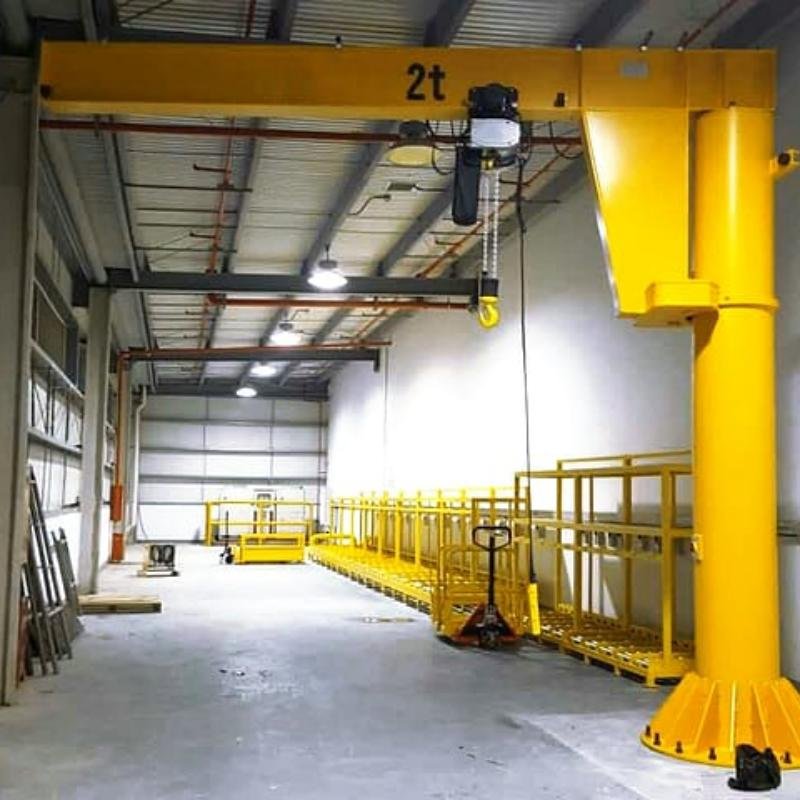
FEM Standard Jib Cranes
FEM Standard Jib Cranes are widely used in industrial applications for efficient, flexible, and space-saving material handling. Designed in accordance with FEM standards, these cranes offer optimized structural performance, smooth operation, and long service life.
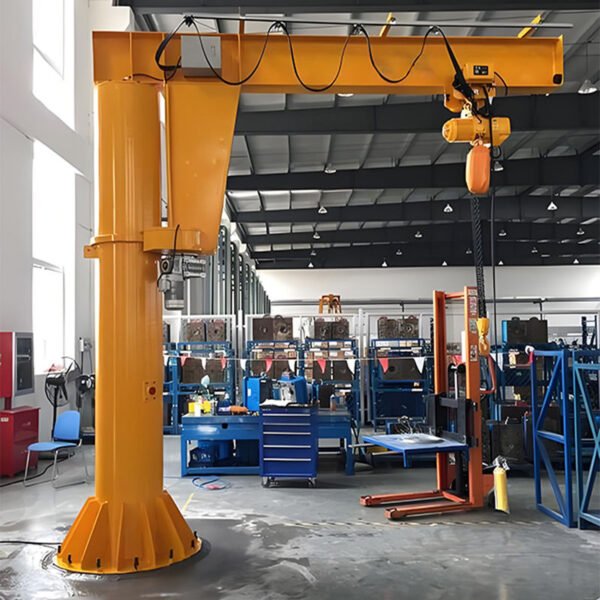
Jib cranes are available in multiple configurations, including wall-mounted jib cranes, wall-traveling jib cranes, and pillar (free-standing) jib cranes, providing versatile solutions for different workspace requirements.
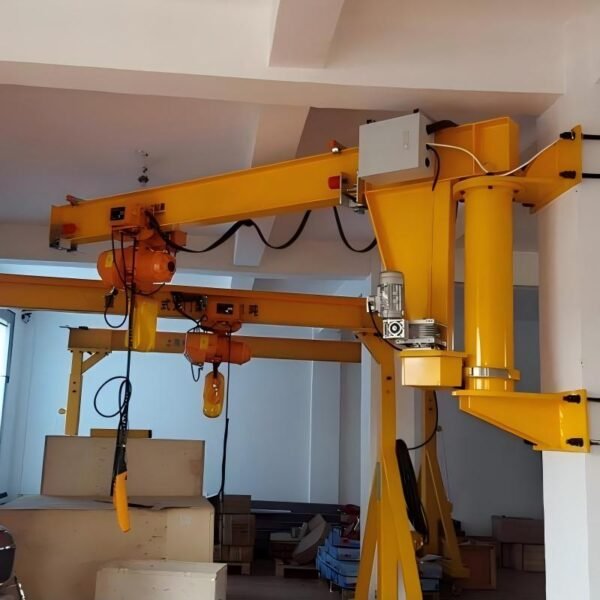
The wall-mounted jib crane (cantilever crane) features an I-beam main girder fixed to walls or steel columns using specially designed brackets, allowing up to 180° rotation. This design eliminates the need for floor space while ensuring efficient lifting operations.
As a professional China jib crane manufacturer and supplier, MecBase specializes in design, structural calculation, and customized engineering solutions, delivering reliable and cost-effective lifting systems for global customers.
Technical Specifications – FEM Standard Jib Crane
The following technical specifications apply to our FEM Standard Jib Cranes, engineered for flexibility, efficiency, and optimized workspace utilization.
Our jib crane systems are widely used in production lines, workshops, warehouses, and assembly stations, enabling precise lifting and material handling across multiple workstations.
With modular design and flexible configurations, all specifications can be fully customized to meet specific project requirements.
Key Features of FEM Standard Jib Cranes
- FEM European Design Standard
Optimized structure for efficiency and durability - Flexible Rotation (90°–360°)
Suitable for various working layouts - Space-Saving Design
Ideal for confined work areas - Smooth & Precise Operation
Compatible with electric hoists and VFD control - Multiple Installation Options
Wall-mounted, wall-traveling, or pillar-mounted - Easy Installation & Low Maintenance
Simple structure reduces installation time and cost
| Parameter | Specification |
| Lifting Capacity | 0.5 – 5 ton |
| Arm Length (Radius) | 2 – 12 m (max. 16 m for light loads) |
| Lifting Height | 2 – 10 m (customized available) |
| Work Duty | A3 / A4 (FEM 1Am – 2m) |
| Rated Voltage | 220V – 690V, 50–60Hz, 3 Phase AC |
| Working Temperature | -20℃ to +40℃ |
| Relative Humidity | ≤ 85% |
| Control Mode | Pendant Control / Remote Control |
| Rotation Angle | 180° / 270° / 360° (depending on type) |
| Hoist Type | Electric Chain Hoist / Wire Rope Hoist |
| Reference Price Range | $800 – $6,000 / set |
Why Choose a FEM Standard Jib Crane?
Choosing a FEM Standard Jib Crane provides an efficient and flexible solution for light to medium-duty material handling in modern industrial environments.
Space-Saving & Flexible Design
FEM jib cranes are available in wall-mounted, wall-traveling, and pillar-mounted configurations, allowing optimal use of workspace while minimizing floor obstruction.
Easy Installation & High Adaptability
Designed with modular components and standardized FEM principles, jib cranes ensure quick installation, easy relocation, and flexible operation across different workstations.
Safe & Reliable Operation
Equipped with essential safety features such as:
- Overload protection
- Limit switches
- Emergency stop systems
Ensuring safe and stable lifting operations.
Smooth & Precise Performance
With advanced design and optional VFD control, FEM jib cranes provide:
- Smooth lifting and rotation
- Accurate load positioning
- Reduced operator effort
Customizable Configurations
Available in multiple designs to suit different applications:
- Wall-mounted jib crane
- Pillar (free-standing) jib crane
- Wall-traveling jib crane
- Articulating (knuckle boom) jib crane
Main Models & Configurations
We offer a wide range of FEM standard jib cranes to meet various operational requirements:
By Capacity
- 0.25 ton jib crane
- 0.5 ton jib crane
- 1 ton jib crane
- 2 ton jib crane
- 3 ton jib crane
- 5 ton jib crane
By Structure
- Wall-mounted jib crane
- Pillar-mounted jib crane
- Articulating jib crane
- Wall-traveling jib crane
By Function
- Manual slewing jib crane
- Motorized jib crane
- Swing arm jib crane
By Components
- Jib crane brackets and columns
- Electric hoist (chain or wire rope)
- Slewing mechanism and bearings
- Trolley and traveling system
- Spare parts and accessories
Applications of FEM Standard Jib Cranes
FEM standard jib cranes are widely used in:
- Machine shops and maintenance areas
- Assembly and production lines
- Warehousing and logistics operations
- Machinery manufacturing plants
- Welding, steel structure, and fabrication workshops
They are ideal for localized lifting tasks and workstation-level material handling.
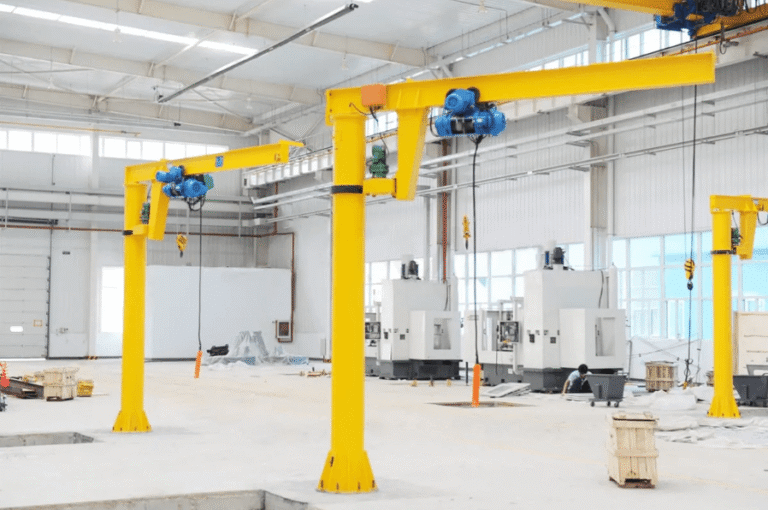
Structure & Components of FEM Standard Jib Crane
| Component | Function |
| Column / Wall Bracket | Supports the crane structure (pillar or wall-mounted) |
| Jib Arm | Main beam (I-beam / box girder) carrying the load |
| Slewing Mechanism | Enables rotation (90°–360° depending on type) |
| Electric Hoist | Lifting mechanism (chain or wire rope hoist) |
| Trolley | Moves hoist along the jib arm |
| Control System | Controls lifting and rotation |
| Safety Devices | Overload protection, limit switches, etc. |
Get a Quote for FEM Standard Jib Crane
Looking for a reliable FEM Standard Jib Crane supplier?
- Professional consultation
- Customized design solutions
- Competitive pricing
- Fast global delivery
👉 Contact us today for a free quotation and technical support
FAQs About FEM Standard Jib Crane
A FEM Standard Jib Crane is a European-standard lifting device designed for localized material handling, typically used in workstations, workshops, and warehouses. It features a rotating arm (jib) with an electric hoist for efficient lifting.
Depending on the configuration:
- Wall-mounted: up to 180°
- Pillar-mounted: up to 360°
- Articulating: flexible multi-angle movement
Yes. Customization options include:
- Lifting capacity
- Arm length and height
- Rotation angle
- Installation type (wall or pillar)
- Control system and power supply
You should consider:
- Load capacity
- Arm length (radius)
- Lifting height
- Installation conditions (wall or floor)
- Frequency of use
👉 Consulting a professional supplier ensures the best solution for your application.
Related products
-
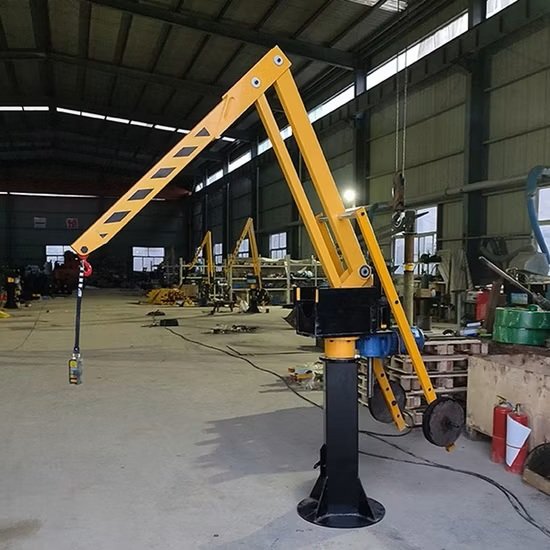 Jib Cranes
Balance Jib Cranes
-
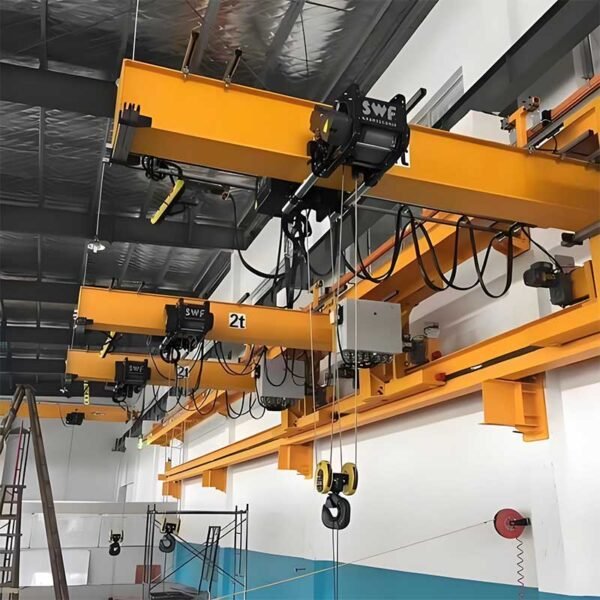 Jib Cranes
Wall Traveling Jib Crane
-
 Jib Cranes
Wall Mounted Jib Crane
-
 Jib Cranes
Free Standing Jib Cranes