A come along, also known as a come-along winch, hand cable puller, or manual pulling winch, is a manually operated tool designed to pull, tension, or position heavy loads using mechanical advantage. Unlike powered winches, a come along uses a ratcheting mechanism that allows users to apply significant pulling force with relatively little physical effort.
Come alongs are widely used in construction, utility work, agriculture, automotive recovery, marine operations, oil and gas projects, and industrial maintenance. They are valued for their portability, reliability, and ability to operate without electricity or hydraulic power.
Whether you’re straightening steel structures, tensioning fencing, recovering vehicles, or aligning heavy equipment, a come along provides a simple yet highly effective solution.
What Is a Come Along?
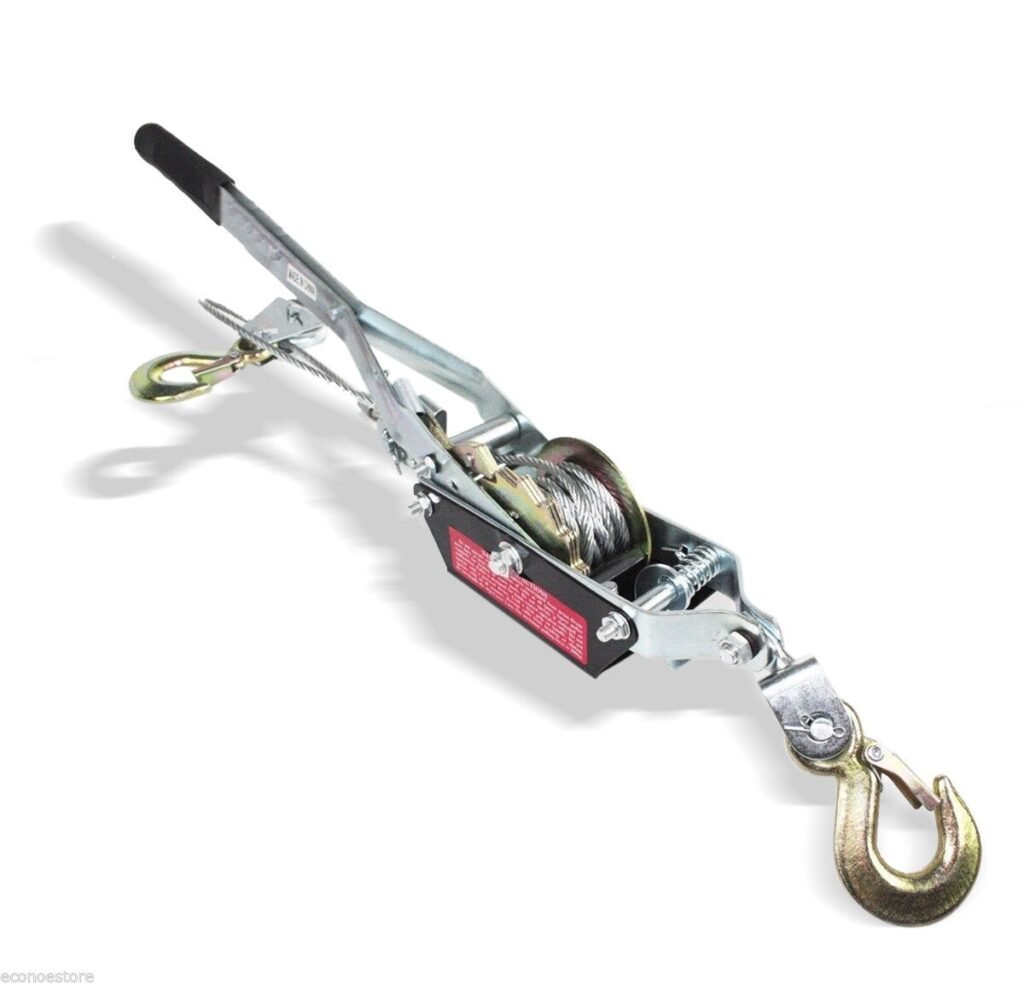
A come along consists of a steel frame, ratchet handle, gear mechanism, hooks, and either a steel wire rope or chain. As the operator pumps the handle back and forth, the ratchet mechanism gradually reels in the cable or chain, pulling the load toward the anchor point.
Unlike a lifting hoist, a standard come along is primarily designed for horizontal pulling, tensioning, and positioning rather than continuous vertical lifting. Some specially designed models may be rated for lifting, but users should always follow the manufacturer’s load ratings and intended applications.
Depending on the region and industry, a come along may also be called:
- Come-along winch
- Manual cable puller
- Hand winch
- Hand puller
- Wire rope puller
- Ratchet puller
- Chain come along (chain models)
How Does a Come Along Work?
The operating principle is based on mechanical advantage. Instead of pulling the load directly, the operator repeatedly moves a ratchet handle. Each stroke rotates a gear that gradually winds the cable or chain, multiplying the applied force.
Ratchet Mechanism
The ratchet allows movement in one direction while preventing the load from moving backward. A pawl locks onto the gear teeth after every handle stroke, holding the load securely until the next stroke.
Wire Rope or Chain
Depending on the model:
- Cable come alongs use galvanized or stainless steel wire rope.
- Chain come alongs use high-strength alloy load chain.
Each design offers advantages depending on the application.
Mechanical Advantage
Mechanical advantage allows a person to pull loads several times heavier than their own body weight. Larger gear ratios require more handle strokes but significantly reduce the operating effort.
Main Components of a Come Along
A typical come along includes the following parts:
Frame
The heavy-duty steel frame supports the internal gears and protects the mechanism from impact.
Ratchet Handle
The handle drives the gear mechanism through repeated pumping action.
Gear System
Precision-machined gears convert handle movement into pulling force.
Pawl
The pawl locks the gear between strokes to prevent accidental reverse movement.
Cable or Chain
Acts as the pulling medium between the tool and the load.
Hooks
Forged alloy steel hooks connect the tool to the anchor point and load. Most models include safety latches to prevent accidental disengagement.
Types of Come Alongs
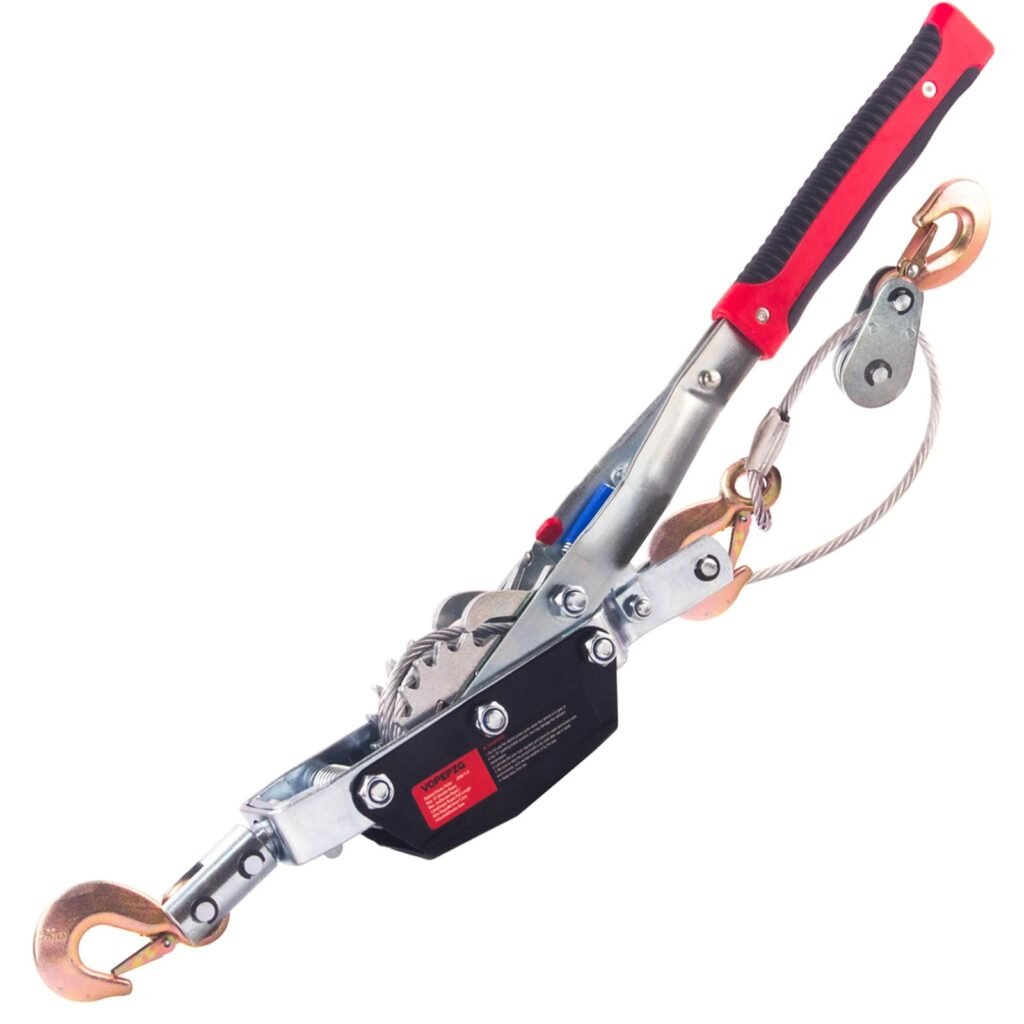
Cable Come Along
Cable models use steel wire rope and are the most common design.
Advantages:
- Lightweight
- Portable
- Longer pulling distance
- Smooth operation
- Ideal for general-purpose pulling
Typical applications include:
- Fence installation
- Vehicle recovery
- Utility line tensioning
- Equipment positioning
Chain Come Along
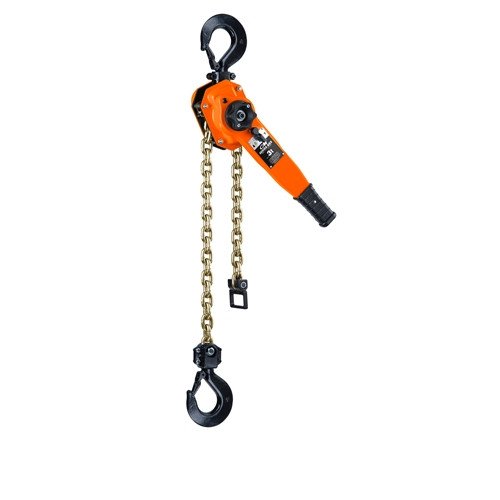
Chain come alongs replace the wire rope with alloy steel load chain.
Advantages:
- Excellent durability
- Resistant to abrasion
- Suitable for harsh industrial environments
- Better performance under heavy-duty applications
Common industries include:
- Shipbuilding
- Mining
- Steel fabrication
- Heavy construction
What Are Come Alongs Used For?
Construction
Construction crews use come alongs to align structural steel, position beams, tension cables, and adjust temporary supports.
Utility Line Work
Electrical and telecommunications contractors use come alongs to tension conductors and overhead cables during installation.
Agriculture
Farmers frequently use come alongs to:
- Repair fencing
- Pull fence posts
- Move machinery
- Remove fallen trees
Vehicle Recovery
Off-road enthusiasts often carry a come along for recovering vehicles when no powered winch is available.
Industrial Maintenance
Factories use come alongs to:
- Align machinery
- Install pumps
- Position motors
- Pull piping into alignment
How to Use a Come Along
Step 1 – Inspect the Tool
Before each use:
- Check the frame for cracks.
- Inspect hooks and safety latches.
- Examine the cable or chain for wear.
- Ensure the ratchet operates smoothly.
Step 2 – Secure the Anchor
Attach one hook to a strong anchor point capable of supporting the load.
Step 3 – Connect the Load
Attach the second hook securely to the object being moved.
Step 4 – Remove Slack
Take up any slack in the cable or chain before applying force.
Step 5 – Operate the Handle
Pump the handle steadily until the load reaches the desired position.
Step 6 – Release Carefully
Release tension slowly according to the manufacturer’s instructions.
Safety Tips
Always follow these safety practices:
- Never exceed the rated Working Load Limit (WLL).
- Never stand directly in line with a tensioned cable.
- Wear gloves and safety glasses.
- Inspect the tool before every use.
- Replace damaged cables immediately.
- Never use a come along with twisted or kinked wire rope.
- Ensure hooks are fully engaged.
- Do not use extension pipes on the handle.
- Never allow personnel beneath suspended loads.
Inspection and Maintenance
Proper maintenance extends service life and improves safety.
Before Every Use
Inspect:
- Cable
- Hooks
- Pawls
- Gear teeth
- Safety latches
Lubrication
Lubricate:
- Ratchet mechanism
- Pivot pins
- Gear teeth
Avoid over-lubricating the cable, which may attract dirt.
Storage
Store the tool:
- Indoors
- Dry
- Away from corrosive chemicals
- With the cable neatly wound
How to Choose the Right Come Along
When selecting a come along, consider:
Capacity
Choose a Working Load Limit greater than the maximum expected load.
Pulling Distance
Longer pulls may require longer cable lengths.
Cable vs Chain
Wire Rope:
- Lightweight
- Portable
- Long reach
Chain:
- Heavy duty
- More durable
- Better for harsh environments
Environment
Consider:
- Corrosion resistance
- Temperature
- Moisture
- Dust
- Chemicals
Certifications
Look for products manufactured according to recognized quality standards and supplied with load test certificates where required.
Come Along vs Chain Hoist
| Feature | Come Along | Chain Hoist |
| Primary Function | Pulling and tensioning | Vertical lifting |
| Pulling Medium | Wire rope or chain | Alloy load chain |
| Power Source | Manual | Manual |
| Best For | Horizontal pulling | Vertical lifting |
| Portability | Excellent | Good |
| Typical Capacity | 0.75–5 Ton | 0.5–50 Ton |
Conclusion
A come along is one of the most versatile manual pulling tools available. Its simple ratchet mechanism provides significant mechanical advantage, allowing operators to pull, tension, and position heavy loads safely and efficiently without external power.
Choosing the correct capacity, following safe operating procedures, and performing regular inspections will maximize both safety and service life. For industrial users, investing in a certified, high-quality come along ensures reliable performance in demanding environments.
FAQs About come-along
Select a model based on the required Working Load Limit, pulling distance, operating environment, and whether a cable or chain design is more suitable.
Most come alongs are designed primarily for pulling and tensioning. Only use a model for lifting if the manufacturer specifically certifies it for vertical lifting.
Inspect the cable or chain, hooks, ratchet mechanism, and safety latches before each use. Lubricate moving parts regularly and replace worn components immediately.
A visual inspection should be performed before every use, with more detailed periodic inspections based on usage frequency and applicable safety regulations.