Lawn mowers come in many different designs, from simple push mowers for residential lawns to heavy-duty remote control machines designed for steep slopes and rough terrain.
Choosing the right mower depends on more than just cutting width or engine power. The size of the working area, terrain, slope, vegetation type, operating conditions, and required productivity all influence which type of mower is most suitable.
In this guide, we explain the most common types of lawn mowers, how they work, where they are typically used, and what to consider when selecting a mower for your application.
What Are the Main Types of Lawn Mowers?
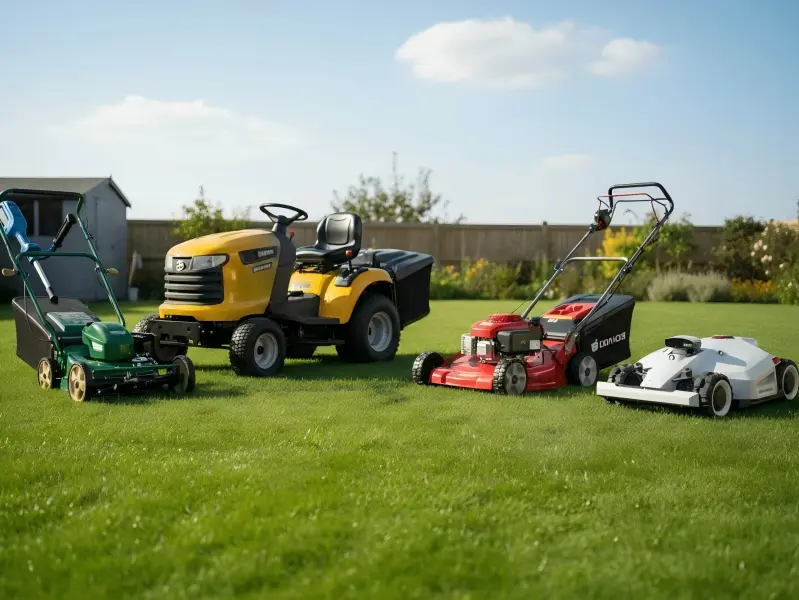
Lawn mowers can be classified in several ways, including how they are operated, how they travel, what cutting system they use, and how they are powered.
The most common types include:
- Push lawn mowers
- Self-propelled lawn mowers
- Riding lawn mowers
- Zero-turn mowers
- Robotic lawn mowers
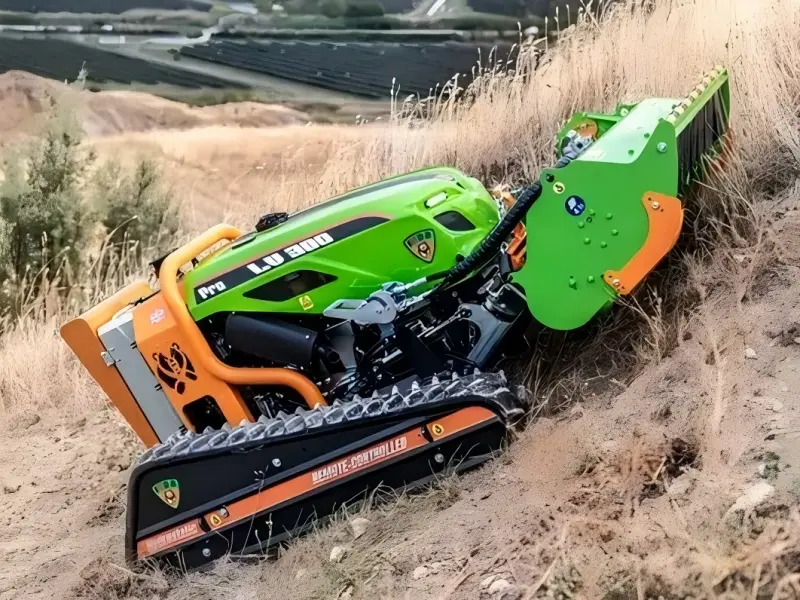
- Remote control lawn mowers
- Flail mowers
- Slope mowers
Each type is designed for different working conditions.
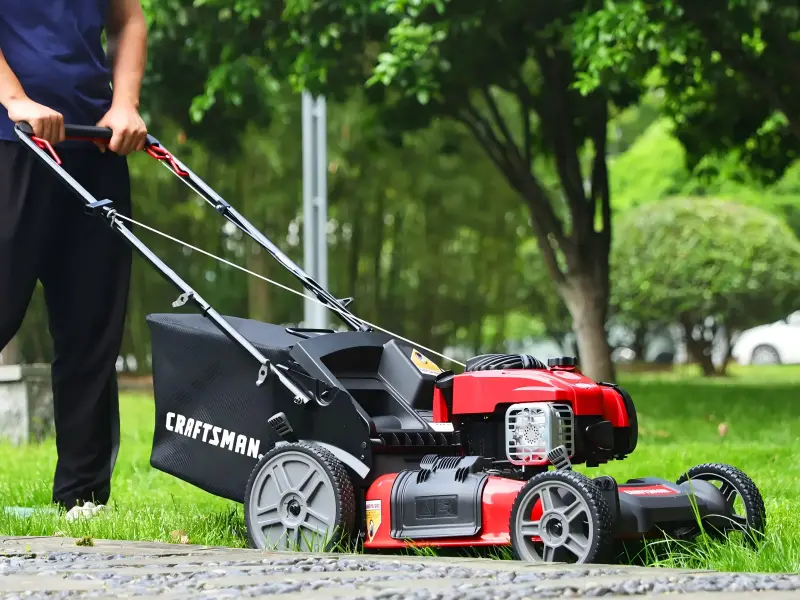
Push Lawn Mowers
A push lawn mower is one of the simplest and most common types of mower. The operator walks behind the machine and manually pushes it forward while the cutting blade trims the grass.
Push mowers are generally compact, easy to operate, and relatively inexpensive to maintain.
Best suited for:
- Small residential lawns
- Gardens
- Flat terrain
- Areas with limited mowing requirements
Their main limitation is productivity. On large areas, rough terrain, or slopes, manually pushing the machine can become physically demanding.
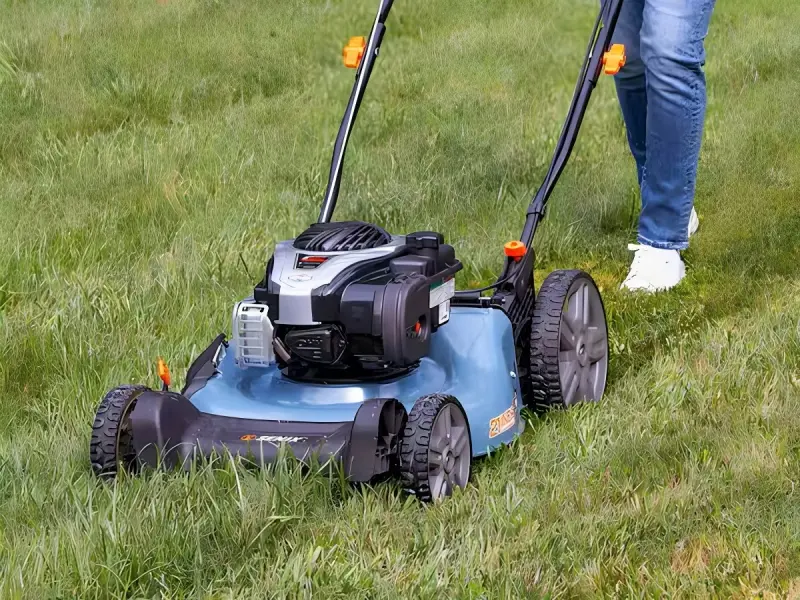
Self-Propelled Lawn Mowers
A self-propelled lawn mower looks similar to a conventional push mower, but its wheels are powered by an engine or electric motor.
Instead of pushing the full weight of the mower, the operator mainly controls its direction and speed.
Advantages include:
- Less physical effort
- Better productivity than manual push mowers
- Easy operation
- Suitable for moderately uneven terrain
Self-propelled mowers are commonly used for medium-sized residential lawns, landscaping work, and areas with gentle slopes.
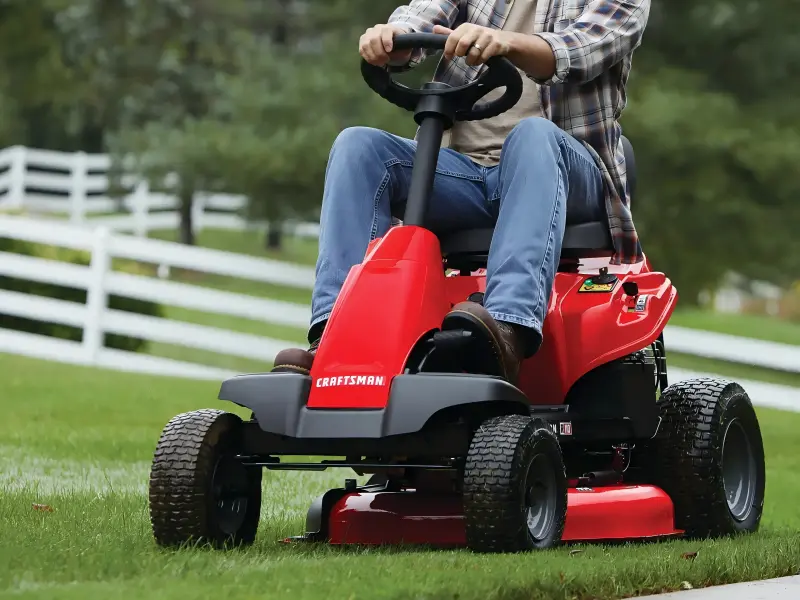
Riding Lawn Mowers
A riding lawn mower allows the operator to sit on and drive the machine.
These mowers typically have larger engines, wider cutting decks, and higher working speeds than walk-behind models, making them much more productive over large areas.
Typical applications include:
- Large residential properties
- Farms
- Parks
- Schools
- Sports grounds
- Commercial landscaping
Riding mowers are highly efficient on relatively open terrain, but their suitability can decrease when working on narrow paths, rough ground, or steep slopes.
Zero-Turn Mowers
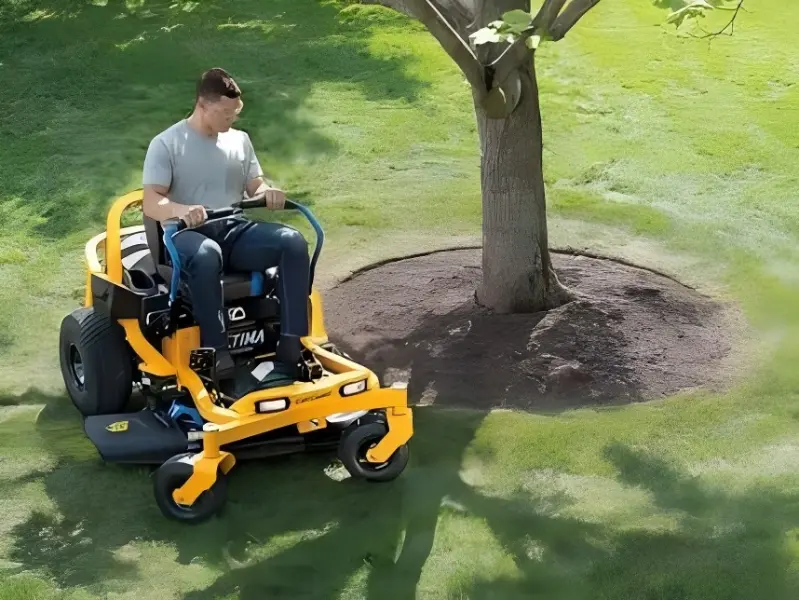
A zero-turn mower is a highly maneuverable type of riding mower.
The left and right drive wheels can typically be controlled independently, allowing the mower to turn within a very small radius.
This makes zero-turn mowers particularly effective when mowing around trees, landscaping features, fences, and other obstacles.
Main advantages:
- Excellent maneuverability
- High mowing speed
- High productivity
- Efficient operation around obstacles
They are widely used by professional landscapers, property managers, parks, and commercial grounds-maintenance contractors.
Robotic Lawn Mowers
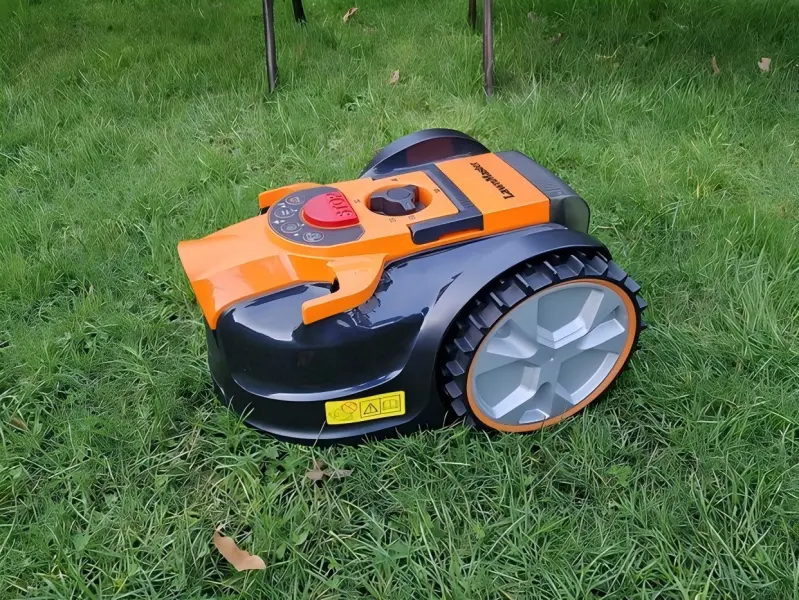
A robotic lawn mower is designed to maintain grass automatically with minimal operator involvement.
Depending on the model, robotic mowers may use boundary wires, sensors, GPS, RTK positioning, cameras, or other navigation technologies to identify and travel within the mowing area.
Some models can automatically return to a charging station when the battery becomes low.
Robotic mowers are commonly used for:
- Residential lawns
- Hotels and resorts
- Landscaped properties
- Regularly maintained grass areas
Their primary purpose is automated lawn maintenance rather than heavy vegetation clearing.
This is an important distinction between a robotic mower and a remote control mower.
Remote Control Lawn Mowers
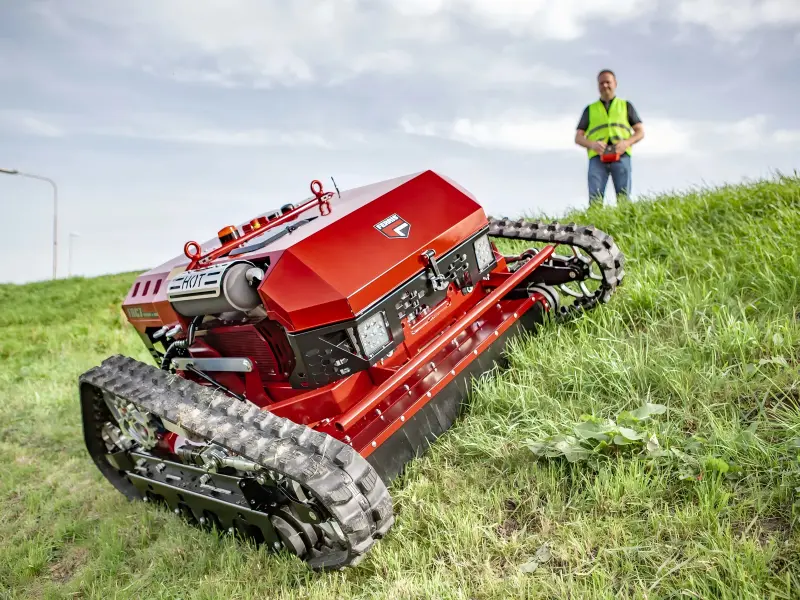
A remote control lawn mower allows an operator to control the machine from a distance using a wireless remote controller.
Unlike a robotic mower, it does not necessarily operate autonomously. Instead, the operator remains in control while being able to stay away from the moving machine.
This can be particularly useful in areas where conventional walk-behind or ride-on equipment is difficult or potentially hazardous to operate.
Common applications include:
- Steep slopes
- Roadside embankments
- Orchards
- Solar farms
- Riverbanks and levees
- Overgrown land
- Rough terrain
- High-grass areas
Remote control mowers may use either wheels or tracks.
Tracked remote control mowers are especially useful on uneven or loose terrain because tracks can provide a larger ground-contact area and improved traction.
Remote operation can also reduce the need for an operator to ride directly on a machine when working on challenging slopes.
Flail Mowers
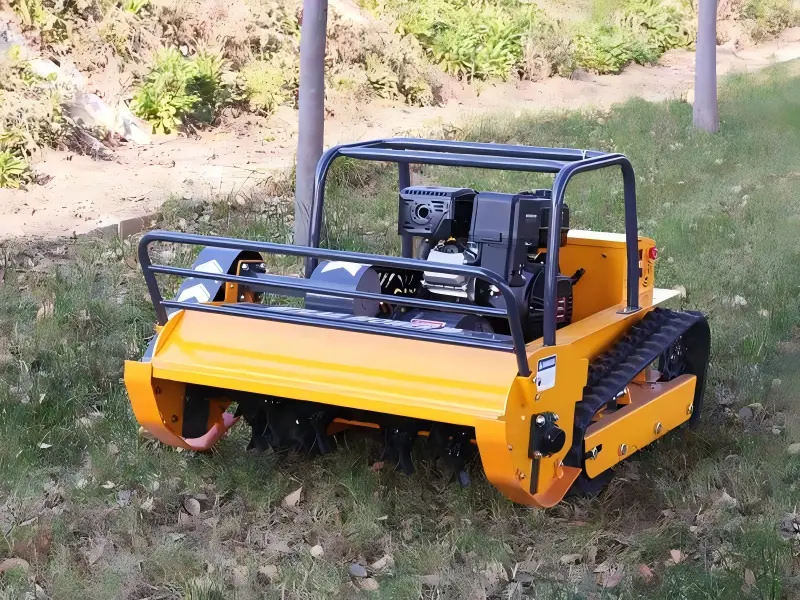
A flail mower uses a rotating horizontal rotor fitted with multiple individual flail blades.
As the rotor turns at high speed, the flails cut and mulch vegetation.
Compared with a conventional rotary lawn mower, a flail mower is generally better suited to tougher vegetation.
Typical applications include:
- Tall grass
- Dense weeds
- Orchards
- Farms
- Roadside vegetation
- Overgrown land
- Light brush
Flail cutting systems are also increasingly used on professional remote control mowers intended for vegetation management rather than fine lawn finishing.
Slope Mowers
A slope mower is specifically designed for mowing inclined terrain where conventional equipment may have difficulty maintaining traction or stability.
Depending on the machine, design features may include:
- Low center of gravity
- Wide track or wheel stance
- Tracked undercarriage
- High-traction drive system
- Remote control
- Enhanced braking
- Improved slope stability
Slope mowers are commonly used on highway embankments, riverbanks, reservoirs, solar farms, orchards, and other difficult terrain.
Rotary Mower vs Flail Mower
Another important way to classify mowers is by their cutting system.
Rotary Mower
A rotary mower typically uses one or more blades rotating horizontally at high speed.
Rotary cutting systems are widely used on push, self-propelled, riding, zero-turn, and some remote control mowers.
They are generally suitable for:
- Regular grass
- Maintained lawns
- Routine mowing
- Relatively light vegetation
Their relatively simple construction also makes rotary mowers widely available and easy to maintain.
Flail Mower
A flail mower uses multiple swinging blades attached to a rotating rotor.
This design is generally better suited to:
- Tall grass
- Dense weeds
- Rough vegetation
- Orchards
- Overgrown areas
- Some types of light brush
If the main objective is maintaining a clean residential lawn, a rotary mower is often the more practical choice.
For vegetation management and tougher cutting conditions, a flail mower may be more suitable.
Types of Lawn Mowers by Power Source
Types of Lawn Mowers by Power Source
Lawn mowers can also be classified according to their power system.
Gasoline Lawn Mowers
Gasoline engines are widely used because they provide good power density, fast refueling, and convenient operation in areas without access to electricity.
They are common in both residential and professional mowing equipment.
Diesel Lawn Mowers
Diesel engines are more commonly found in larger professional machines designed for demanding or extended working cycles.
They are particularly relevant for heavy-duty mowing and vegetation-management equipment.
Electric Lawn Mowers
Electric mowers can be corded or battery-powered.
Battery technology has significantly expanded the range of electric mowing equipment, particularly for residential lawns, commercial landscaping, and applications where low noise is important.
Hybrid Remote Control Mowers
Some remote control mowers combine an internal combustion engine with an electric drive system.
For example, the engine may power the cutting system while electric motors drive the tracks or wheels.
This arrangement can combine the continuous operating capability of an engine with the precise movement control offered by electric drive systems.
Which Type of Lawn Mower Should You Choose?
The right mower depends primarily on the application rather than simply on engine horsepower.
| Application | Mower Types to Consider |
| Small residential lawn | Push or Electric Mower |
| Medium residential lawn | Self-Propelled Mower |
| Large, flat grass area | Riding or Zero-Turn Mower |
| Automated lawn maintenance | Robotic Lawn Mower |
| Orchard | Flail or Remote Control Mower |
| Tall grass and weeds | Flail or Brush Mower |
| Solar farm | Remote Control Mower |
| Roadside embankment | Remote Control Slope Mower |
| Steep or difficult terrain | Tracked Remote Control Mower |
Before selecting a mower, consider the following factors.
Terrain Flat lawns, rolling terrain, steep slopes, muddy ground, and rocky areas place very different demands on a machine.
Slope As slope angle increases, traction, braking, center of gravity, and machine stability become increasingly important.
Vegetation Regular lawn grass, tall weeds, dense vegetation, and brush may require different cutting systems.
Working Area For large areas, cutting width, travel speed, fuel capacity, battery runtime, and overall productivity become more important.
Ground Conditions Loose soil, wet grass, mud, gravel, and uneven ground can influence whether wheels or tracks are more appropriate.
Operator Safety For steep slopes and difficult-to-access terrain, remote control equipment can allow the operator to remain away from the machine and potentially hazardous working areas.
Remote Control Mower vs Robotic Lawn Mower
Although these two terms are sometimes confused, they describe different types of equipment.
A robotic lawn mower is primarily designed for autonomous lawn maintenance. Once configured, it can perform routine mowing with limited operator involvement.
A remote control lawn mower is primarily designed for remote operation. The operator actively controls the machine while remaining at a distance.
In simple terms:
Robotic Lawn Mower = Automated lawn maintenance
Remote Control Lawn Mower = Operator-controlled mowing from a distance
For a maintained residential lawn, a robotic mower may be appropriate.
For steep slopes, orchards, overgrown areas, solar farms, and difficult terrain, a remote control mower may provide greater control and versatility.
Final Thoughts
There is no single type of lawn mower that is best for every application.
Push, self-propelled, riding, zero-turn, and robotic mowers are well suited to different levels of conventional lawn maintenance. For more demanding environments such as orchards, overgrown land, roadside embankments, solar farms, and steep slopes, equipment design becomes increasingly important.
In these conditions, factors such as traction, cutting system, slope stability, ground clearance, powertrain, and remote operation may matter more than engine horsepower alone.
Understanding the differences between rotary mowers, flail mowers, slope mowers, robotic mowers, and remote control mowers is therefore the first step toward choosing the right machine for the job.
FAQs About Types of Lawn Mowers
The main types of lawn mowers include push mowers, self-propelled mowers, riding mowers, zero-turn mowers, robotic lawn mowers, remote control lawn mowers, flail mowers, and slope mowers. The best type depends on the size of the mowing area, terrain, slope, vegetation, and required productivity.
For large, relatively flat grass areas, riding and zero-turn mowers are usually more efficient because of their wider cutting decks and higher travel speeds. For large areas with rough terrain, dense vegetation, or significant slopes, a remote control or flail mower may be more suitable.
For steep slopes, a purpose-built slope mower or tracked remote control mower is often a better option than a conventional riding mower. Important factors include the machine's center of gravity, traction, braking system, track or wheel configuration, and rated slope capability.
Always follow the manufacturer's operating limits, as actual slope performance can vary with ground conditions, vegetation, travel direction, and weather.
Rinse the chain with fresh water, remove debris, allow it to dry when possible, and store it in a clean, ventilated chain locker to minimize corrosion.
A robotic lawn mower is designed primarily for autonomous lawn maintenance and can operate with limited human input once its working area has been configured.
A remote control lawn mower is actively controlled by an operator using a wireless controller. It is often used for slopes, rough terrain, orchards, solar farms, and other areas where keeping the operator away from the machine can improve accessibility and safety.
Not necessarily. Each design has advantages.
Wheeled mowers can be faster and more efficient on firm, relatively flat ground. Tracked mowers typically provide a larger ground-contact area and better traction on loose, uneven, or sloped terrain.
The right choice depends on the ground conditions and intended application.
A rotary mower uses horizontally rotating blades and is generally well suited to regular grass and maintained lawns.
A flail mower uses multiple swinging blades mounted on a rotating rotor. It is typically better suited to tall grass, weeds, rough vegetation, orchards, roadside maintenance, and overgrown areas.
Yes, but the appropriate machine depends on the height and density of the vegetation.
Conventional lawn mowers are primarily designed for maintained grass. For tall grass, dense weeds, and rough vegetation, a flail mower, brush mower, or heavy-duty remote control mower may be more appropriate.
Yes. Remote control mowers can be useful in orchards, particularly where there are slopes, narrow working areas, uneven ground, or dense vegetation between tree rows.
Machine width, turning radius, cutting width, ground clearance, and cutting system should be considered when selecting an orchard mower.
Remote control mowers are increasingly used for vegetation management around solar installations because they can operate in areas where access may be restricted by panel structures, uneven ground, or slopes.
A suitable machine should be selected according to row spacing, panel clearance, terrain, vegetation density, cutting width, and slope conditions.
Start by evaluating the working environment rather than choosing based only on engine horsepower.
Consider the mowing area, terrain, maximum working slope, vegetation type, required cutting width, ground conditions, operating time, maneuverability, and operator safety.
For a small maintained lawn, a push, self-propelled, or robotic mower may be sufficient. For large areas, riding or zero-turn mowers offer higher productivity. For steep slopes, rough terrain, orchards, and heavy vegetation, remote control, tracked, slope, or flail mowers may be more appropriate.