Attach a Hook to a Chain – Key Takeaways
- Always match hook grade with chain grade (e.g., G80 with G80, G100 with G100)
- Proper installation ensures lifting safety and prevents failure
- Only certified hooks and chains should be used for lifting operations
- Visual inspection before and after installation is mandatory
- Incorrect assembly is one of the most common causes of lifting accidents
Tools for How to Attach a Hook to a Chain
Before attaching a hook to a chain, ensure you have the correct tools and equipment:
- Master link or connecting link (if required)
- Shackles (if applicable)
- Hammer or pin tool (for specific hook types)
- Measuring gauge (for chain size verification)
- PPE (personal protective equipment)
Choosing the Right Lifting Hook
Selecting the correct hook is critical for safe lifting operations.
Common Hook Types
- Clevis Hook
- Eye Hook
- Self-locking Hook
- Swivel Hook
- Foundry Hook
Key Selection Criteria
- Working Load Limit (WLL)
- Chain grade compatibility (G80 / G100 / G120)
- Hook opening size
- Locking mechanism type
- Application environment (marine, construction, industrial)
Selecting the Proper Chain
The hook must always match the chain specification.
Common Chain Grades
- G80 Alloy Steel Chain (most common)
- G100 High-strength Chain
- G120 Premium lifting chain
Important Parameters
- Chain diameter
- Load capacity
- Heat treatment status
- Surface finish (painted, blackened, galvanized)
⚠️ Never mix different grades unless explicitly approved by the manufacturer.
Safety Gear
Always wear proper PPE when working with lifting equipment:
- Safety gloves
- Hard hat
- Safety shoes
- Eye protection
- High-visibility vest
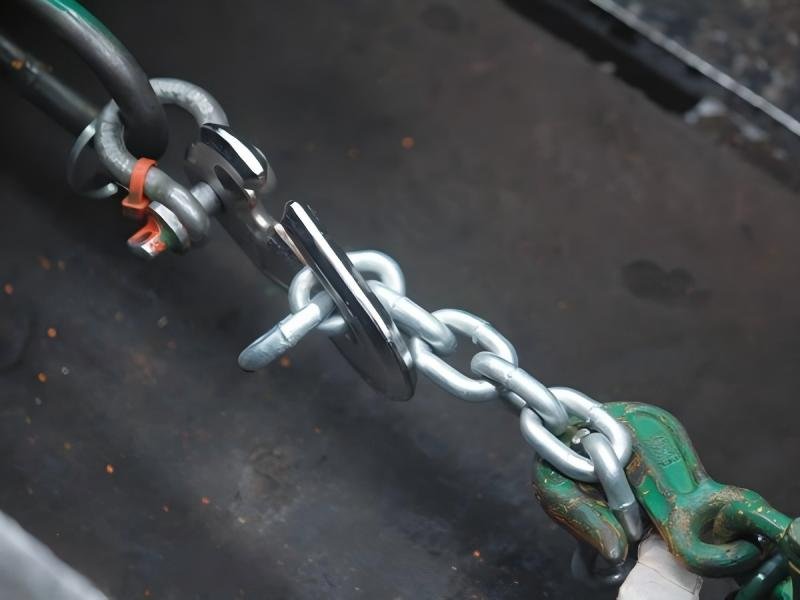
Proper Way to Attach a Chain and Hook
Step 1 – Inspect Chain and Hook
Before installation:
- Check for cracks, deformation, or wear
- Verify certification markings (WLL, grade, manufacturer)
- Ensure compatibility between chain and hook
Step 2 – Positioning and Connecting
- Align the hook with the chain end link or master link
- Ensure correct orientation of the hook opening
- Avoid twisting or side loading
Step 3 – Securing the Connection
Depending on hook type:
- Clevis hook: insert pin and secure cotter pin
- Eye hook: connect using a shackle or master link
- Self-locking hook: ensure latch closes automatically
Tighten all components to manufacturer specifications.
Lifting Hooks and Safety Hooks: Industry-Specific Methods
Construction Industry
- Used for steel beams, scaffolding, and concrete lifting
- Requires high shock resistance hooks (G80 or above)
Shipping & Marine Industry
- Must resist corrosion (galvanized or stainless steel)
- Often uses swivel hooks to prevent rope twisting
Mining Industry
- Heavy-duty hooks required for extreme loads
- Frequent inspection due to abrasive environment
Oil & Gas Industry
- Strict certification requirements (API / ISO standards)
- Often requires traceability and third-party inspection
Manufacturing & Warehousing
- Used for material handling and production lines
- Focus on efficiency and repetitive lifting safety
Check Security After You Attach a Chain
After installation, always verify:
Visual Inspection
- Hook latch fully closed
- Chain properly seated
- No visible deformation
- No twisting or misalignment
Manual Inspection
- Light tension test before full load
- Confirm hook rotation (if swivel type)
- Ensure load path is straight
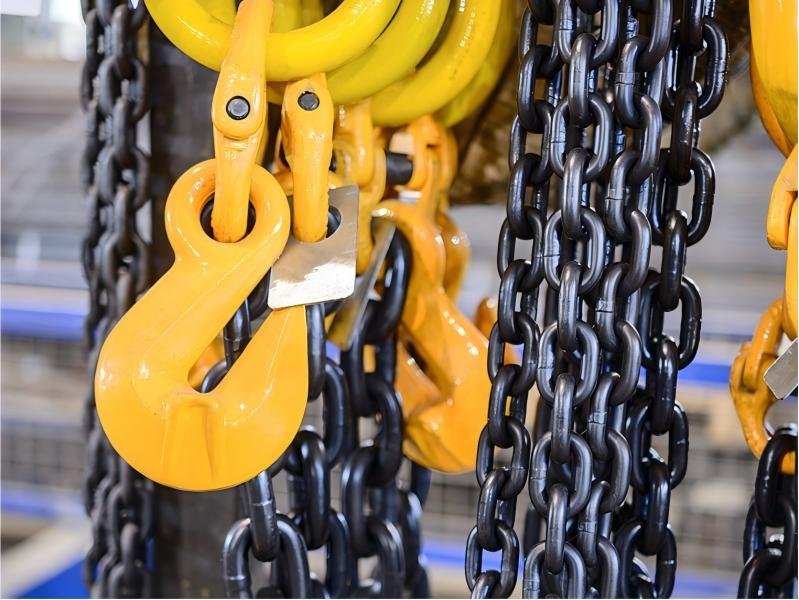
Common Mistakes to Avoid
- Mixing different chain grades (e.g., G80 with G100)
- Overloading beyond WLL
- Improper hook orientation
- Using damaged or worn components
- Ignoring latch functionality
- Side loading hooks
- Skipping inspection before use
Conclusion
Attaching a hook to a chain is a simple process in principle, but it requires strict attention to safety, compatibility, and inspection procedures. Correct selection of chain grade, hook type, and proper installation ensures safe lifting operations in construction, industrial, marine, and manufacturing environments.
For safe operation, always follow manufacturer instructions and ensure all components are certified and regularly inspected.
FAQs About How to Attach a Hook to a Chain
G100 hooks have higher tensile strength and allow higher lifting capacity compared to G80 hooks of the same size.
Check for markings such as:
- Grade (G80, G100)
- WLL (Working Load Limit)
- Manufacturer identification
- Certification marks (CE, ISO, etc.)
Yes, but corrosion-resistant coatings or galvanized finishes are recommended for outdoor or marine environments.
No. Mixing grades is not recommended and may result in unsafe load imbalance or failure. Always match system components.