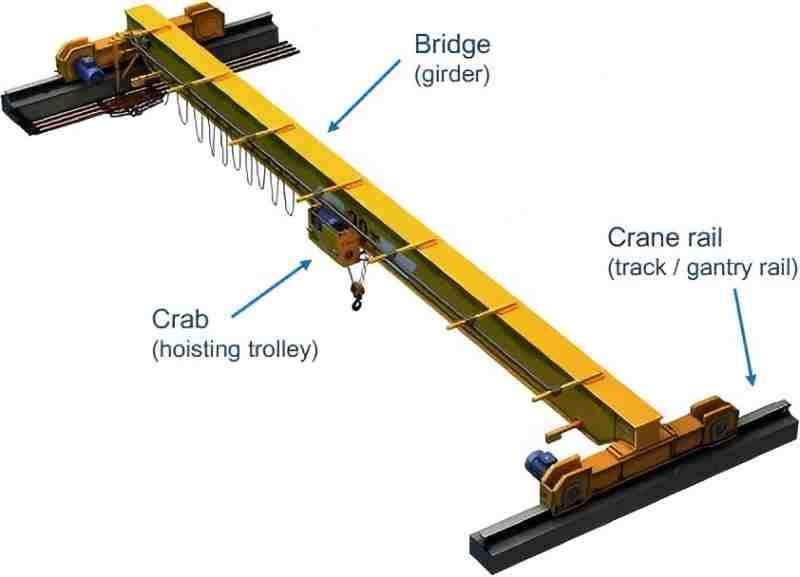
Crane rails are a critical component of overhead crane and gantry crane systems. They provide the running track for crane wheels, enabling cranes to move safely while lifting and transporting heavy loads in industrial environments.
To ensure safety, durability, and compatibility with crane wheels, crane rails are typically manufactured according to specific international or national standards.
The most widely used crane rail standards worldwide include:
- DIN / EN (European standards)
- GB (Chinese standards)
- JIS (Japanese standards)
- ASCE / AREMA (American standards)
These standards specify:
- Rail profile and cross-section shape
- Dimensions and tolerances
- Material properties
- Unit weight
- Manufacturing and inspection requirements
They help engineers and equipment manufacturers select the appropriate crane rail for different crane applications.
What is a Crane Rail?
A crane rail is a specially designed steel rail installed on: Crane runway beams and Ground rail systems, it supports the movement of crane wheels and ensures smooth and stable crane operation.
Compared with standard railway rails, crane rails typically have the following characteristics:
- Wider Rail Head: The rail head is wider to increase the contact area with crane wheels and reduce pressure.
- Higher Structural Strength: Crane rails are designed to withstand high wheel loads generated by heavy lifting equipment.
- Improved Wear Resistance: They are built to handle long-term industrial operation and harsh working environments.
Typical Applications of Crane Rails
Crane rails are widely used in:
- Overhead bridge cranes
- Gantry cranes
- Port container cranes
- Steel mill cranes
- Shipyard cranes
They are essential components of industrial lifting systems.
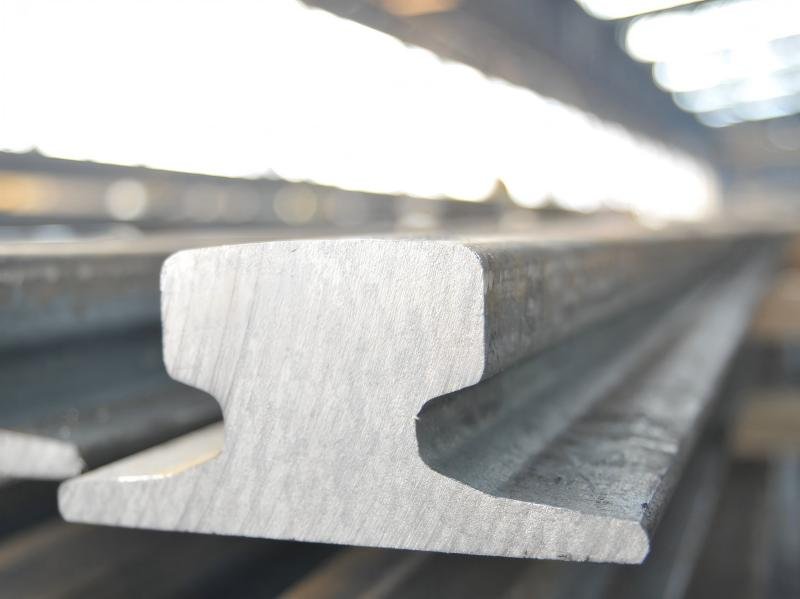
European Standards (DIN / EN Crane Rail)
Main Standards
- DIN 536 — Crane Rails
- EN 13674-4 — Railway rails for cranes
The DIN A-Series crane rails are among the most widely used crane rail standards in Europe.
These rails are classified according to size and load capacity, and they are commonly used for overhead cranes, gantry cranes, and port cranes.
DIN A-Series Crane Rails
| Model | Height (mm) | Head Width (mm) | Weight (kg/m) | Typical Application |
| A45 | 55 | 45 | 22 | Light duty cranes |
| A55 | 65 | 55 | 31.8 | Medium-light duty |
| A65 | 75 | 65 | 43.1 | Medium duty |
| A75 | 85 | 75 | 56.2 | Industrial workshops |
| A100 | 95 | 100 | 74.3 | Heavy duty cranes |
| A120 | 105 | 120 | 100 | Port cranes |
| A150 | 150 | 150 | 150 | Extra heavy duty |
Features
- Wide rail head suitable for crane wheels
- High strength for heavy-duty overhead cranes
- Widely used in European ports, steel mills, and shipyards
Typical Engineering Selection
| Crane Capacity | Recommended Rail |
| ≤10 tons | A45 / A55 |
| 10–50 tons | A65 / A75 |
| 50–200 tons | A100 / A120 |
| Port container cranes | A120 / A150 |
Chinese Standards (GB Crane Rail)
The QU series crane rails are the most commonly used heavy-duty crane rails in China.
Main Standards
- GB/T 3426 — Crane Rails
- YB/T 5055 — Steel Crane Rails
The designation QU represents Crane Rail, and the number indicates the rail head width (mm).
For example:
QU70 → rail head width approximately 70 mm
These rails are specifically designed for high wheel load cranes.
Key Characteristics
- Wide rail head
- Thick rail web
- High wear resistance
- Strong impact resistance
They are widely used in:
- Steel mills
- Ports
- Heavy industrial plants
QU Series Crane Rails
| Model | Head Width (mm) | Height (mm) | Weight (kg/m) | Typical Application |
| QU70 | 70 | 120 | 52.8 | Small to medium overhead cranes |
| QU80 | 80 | 130 | 63.7 | Medium cranes |
| QU100 | 100 | 150 | 88.9 | Heavy cranes |
| QU120 | 120 | 170 | 118 | Port heavy-duty cranes |
Engineering Selection Guide
Typical Engineering Selection
| Crane Capacity | Recommended Rail |
| ≤10 tons | A45 / A55 |
| 10–50 tons | A65 / A75 |
| 50–200 tons | A100 / A120 |
| Port container cranes | A120 / A150 |
American Standards (AREMA / ASCE Rail)
Main Standards
- AREMA — American Railway Engineering and Maintenance-of-Way Association
- ASCE Rail Profiles — American Society of Civil Engineers
The ASCE rail series was originally designed for:
- Light railway systems
- Industrial transport tracks
Later, it became widely used for:
- Light-duty crane runways
- Small gantry cranes
- Industrial rail tracks
The ASCE rail number indicates weight per yard (lb/yd).
ASCE Rail Series
| Model | lb/yd | kg/m | Height (mm) | Application |
| ASCE 25 | 25 | 12.4 | ~76 | Light equipment |
| ASCE 30 | 30 | 14.9 | ~89 | Small cranes |
| ASCE 40 | 40 | 19.8 | ~108 | Medium-light duty |
| ASCE 60 | 60 | 29.8 | ~152 | Medium duty |
| ASCE 85 | 85 | 42.1 | ~178 | Medium-heavy duty |
Characteristics
- Originally designed for light railway applications
- Narrower rail head
- Lower load capacity compared with heavy crane rails
Typical Engineering Applications
| Application | Recommended Rail |
| Light crane runway | ASCE 25 / 30 |
| Industrial workshops | ASCE 40 / 60 |
| Heavier equipment rails | ASCE 85 |
However, for port cranes and steel mill cranes, heavier rails are typically used:
- DIN A100 / A120
- QU100 / QU120
Because ASCE rails have relatively lower load capacity.
Japanese Standards (JIS Crane Rail)
Main Standard
- JIS E 1103 — Crane Rails
The CR series crane rails are commonly used in Japan.
CR stands for Crane Rail, and the number usually indicates the rail head width (mm).
CR Series Crane Rails
| Model | Head Width (mm) | Height (mm) | Weight (kg/m) | Typical Application |
| CR73 | 73 | ~135 | ~60 | Medium cranes |
| CR100 | 100 | ~150 | ~90 | Heavy cranes |
| CR120 | 120 | ~170 | ~118 | Port heavy cranes |
Typical Engineering Selection
| Crane Capacity | Recommended Rail |
| 20–50 tons | CR73 |
| 50–150 tons | CR100 |
| 150 tons+ | CR120 |
The CR series rails are structurally very similar to:
- DIN A series rails
- QU series rails
Therefore, they can often be interchangeable in international engineering projects.
International Standards (ISO / FEM)
In addition to rail profile standards, crane runway systems also involve international regulations.
Relevant Standards
- ISO 12488 — Crane tolerances
- FEM 1.001 — European crane design rules
These standards are typically used for:
- Crane design
- Rail installation tolerances
- Crane operational safety
Conclusion
Globally, crane rails are mainly categorized into four major standards:
| Standard | Region | Common Models |
| DIN / EN | Europe | A45 – A150 |
| GB | China | QU70 – QU120 |
| ASCE | United States | ASCE 25 – 85 |
| JIS | Japan | CR73 – CR120 |
When selecting crane rails for engineering projects, several factors must be considered:
- Crane lifting capacity
- Wheel load
- Runway span
- Duty class
- Industrial working environment
Choosing the correct crane rail ensures:
- Safe crane operation
- Longer rail service life
- Reduced maintenance costs