- Wire rope offers a higher strength-to-weight ratio and greater flexibility.
- Lifting chains provide superior wear resistance, impact resistance, and high-temperature performance.
- The best choice depends on load requirements, operating conditions, inspection needs, and service life.
- Both chain and wire rope are widely used in lifting, rigging, marine, oil & gas, construction, and mining industries.
Understanding Chain and Wire Rope Strength
When selecting lifting and rigging equipment, one of the most common questions is:
Is chain stronger than wire rope?
The answer depends on how “strength” is measured.
Industrial users should evaluate:
- Working Load Limit (WLL)
- Minimum Breaking Load (MBL)
- Safety Factor
- Fatigue Resistance
- Wear Resistance
- Environmental Conditions
A wire rope may provide higher tensile strength for its weight, while a lifting chain may outperform it in harsh environments and shock-loading applications.
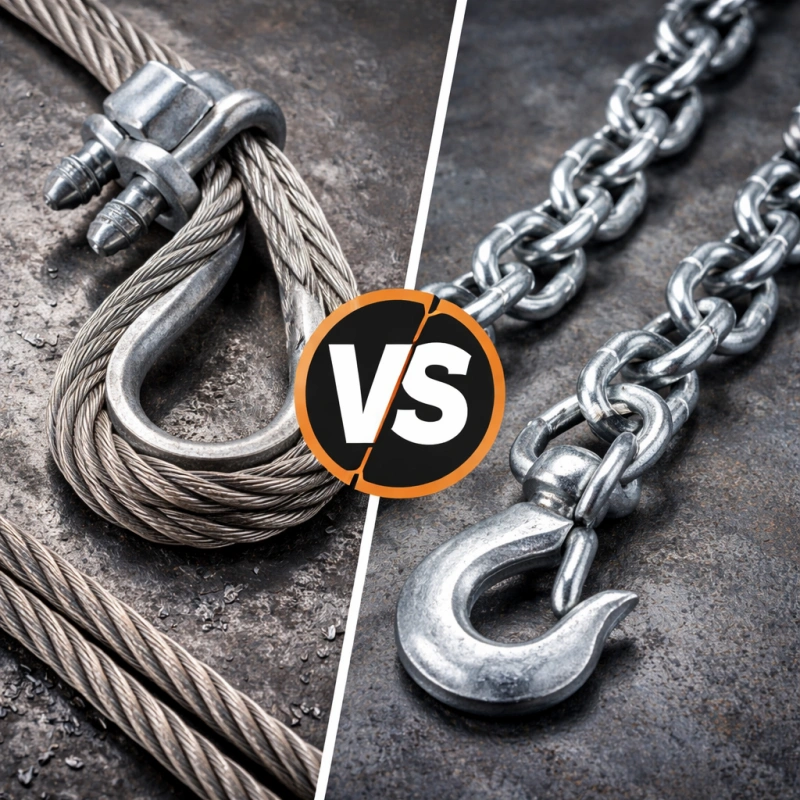
Breaking Strength Comparison
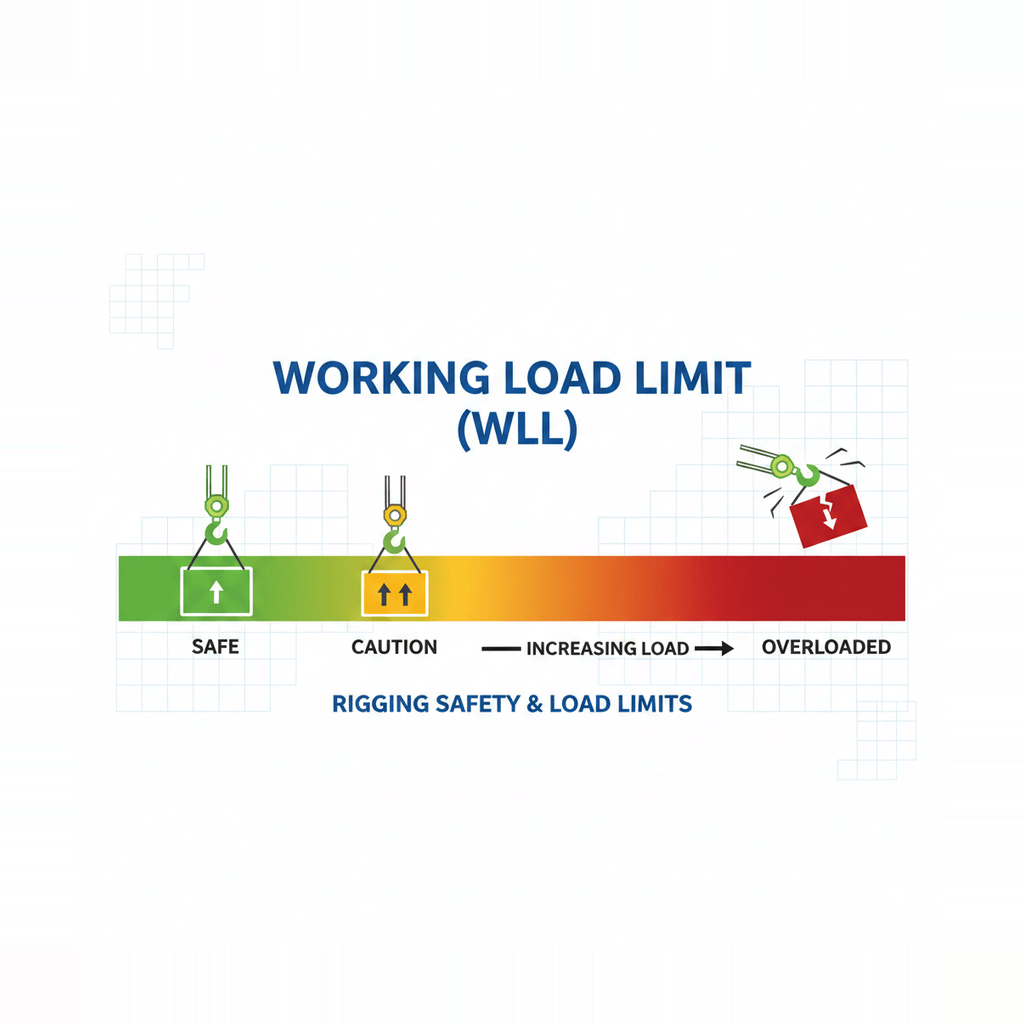
What Is Working Load Limit (WLL)?
The Working Load Limit is the maximum load that should be applied during normal operation.
Example:
- WLL = 5 tons
- Safety Factor = 4:1
Minimum Breaking Load:
5 × 4 = 20 tons
Therefore, industrial buyers should compare WLL rather than breaking load alone.
Chain vs Wire Rope Strength Comparison
| Property | Lifting Chain | Wire Rope |
| Strength-to-Weight Ratio | Good | Excellent |
| Breaking Strength | High | Very High |
| Abrasion Resistance | Excellent | Moderate |
| Shock Load Resistance | Excellent | Good |
| Flexibility | Moderate | Excellent |
| High Temperature Resistance | Excellent | Moderate |
| Ease of Inspection | Excellent | Good |
Heavy-Duty Lifting Chains: Features and Grades
Chain Materials and Grades
Most lifting chains are manufactured from heat-treated alloy steel.
Common grades include:
| Grade | Typical Application |
| Grade 30 | General utility |
| Grade 43 | Transport chain |
| Grade 70 | Cargo securement |
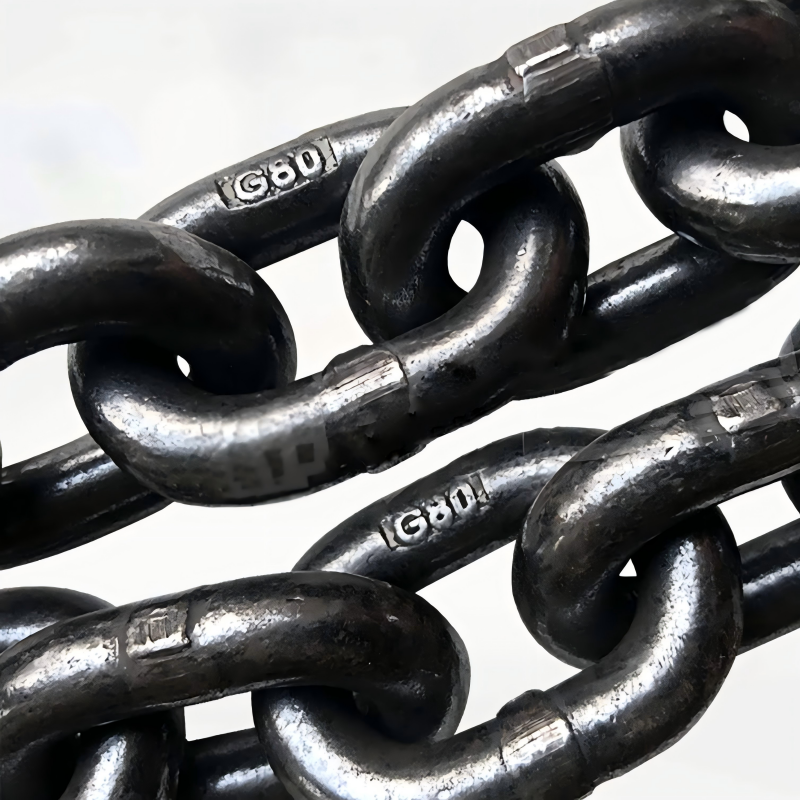
| Grade 80 | Overhead lifting |
| Grade 100 | Heavy lifting |
| Grade 120 | Extreme-duty lifting |
Grade 80 and Grade 100 are the most common choices for industrial lifting operations.
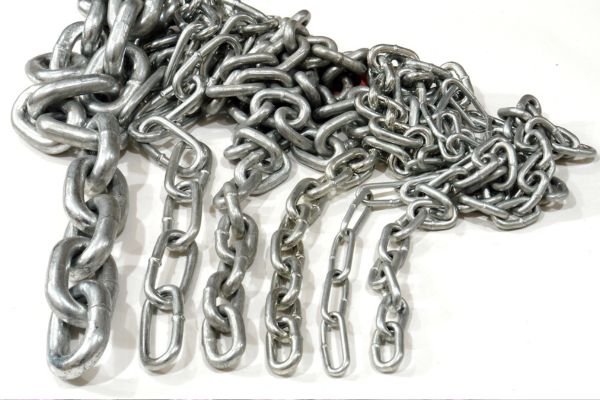
Typical Grade 80 Chain Capacities
| Chain Diameter | WLL |
| 8 mm | 2 Ton |
| 10 mm | 3.15 Ton |
| 13 mm | 5.3 Ton |
| 16 mm | 8 Ton |
| 20 mm | 12.5 Ton |
Durability and Corrosion Resistance
Industrial lifting chains offer:
- Excellent abrasion resistance
- Superior shock load resistance
- Easy visual inspection
- Good performance in high-temperature environments
For corrosive environments, available options include:
- Galvanized chain
- Stainless steel chain
- Coated alloy chain
International Standards
High-quality lifting chains are typically manufactured according to:
- ISO standards
- ASME B30 series
- ASTM International specifications
Industrial Wire Rope: Types and Performance
Wire Rope Construction
A wire rope consists of:
- Individual wires
- Strands
- Core (Fiber Core or IWRC)
Common constructions include:
| Construction | Feature |
| 6×19 | Abrasion resistant |
| 6×36 | Flexible |
| 8×19 | Crane applications |
| 19×7 | Sling applications |
| 35×7 | High flexibility |
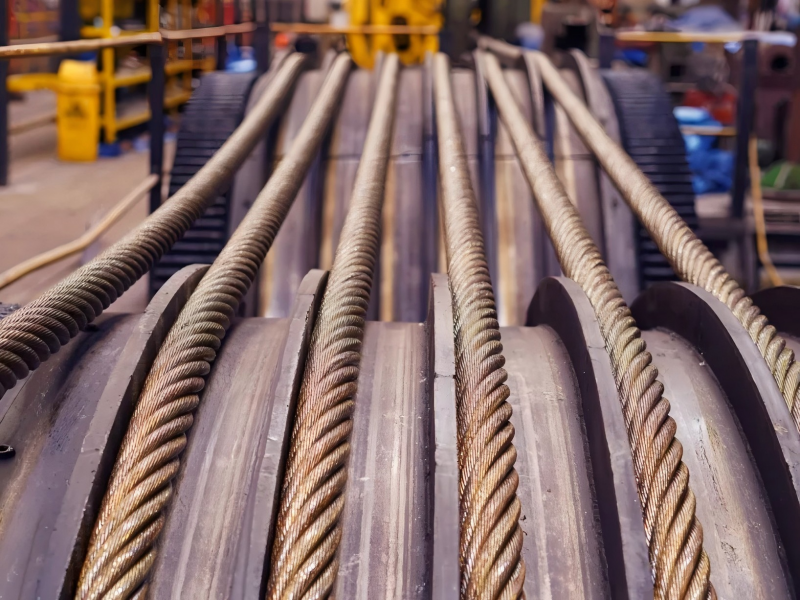
Strength and Flexibility
Wire rope provides:
- Lower weight
- Higher strength-to-weight ratio
- Excellent flexibility
- Smooth operation over sheaves and pulleys
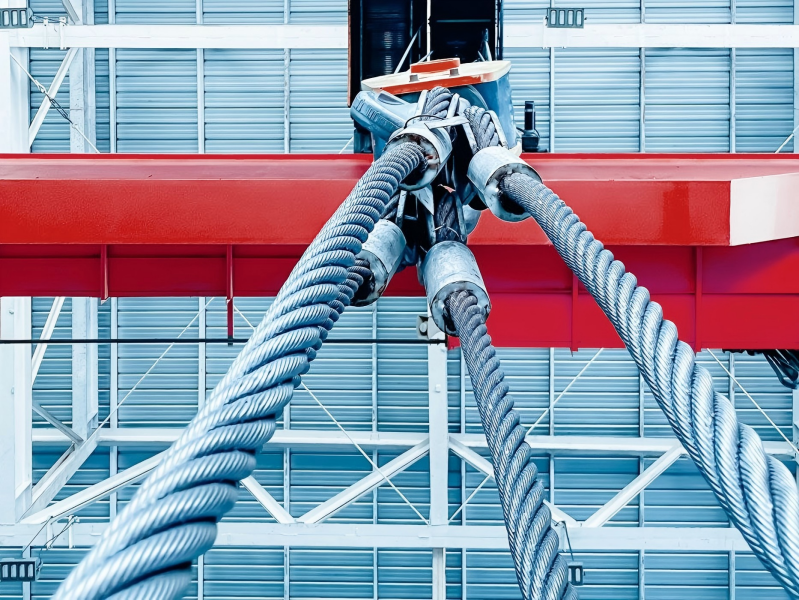
These characteristics make wire rope ideal for:
- Tower cranes
- Overhead cranes
- Elevators
- Drilling rigs
- Offshore lifting equipment
Factors Affecting Strength and Service Life
Wear and Abrasion
Over time, friction causes:
Chain
- Link wear
- Reduced diameter
- Lower load capacity
Wire Rope
- Broken wires
- Strand wear
- Crushing damage
Regular inspection is essential for both products.
Corrosion and Environmental Conditions
Service life may be affected by:
- Saltwater exposure
- Marine environments
- Chemicals
- Humidity
- Extreme temperatures
Corrosion reduces the effective cross-sectional area and therefore decreases strength.
Loading Conditions
Improper loading can dramatically shorten service life:
- Overloading
- Shock loading
- Side loading
- Twisting
- Improper bending
Wire rope is especially sensitive to small sheave diameters and repeated bending cycles.
How to Choose Between Chain and Wire Rope
Key Decision Factors
Before selecting lifting equipment, consider:
- Maximum load capacity
- Lift height
- Frequency of use
- Shock loading risk
- Environmental conditions
- Inspection requirements
- Maintenance costs
When to Choose Lifting Chain
Choose chain when:
✔ Heavy-duty lifting is required
✔ Impact loads are common
✔ High temperatures are present
✔ Equipment is frequently connected and disconnected
✔ Abrasive environments exist
Typical applications:
- Structural steel erection
- Die and mold handling
- Oilfield equipment lifting
- Industrial maintenance
When to Choose Wire Rope
Choose wire rope when:
✔ Long lifting distances are required
✔ High-cycle operation is expected
✔ Weight reduction is important
✔ Pulley systems are used
Typical applications:
- Cranes
- Drilling rigs
- Elevators
- Offshore lifting systems
Chain vs Wire Rope Strength Comparison Summary
| Feature | Chain | Wire Rope |
| Weight | Heavy | Light |
| Strength-to-Weight Ratio | Good | Excellent |
| Wear Resistance | Excellent | Good |
| Impact Resistance | Excellent | Good |
| Flexibility | Moderate | Excellent |
| High Temperature Resistance | Excellent | |
| Inspection Simplicity | Excellent | Good |
| Long-Distance Lifting | Limited | Excellent |
Conclusion
Neither chain nor wire rope is universally stronger in every application.
Wire rope delivers exceptional strength-to-weight performance and flexibility, making it ideal for cranes, drilling rigs, and lifting systems.
Lifting chain offers superior durability, impact resistance, and ease of inspection, making it the preferred choice for heavy industrial lifting and harsh operating environments.
The best solution is always determined by the application, not by breaking strength alone.
FAQs About Chain vs Wire Rope Strength
Consider load capacity, lifting height, environmental conditions, shock loading, inspection requirements, and maintenance needs.
Select the chain grade based on the Working Load Limit (WLL), safety factor, and applicable industry standards. Grade 80 and Grade 100 are commonly used for overhead lifting.
Yes. Galvanized, stainless steel, and coated chains are available for outdoor and corrosive environments.
A visual inspection should be performed before each use. Detailed inspections should be conducted regularly according to operating conditions and applicable safety regulations.