
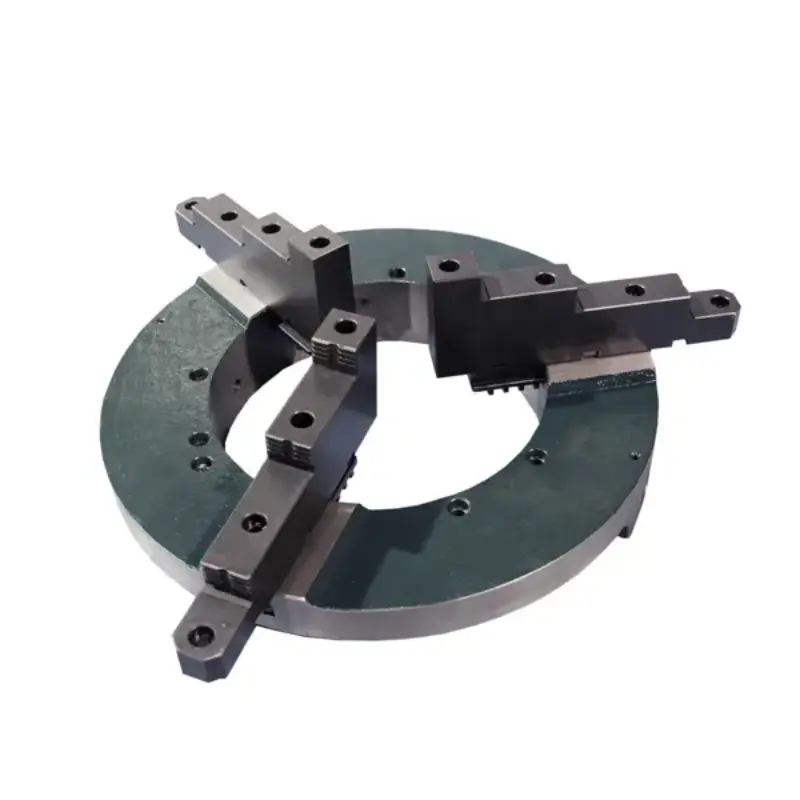
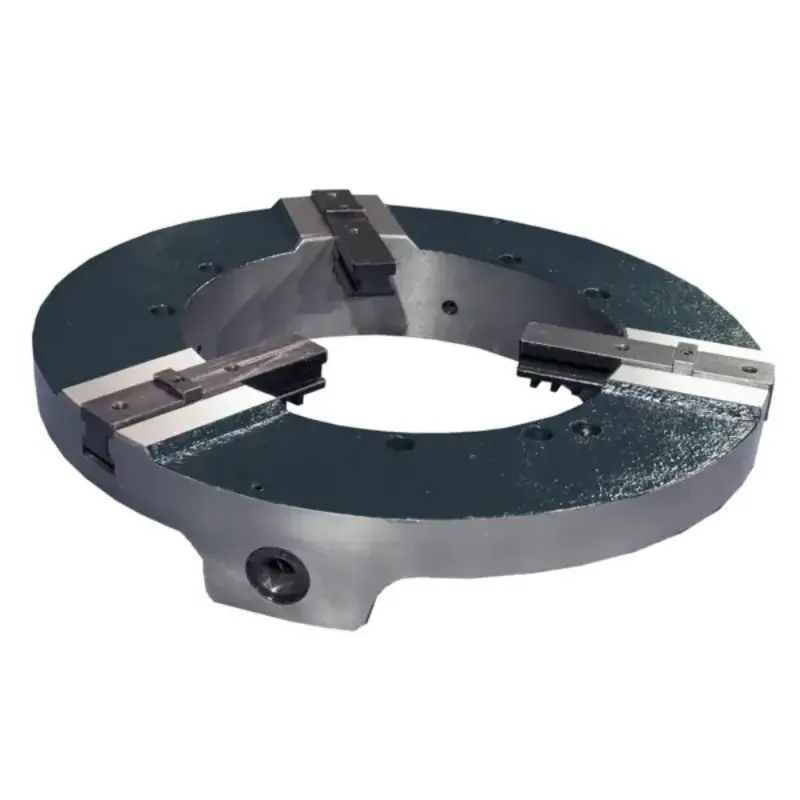
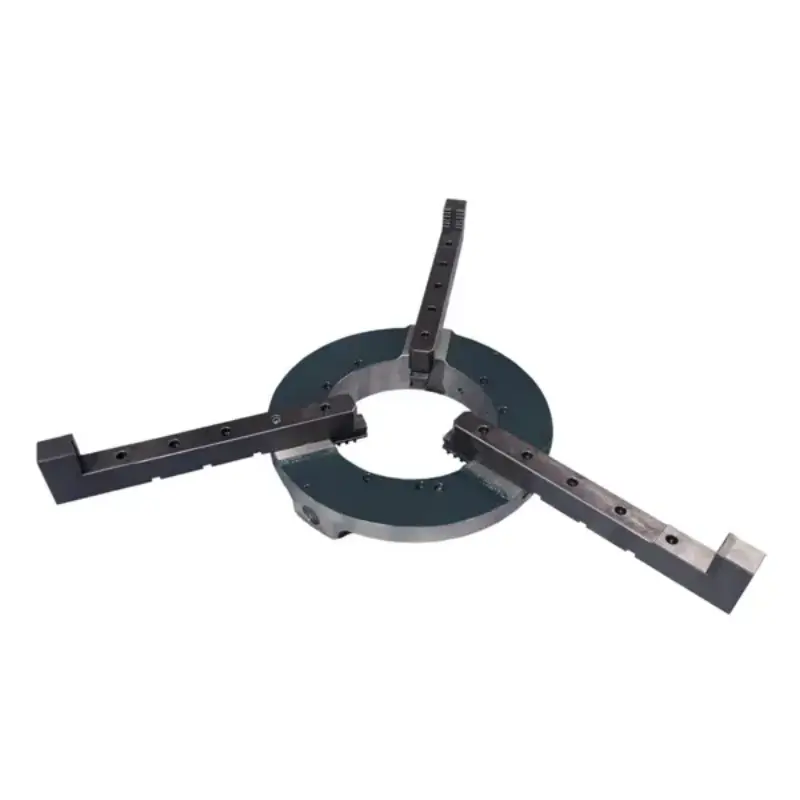
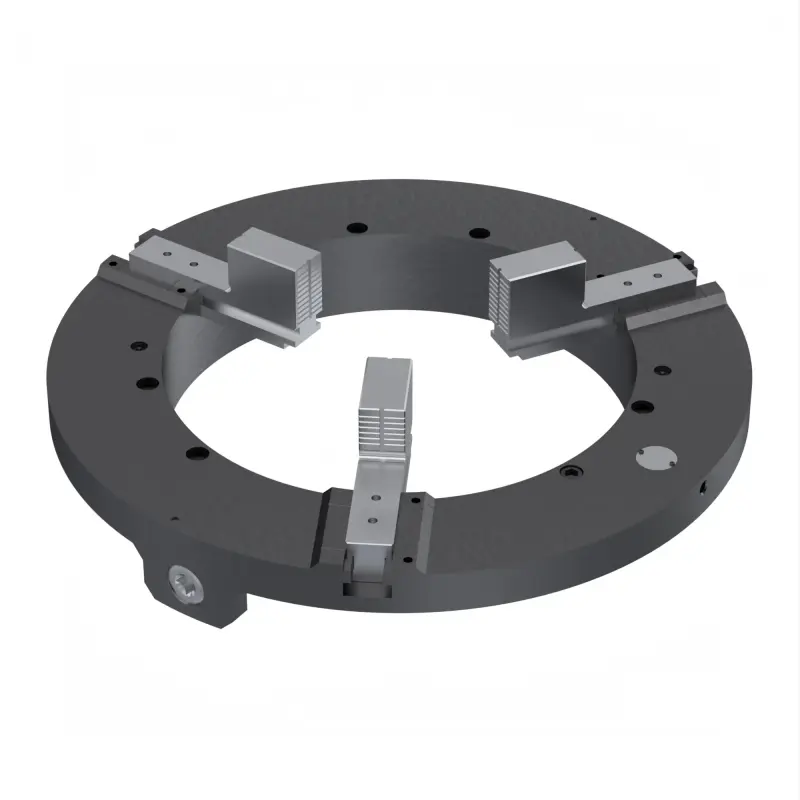
3 Jaw Chuck for Welding Positioner
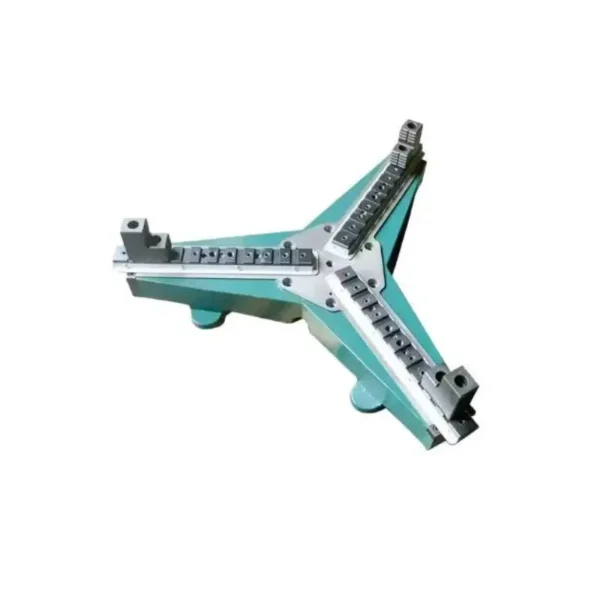
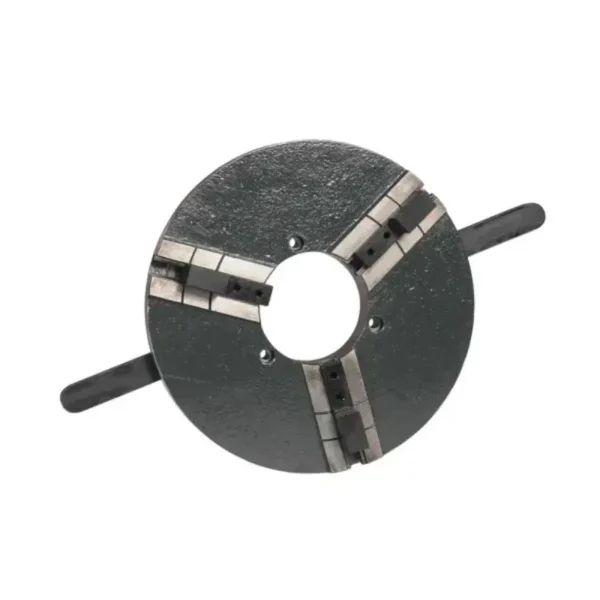
The MECBASE 3 Jaw Chuck for Welding Positioner is designed for fast and secure clamping of round workpieces during rotary welding. Its three-jaw configuration provides reliable workpiece centering and makes it suitable for holding pipes, tubes, flanges, fittings, and other cylindrical components on welding positioners and rotary welding tables.
Designed specifically for welding applications, the chuck provides a practical workholding solution where frequent loading, positioning, and rotation of workpieces are required.
MECBASE offers different chuck sizes and mounting configurations to match welding positioners with different table diameters and load capacities.
Key Benefits
- Designed for welding positioners and rotary welding tables
- Three jaws for stable clamping of round workpieces
- Fast workpiece loading and adjustment
- Suitable for internal and external clamping
- Wide clamping range for pipes, flanges, and fittings
- Heavy-duty steel construction
- Multiple chuck sizes available
- Mounting options for different welding positioners
3 Jaw Welding Chuck for Pipe and Flange Positioning
A welding positioner rotates the workpiece so the weld can be performed in a more favorable position. The chuck is the connection between the workpiece and the rotating table, making reliable clamping particularly important.
The MECBASE 3 jaw welding chuck holds cylindrical components around three contact points and helps position the workpiece relative to the rotational axis.
Typical workpieces include:
- Pipes and tubes
- Pipe fittings
- Flanges
- Bushings
- Cylindrical tanks
- Round fabricated components
- Rings and sleeves
The chuck can be mounted directly to a compatible welding positioner or installed through an adapter plate where required.
Technical Specifications
| Model | Chuck Diameter | Clamping Range | Recommended Positioner |
| WP200 | 200 mm | Custom / Model dependent | Small welding positioners |
| WP200A | 200 mm | Custom / Model dependent | Small welding positioners |
| WP300 | 300 mm | Custom / Model dependent | Medium welding positioners |
| WP400 | 400 mm | Custom / Model dependent | Medium / heavy-duty positioners |
Note: Final clamping range, mounting dimensions, chuck weight, and compatible positioner capacity should be confirmed according to the selected model and workpiece.
3 Jaw Welding Chuck Features
Self-Centering 3 Jaw Design
The three jaws move together to simplify the centering and clamping of round workpieces. Compared with individually adjusting each jaw, this design can reduce setup time when handling repetitive pipe and flange welding jobs.
Internal and External Clamping
Depending on the jaw arrangement and workpiece geometry, the chuck can hold a component from its outside diameter or expand against an internal diameter.
This provides greater flexibility when positioning pipes, flanges, rings, and similar components.
Designed for Welding Positioners
Unlike a general-purpose machining chuck, a welding positioner chuck is selected as part of the complete rotating workholding system.
Chuck diameter, chuck weight, workpiece weight, mounting interface, center of gravity, and positioner capacity should therefore be considered together.
Heavy-Duty Steel Construction
The chuck body and jaws are designed to withstand repeated loading and clamping in fabrication environments.
Quick Workpiece Setup
The 3-jaw configuration is particularly useful for repetitive production where similar round components need to be loaded, welded, removed, and replaced frequently.
External Clamping
For external clamping, the jaws grip the outside diameter of the workpiece.
This configuration is commonly used for:
Pipe → Tube → Round Bar → Fitting → Cylindrical Component
It provides a straightforward setup for circumferential welding and other rotary welding operations.
Internal Clamping
For suitable hollow components, the jaws can be configured to clamp against an internal diameter.
Internal clamping can be useful when the outside surface needs to remain accessible during welding or when the workpiece geometry makes OD clamping inconvenient.
Typical applications include:
Flanges → Rings → Large-Diameter Pipes → Sleeves
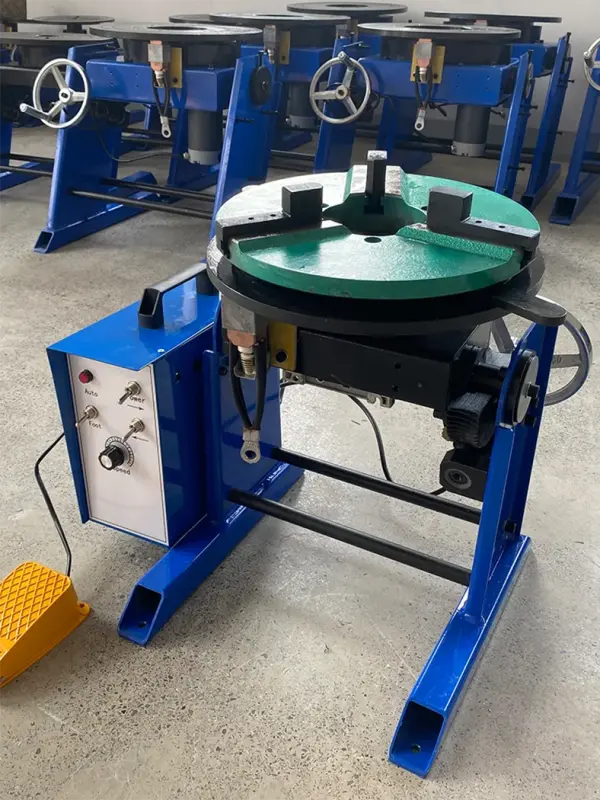
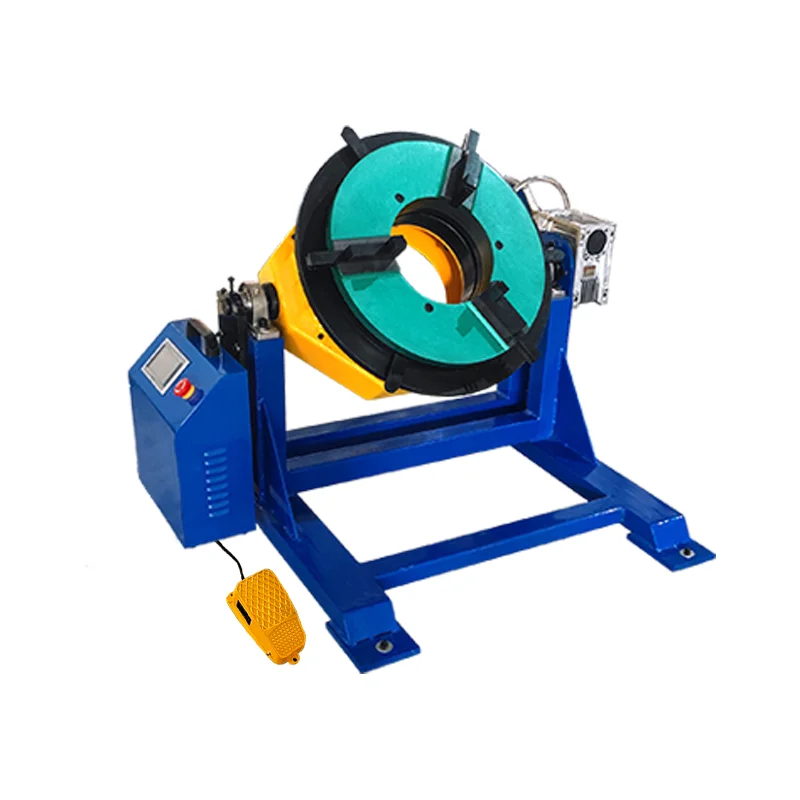
3 Jaw Chuck + Welding Positioner
A 3 jaw chuck for a welding positioner allows the positioner and workholding system to operate as one unit:
Chuck → Workpiece → Positioner Table → Controlled Rotation → Welding
This combination is commonly used for circumferential welds because the welding positioner can rotate the workpiece while the chuck maintains its position on the table.
It can be used with:
- TIG welding
- MIG/MAG welding
- Plasma welding
- Manual welding
- Automated welding systems
How to Choose the Right 3 Jaw Chuck
1. Workpiece Diameter
Check both the minimum and maximum diameter that must be clamped.
2. Workpiece Weight
The combined weight of the chuck + workpiece + fixture must remain within the permissible capacity of the welding positioner.
3. Center of Gravity
A long or irregular workpiece can create a significant overturning moment even when its total weight is below the nominal positioner capacity.
4. Clamping Method
Determine whether the workpiece will be held by:
External diameter (OD) or Internal diameter (ID).
5. Mounting Interface
Check the positioner’s:
- Table diameter
- Mounting holes
- Bolt circle
- Center bore
- Adapter plate requirements
This is particularly important when installing a larger chuck on an existing welding positioner.
Applications
MECBASE 3 jaw welding chucks can be used in a wide range of fabrication applications, including:
- Pipe Welding
Secure positioning of pipes during circumferential welding. - Flange Welding
Holding round flanges or flange assemblies during rotation. - Tank and Vessel Fabrication
Positioning smaller cylindrical components and vessel parts. - Fitting Welding
Holding elbows, reducers, couplings, and other suitable round components. - Automated Welding
Integration with welding positioners, torches, controllers, and automation systems for repetitive production.
3 Jaw vs 4 Jaw Welding Chuck
The correct jaw configuration depends primarily on the workpiece.
| 3 Jaw Welding Chuck | 4 Jaw Welding Chuck |
| Faster setup | Greater adjustment flexibility |
| Well suited to round parts | Better for irregular workpieces |
| Self-centering designs available | Independent jaw adjustment available |
| Good for repetitive pipe work | Better for eccentric positioning |
| Simple operation | More precise individual adjustment |
For regular round pipes, tubes, and similar components, a 3 jaw chuck is often the more convenient solution.
For irregular, square, eccentric, or difficult-to-center components, an independent 4 jaw welding chuck may be more suitable.
Welding Positioner Compatibility
MECBASE welding chucks can be supplied for use with different sizes of welding positioners.
However, installing a larger chuck does not automatically mean that the positioner can safely handle a larger workpiece.
The chuck weight itself becomes part of the rotating load.
For example:
Positioner Capacity ≥ Chuck Weight + Workpiece Weight + Fixture Weight
The actual permissible workpiece may be lower when the center of gravity is located away from the positioner table.
For this reason, MECBASE can help match the chuck to the positioner according to the workpiece diameter, weight, and geometry.
Why Choose a MECBASE Welding Positioner Chuck?
MECBASE focuses on workholding and positioning equipment for welding applications.
Rather than selecting the chuck independently, we can help match the chuck, positioner, workpiece, and mounting interface as a complete system.
Available options include different:
- Chuck diameters
- Jaw configurations
- Clamping ranges
- Mounting interfaces
- Positioner capacities
- Adapter plates
This makes it easier to configure a practical solution for both new welding positioners and existing equipment.
Request a 3 Jaw Welding Chuck
To select the correct 3 jaw chuck for your welding positioner, please provide:
Workpiece OD/ID + Workpiece Weight + Workpiece Length + Positioner Model/Table Diameter + Required Clamping Method
MECBASE can then recommend a suitable chuck size and mounting configuration.
Frequently Asked Questions
In many cases, yes. The table diameter, mounting-hole pattern, center bore, chuck weight, and positioner load capacity should first be checked. An adapter plate may be required when the mounting patterns do not match.
For suitable chuck and jaw configurations, internal clamping can be used. This is useful when the outside of the pipe, ring, or flange needs to remain accessible.
Possibly, but chuck diameter is not the only consideration. A larger chuck increases rotating mass and can move the workpiece center of gravity farther from the table. Positioner capacity and allowable moment therefore need to be checked.
For regular round pipes and repetitive work, a 3 jaw self-centering chuck is generally faster to set up. A 4 jaw independent chuck offers more adjustment when handling irregular, eccentric, or non-round components.
It depends on the chuck and positioner mounting patterns. If the bolt circle or mounting holes do not correspond, an adapter plate can be used to connect the chuck to the rotary table.
Related products
-
 Welding Chucks
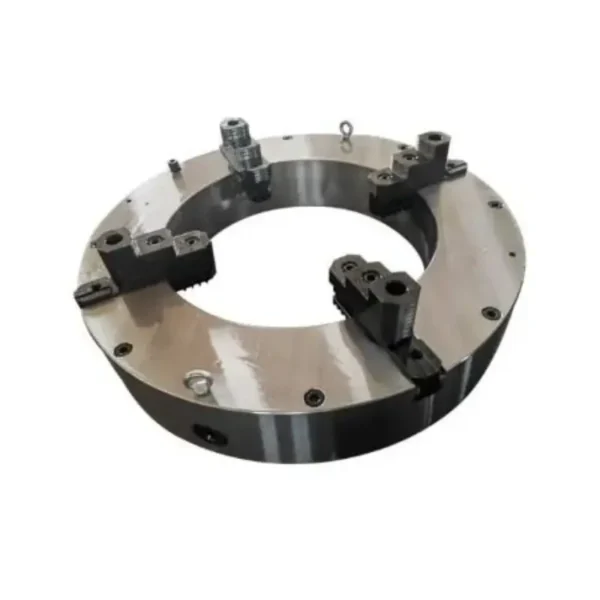
K12 Series 4-Jaw Welding Chuck
-
 Welding Chucks
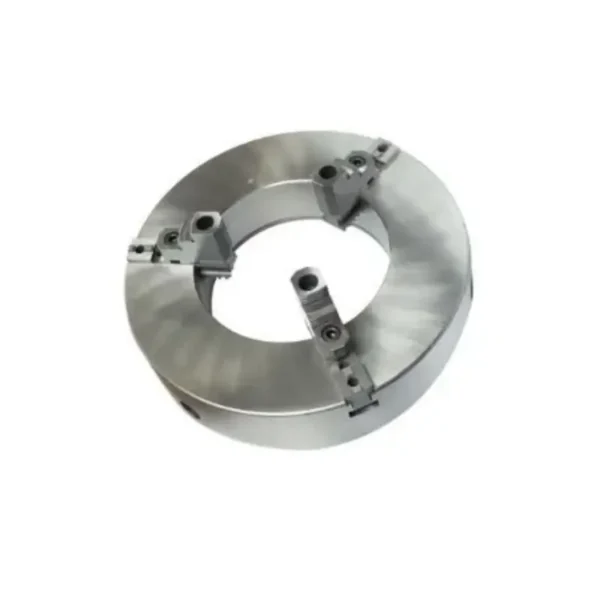
K11 3-Jaw Welding Chuck
-
 Welding Chucks
WPT Welding Chucks
-
 Welding Chucks
WP Welding Chucks