A snatch block may not be as visible as a crane hook or wire rope, but when you need to redirect a line, multiply pulling power, or solve an unconventional lifting problem, it becomes the piece of equipment that makes the job possible – and safer for everyone involved.
However, many operators are unsure when to use one, how it differs from a standard pulley, or how to select the right block for the job. Misapplication can lead to rope damage, reduced efficiency, and even unsafe lifting conditions.
This article explains what a snatch block is, how it works, when to use one, and how you can get the most out of this versatile rigging tool.
What Is a Snatch Block?
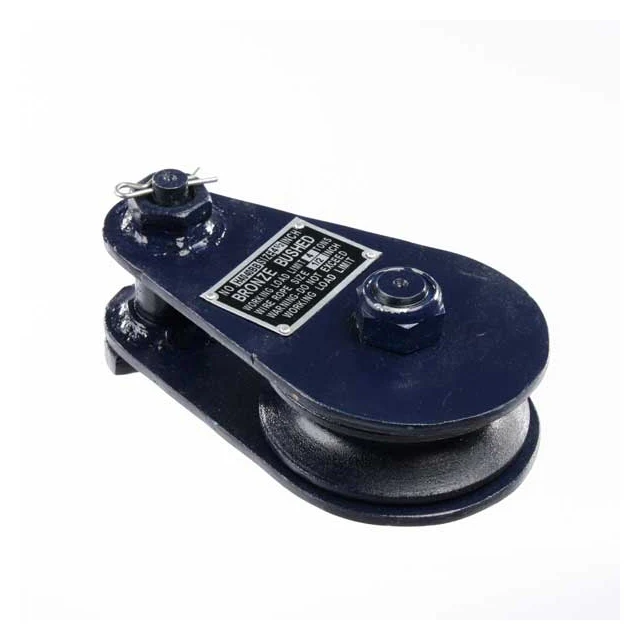
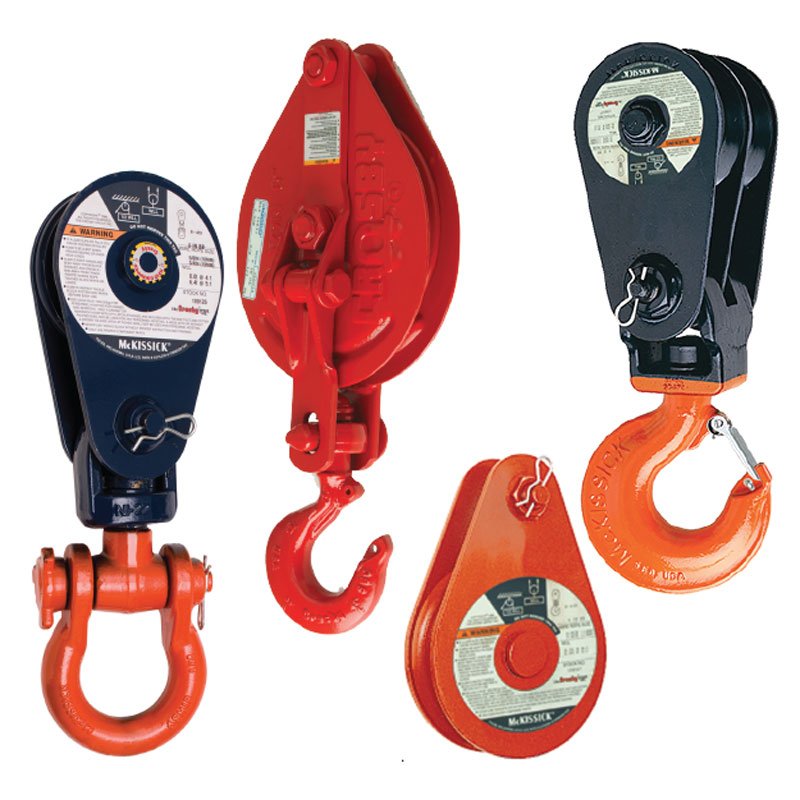
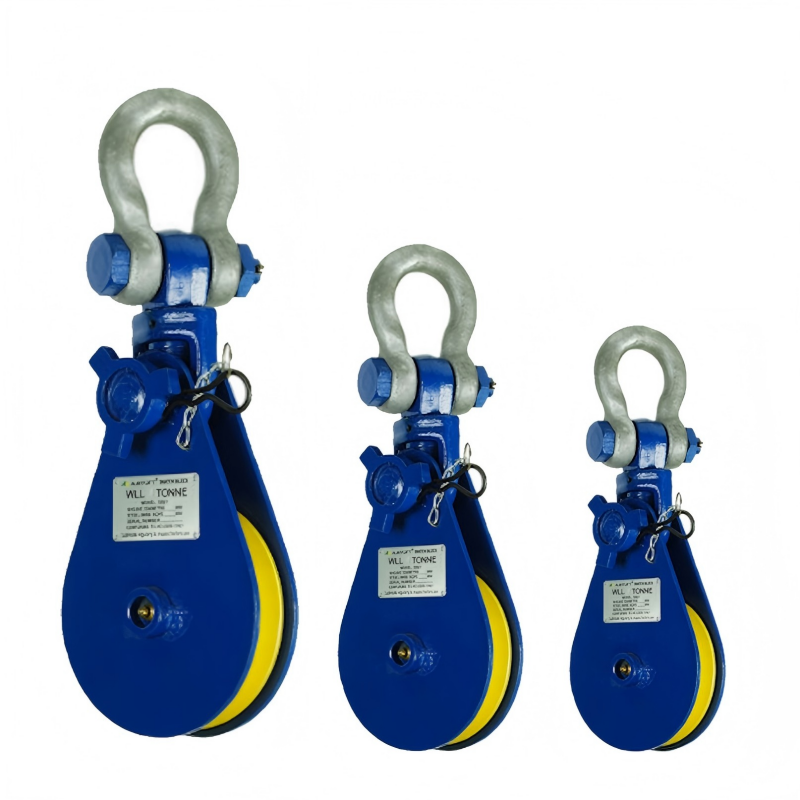
A snatch block is a type of pulley block with a swing-open side plate. This design allows a rope or cable to be inserted into the sheave (pulley wheel) midline – without having to thread it from the end. That single feature makes it much faster and more adaptable than a standard closed pulley block.
The swing-open plate “snatches” shut around the rope, giving the block its name.
Quality snatch blocks are rated for both lifting and pulling, unlike many general-purpose pulleys. They are compatible with wire rope and synthetic rope, provided the rope size matches the sheave groove and the correct D/d ratio (sheave diameter to rope diameter) is maintained.
In industrial and engineering contexts, a snatch block is the most common type of openable pulley block – a key component of block-and-tackle systems. When combined with ropes, shackles, and anchor points, it forms a basic but powerful mechanical lifting and pulling device.
Types of Snatch Blocks and Configurations
Not all snatch blocks are the same. Manufacturers offer different models for specific applications.
Shackle snatch block
Fitted with a shackle for easy connection to anchors, slings, or tow points – most common for recovery and general rigging.
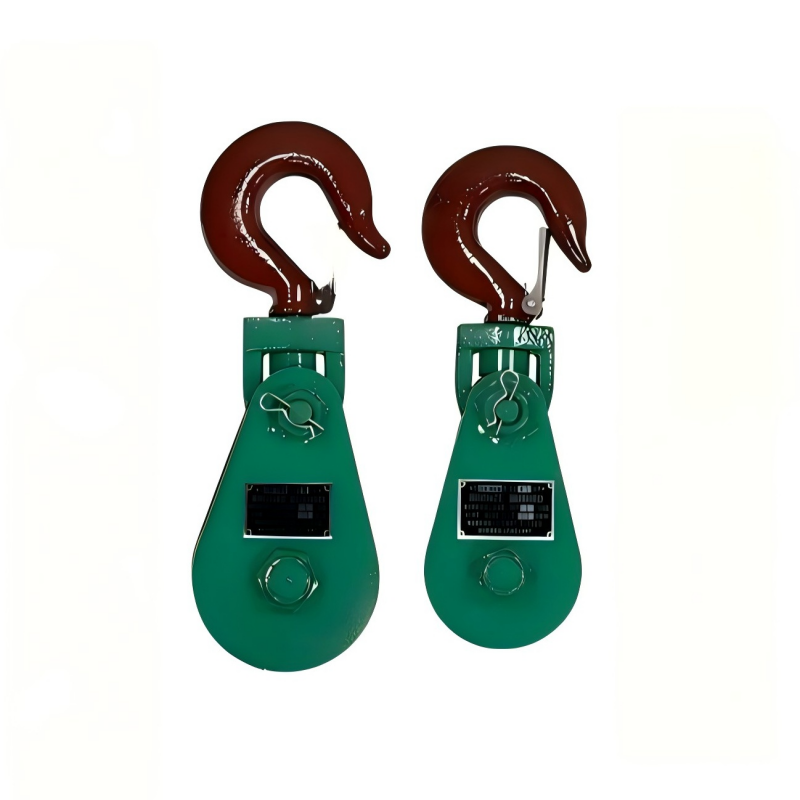
Hook snatch block
Equipped with a hook for quick attachment to lifting points – often used in cranes or temporary overhead lifts.
Tailboard snatch block
Designed for permanent or semi-permanent pin-mounting to a structure – common in industrial and marine settings.
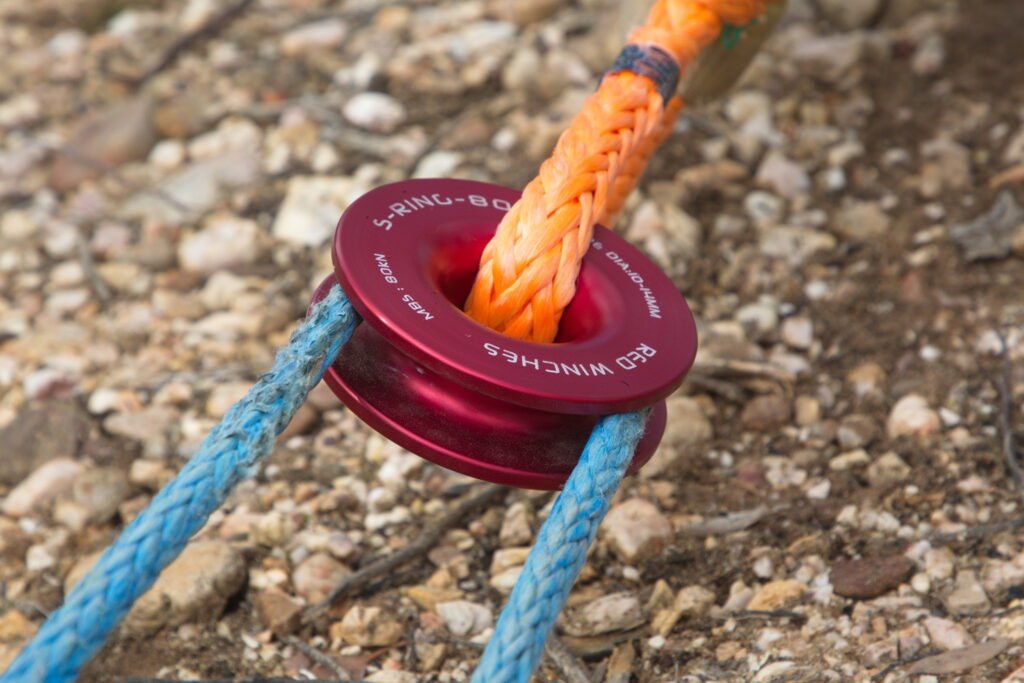
Newer variant – Snatch Ring
A snatch ring is a lightweight, minimalist device that uses a rotating ring on a soft shackle. It is designed for synthetic rope only and offers a compact alternative to traditional snatch blocks, especially in off-road recovery.
Choosing the right type depends on how you intend to attach the block and whether the application is temporary or fixed.
How Does a Snatch Block Work?
At its core, a snatch block works like any pulley: it allows a rope to move around a sheave to change direction or multiply pulling force. But to fully understand its power, we need to look at the combined action of fixed and movable pulleys.
Simple Machines Refresher
You likely learned about simple machines in school: inclined plane, wheel & axle, wedge, screw, lever, and pulley. Each changes the direction or magnitude of force. This is called mechanical advantage – the advantage gained by using a mechanism to transmit force.
A fixed pulley (attached to a stationary anchor) changes direction but does not reduce the force required.
A movable pulley (attached to the load) reduces the force required but does not change direction.
A combination of fixed and movable pulleys – which is what a snatch block system enables – both changes direction AND reduces force.
Two Core Principles
Force Reduction (Saving Effort) – Multiple Parts of Line
When a rope is reeved through one or more movable pulleys, the total load is shared by several parallel rope segments. The number of load-bearing segments (often called “parts of line” or “working lines”) determines the mechanical advantage.
Simple formula (ignoring friction):
Pulling force = Load weight ÷ Number of load-bearing rope segments
For example, with 4 load-bearing segments, you theoretically need only one-quarter of the load weight to lift it. However, saving effort costs distance – you must pull four times as much rope, and the load moves four times slower.
Direction Change – Optimizing the Pulling Angle
A fixed pulley (or the fixed sheave in a snatch block system) allows you to pull downward or sideways instead of directly upward. This is invaluable when working at height, in confined spaces, or when the anchor point is not straight ahead.
Practical Note: Friction and Efficiency
In real-world use, pulley bearings create friction, and rope deformation causes minor energy losses. Therefore, the actual mechanical advantage is slightly lower than the theoretical value. Quality snatch blocks use ball or roller bearings to minimize this loss.
Example: Mechanical Advantage in Action
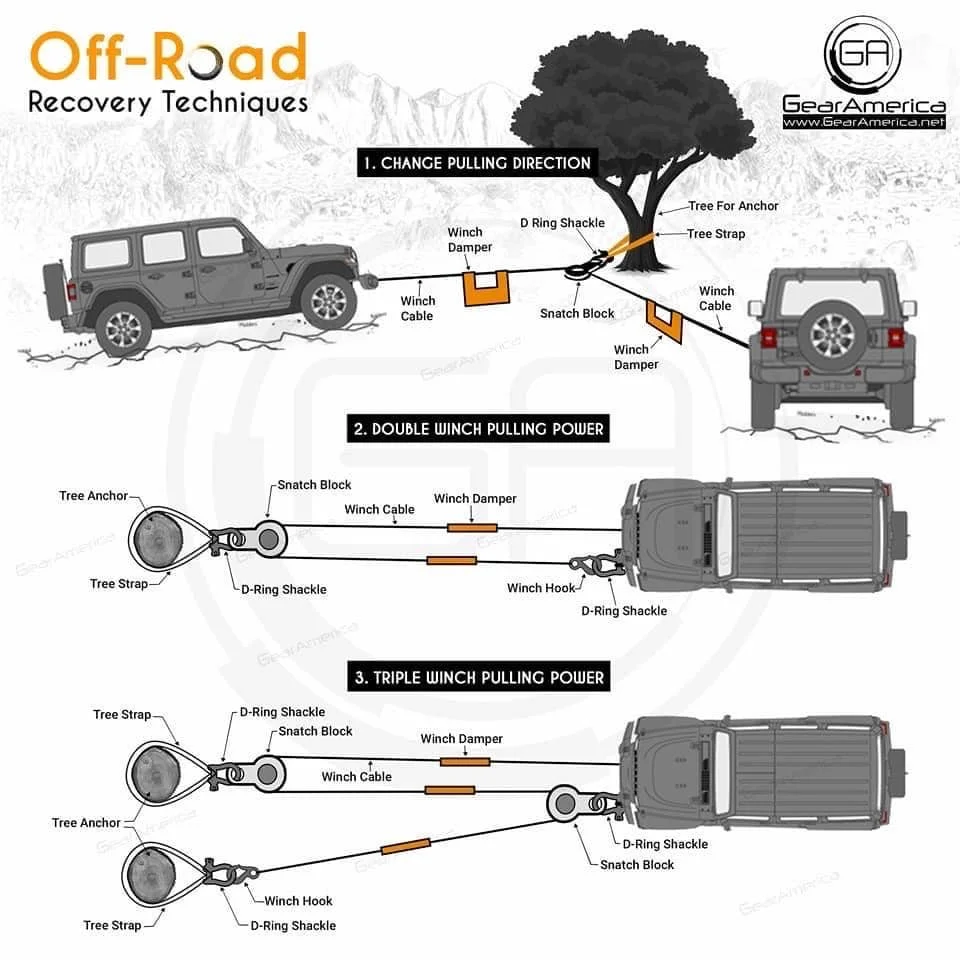
Single-line pull (no snatch block):
A winch rated at 2,000 lbs pulls directly on the load. Force = 2,000 lbs. Speed = full line speed.
Double-line pull (one snatch block as a movable pulley):
Attach snatch block to anchor. Run winch line to the block, then back to the vehicle.
Now two rope segments share the load.
Effective pulling capacity ≈ 4,000 lbs (doubled).
Line speed ≈ half of single-line speed.
Triple-line pull (two snatch blocks):
Proper reeving yields three load-bearing segments.
Capacity ≈ 6,000 lbs (tripled). Speed ≈ 1/3 of single-line speed.
Important clarification: A snatch block does not magically increase your winch’s power. It reduces the load on the winch by sharing it over multiple rope segments. By halving (or thirding) the load, you effectively multiply the winch’s capacity – at the cost of speed and rope length.
When Should You Use a Snatch Block?
Directional Changes (Rope Redirect)
When your anchor point is offset – not in a straight line from the winch or pulling point – use a snatch block to safely redirect the rope. This is a single-line pull with a redirect: no increase in capacity, only a change in direction.
Example: Pulling a vehicle out of a ditch where the only solid anchor is at a 90° angle to the vehicle’s heading.
Multi-Line Pulls (Increasing Capacity)
When the winch’s rated capacity may be insufficient for the load – e.g., a vehicle deeply stuck in mud, sand, or snow – use a double-line or triple-line pull to multiply capacity.
Example: A 5,000 lb vehicle stuck in mud may require 10,000+ lbs of pulling force. A double-line pull with a 5,000 lb winch effectively provides 10,000 lb capacity.
Broader Applications Across Industries
Beyond vehicle recovery, snatch blocks (and pulley block systems) are indispensable in:
| Industry | Typical Uses |
| Construction / Heavy Lifting | Cranes, tower cranes, hoists – lifting steel beams, concrete panels, machinery. Multiple snatch blocks allow precise control and reduce load on the hoist motor. |
| Emergency Rescue | Fire and rescue teams use portable snatch blocks for high-angle rescues, well rescues, collapsed structure debris removal – no power required, fast deployment. |
| Marine & Ports | Mooring adjustments, cargo loading/unloading, sail handling, underwater equipment recovery – withstands wind, waves, and confined deck spaces. |
| Logging & Forestry | Moving felled timber across uneven terrain without straight-line access. |
| Mining & Oil/Gas | Pulling equipment through tunnels or redirecting heavy pipe in tight spaces. |
| Warehouse & Home Use | Small block-and-tackle systems for lifting goods, moving furniture, or hoisting tools in attics or workshops. |
In all these cases, the snatch block is chosen for its adaptability, mechanical advantage, and speed of setup.
Wire Rope vs. Synthetic Rope in Snatch Blocks
Traditionally, snatch blocks were used with wire rope (steel cable). Today, synthetic rope (e.g., Dyneema, nylon) is increasingly common.
| Feature | Wire Rope | Synthetic Rope |
| Strength & durability | Very high, abrasion-resistant | High, but more susceptible to cutting |
| Weight | Heavy | Lightweight |
| Flexibility | Low | High |
| Handling | Requires gloves, can kink | Easy to handle, floats on water |
| Compatibility with snatch blocks | Standard, but can create burrs on sheave | Requires smooth sheave groove; not compatible with sheaves damaged by wire rope |
Important caution:
If you use a snatch block with wire rope, do not use the same block with synthetic rope later. Wire rope can create tiny nicks and burrs on the sheave groove, which will damage or cut synthetic rope.
Snatch rings are designed exclusively for synthetic rope and must never be used with steel cable.
What Are the Benefits of Using a Snatch Block?
| Benefit | Explanation |
| Versatility | One tool can redirect lines, multiply force, or do both – suitable for hundreds of configurations across industries. |
| Time savings | Swing-open plate allows mid-line installation in seconds – no need to disconnect rope ends. |
| Increased capacity | By adding rope segments, you multiply pulling force (double, triple, etc.) without changing the winch. |
| Equipment protection | Distributing load over more rope segments reduces peak strain on winch, anchor points, and rope itself – extending equipment life. |
| Force multiplication (effort saving) | Purely mechanical – no electricity or hydraulics needed. A small winch or even manual force can move very heavy loads. |
| Direction flexibility | Pull from the most convenient or safest angle – down, sideways, or even around corners. |
| Reliability | No electrical or electronic components – works in rain, mud, dust, and explosive atmospheres. |
| Portability | Lightweight and compact – easily carried in a vehicle or toolbox. |
The greatest benefit of all is flexibility. If you own a winch or regularly perform lifting/pulling tasks, a snatch block is a must-have accessory.
Mistakes to Avoid When Using Snatch Blocks
Even a versatile tool must be used correctly. Common mistakes include:
| Mistake | Consequence | Prevention |
| Overloading | Block or rope failure, injury. Exceeding WLL (Working Load Limit) is a violation of OSHA 1910.184. | Always know the load and the block’s rating. Calculate line forces correctly. |
| Mismatched rope size | Rope wears rapidly; sheave groove damaged. | Use rope diameter within block’s specified range. |
| Skipping inspection | Using a block with worn sheave, bent side plate, or broken latch leads to failure. | Conduct pre-use inspection every time. |
| Misunderstanding “doubling power” | Assumes winch outputs more force – leads to overloading other components. | Remember: snatch block reduces load on winch, not increases winch power. |
| Cross-using wire and synthetic rope | Synthetic rope cut by nicks from previous wire rope use. | Dedicate blocks to one rope type, or inspect groove carefully before switching. |
| Ignoring distance trade-off | Runs out of rope before recovery complete. | Plan rope length: double-line pull needs 2x the straight-line distance. |
Understanding these pitfalls helps operators avoid costly downtime, equipment damage, and safety incidents.
Final Thoughts: Why Snatch Blocks Are a Flexible Rigging Tool
A snatch block is much more than a simple pulley. It is a force multiplier, a direction changer, and a problem solver in one compact, portable package. Whether you are recovering a vehicle from a ditch, lifting steel beams on a construction site, rescuing a person from a confined space, or adjusting mooring lines in a busy port, the snatch block gives you mechanical advantage when you need it most.
The key to safe and efficient use lies in proper selection and application: matching rope size, sheave diameter, and working load limit; understanding the trade-off between force and distance; and inspecting equipment before each use.
If you are planning a lift or pull and are unsure which snatch block is right for your job, do not guess. At Mazzella, we partner with Kito Crosby – one of the most respected snatch block manufacturers in the industry. Contact Mazzella’s lifting and rigging experts to review your application and get guidance on the safest, most efficient option.
FAQs About Snatch Blocks
Yes, but ensure the sheave groove is perfectly smooth. If the block has previously been used with wire rope, inspect for nicks before using synthetic rope. Snatch rings are for synthetic rope only.
A double-line pull (one snatch block as a movable pulley) doubles capacity (halves load on winch). A triple-line pull triples capacity. The theoretical mechanical advantage equals the number of load-bearing rope segments.
A snatch block has a swing-open side plate for midline rope insertion. A standard pulley block requires threading the rope from the end. Also, "snatch block" often implies a movable pulley system, while a "standard pulley" is often a fixed pulley.
No. While they excel at temporary and mobile applications, some types (e.g., tailboard blocks) are designed for permanent installation. Industrial cranes and tower cranes use permanent pulley block systems.
If you have a winch, yes – a snatch block is highly recommended. It dramatically increases your recovery capability, allowing you to tackle stuck vehicles that would otherwise exceed your winch's rating. You will also need a tree trunk protector and suitable shackles (soft shackles for snatch rings).