
What Are Jib Cranes? Types, Uses, Design & Applications Explained

When it comes to efficient material handling solutions, jib cranes are one of the most reliable and cost-effective choices for industrial lifting applications. Whether you are looking for a jib crane manufacturer, comparing types of jib cranes, or searching for the best jib crane price, understanding how these systems work is essential for making the right investment.

There are multiple types of jib cranes available, including freestanding jib cranes, wall mounted jib cranes, articulating jib cranes, and portable jib cranes, each designed to meet different load capacities, workspace limitations, and operational requirements. Choosing the right system depends on factors such as lifting capacity, rotation angle, installation conditions, and frequency of use.

In this guide, you will learn everything about jib cranes, including their types, applications, advantages, and how to select the best jib crane for your specific project.

What is a Jib Crane?

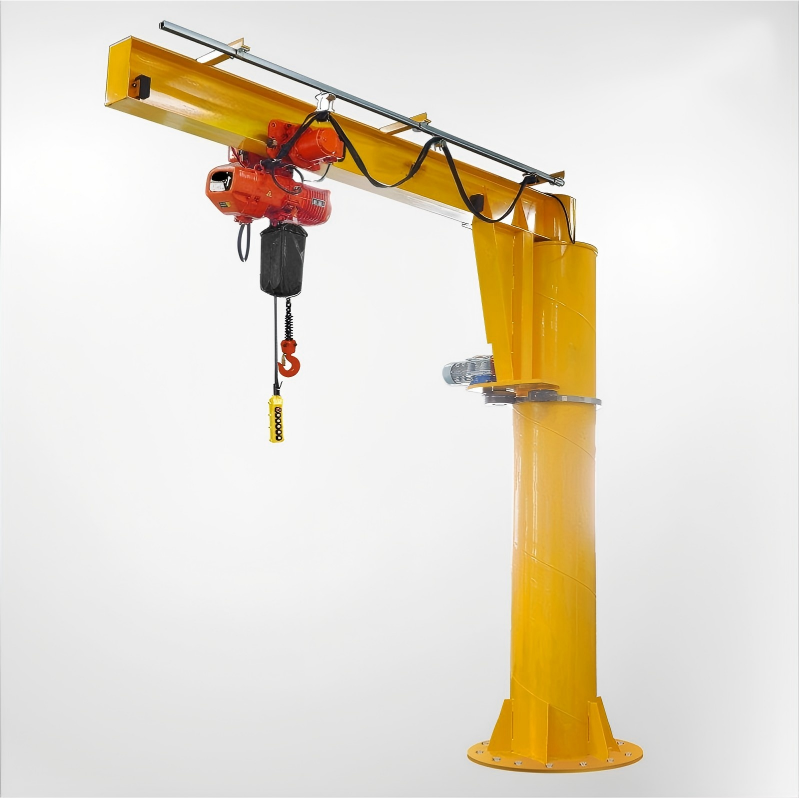
A jib crane is a versatile lifting device equipped with a horizontal arm (jib arm or boom) that supports a hoist, allowing precise and efficient load handling within a defined area. Compared with larger systems like overhead cranes, jib cranes offer lower cost, easier installation, and higher flexibility, making them ideal for workshops, warehouses, production lines, and maintenance stations.

Jib Cranes

What are the Different Types of Jib Cranes?

Jib cranes can be classified based on installation method, structural design, and application scenarios. Each type is engineered to meet specific operational requirements, including load capacity, workspace constraints, and flexibility. The following structured classification provides a clear overview for selection and application.

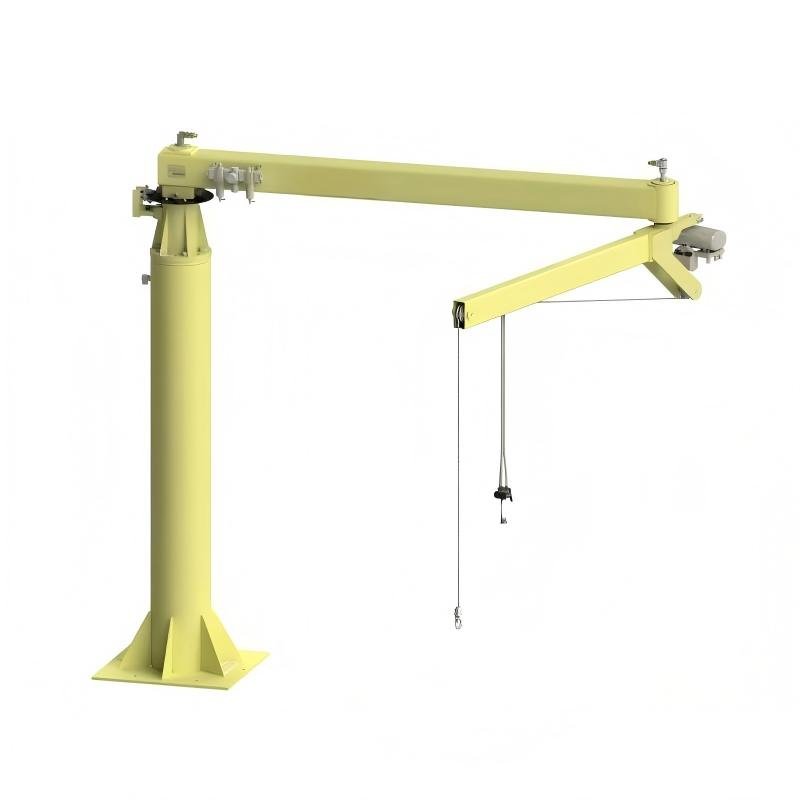
Floor Mounted Jib Cranes

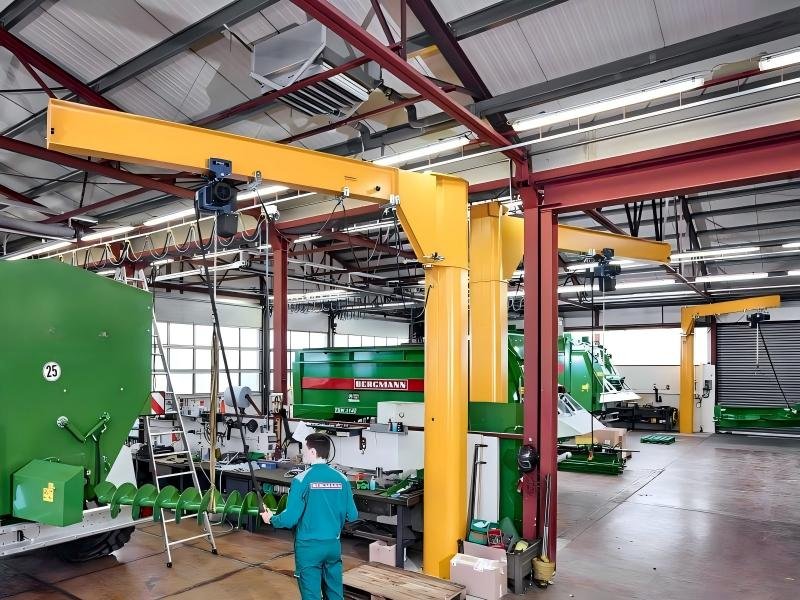
Floor-mounted jib cranes are installed on the ground and are typically used for stable, heavy-duty, and high-frequency lifting operations.

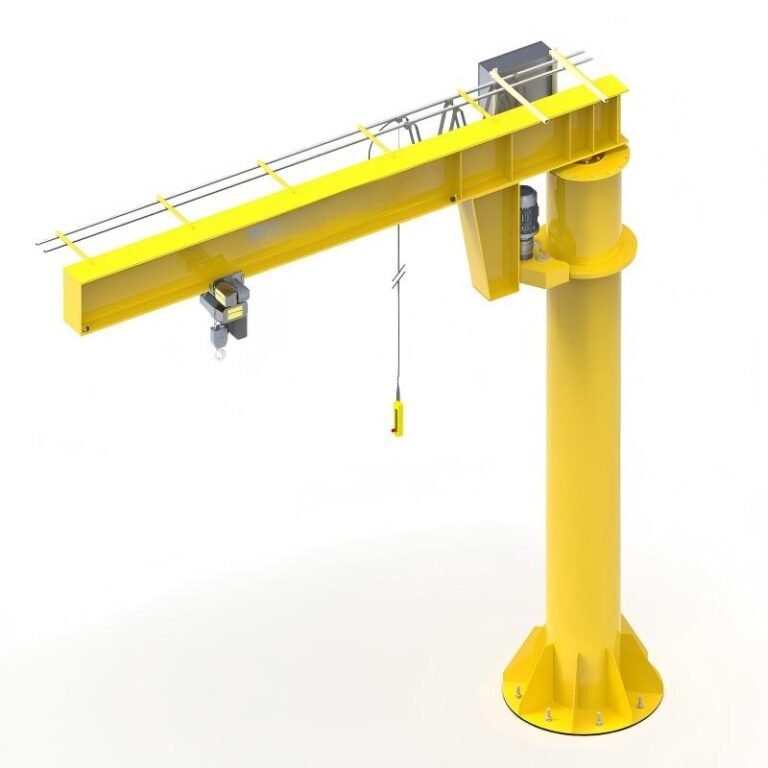
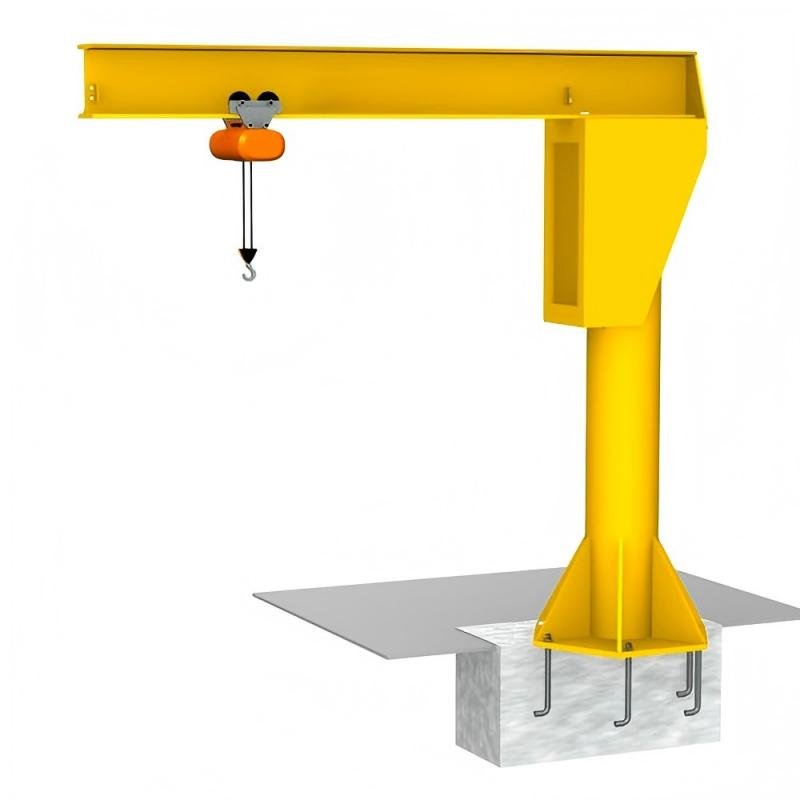
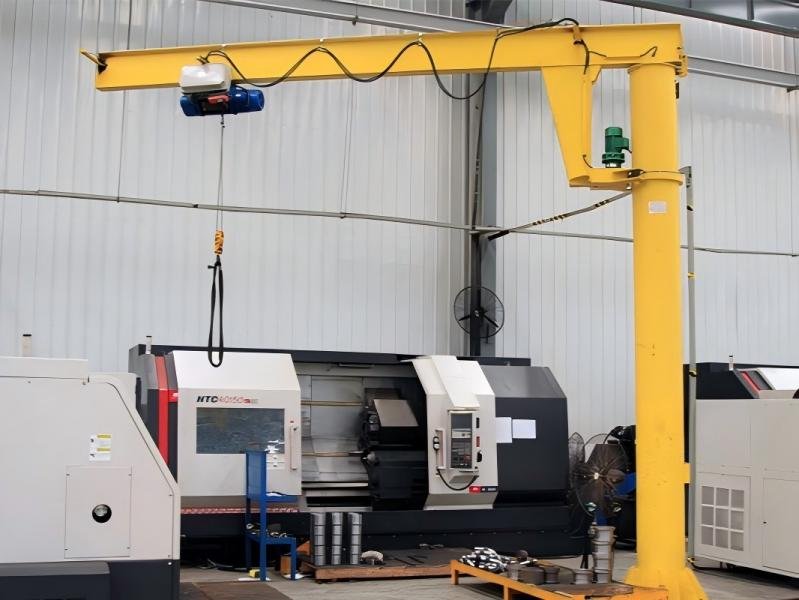
Freestanding Jib Crane

  • Installed on a reinforced concrete foundation
  • Supports up to 360° rotation
  • High load capacity and maximum coverage
  • Suitable for standalone or system-integrated use

Applications: Manufacturing plants, warehouses, heavy-duty workstations

Freestanding Jib Crane

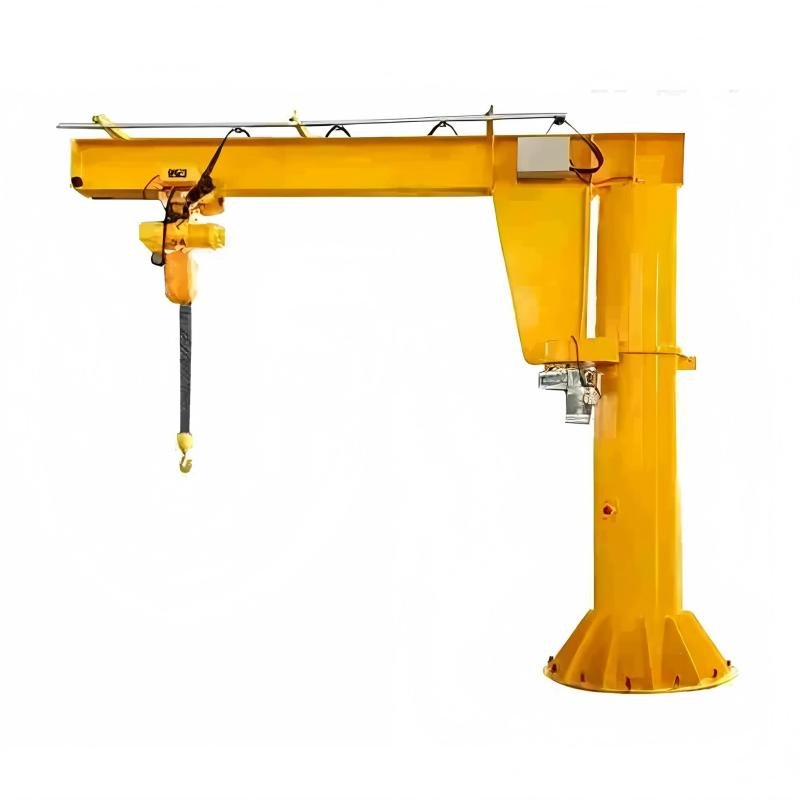
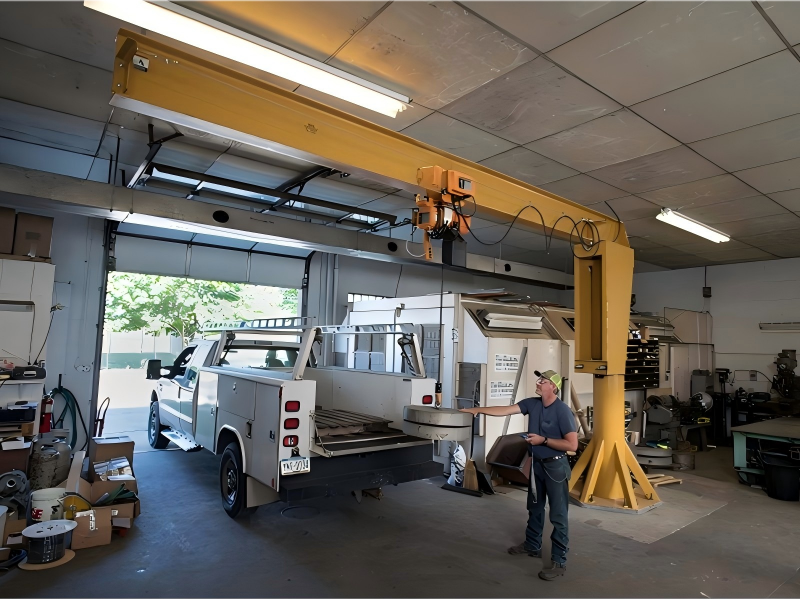
Foundationless Jib Crane

  • No special foundation required
  • Mounted using anchor bolts on existing concrete floors
  • Quick installation and reduced setup cost
  • Ideal for light to medium-duty applications

Applications: Workshops, maintenance areas, light industrial environments

Foundationless Jib Crane

Mast Jib Crane

  • Floor-mounted with additional top support from building structure
  • Reduces foundation load requirements
  • Provides enhanced stability for medium to heavy loads

Applications: Facilities with available overhead structural support

Mast Jib Crane

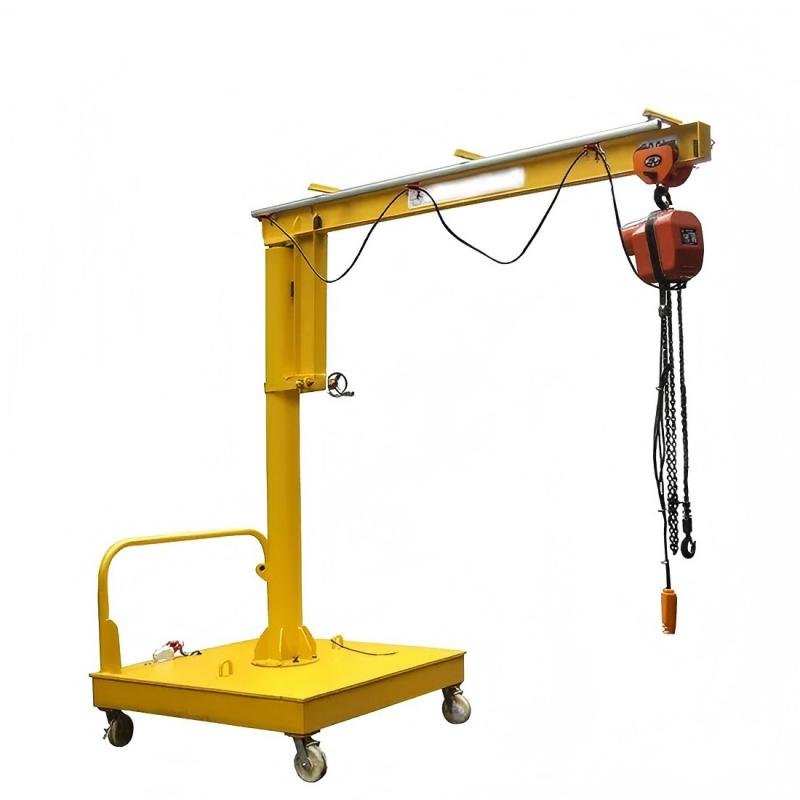
Portable Jib Crane

  • Mounted on a movable base or wheels
  • Easy relocation between work areas
  • Flexible and adaptable for temporary operations

Applications: Multi-station environments, temporary work zones

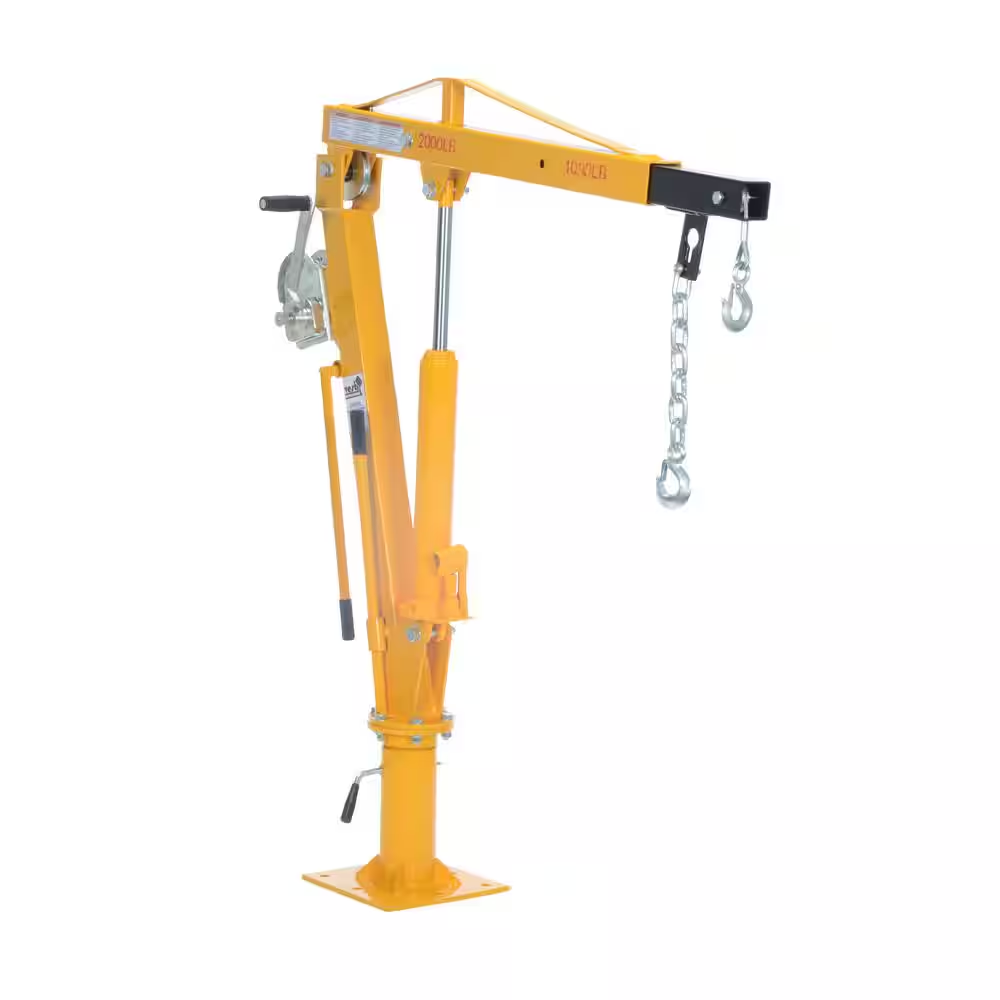
Portable Jib Crane

Hydraulic Jib Crane

  • Equipped with a hydraulic lifting or positioning system
  • Allows smoother and more controlled operation
  • Suitable for specialized or heavy-duty lifting adjustments

Applications: Maintenance, repair operations, precision lifting tasks

Hydraulic Jib Crane

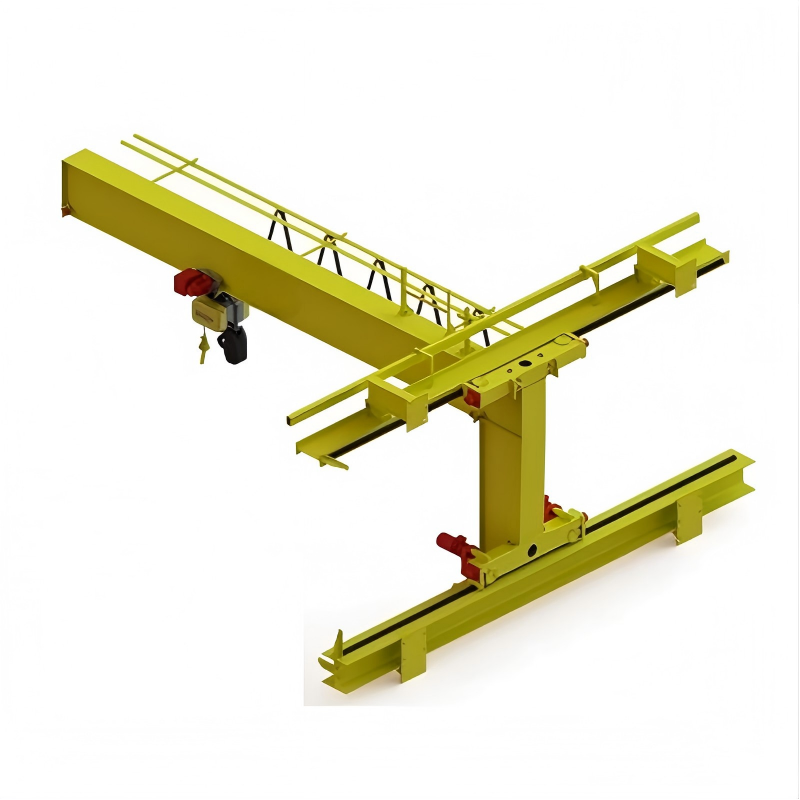
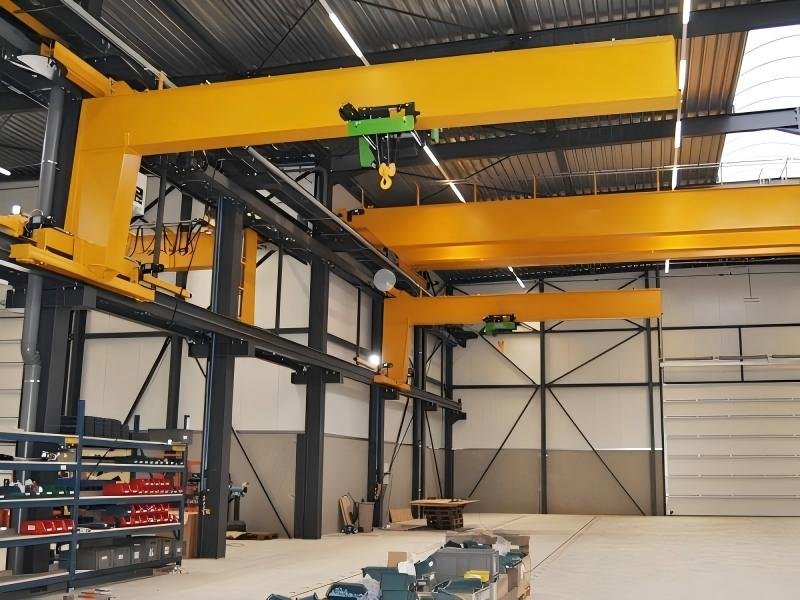
Wall Mounted Jib Cranes

Wall-mounted jib cranes are fixed to walls or structural columns, eliminating the need for floor space and improving workspace efficiency.

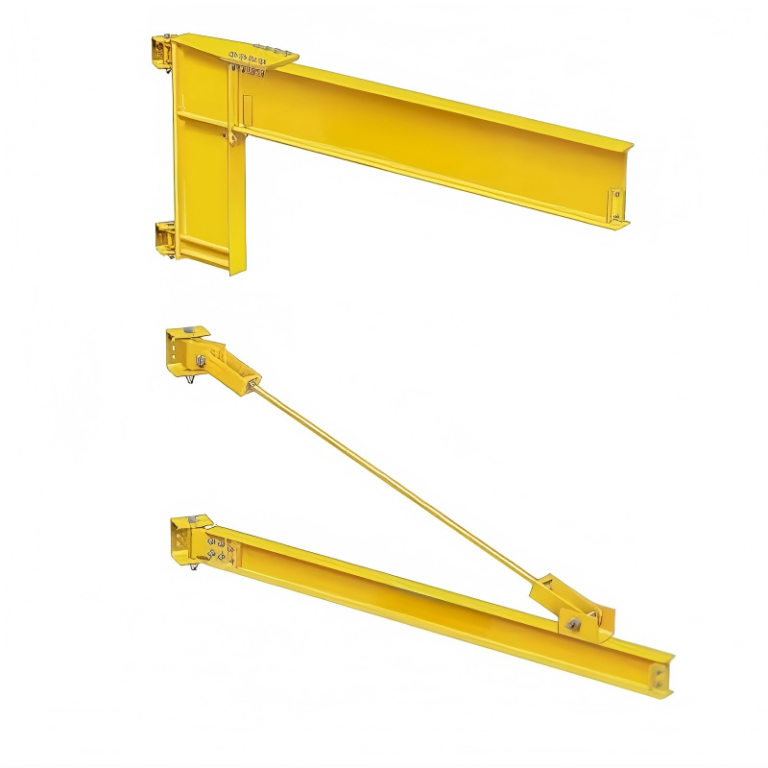
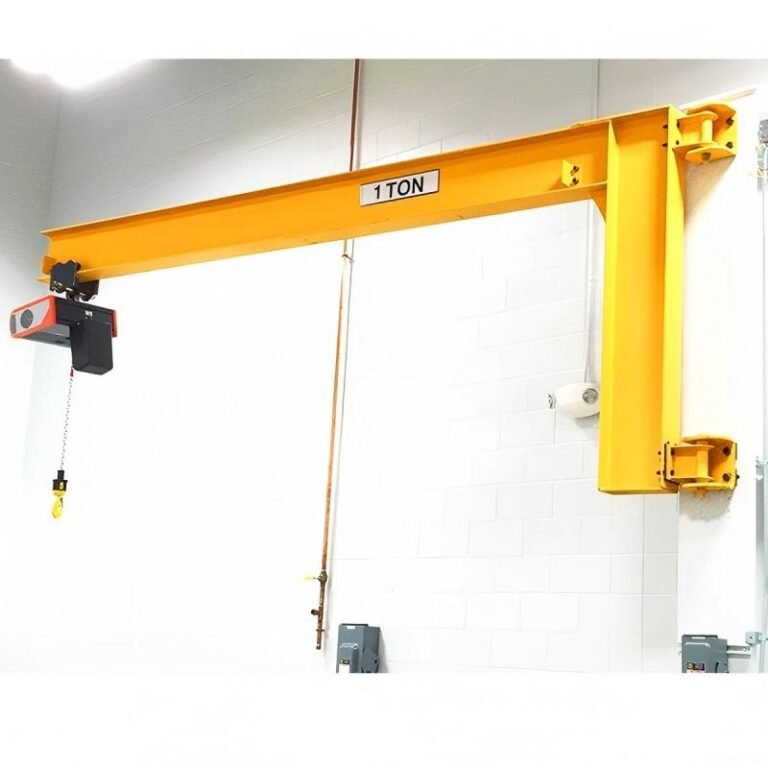
Wall Mounted Jib Crane

Cantilever Type
  • No tie rods or upper supports
  • Provides full clearance beneath the arm
  • Ideal for areas with height or obstruction constraints
Tie Rod Supported Type
  • Supported by tie rods connected to upper structures
  • Lighter structure with reduced material cost
  • Suitable for standard industrial applications

Applications: Production lines, machining stations, assembly areas

Wall Traveling Jib Crane

  • Installed on a wall-mounted track system
  • Moves horizontally along the wall
  • Serves multiple workstations with a single unit

Applications: Long production lines, multi-bay workshops

Wall Traveling Jib Crane

Ceiling Mounted Jib Cranes

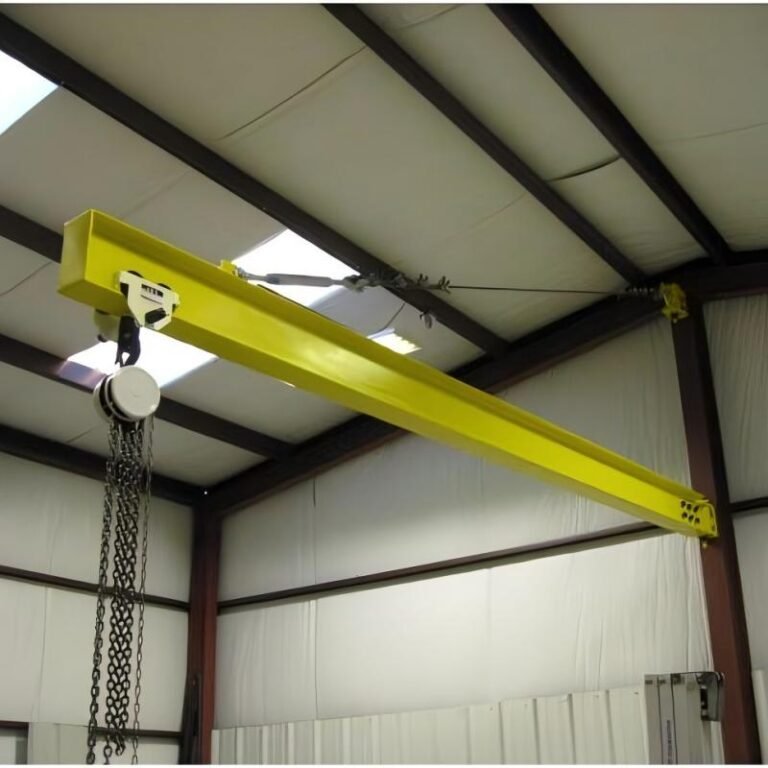
Ceiling Mounted Jib Crane

  • Suspended from ceiling beams or building structures
  • Does not occupy any floor space
  • Maximizes workspace utilization

Applications: Compact workshops, crowded production floors, clean environments

Ceiling Mounted Jib Crane

Flexible & Special Design Jib Cranes

These cranes are designed for enhanced flexibility, precision, and ergonomic operation.

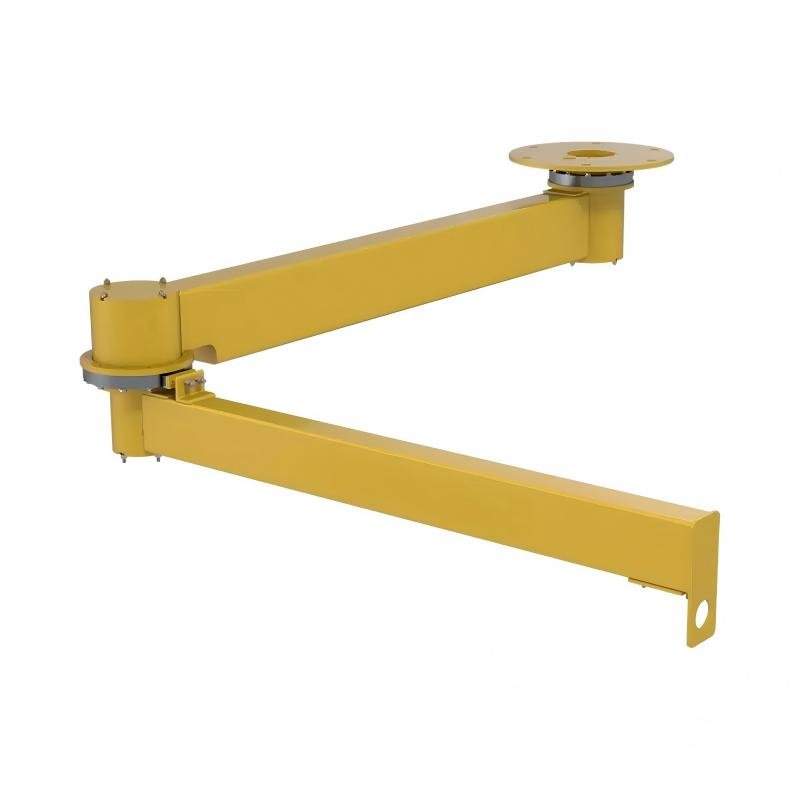
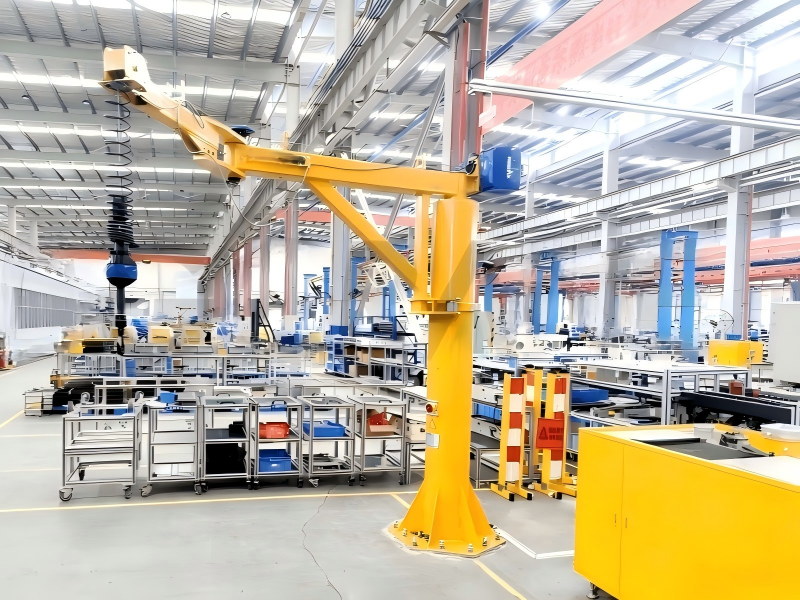
Articulating Jib Crane

  • Features a dual-arm (articulated) design
  • Can move around obstacles and reach confined areas
  • Offers superior maneuverability and precise positioning

Applications: Complex workstations, assembly operations, maintenance tasks

Articulating Jib Crane

Workstation Jib Crane

  • Lightweight and ergonomic design
  • Optimized for repetitive lifting tasks
  • Improves operator efficiency and reduces fatigue

Applications: Assembly lines, packaging stations, light-duty operations

Workstation Jib Crane

Mobile & Application-Based Jib Cranes

These cranes are designed for mobility and specific operational environments.

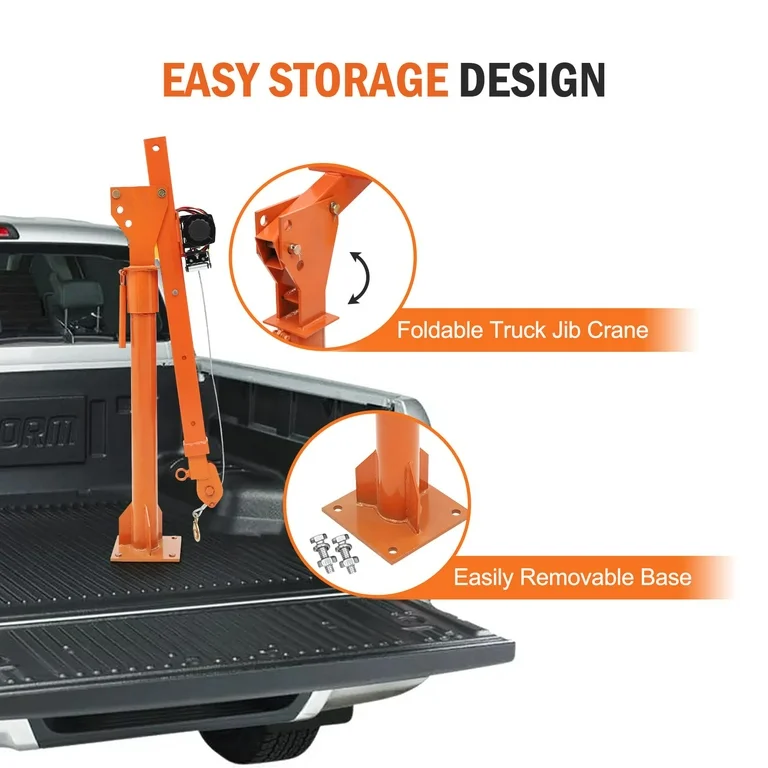
Truck Mounted Jib Crane

  • Installed on trucks or mobile platforms
  • Provides lifting capability in field operations
  • High mobility and flexibility

Applications: Construction sites, logistics, field service operations

Truck Mounted Jib Crane

What Are the Components of a Jib Crane?

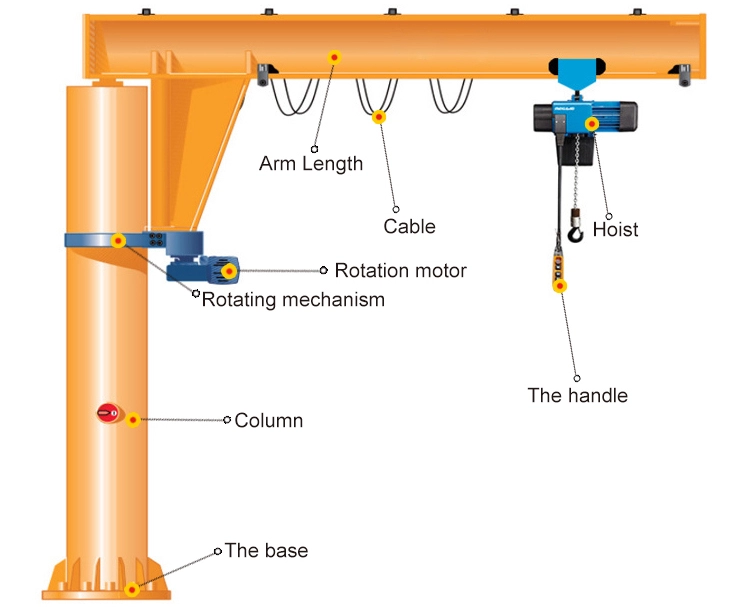
A jib crane is composed of several critical structural and functional components that work together to ensure safe, efficient, and precise lifting operations. Understanding these components is essential for proper selection, installation, and maintenance.

Diagram of a jib crane components

Jib Crane Components Overview

CategoryComponentFunctionDescription
Mast SystemMast / ColumnStructural supportMain vertical structure تحملs all loads
 Base PlateFoundation fixingConnects crane to concrete foundation
 Anchor BoltsLoad transferSecure the crane to the ground
 Top BearingRotation supportEnsures smooth boom rotation
 Bottom BearingLoad bearingHandles vertical and rotational forces
Jib Arm SystemJib Arm / BoomLoad carryingDefines working radius
 Beam StructureStructural supportI-beam or box beam design
 Trolley TrackMovement pathAllows trolley travel
 End StopsSafety protectionPrevents trolley overrun
Lifting SystemElectric HoistLifting loadPowered lifting solution
 Manual HoistLifting loadFor light-duty operations
 TrolleyHorizontal movementMoves along jib arm
 HookLoad connectionConnects lifting load
Rotation SystemRotation MechanismEnable rotationControls working range
 Manual RotationManual operationCost-effective option
 Motorized RotationPowered rotationImproves efficiency
Electrical SystemControl PanelSystem controlCentral control unit
 Pendant ControlOperation controlStandard operation method
 Remote ControlRemote operationImproves safety
 Power SupplyEnergy sourceProvides electricity
Safety SystemOverload ProtectionPrevent overloadEnsures safe operation
 Limit SwitchTravel limitationPrevents over-travel
 Emergency StopEmergency safetyImmediate shutdown

What are the uses of jib cranes?

A jib crane is a compact lifting device with a horizontal arm (jib) that supports a hoist. It’s designed for localized, repetitive lifting tasks—especially where a full overhead crane isn’t practical.

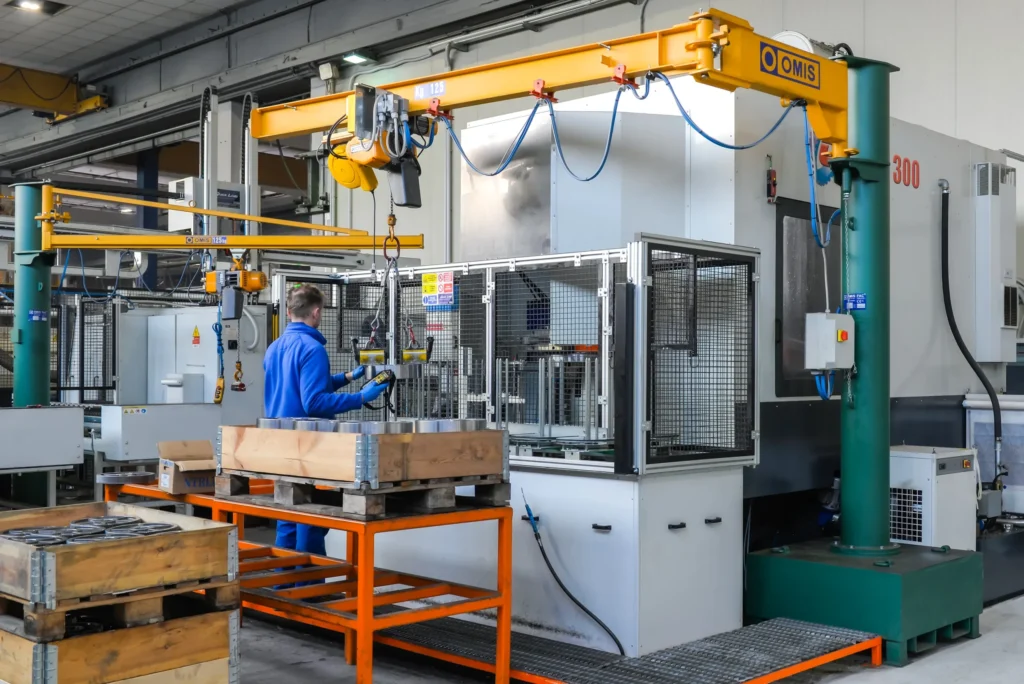
Workstation lifting

  • Lifting parts at a single workstation
  • Feeding machines (CNC, lathes, presses)
  • Assembly line operations

👉 Very common in manufacturing plants

Workstation lifting jib cranes

Loading & unloading

  • Moving materials between trucks, pallets, or workbenches
  • Handling goods at loading docks

👉 Ideal for warehouses & logistics centers

Loading & unloading jib cranes

Maintenance & repair

  • Lifting motors, pumps, or heavy components during maintenance
  • Supporting repair work in tight areas

👉 Used in workshops, power plants, maintenance bays

Maintenance & repair jib cranes

Small-area material handling

  • Moving items within a limited radius (180°–360° rotation)
  • Perfect for areas where space is restricted

👉 Used in garages, small factories, fabrication shops

jib cranes used in garages, small factories, fabrication shops

Supporting larger crane systems

  • Works alongside overhead cranes for secondary tasks
  • Handles light loads so main crane can focus on heavy lifting

👉 Improves overall efficiency

jib crane works alongside overhead cranes

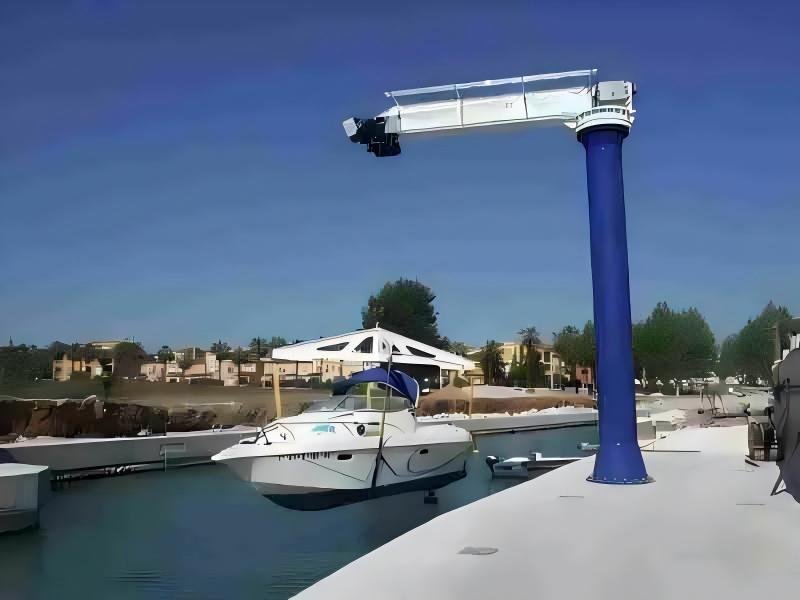
Outdoor and specialized applications

  • Dockside lifting (small marine operations)
  • Construction site material handling
  • Mining or steel plant auxiliary lifting
Outdoor and specialized applications of jib cranes

How to Choose a Jib Crane?

Choosing the right jib crane isn’t just about picking a model—it’s about matching the crane to your application, space, and duty cycle. Since you’re already working in industrial environments, I’ll keep this practical and engineering-focused.

ParameterDescriptionKey PointsEngineering Tip
Lifting CapacityMaximum load the jib crane can safely liftTypical range: 0.25T – 10TAlways leave safety margin for dynamic load, impact, and future expansion
👉 Rated load ≥ 1.25 × actual load
Working Radius (Span)Horizontal reach of the jib armDefines working coverage areaLarger span requires stronger column and foundation design
Longer span = higher bending moment
Lifting HeightVertical lifting distance (hook travel)Must consider:Critical for low ceiling workshops and equipment clearance
• Hook height
• Hoist headroom
Rotation AngleSlewing range of the jib arm• 180° → Wall-mountedChoose based on workspace accessibility and obstruction
• 270° → Limited structure
• 360° → Freestanding / Mast
Duty ClassFrequency and intensity of crane usage• A1–A2: Light dutyUnderspec → fatigue failure (bearing wear, boom deflection)
• A3–A4: Medium duty
• A5–A6: Heavy duty
Hoist TypeLifting mechanism installed on the jib• Wire rope hoist → heavy-dutyMatch hoist type with duty cycle and precision requirements
• Chain hoist → compact
• Manual → low frequency

Conclusion

Each type of jib crane is designed to solve specific challenges related to space utilization, load handling, and operational flexibility. Selecting the right configuration ensures improved efficiency, reduced labor costs, and enhanced workplace safety.

Table of Contents

Related Resources

Scroll to Top

Contact Us Now