Types of Overhead Cranes: Bridge, Gantry, Jib, Monorail & Workstation Crane Classification Guide

In the field of industrial material handling, Overhead Cranes can be classified into multiple types according to their structural design, operating method, installation configuration, and application scenarios. Different types of overhead cranes vary in lifting capacity, working range, structural complexity, and applicable industries. Common examples include single girder overhead cranes, double girder overhead cranes, under-running cranes, and monorail cranes.

By systematically classifying overhead cranes, it becomes easier to understand the structural characteristics and suitable working conditions of each type, allowing industries such as manufacturing, warehousing, and heavy engineering to select the most appropriate lifting equipment.

Because factory building structures, lifting capacity requirements, operating frequency, and industry applications vary widely, overhead cranes have evolved into many structural forms. Systematic classification helps users clearly understand the design features, working principles, and suitable applications of each crane type. The following sections introduce the most common overhead crane classification systems.

Bridge Overhead Cranes

A Bridge Overhead Crane is a lifting system installed on runway rails above a workshop or industrial building. It consists of one or two bridge girders spanning between runway rails mounted on both sides of the building structure. A hoist and trolley system moves along the bridge to lift and transport loads.

The crane bridge travels along runway rails in the longitudinal direction, while the trolley moves across the bridge girder laterally. The hoist or hook performs the vertical lifting motion. These three movements create a three-dimensional lifting system:

  • X direction – longitudinal travel
  • Y direction – cross travel of trolley
  • Z direction – vertical lifting
overhead crane system​

This allows loads to be transported efficiently and precisely throughout the entire working area.

Bridge Overhead Cranes are commonly classified according to their main girder structure, which determines lifting capacity, span, structural rigidity, and application suitability. The two most common types are:

  • Single Girder Overhead Crane
  • Double Girder Overhead Crane

Single Girder Overhead Crane

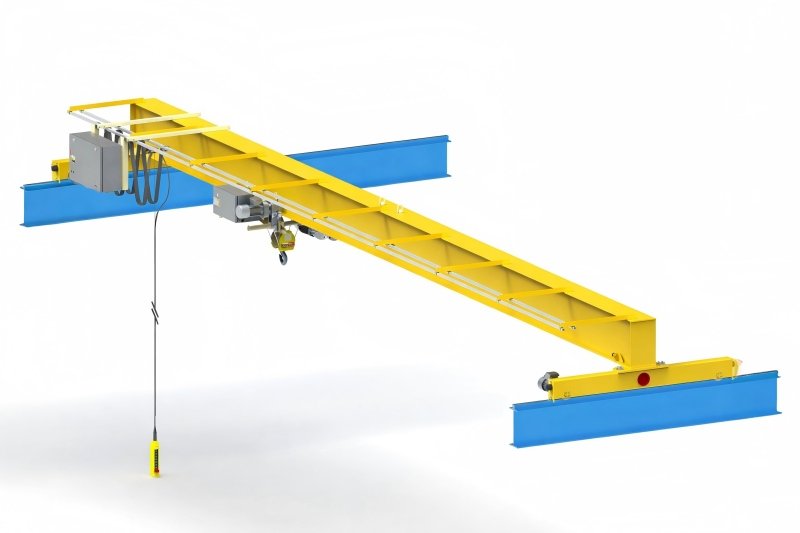
A Single Girder Overhead Crane uses one main girder as the bridge structure, with the electric hoist typically suspended beneath the girder. This design is simple, lightweight, and cost-effective, making it the most common overhead crane used in industrial workshops.

Typical specifications include:

  • Lifting capacity: 1–20 tons
  • Span: 7.5–30 m
  • Duty class: A3–A5

This crane type is suitable for light to medium-duty material handling operations.

Single Girder Overhead Crane

Double Girder Overhead Crane

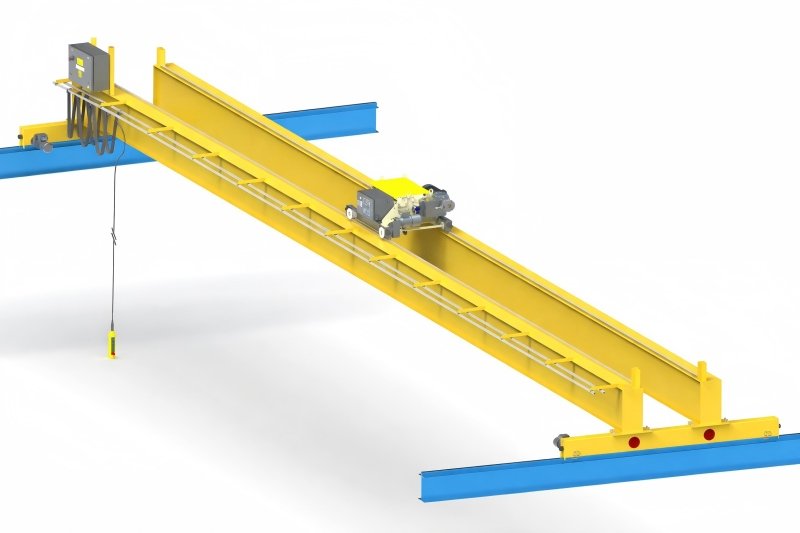
A Double Girder Overhead Crane consists of two parallel bridge girders. The trolley and hoisting mechanism usually travel between or on top of the girders. This design provides higher lifting capacity, greater structural rigidity, and improved stability, making it suitable for heavy loads and high-frequency operations.

Typical specifications include:

  • Lifting capacity: 5–500 tons
  • Span: 10–40 m
  • Duty class: A5–A8
Double Girder Overhead Crane

Bridge overhead cranes can also be classified according to their runway installation method, which determines how the crane interacts with the building structure.

Top Running Overhead Crane

A Top Running Overhead Crane is the most common type of bridge crane. The crane bridge runs on rails mounted on runway beams installed on top of building columns.

Key characteristics include:

  • High lifting capacity
  • Strong structural rigidity
  • Suitable for large spans
  • Available in both single and double girder designs

Typical specifications:

  • Lifting capacity: 5–500 tons
  • Span: 10–40 m
  • Lifting height: 6–30 m
  • Duty class: A5–A8
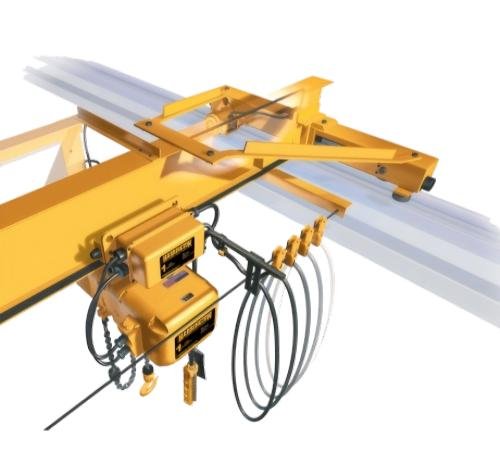
Top Running Overhead Crane

Under Running Overhead Crane

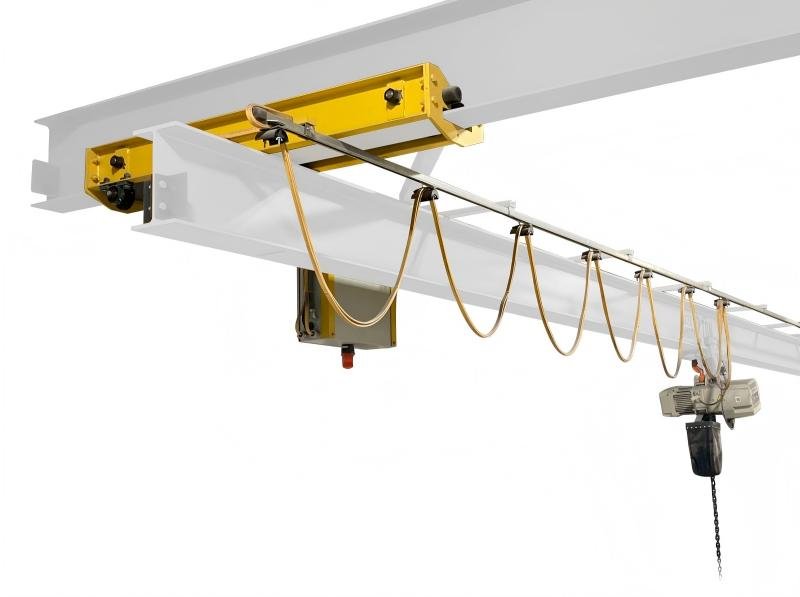
An Under Running (Underhung) Overhead Crane is suspended from the building roof structure or an overhead I-beam track, with wheels running on the lower flange of the rail.

Key advantages include:

  • Flexible installation
  • Lower structural requirements for the building
  • Space-saving design

Typical specifications:

  • Lifting capacity: 0.5–10 tons
  • Span: 3–15 m
  • Lifting height: 3–12 m
  • Duty class: A3–A5
Under Running Overhead Crane

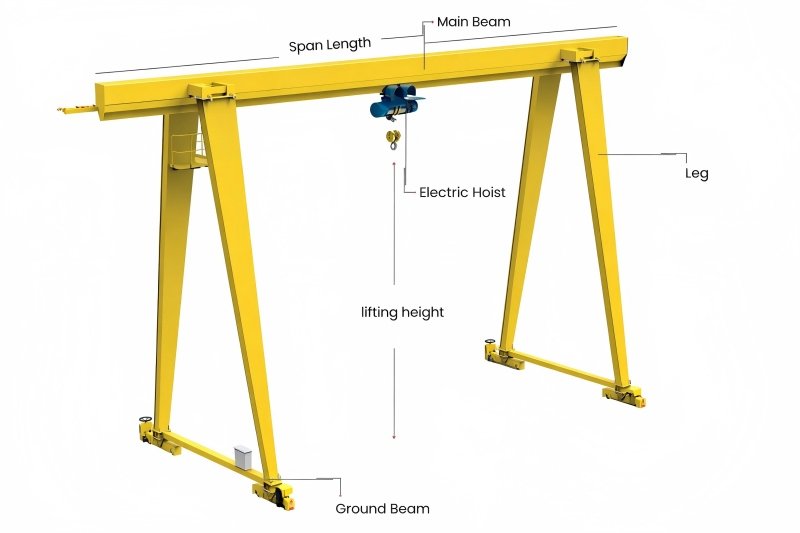
Gantry Overhead Cranes

A Gantry Crane is a lifting device supported by legs that run on ground rails or wheels. Its structure resembles a large portal frame, unlike bridge cranes which rely on building support.

A typical gantry crane consists of:

  • Main girder
  • Supporting legs
  • Traveling mechanism
  • Hoisting system
  • Control system

The trolley moves horizontally along the girder while the entire crane travels along ground rails, enabling three-dimensional material handling.

Gantry cranes can be further classified into:

  • Full Gantry Crane
  • Semi Gantry Crane
  • Portable Gantry Crane
  • Rubber Tyred Gantry Crane (RTG)
Gantry Overhead Cranes

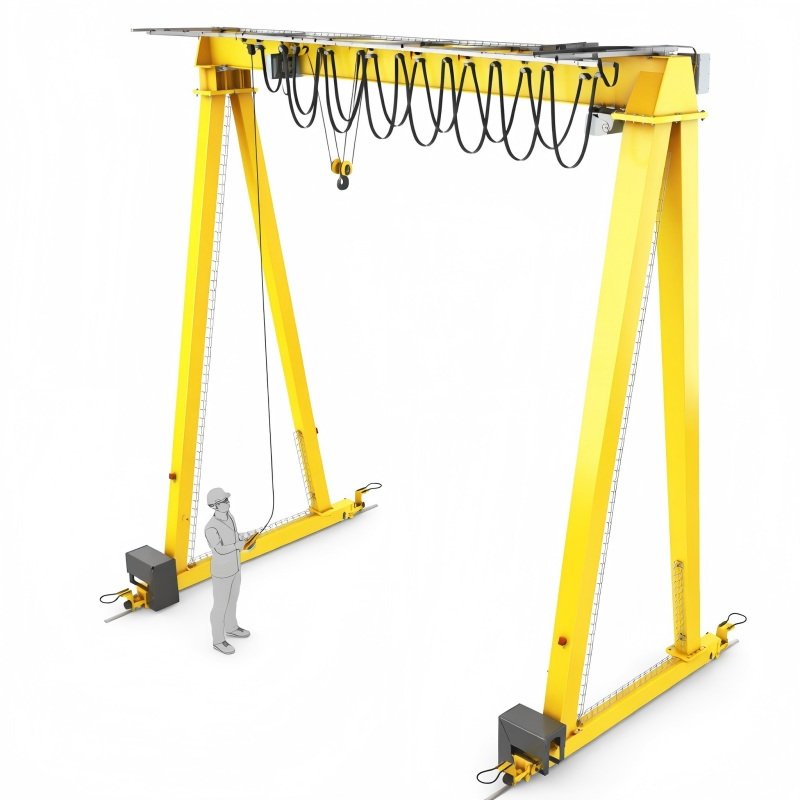
Full Gantry Crane

Full gantry cranes have two supporting legs running on ground rails and are commonly used for large outdoor heavy-duty operations, such as ports, shipyards, and steel yards.

Typical specifications:

  • Lifting capacity: 10–500 tons
  • Span: 18–50 m
  • Lifting height: 10–40 m
  • Duty class: A5–A8
Full Gantry Crane

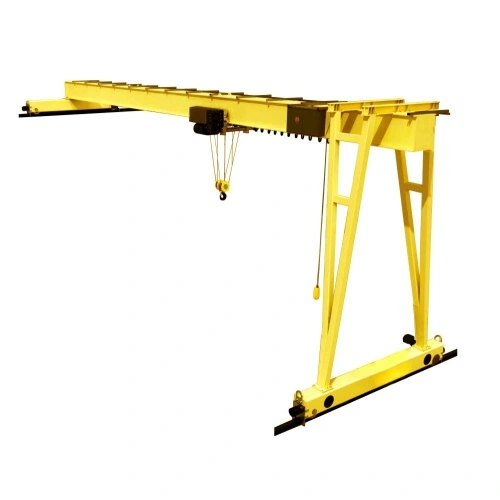
Semi Gantry Crane

Semi gantry cranes have one leg running on a ground rail and the other side supported by a building structure or bridge crane runway beam.

Typical specifications:

  • Lifting capacity: 5–50 tons
  • Span: 10–30 m
  • Lifting height: 6–20 m
  • Duty class: A4–A6
Semi Gantry Crane

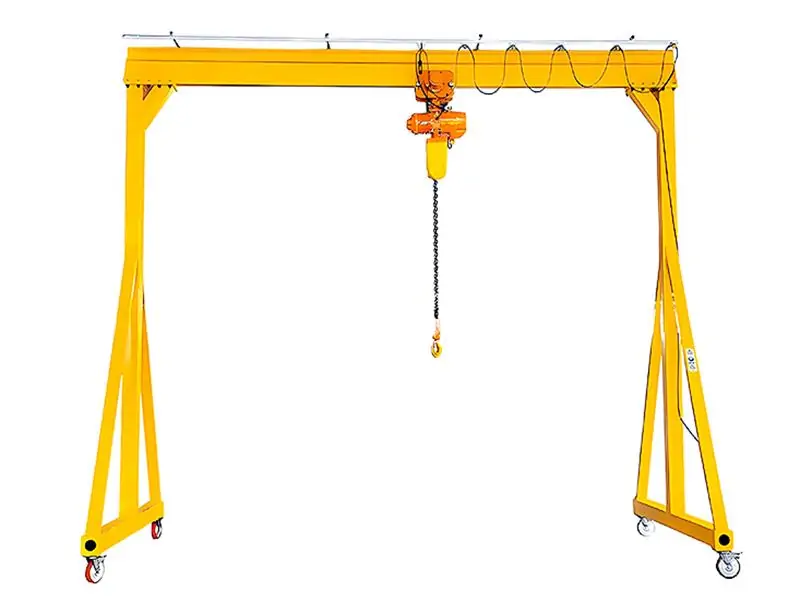
Portable Gantry Crane

Portable gantry cranes are lightweight structures equipped with wheels, allowing them to be moved easily within workshops or warehouses.

Typical specifications:

  • Lifting capacity: 0.5–10 tons
  • Span: 3–10 m
  • Lifting height: 3–8 m
  • Duty class: A2–A4
Portable Gantry Crane

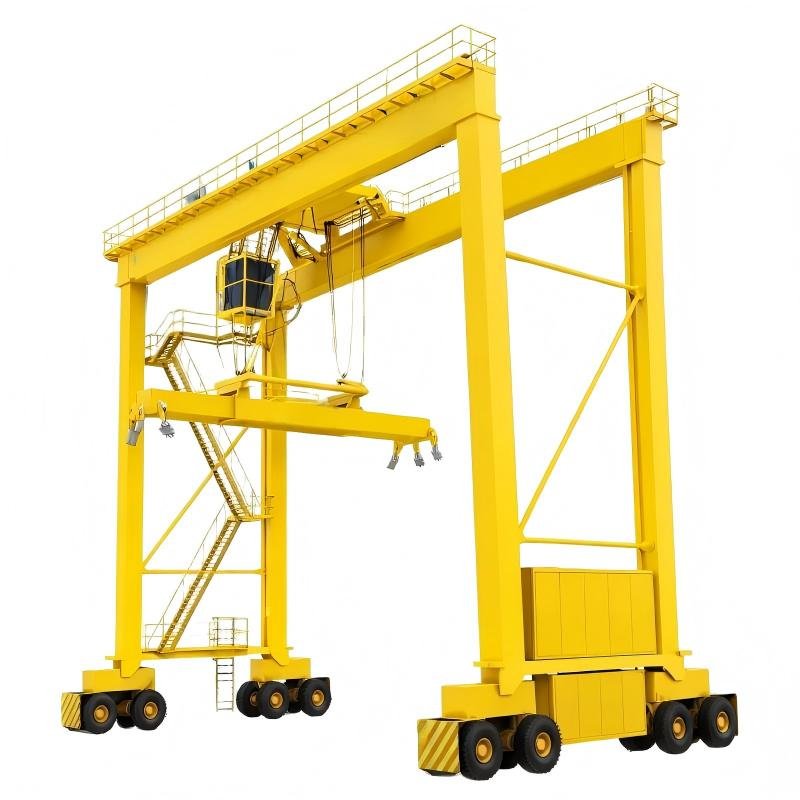
Rubber Tyred Gantry Crane (RTG)

RTG cranes use rubber tires instead of rails, allowing flexible movement in container yards and logistics terminals.

Typical specifications:

  • Lifting capacity: 30–65 tons (container standard)
  • Span: 23–35 m
  • Lifting height: 12–21 m
  • Duty class: A6–A8
Rubber Tyred Gantry Cranes (RTG)

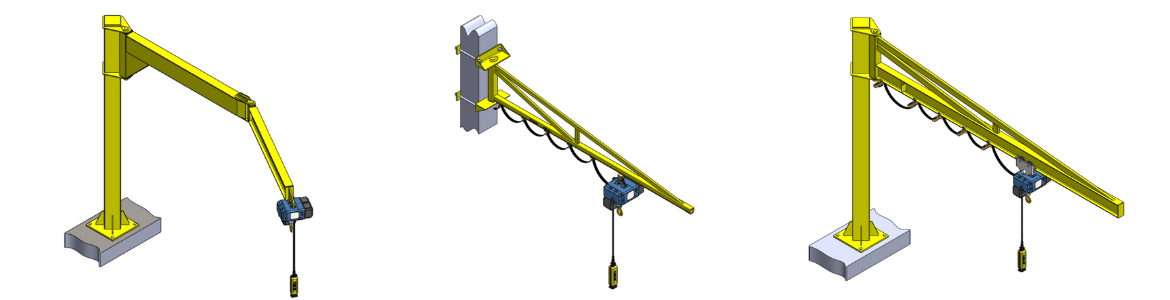
Jib Cranes

A Jib Crane is a light-duty lifting device consisting of a rotating horizontal jib arm mounted on a column or wall support.

The crane typically includes:

  • Column or wall support
  • Jib arm
  • Hoist system
  • Slewing mechanism
  • Control system

Jib cranes are ideal for localized lifting operations in workstations or assembly areas.

Common types include:

  • Pillar Jib Crane
  • Wall Mounted Jib Crane
  • Wall Travelling Jib Crane
  • Articulating Jib Crane
types of jib cranes
types of jib cranes

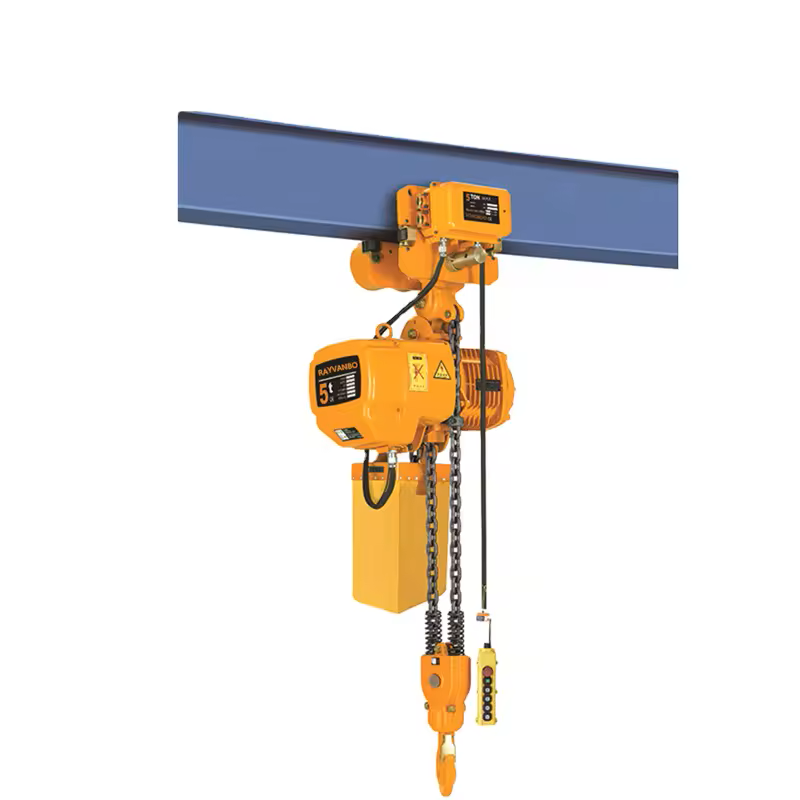
Monorail Overhead Cranes

A Monorail Crane is a light lifting system where a hoist travels along a single fixed track mounted on the building structure.

Unlike bridge cranes, monorail cranes follow predefined linear or curved paths.

Common types include:

  • Straight Monorail Crane
  • Curved Monorail System
  • Enclosed Track Monorail
  • I-Beam Monorail Crane

Typical specifications:

  • Lifting capacity: 0.5–10 tons
  • Track length: 5–100 m or more
  • Lifting height: 3–12 m
  • Duty class: A3–A5
Monorail Overhead Cranes

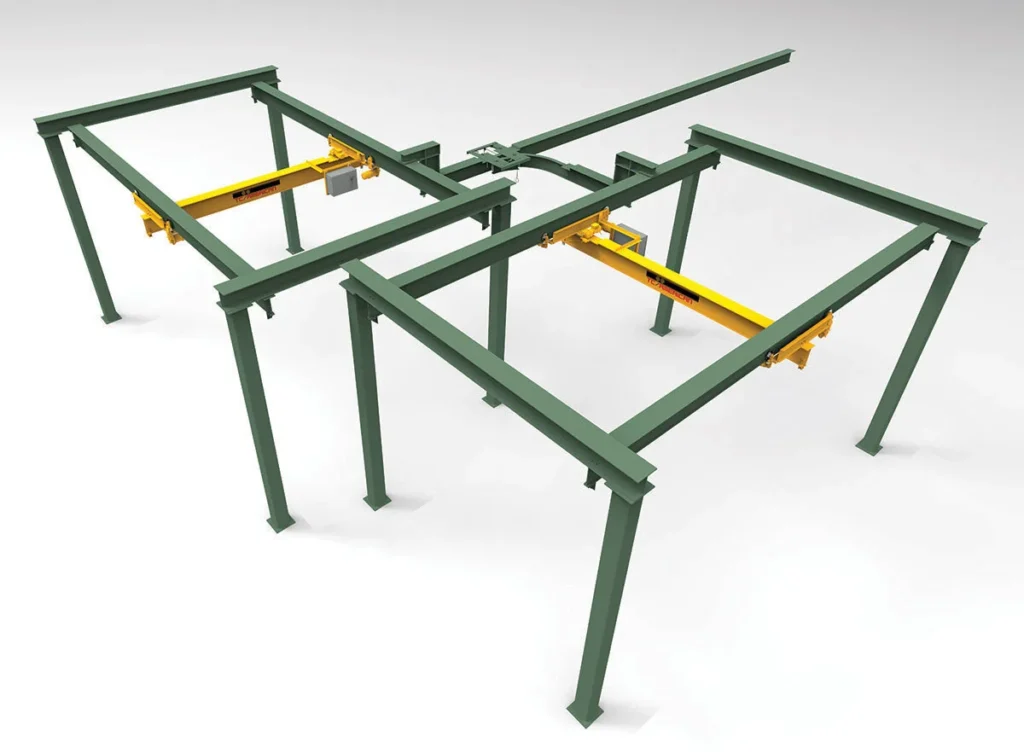
Workstation Cranes

Workstation Cranes are modular light-duty lifting systems designed for workstations and assembly areas.

They typically include:

  • Modular track systems
  • Supporting structures
  • Manual or electric hoists

These systems often use enclosed track designs to improve movement efficiency and reduce friction.

Workstation Cranes

Special Overhead Cranes

Some cranes are designed for specific industrial environments or materials.

Examples include:

  • Explosion Proof Crane – used in petrochemical and gas industries
  • Foundry / Ladle Crane – used for molten metal handling in steel plants
  • Grab Bucket Crane – used for bulk materials such as coal and ore
  • Magnetic Crane – used for steel plates, scrap, and coils
  • Container Crane – used for container handling in ports

Classification by Lifting Device

In many industries such as steel mills, ports, bulk material handling, and automated warehouses, cranes are also classified according to their lifting attachment.
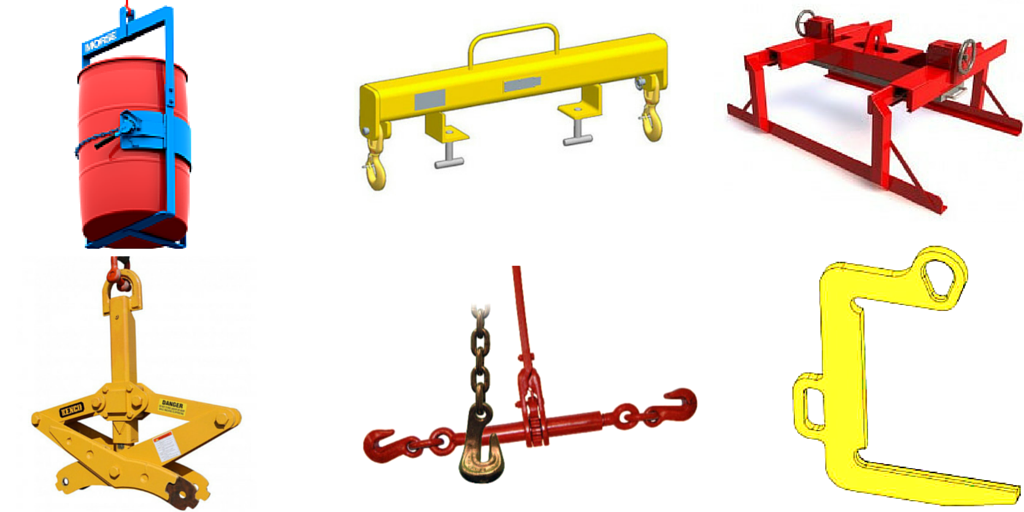
Classification by Lifting Device
Lifting DeviceCrane TypeTypical Industry
HookHook CraneGeneral industry
Grab BucketGrab CraneCoal / bulk materials
ElectromagnetMagnetic CraneSteel industry
LadleLadle CraneSteelmaking
C-HookCoil Handling CraneSteel mills
SpreaderContainer CranePorts
VacuumVacuum Lifting CraneGlass / sheet materials

Overhead Crane Working Class (A1–A8)

Crane working class defines how frequently and heavily a crane operates during its lifetime.

Working ClassDescriptionTypical Applications
A1–A2Light dutyMaintenance, occasional lifting
A3–A4Medium dutyWarehouses, assembly lines
A5–A6Heavy dutyManufacturing, steel structures
A7–A8Very heavy dutySteel mills, ports

Higher working classes indicate greater durability and heavier workloads.

Overhead Crane Selection Guide

When selecting an overhead crane, several key factors must be considered:

  1. Lifting Capacity:Determine the maximum load weight required.
  2. Crane Span:Distance between runway rails.
  3. Lifting Height:Required vertical lifting distance.
  4. Duty Class:Frequency and intensity of operation.
  5. Installation Environment:Indoor factory, outdoor yard, or hazardous environment.

Selecting the correct crane configuration ensures maximum safety, efficiency, and equipment lifespan.

Conclusion

Overhead cranes are essential equipment in modern industrial material handling. From bridge cranes and gantry cranes to jib cranes and monorail systems, each type is designed to meet specific lifting requirements.

By understanding crane classifications, working classes, and selection criteria, businesses can choose the most efficient lifting solution for their operations.

Table of Contents

Related Resources

Scroll to Top

Contact Us Now