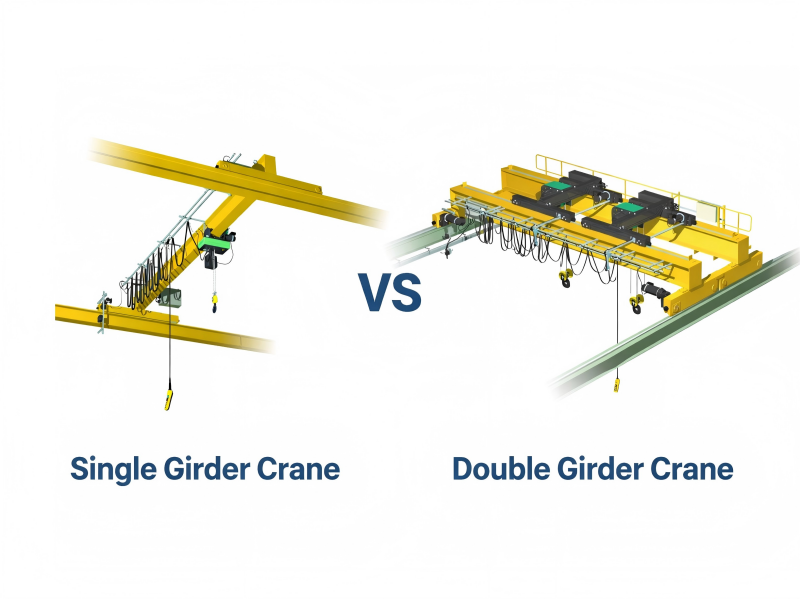
Understanding the differences between a Single Girder Crane and a Double Girder Crane helps companies make more informed decisions when selecting lifting equipment. These two types of cranes differ significantly in structural design, lifting capacity, span, and lifting height, making them suitable for different industrial environments and operational requirements. By understanding these differences, users can choose the most appropriate crane according to their actual working conditions.
In addition, understanding the differences between the two crane types can help optimize equipment investment and factory design. Single girder cranes feature a simpler structure and lower cost, and they require less support from the building structure. In contrast, double girder cranes offer higher lifting capacity but usually require greater headroom and stronger runway beams. Choosing the right crane type can effectively reduce equipment investment costs while optimizing plant layout.
Selecting the correct crane type also improves production efficiency and operational safety. If the crane capacity does not match the operational demand, it may reduce lifting efficiency or even create safety risks. Therefore, understanding the differences between single girder and double girder cranes is essential for industrial production, equipment management, and engineering design.
What is a Single Girder Crane?
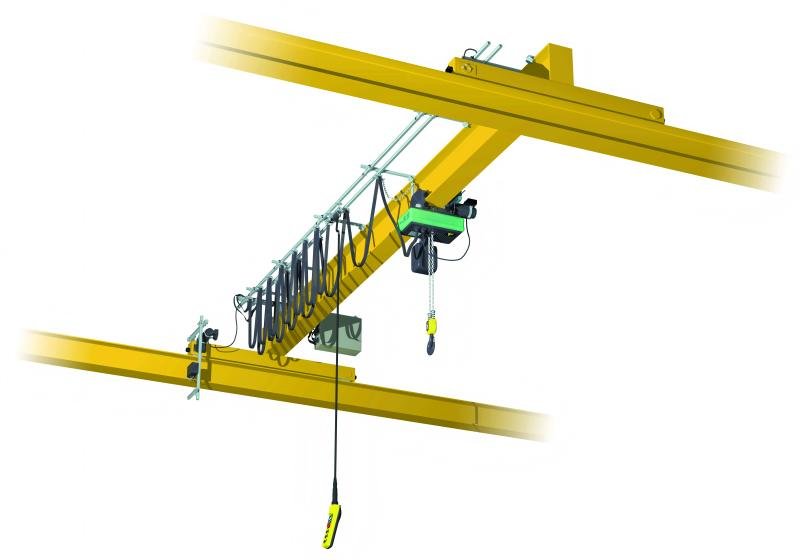
A Single Girder Overhead Crane is a type of bridge crane whose bridge structure consists of one main girder. The electric hoist is typically suspended underneath the girder. The crane operates through the coordination of the bridge travelling mechanism, trolley travelling mechanism, and hoisting mechanism, enabling three-dimensional material handling inside the facility (longitudinal movement, transverse movement, and vertical lifting).
Due to its relatively simple structure and lighter weight, the single girder crane is one of the most commonly used overhead cranes in industrial facilities. It is widely used in manufacturing plants, warehouses, assembly workshops, and equipment maintenance areas.
Advantages of Single Girder Cranes
Single girder cranes feature a simple structure with only one main girder, making them lighter and easier to install and maintain. Their compact design places lower requirements on runway beams and building support structures, helping reduce construction costs. Additionally, the manufacturing and installation costs of single girder cranes are generally lower than those of double girder cranes, making them an economical option for many small and medium-sized enterprises.
Limitations of Single Girder Cranes
Despite their cost advantages and simple structure, single girder cranes have relatively limited lifting capacity and lifting height. They are typically used for small to medium lifting tasks. Since the hoist is usually suspended below the girder, the available lifting height is smaller. Furthermore, under high-frequency or heavy-duty operations, the load-bearing capacity and stability of single girder cranes are lower than those of double girder cranes, which limits their application in heavy industrial environments.
Applications of Single Girder Cranes
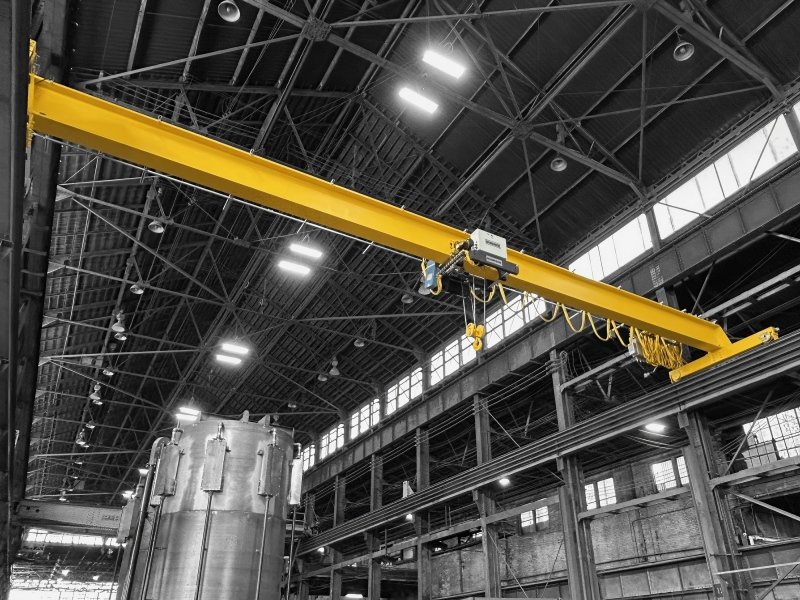
Single girder cranes are mainly used for light to medium material handling applications, especially in environments where cost efficiency and space utilization are important. They are widely used in machine workshops, warehouses, assembly production lines, and equipment maintenance areas. In these scenarios, single girder cranes provide an economical and efficient material handling solution.
What is a Double Girder Crane?
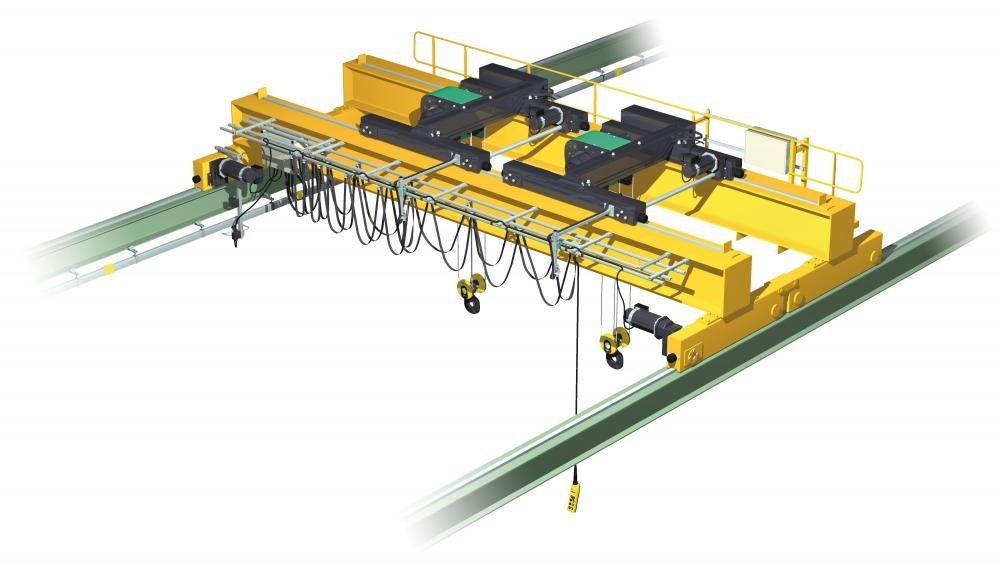
A Double Girder Overhead Crane is a bridge crane whose bridge structure consists of two parallel girders. The trolley and hoisting mechanism usually run on rails mounted between or above the two girders. By combining bridge travel, trolley travel, and vertical lifting, the crane can perform three-dimensional material handling inside a facility.
Because of its higher structural rigidity and stronger load-bearing capacity, the double girder crane is commonly used in heavy-duty and high-frequency industrial lifting operations.
Advantages of Double Girder Cranes
Double girder cranes provide higher structural strength and stability, allowing greater lifting capacity and larger spans. Since the trolley runs on top of the girders, they can achieve greater lifting height. Their robust structure ensures stable operation and makes them suitable for continuous operation and heavy industrial environments. As a result, they are widely used in heavy manufacturing and large engineering projects.
Limitations of Double Girder Cranes
Compared with single girder cranes, double girder cranes have a more complex structure and heavier weight, requiring stronger building structures and runway beams. Their manufacturing, transportation, and installation costs are also higher, and maintenance can be more complex. Therefore, they may not be the most economical choice for light or low-frequency lifting operations.
Applications of Double Girder Cranes
Double girder cranes are mainly used in heavy-duty, large-span, and high-frequency lifting applications. Typical industries include steel mills, shipbuilding yards, heavy machinery manufacturing, power equipment manufacturing, and large industrial plants. In these environments, double girder cranes provide stable and efficient heavy material handling capabilities.
Performance and Functional Comparison Between Single Girder and Double Girder Cranes
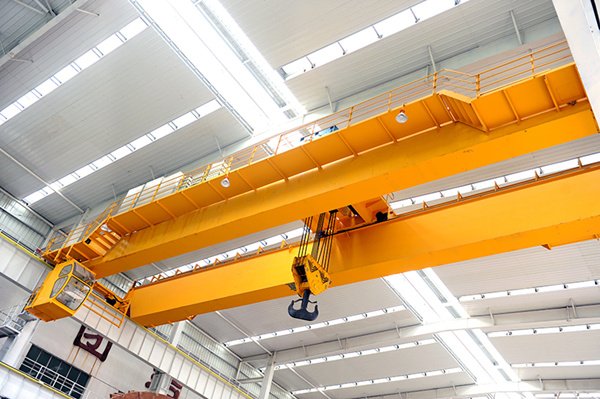
Single girder cranes and double girder cranes differ significantly in structural design, load capacity, operating performance, and application scenarios. Single girder cranes are simpler and more economical, making them suitable for light and medium material handling tasks. Double girder cranes, however, offer stronger structural support and are designed for heavy-duty industrial operations.
Engineering-Level Comparison Table
| Technical Parameter | Single Girder Crane | Double Girder Crane |
| Structural design | One box girder or I-beam | Two box girders |
| Lifting capacity | 1 – 20 t | 5 – 500 t |
| Span | 7.5 – 30 m | 10 – 40 m (up to 50 m) |
| Lifting height | 6 – 18 m | 12 – 30 m |
| Duty class | A3 – A5 | A5 – A8 |
| Hoisting speed | 3 – 8 m/min | 5 – 15 m/min |
| Trolley speed | 10 – 20 m/min | 20 – 40 m/min |
| Crane travel speed | 20 – 40 m/min | 40 – 80 m/min |
| Girder height | 300 – 900 mm | 900 – 2000 mm |
| Rail type | P18 – P24 | P24 – P43 |
| Maximum wheel load | 30 – 120 kN | 120 – 450 kN |
| Hoisting system | Electric hoist | Winch trolley |
| Control method | Pendant / Remote | Remote / Cabin |
| Motor power | 3 – 30 kW | 30 – 200 kW |
| Crane weight | 3 – 10 t | 10 – 60 t |
Typical Engineering Selection Range
| Application | Single Girder | Double Girder |
| Economic lifting solution | ✔ | |
| Medium production workshop | ✔ | ✔ |
| Heavy lifting | ✔ | |
| High-frequency operation | ✔ | |
| Steel mills / metallurgy | ✔ | |
| Warehouse / assembly line | ✔ |
Engineering Selection Rules
Engineers typically follow these practical selection guidelines:
Choose a Single Girder Crane when:
- Lifting capacity ≤ 20 t
- Duty class ≤ A5
- Span ≤ 25 m
- Lifting frequency is relatively low
Choose a Double Girder Crane when:
- Lifting capacity ≥ 20 t
- Duty class ≥ A5
- Span ≥ 25 m
- Higher lifting height is required
Conclusion
Both Single Girder Cranes and Double Girder Cranes play important roles in industrial material handling, but they are designed for different operational requirements. Single girder cranes are known for their simple structure, lower cost, and easier installation, making them an ideal solution for light to medium-duty lifting tasks in workshops, warehouses, and assembly lines. They provide an economical and efficient option for facilities where lifting capacity and duty cycle requirements are relatively moderate.
In contrast, double girder cranes offer greater lifting capacity, higher lifting height, and stronger structural stability, making them suitable for heavy-duty and high-frequency industrial operations such as steel production, shipbuilding, and large-scale manufacturing. Although they require higher investment and stronger building structures, they deliver superior performance in demanding environments.
Therefore, selecting the right crane type should be based on lifting capacity, span, duty class, lifting height, and operational frequency. By carefully evaluating these factors, companies can choose the most suitable crane system to optimize equipment investment, improve operational efficiency, and ensure safe and reliable lifting operations.