Although both come alongs and ratchet straps are used to apply tension and secure loads, they are designed for very different purposes.
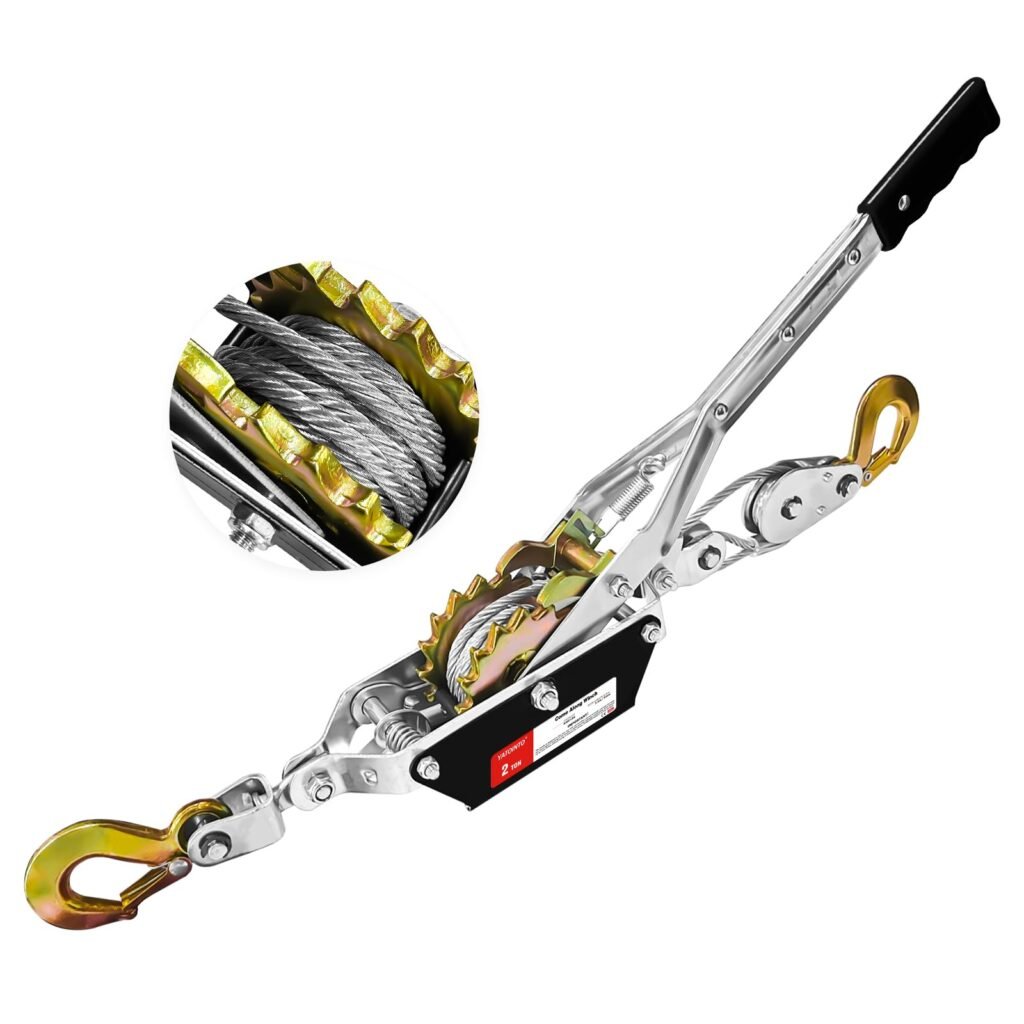
- Come Along: Uses a steel wire rope or chain with a ratcheting mechanism to pull, tension, or position heavy objects.
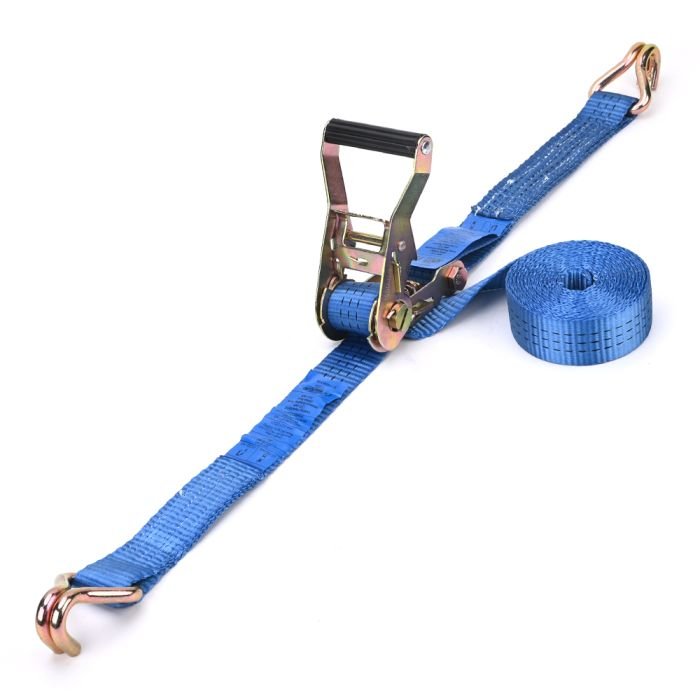
- Ratchet Strap: Uses polyester webbing and a ratchet buckle to secure cargo during transportation.
Simply put:
A Come Along is designed for pulling and tensioning, while a Ratchet Strap is designed for load securement.
Quick Comparison Table
| Feature | Come Along | Ratchet Strap |
| Primary Function | Pulling, tensioning, positioning | Securing cargo |
| Material | Steel cable or chain | Polyester webbing |
| Operating Method | Manual ratchet mechanism | Ratchet tightening mechanism |
| Typical Capacity | 0.5–5 tons or more | 500 kg–10+ tons |
| Lifting Capability | Some models allow limited lifting | Not designed for lifting |
| Transportation Securement | Not recommended | Specifically designed |
| Surface Protection | Moderate | Excellent |
| Common Applications | Vehicle recovery, fence stretching, equipment positioning | Trucking, container securing, machinery transport |
What Is a Come Along?
Definition
A come along is a portable manual pulling tool that uses a ratchet-and-pawl mechanism to gradually tighten a wire rope or chain, generating significant pulling force.
Common Applications
- Vehicle recovery
- Fence tensioning
- Construction projects
- Tree and land clearing
- Equipment alignment
- Pipeline installation
Its biggest advantage is providing substantial pulling power without requiring electricity or hydraulic systems.
Ratchet Straps: Uses and Advantages
Definition
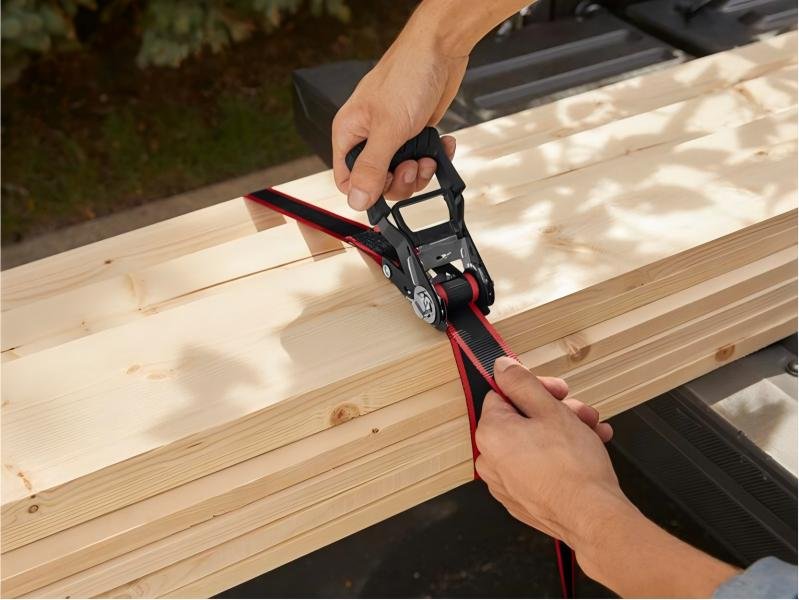
A ratchet strap is a cargo securement device that uses a ratchet mechanism to tighten polyester webbing around a load.
Common Applications
- Truck cargo securement
- Container lashing
- Pallet stabilization
- ATV and motorcycle transport
- Machinery transportation
- Warehouse load restraint
Comparison: Mechanism, Capacity, and Safety
Operating Mechanism
Come Along
- Attach hooks to anchor points.
- Move the handle back and forth.
- The ratchet mechanism gradually tensions the cable.
- Pulling force is generated.
Ratchet Strap
- Feed the webbing through the ratchet.
- Pump the ratchet handle.
- The strap tightens around the load.
- The load is securely locked in place.
Load Capacity
Come Along
Common Working Load Limits (WLL):
- 0.5 Ton
- 1 Ton
- 2 Ton
- 3 Ton
- 5 Ton
Ideal for high-tension pulling applications.
Ratchet Strap
Typical Working Load Limits:
- 500 kg
- 1 Ton
- 2 Ton
- 5 Ton
- 10+ Tons
Designed primarily for cargo securement.
Note: The breaking strength of a ratchet strap is typically about three times its working load limit.
Safety Features
Come Along
- Dual-pawl locking mechanism
- Automatic load holding
- Heavy-duty steel hooks
- Safety latch hooks
Ratchet Strap
- Locking ratchet handle
- Abrasion-resistant polyester webbing
- Secure end fittings
- Clearly labeled WLL tags
Pros and Cons Overview
Advantages of a Come Along
- ✔ High pulling force
- ✔ Suitable for equipment positioning
- ✔ Portable for field work
- ✔ No external power source required
Disadvantages
- ✘ Slower operation
- ✘ Heavier than straps
- ✘ Requires cable maintenance
Advantages of a Ratchet Strap
- ✔ Lightweight and portable
- ✔ Helps protect cargo surfaces
- ✔ Fast and easy to use
- ✔ Cost-effective
Disadvantages
- ✘ Not suitable for pulling operations
- ✘ Cannot be used for lifting
- ✘ Vulnerable to damage from sharp edges
Choosing the Right Tool for Your Needs
When Should You Use a Come Along?
Choose a come along if you need to:
- Pull a vehicle
- Recover equipment
- Tension fencing
- Position steel structures
- Perform high-tension pulling tasks
When Should You Use a Ratchet Strap?
Choose a ratchet strap if you need to:
- Secure cargo for transport
- Fasten machinery during shipping
- Stabilize palletized loads
- Prevent movement during transit
Best Practices for Safe Use
Using a Come Along
- Inspect the wire rope for damage.
- Verify anchor points are rated for the load.
- Apply tension gradually.
- Never exceed the rated capacity.
- Keep personnel clear of the tensioned line.
Using a Ratchet Strap
- Check the webbing for cuts, tears, or excessive wear.
- Ensure the strap is not twisted.
- Use edge protectors on sharp corners.
- Tighten to the appropriate tension.
- Confirm the ratchet is fully locked.
Conclusion
Although both tools utilize a ratcheting mechanism, they serve completely different purposes:
- Come Along = Pulling, tensioning, and positioning
- Ratchet Strap = Cargo securement and transportation safety
If you need to move, pull, or align heavy objects, a come along is the right choice. If you need to secure cargo during transportation, a ratchet strap is the better solution.
FAQs About Come Along vs Ratchet Strap
A come along uses a steel cable or chain to generate pulling force for moving or positioning loads, while a ratchet strap uses polyester webbing to secure cargo during transportation.
No. Ratchet straps are designed for cargo securement only and should never be used for overhead lifting. Use certified lifting slings, chain slings, or wire rope slings for lifting applications.
- Lubricate the ratchet mechanism regularly.
- Inspect cables for wear, corrosion, and broken strands.
- Store in a dry environment.
- Never exceed the rated working load limit.
- Inspect the webbing for cuts, burns, or abrasion.
- Check hooks and fittings for deformation.
- Verify the WLL tag is legible.
- Ensure the ratchet locking mechanism operates correctly.
- Purchase products from reputable manufacturers and suppliers that provide testing certificates and clearly marked Working Load Limits (WLL). Always verify compliance with applicable standards such as ASME, WSTDA, EN, or local regulations before use.