When selecting a connector for lifting, rigging, fall protection, climbing, or general utility applications, understanding the differences between carabiners, snap hooks, and quick links is essential. While all three devices are designed to create secure connections, their designs, load capacities, and intended uses vary significantly.
This guide explains the key differences between carabiner hooks and snap hooks while also covering quick links as an alternative connector option.
- Carabiners, snap hooks, and quick links are designed for different applications and load requirements.
- Carabiners typically provide higher strength and greater versatility.
- Snap hooks offer fast attachment and detachment for repetitive use.
- Quick links provide highly secure semi-permanent connections.
- Always verify load ratings, certifications, and intended use before selecting a connector.
- Industrial lifting and rigging applications require connectors that comply with applicable standards.
What Are Carabiner Hooks?
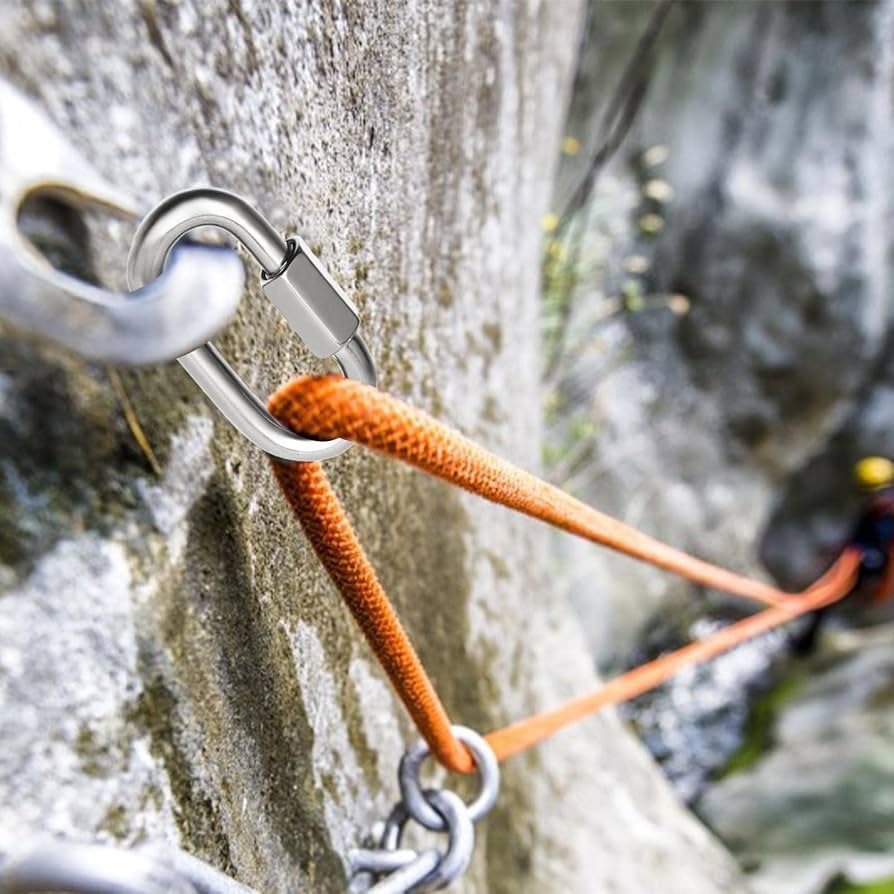
A carabiner is a metal connector featuring a spring-loaded gate that opens inward and automatically closes when released.
Carabiners are commonly used in:
- Rock climbing
- Rope access
- Fall protection systems
- Rescue operations
- Industrial safety applications
- Outdoor recreation
Many professional-grade carabiners include locking mechanisms for additional security.
Common Carabiner Types
- Non-locking carabiners
- Screw-lock carabiners
- Auto-locking carabiners
- Triple-action locking carabiners
- Steel carabiners
- Aluminum carabiners
What Are Snap Hooks?
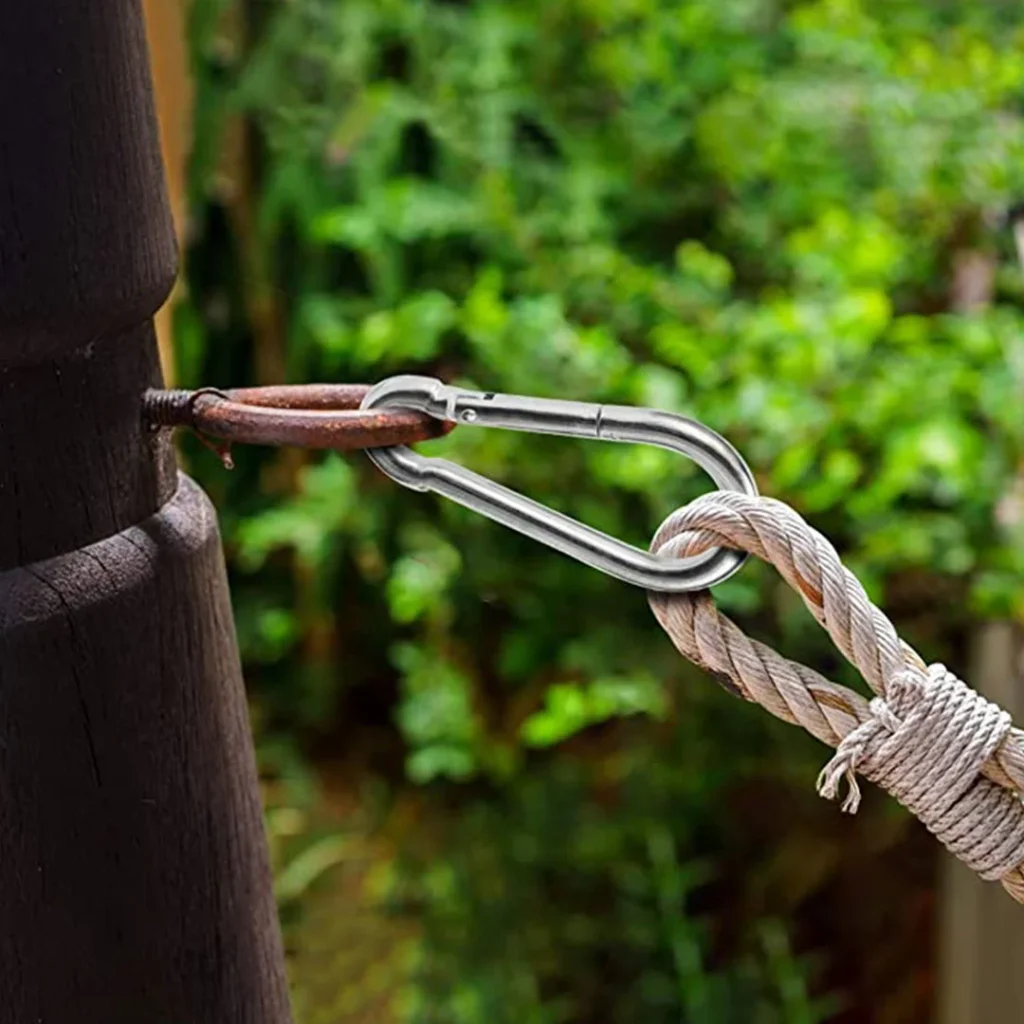
A snap hook is a connector equipped with a spring-loaded latch that opens when pressure is applied and automatically closes after attachment.
Snap hooks are widely used for:
- Lanyards
- Tie-down systems
- Safety harnesses
- Animal restraint equipment
- Material handling
- General industrial applications
Some safety snap hooks feature double-locking gates to prevent accidental opening.
What Are Quick Links?
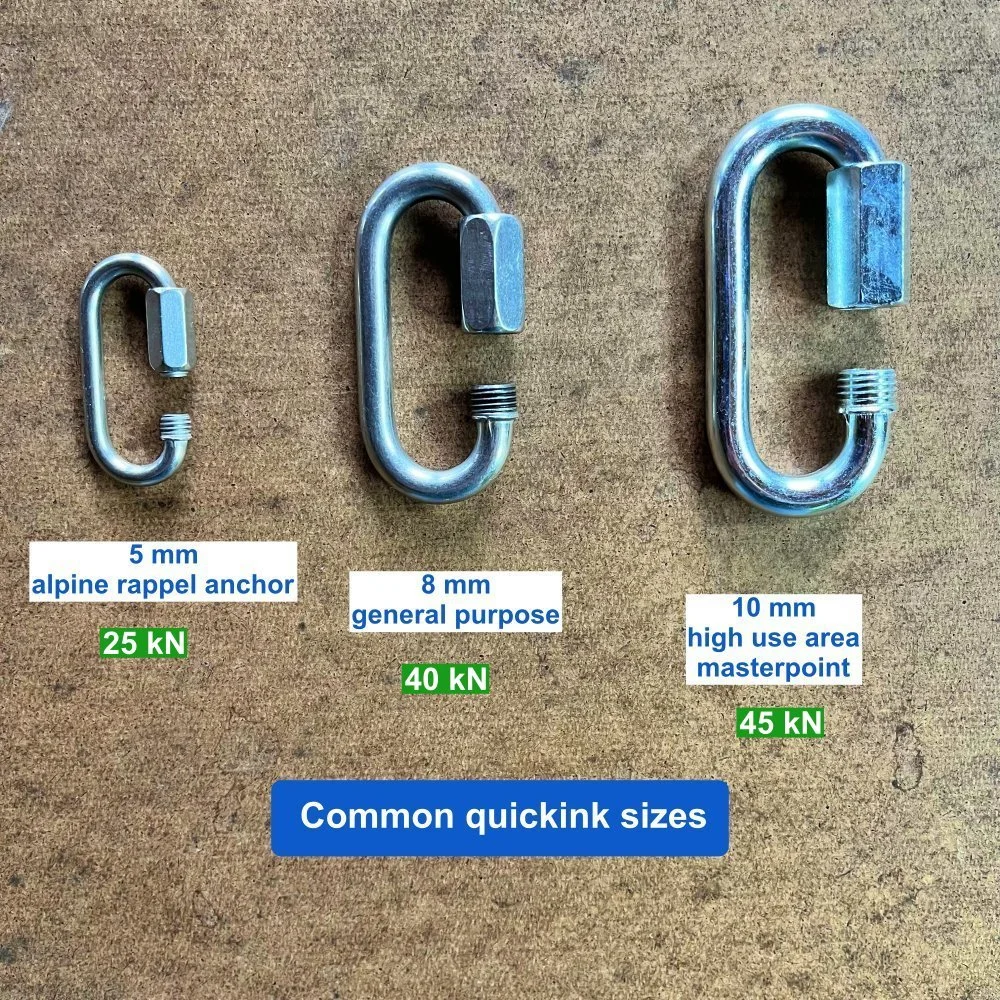
Quick links, also known as screw links or chain repair links, are threaded connectors that close by tightening a threaded sleeve.
They are commonly used for:
- Chain assemblies
- Rigging systems
- Anchor points
- Suspension systems
- Permanent or semi-permanent installations
Because they require manual threading, quick links are not intended for frequent opening and closing.
Design and Gate Mechanisms
Carabiner Hook Design
Carabiners are typically available in several shapes:
- D-shape
- Offset D
- Oval
- Pear (HMS)
- Asymmetrical D
The gate automatically closes under spring tension and may include:
- Screw-lock gate
- Twist-lock gate
- Triple-lock gate
- Auto-lock gate
These locking systems help reduce accidental gate opening.
Snap Hook Mechanism
Snap hooks generally feature:
- Spring-loaded latch
- Trigger release
- Optional locking mechanism
The latch opens outward and closes automatically after attachment.
Industrial safety snap hooks often require two separate actions to open, reducing accidental disengagement.
Quick Link Construction
Quick links consist of:
- Forged or welded steel body
- Threaded gate section
- Screw-tightened closure
Once tightened properly, quick links create a highly secure connection resistant to accidental opening.
Carabiners Strength and Load Ratings
Carabiner Load Capacity
Professional carabiners are designed to withstand substantial loads.
Typical ratings include:
| Carabiner Type | Typical Strength |
| Aluminum Climbing Carabiner | 20–30 kN |
| Steel Carabiner | 40–70+ kN |
| Industrial Rescue Carabiner | 50+ kN |
Certified carabiners are often tested according to international safety standards.
Snap Hooks Strength
Snap hook capacities vary considerably.
Examples include:
| Snap Hook Type | Typical Capacity |
| Utility Snap Hook | Light Duty |
| Safety Harness Snap Hook | Fall Protection Rated |
| Industrial Rigging Snap Hook | Heavy Duty |
Always verify the manufacturer’s Working Load Limit (WLL).
Quick Links Durability
Quick links are known for:
- High strength
- Excellent wear resistance
- Strong resistance to accidental opening
- Long service life
Many heavy-duty quick links are manufactured from alloy steel or stainless steel for demanding environments.
Carabiner Hooks vs Snap Hooks: Key Differences
Shape and Security
| Feature | Carabiner | Snap Hook |
| Shape | D, Oval, Pear | Hook Shape |
| Gate Type | Spring Gate | Spring Latch |
| Locking Options | Extensive | Limited |
| Security | High | Moderate to High |
Carabiners generally offer more advanced locking systems.
Ease of Use
Carabiners
- Easy to clip and remove
- Versatile attachment options
- Available with one-handed operation
Snap Hooks
- Extremely fast attachment
- Ideal for repetitive connection tasks
- Common in lanyards and tie-down systems
Reliability Over Time
Carabiners
- Designed for repeated loading cycles
- Locking mechanisms enhance safety
- Common in life-safety applications
Snap Hooks
- Reliable when properly maintained
- Spring mechanisms require regular inspection
- More susceptible to accidental side loading
Quick Links
- Exceptional long-term reliability
- Minimal moving parts
- Ideal for fixed connections
Best Use Cases for Carabiners and Snap Hooks
Climbing and Safety Applications
Carabiners are generally preferred for:
- Rock climbing
- Rope rescue
- Fall arrest systems
- Rope access work
- Industrial safety systems
Locking carabiners provide additional protection in critical applications.
Industrial and Rigging Uses with Powerful Machinery
In industrial environments, connector selection depends on the task:
Carabiners
Suitable for:
- Safety systems
- Temporary anchor connections
- Rope access operations
Snap Hooks
Suitable for:
- Lanyards
- Harness attachments
- Tool tethering
- General utility connections
Quick Links
Suitable for:
- Chain assemblies
- Permanent rigging points
- Semi-permanent lifting accessories
- Anchor systems
Powerful Machinery supplies a wide range of lifting, rigging, and material handling hardware designed for industrial applications.
Recreational and Everyday Uses
Common uses include:
- Camping
- Hiking
- Keychains
- Pet leashes
- Cargo securing
For non-life-safety applications, utility-grade connectors are often sufficient.
Semi-Permanent Connections
Quick links are often the preferred choice when:
- Frequent disassembly is unnecessary
- Maximum connection security is required
- Long-term durability is important
Choosing the Right Connector
Assessing Your Needs
Consider:
- Required load capacity
- Frequency of connection changes
- Environmental conditions
- Safety requirements
- Industry regulations
Safety and Certification
Always verify applicable certifications.
Examples include:
- ANSI standards
- OSHA requirements
- EN standards
- UIAA certifications
- CE certification
Never use uncertified hardware in life-safety or critical lifting applications.
Maintenance and Replacement
Inspect connectors regularly for:
- Corrosion
- Cracks
- Gate malfunction
- Excessive wear
- Deformation
Replace damaged components immediately.
Conclusion
Carabiners, snap hooks, and quick links each serve important roles in lifting, rigging, safety, and recreational applications. Carabiners typically provide the highest versatility and security, snap hooks excel in fast attachment tasks, and quick links offer superior security for semi-permanent connections. Selecting the right connector depends on load requirements, safety considerations, frequency of use, and environmental conditions.
FAQs About Carabiner vs Snap Hook
A carabiner typically uses a gate integrated into a closed frame and often includes locking mechanisms, while a snap hook uses a spring-loaded latch and is generally designed for quicker attachment and removal.
Most standard snap hooks should not be used for climbing or rescue operations unless they are specifically designed, tested, and certified for life-safety applications.
Check the product markings, manufacturer documentation, Working Load Limit, and compliance with applicable standards such as ANSI, OSHA, CE, or EN requirements.
Choose a quick link when you need a highly secure, semi-permanent connection that will not require frequent opening and closing.