A block and tackle system is one of the oldest and most effective mechanical lifting solutions ever developed. By combining multiple pulleys and rope or wire rope, a block and tackle multiplies lifting force, allowing operators to move heavy loads with significantly less effort.
Today, block and tackle systems remain widely used in construction, marine operations, oil and gas facilities, manufacturing plants, warehouses, and industrial maintenance projects.
This guide explains how block and tackle systems work, their key components, common types, industrial applications, and how to select the right system for your lifting requirements.
- Block and tackle systems use multiple pulleys to create mechanical advantage.
- The system reduces the force required to lift heavy loads.
- Available in manual and powered configurations.
- Commonly used in construction, marine, oil & gas, mining, and manufacturing industries.
- Regular inspection of pulleys, hooks, wire ropes, and chains is critical for safe operation.
What Is a Block and Tackle?
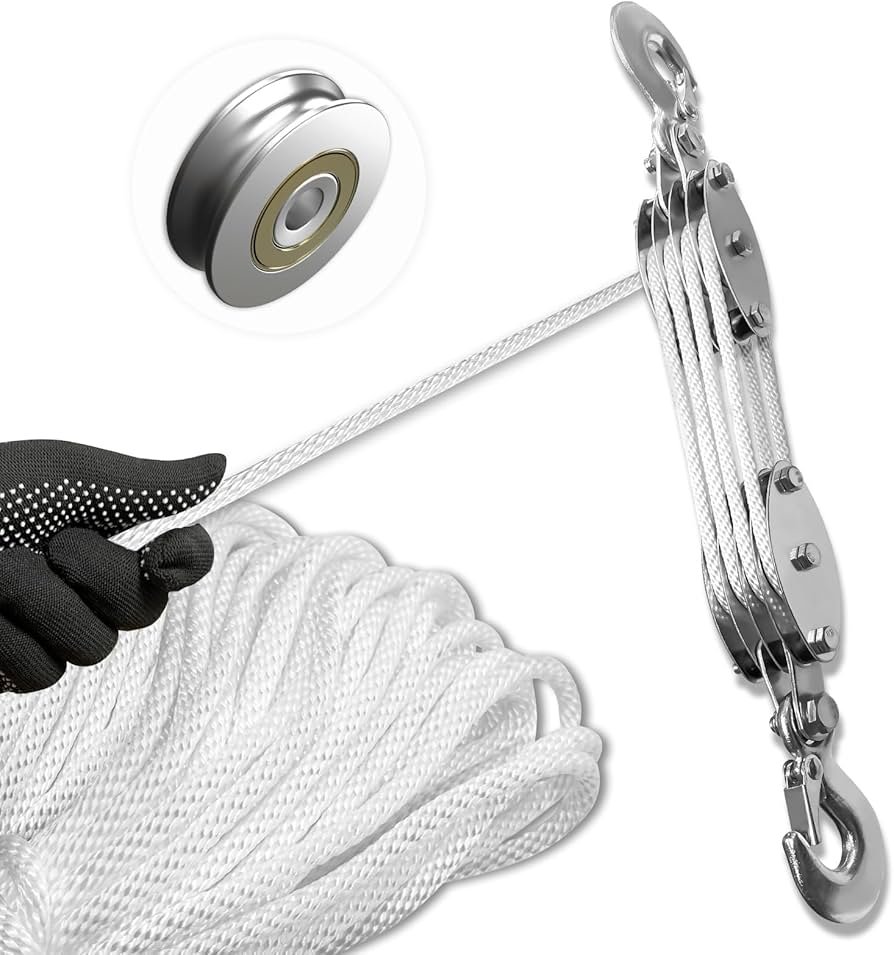
A block and tackle is a lifting mechanism consisting of two or more pulleys connected by a rope, wire rope, or chain.
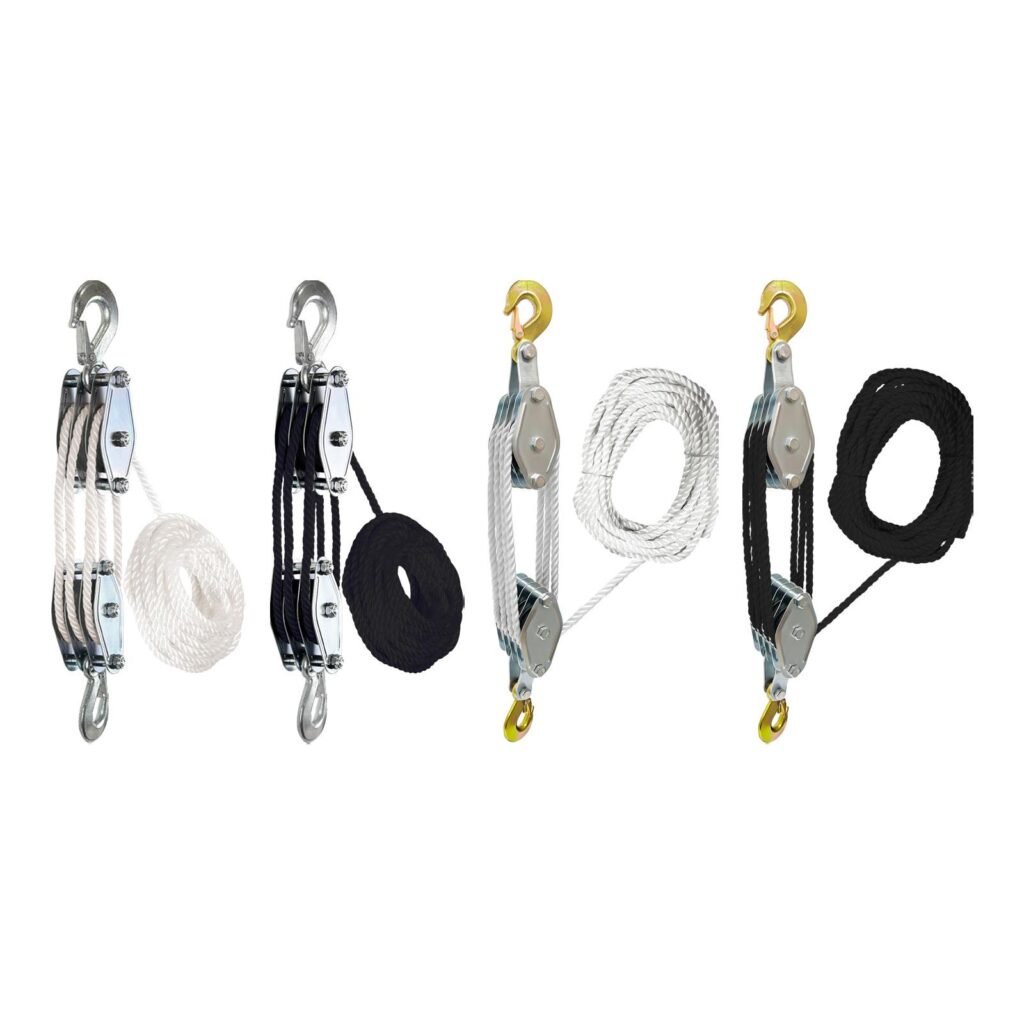
The system generally includes:
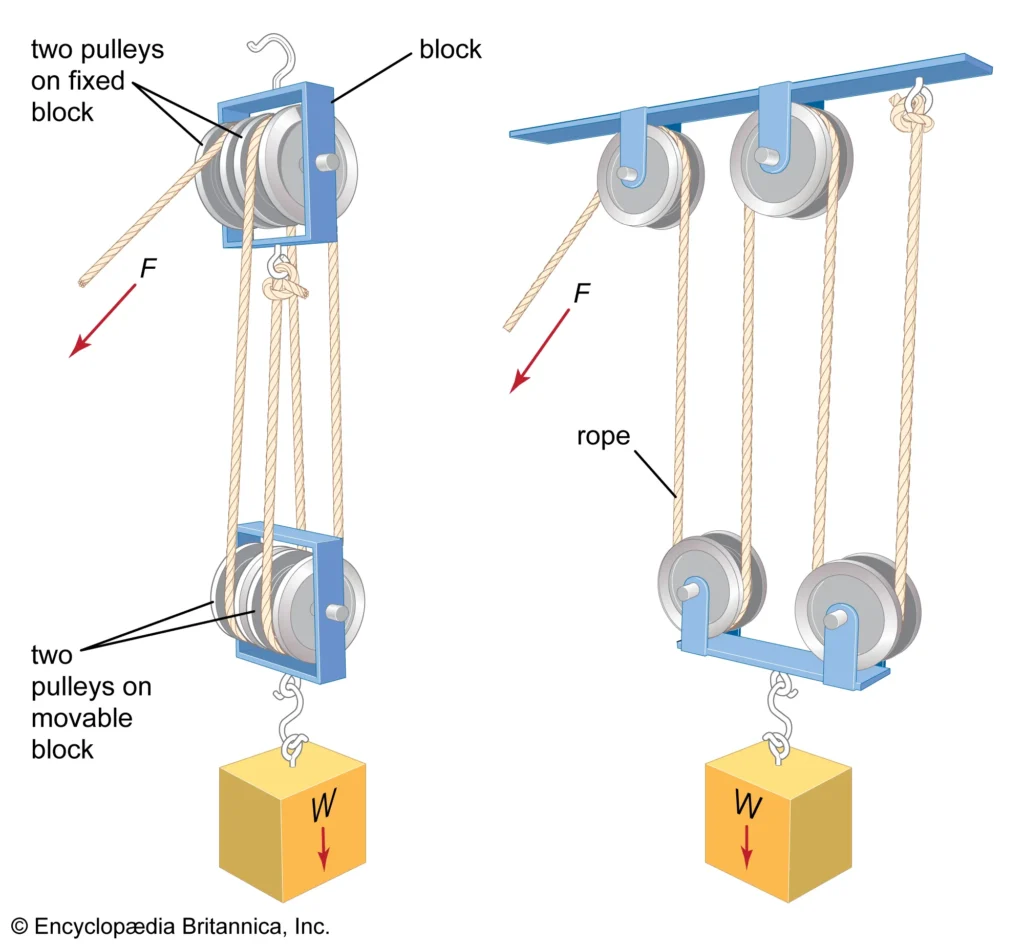
- Fixed block
- Moving block
- Rope, wire rope, or chain
- Hooks or attachment points
By increasing the number of supporting rope segments, the system reduces the amount of force required to lift a load.
For example:
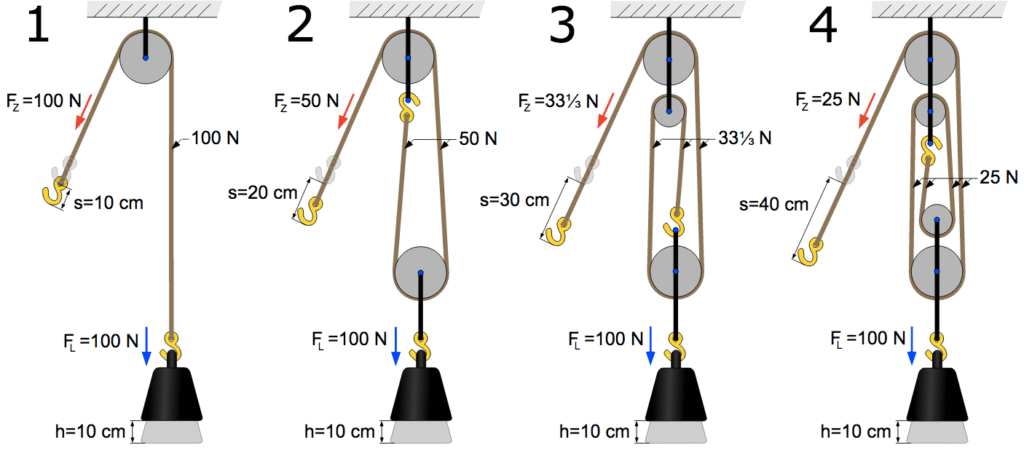
- Single pulley = approximately 1:1 mechanical advantage
- Two-pulley system = approximately 2:1 mechanical advantage
- Four-pulley system = approximately 4:1 mechanical advantage
The greater the number of supporting rope sections, the greater the mechanical advantage.
Main Components of a Block and Tackle System
Sheaves (Pulleys)
The sheave guides the rope or wire rope and allows smooth movement with minimal friction.
Blocks
Blocks are the housings that support one or more sheaves.
Rope, Wire Rope, or Chain
The lifting medium may include:
- Synthetic rope
- Steel wire rope
- Alloy lifting chain
The choice depends on load requirements and operating conditions.
Hooks
Hooks connect the lifting system to the load or lifting structure.
Shackles and Connectors
These components provide secure attachment points within the lifting assembly.
History of Block and Tackle Systems
The concept of mechanical advantage dates back thousands of years.
The ancient Greek mathematician and engineer Archimedes is often associated with the development of fundamental lifting principles that eventually led to pulley systems.
For centuries, block and tackle systems have been used aboard ships, in construction projects, and in industrial lifting applications.
Types of Block and Tackle Systems
Single Pulley System
The simplest pulley arrangement.
Benefits:
- Changes the direction of force
- Simple and economical
Mechanical advantage is minimal.
Double Pulley System
Uses both fixed and moving pulleys.
Benefits:
- Reduces required lifting effort
- Suitable for light to medium lifting tasks
Multiple Pulley Block and Tackle
Includes several pulleys arranged to maximize mechanical advantage.
Benefits:
- Significant force multiplication
- Suitable for heavy industrial lifting
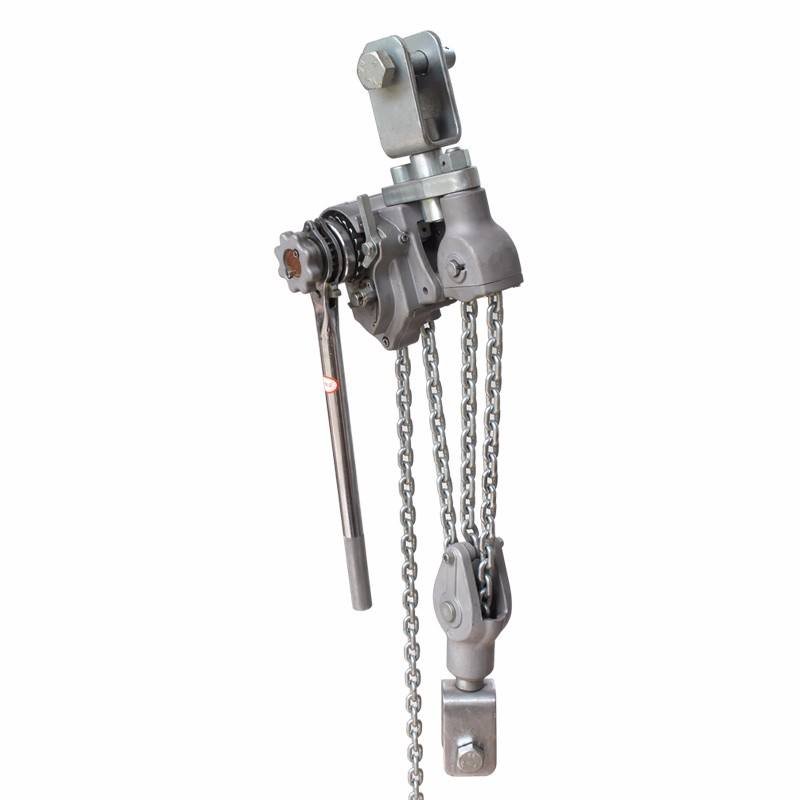
Chain Block Systems
Use lifting chains instead of rope.
Benefits:
- High load capacity
- Excellent durability
- Suitable for industrial environments
Often found in manual chain hoists and chain blocks.
How Does a Block and Tackle Work?
Understanding Mechanical Advantage
The effectiveness of a block and tackle comes from mechanical advantage.
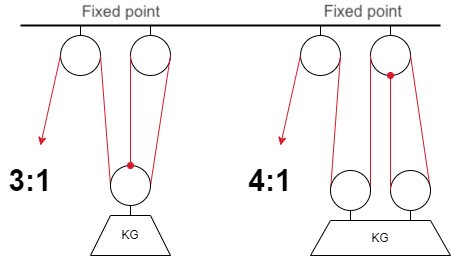
Mechanical Advantage (MA) is generally equal to the number of rope segments supporting the load.
For example:
If four rope sections support a load:
MA = 4
A 1,000 kg load theoretically requires only 250 kg of pulling force.
Actual force requirements will be slightly higher due to friction and efficiency losses.
Manual vs Powered Operation
Manual Block and Tackle
Advantages:
- No electricity required
- Low operating cost
- Easy maintenance
Common applications:
- Warehouses
- Workshops
- Construction sites
- Marine maintenance
Powered Block and Tackle
Advantages:
- Faster lifting speeds
- Higher productivity
- Suitable for frequent operation
Common applications:
- Manufacturing plants
- Ports and terminals
- Heavy industrial facilities
How to Choose the Right Block and Tackle
When selecting a block and tackle system, consider:
Load Capacity
Choose a rated capacity that exceeds the maximum expected load.
Lift Height
Higher lifts require longer rope lengths and appropriate pulley configurations.
Operating Environment
Consider whether the system will be used:
- Indoors
- Outdoors
- Marine environments
- Corrosive environments
Duty Cycle
Frequent operation may justify powered systems and premium components.
Compliance Requirements
Ensure compliance with applicable standards, including:
- ASME standards
- ISO standards
- Local lifting regulations
Conclusion
Block and tackle systems remain one of the most effective mechanical solutions for lifting heavy loads safely and efficiently.
Whether used as a simple manual pulley arrangement or as part of a complex industrial lifting system, block and tackle assemblies provide valuable mechanical advantage that reduces effort, improves safety, and increases productivity.
Selecting the right pulley configuration, load rating, and lifting components ensures reliable performance and long service life.
FAQs About Block and tackle systems
Block and tackle systems reduce the force required to lift heavy loads, improve safety, and increase lifting efficiency.
Consider load capacity, lift height, operating environment, duty cycle, and whether manual or powered operation is required.
Yes. Galvanized, stainless steel, and marine-grade components are available for outdoor and offshore applications.
A visual inspection should be conducted before each use. Detailed inspections should be performed regularly according to usage frequency and applicable safety standards. Critical lifting equipment should receive annual professional inspections.