Understanding the classification of overhead cranes is essential for selecting the right equipment, improving operational efficiency, ensuring workplace safety, and optimizing engineering design. Different crane types are designed for different working environments, lifting capacities, and industrial applications.
By understanding how cranes are categorized, engineers, plant managers, and procurement teams can make better decisions when selecting material handling equipment. In the following sections, we will systematically introduce the main classification methods of overhead cranes.
Classification by Structural Design
Among all classification methods, structural design is the most fundamental and widely used. In technical documentation, product catalogs, and equipment selection processes, cranes are usually introduced according to their structural type first. This method is intuitive and helps users quickly understand the key differences between various crane systems.
The most common structural types of overhead cranes include:
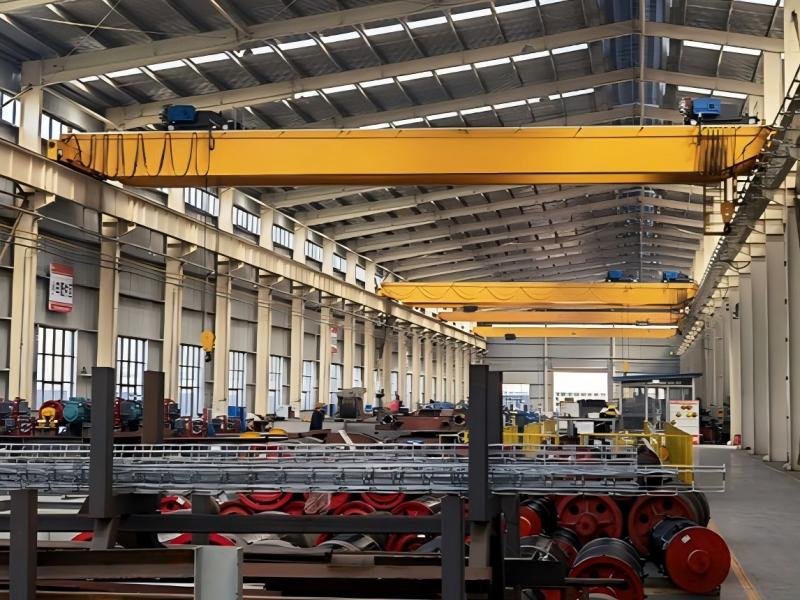
Bridge Crane
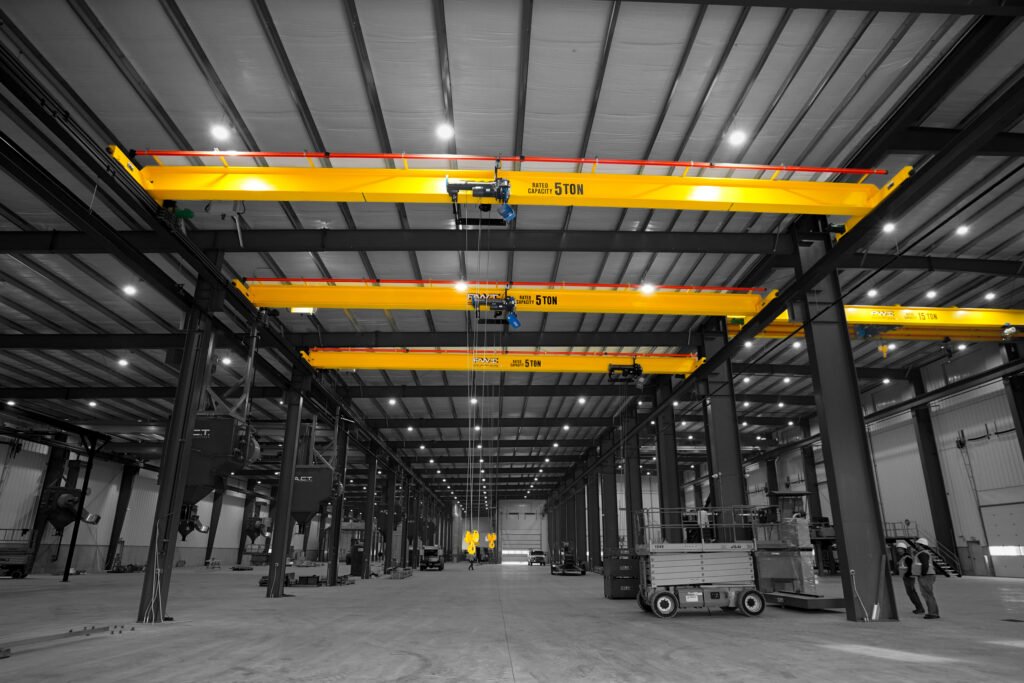
A bridge crane is the most widely used type of industrial crane. It is typically installed on runway rails mounted on the upper structure of a building and consists of one or two bridge girders.
The crane bridge travels along the runway rails, while the trolley moves across the girder and the hoist lifts or lowers the load. These combined movements create a three-dimensional material handling system that allows loads to be transported efficiently throughout the workspace.
Bridge cranes are commonly used in:
- Manufacturing plants
- Warehouses and logistics centers
- Steel structure workshops
- Machinery production facilities
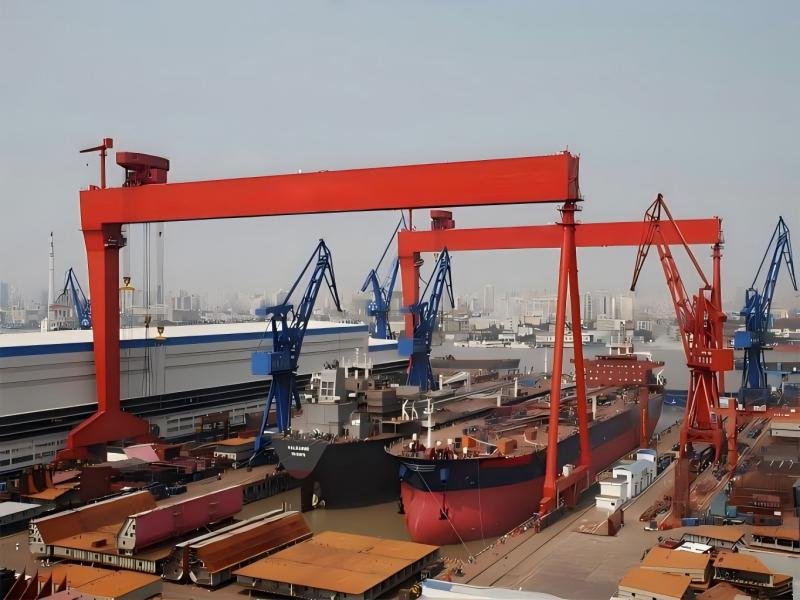
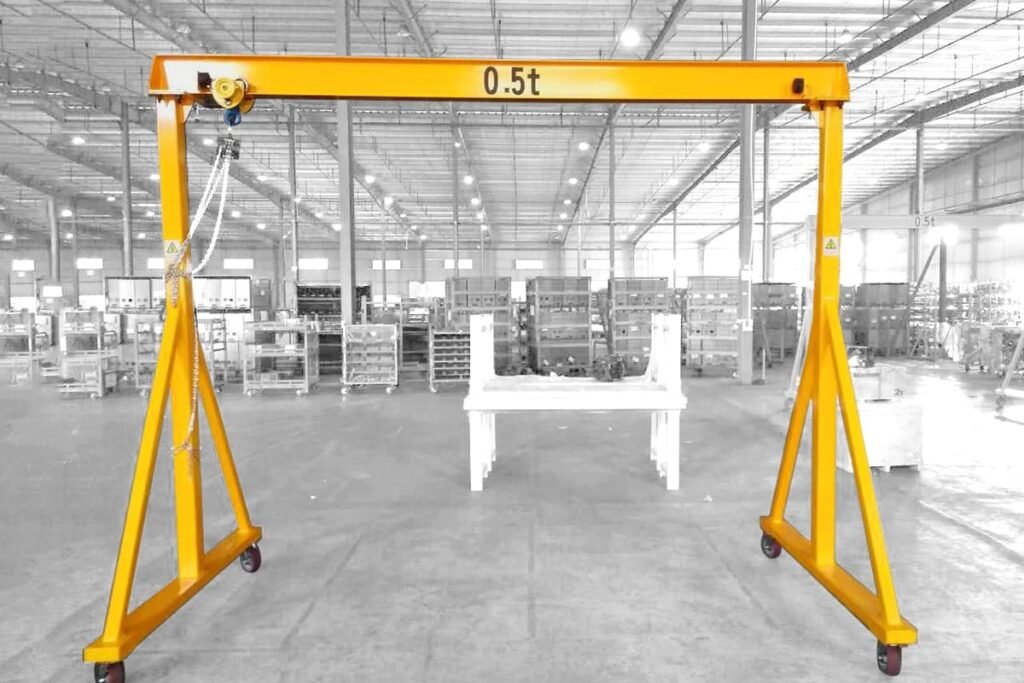
Gantry Crane
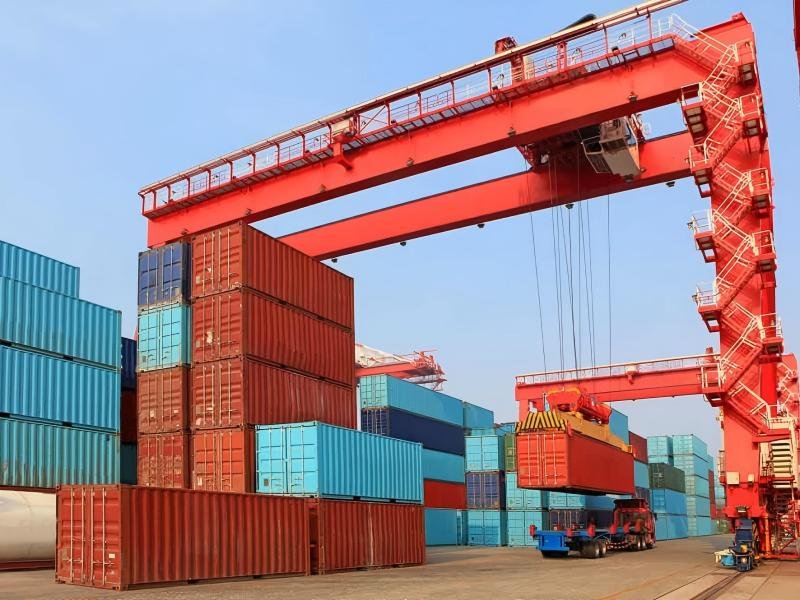
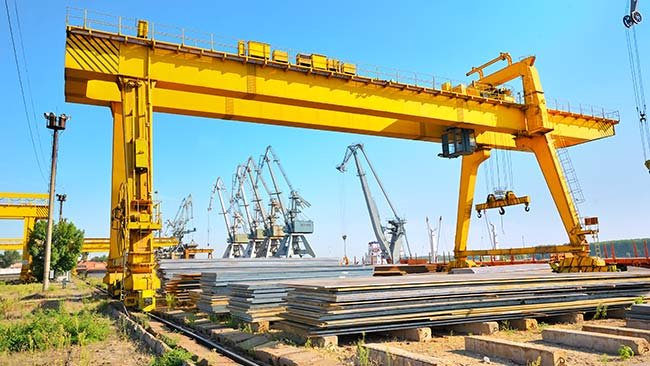
A gantry crane has a structure similar to a bridge crane, but the bridge is supported by legs that move on ground rails or wheels rather than being supported by building structures.
Because gantry cranes do not rely on a building frame, they are widely used in outdoor environments such as:
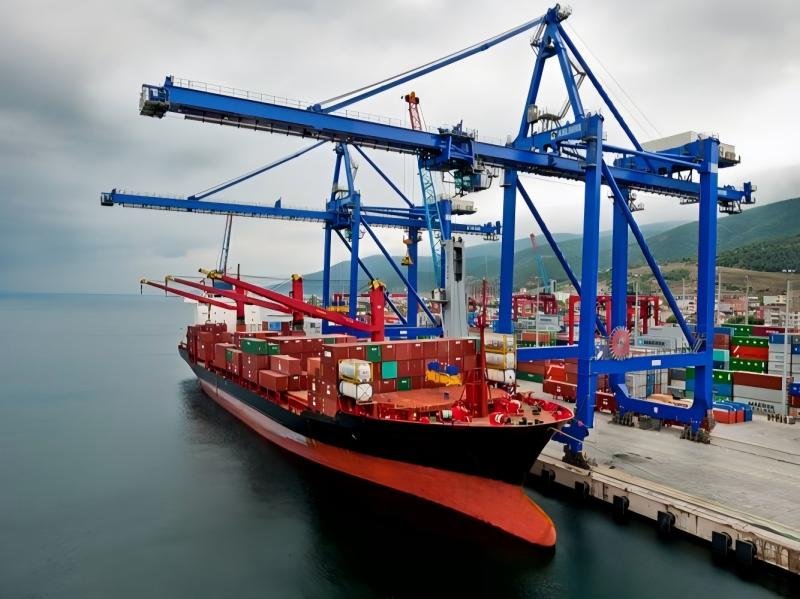
- Port terminals
- Shipyards
- Container yards
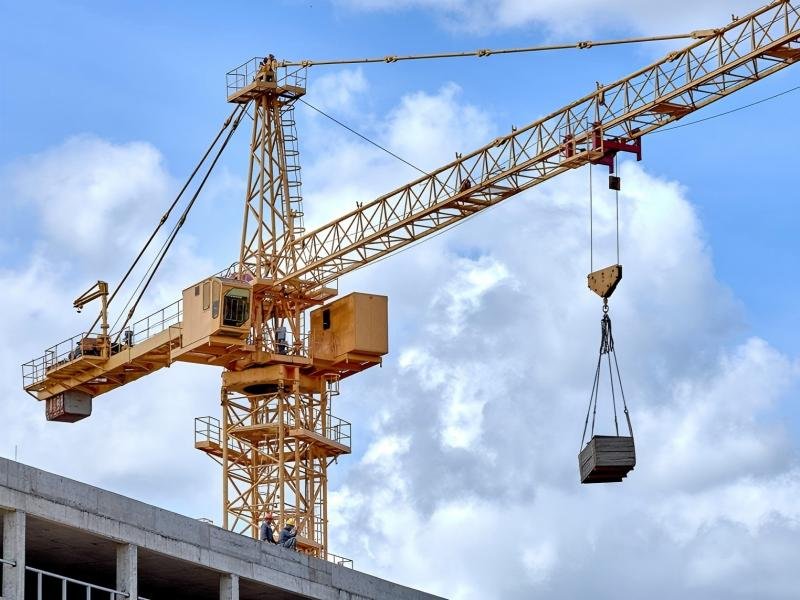
- Construction sites
- Large equipment assembly areas
Gantry cranes are particularly suitable for large spans and heavy lifting operations.
Jib Crane
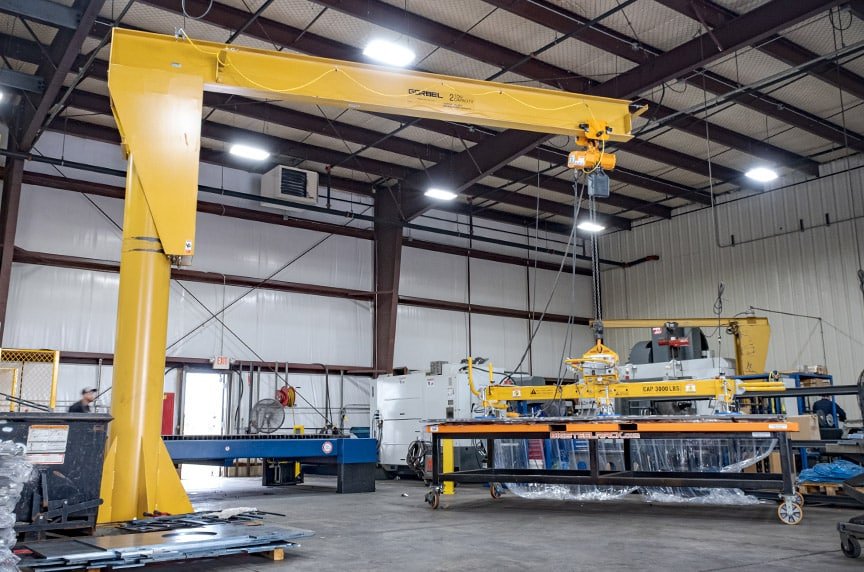
A jib crane is a lightweight lifting device designed for localized lifting tasks. It consists of a horizontal arm (jib) mounted on a column or wall support.
The jib arm can rotate within a certain angle, allowing materials to be lifted and moved within a specific work area. Jib cranes are commonly used for workstation-level lifting tasks.
Typical applications include:
- Assembly lines
- Machine workshops
- Maintenance areas
- Warehouse workstations
Monorail Crane
A monorail crane uses a single overhead track along which a hoist travels. Unlike bridge cranes, monorail systems follow a fixed path rather than covering a full rectangular work area.
The track can be designed in straight, curved, or loop configurations, making monorail cranes ideal for transporting materials between specific points in a production process.
They are widely used in:
- Automotive manufacturing
- Production lines
- Assembly plants
- Warehouse transport systems
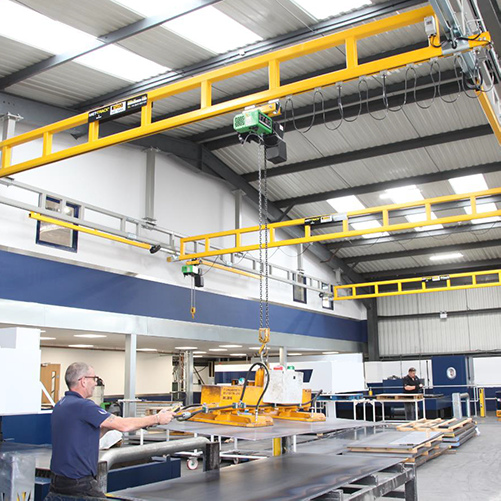
Workstation Crane
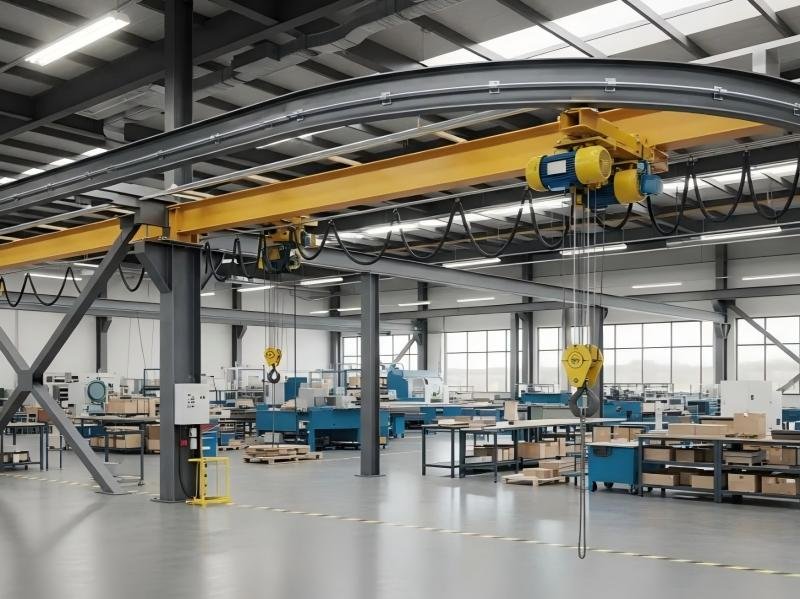
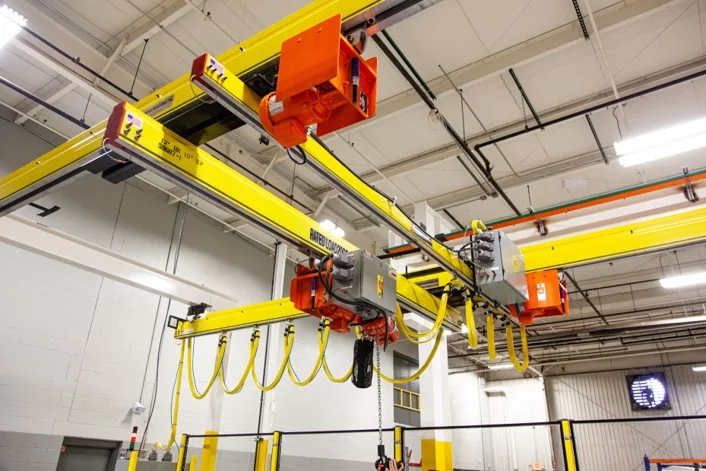
A workstation crane is a modular lightweight crane system designed for workstation-level material handling.
These cranes use lightweight rail systems and manual or electric hoists to lift and move components within a limited workspace. Workstation cranes are ideal for operations that require frequent handling of small or medium-sized loads.
Common applications include:
- Electronics manufacturing
- Automotive parts assembly
- Precision manufacturing workshops
- Small component production lines
Classification by Girder Structure
Another common way to classify overhead cranes is by girder structure. The girder is the main load-bearing beam of the crane and plays a critical role in determining the crane’s lifting capacity, span, structural stability, and overall performance.
Depending on the number of girders used in the bridge structure, overhead cranes are typically divided into Single Girder Overhead Cranes and Double Girder Overhead Cranes. This classification is widely used in crane engineering, equipment procurement, and industrial design because it directly reflects the crane’s load capacity and structural strength.
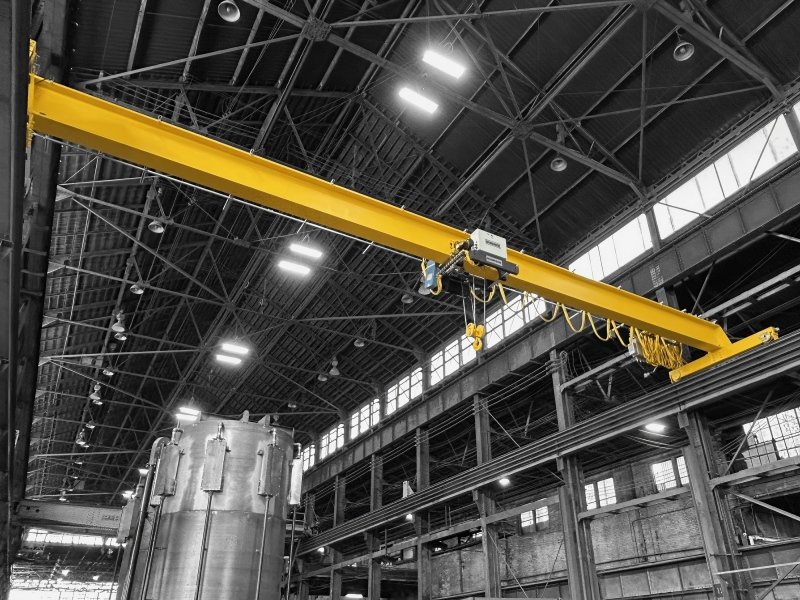
Single Girder Overhead Crane
A Single Girder Overhead Crane uses a single bridge girder as the main supporting beam. The hoist is usually mounted under the girder and moves along the lower flange of the beam. This design makes the crane lighter, more compact, and cost-effective.
Single girder cranes are widely used for light to medium-duty lifting operations and are suitable for facilities where lifting capacity and span requirements are moderate.
Typical applications include:
- Manufacturing workshops
- Warehouses and logistics centers
- Assembly plants
- Equipment maintenance areas
Because of their simple structure, lower cost, and easy installation, single girder cranes are one of the most commonly used overhead crane types in industrial facilities.
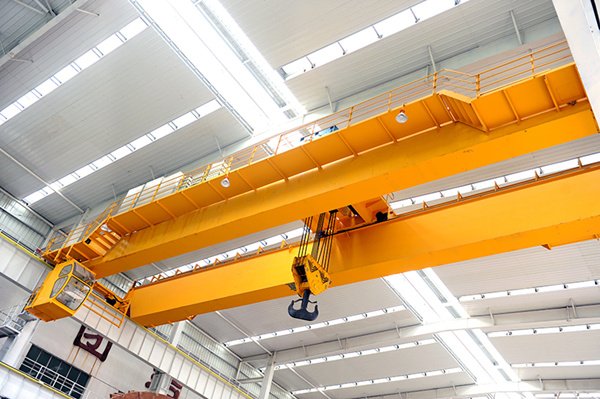
Double Girder Overhead Crane
A Double Girder Overhead Crane uses two parallel bridge girders to support the trolley and hoisting system. The trolley typically runs on rails mounted on top of the girders, allowing the crane to handle heavier loads and achieve greater lifting heights.
Compared with single girder cranes, double girder cranes provide higher load capacity, better structural rigidity, and improved stability, making them suitable for heavy-duty industrial operations.
Double girder cranes are commonly used in:
- Steel mills
- Shipyards
- Heavy manufacturing plants
- Power stations
- Large industrial facilities
These cranes are designed for high-capacity lifting and continuous operation, especially in environments where reliability and strength are critical.
Classification by Runway Installation
Overhead cranes can also be classified according to their runway installation method, which refers to how the crane is mounted and supported within a building structure. The installation method determines how the crane interacts with the runway beams and affects factors such as lifting capacity, structural requirements, and suitable applications.
Based on the runway configuration, overhead cranes are generally divided into Top Running Overhead Cranes and Under Running (Underhung) Cranes. This classification is commonly used in crane engineering and factory design because it directly relates to building structure and crane installation requirements.
Top Running Overhead Crane
A Top Running Overhead Crane travels on rails mounted on top of runway beams supported by building columns. The crane wheels run on the upper surface of the rails, allowing the crane to carry heavier loads and operate over larger spans.
Because the runway beams are supported by structural columns, this configuration provides strong support and allows for higher lifting capacities. Top running cranes are therefore commonly used in heavy industrial applications.
Typical applications include:
- Manufacturing plants
- Steel production facilities
- Heavy equipment workshops
- Power plants
Due to their high load capacity and structural stability, top running cranes are the most commonly used overhead cranes in industrial environments.
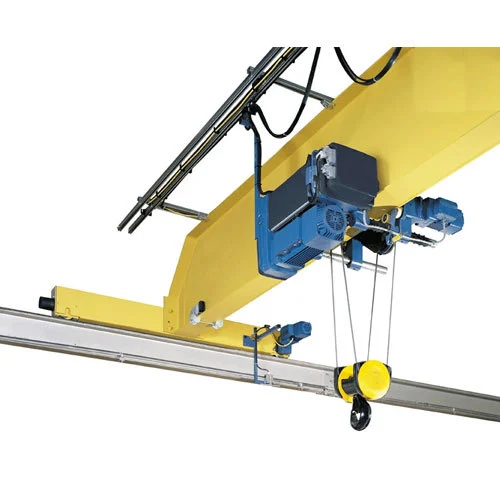
Under Running (Underhung) Crane
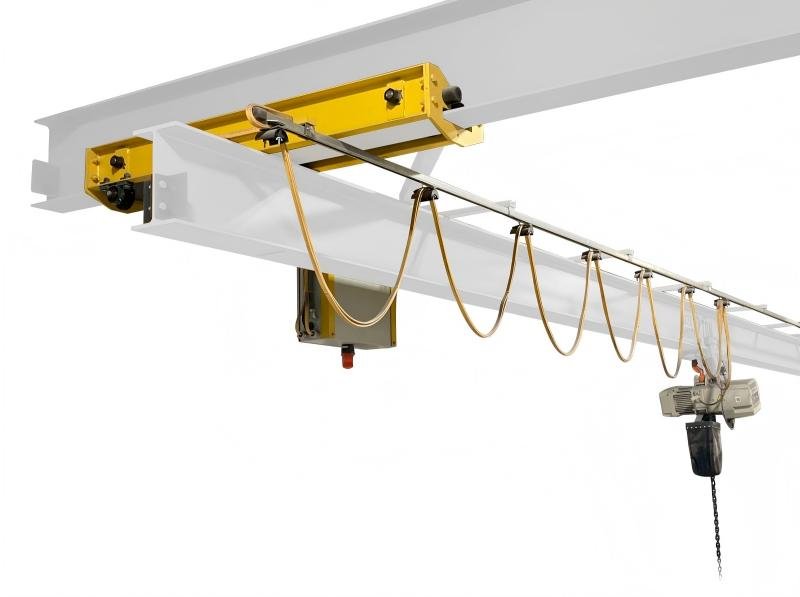
An Under Running Crane, also known as an Underhung Crane, is suspended from the roof structure or the lower flange of runway beams. Instead of running on top of the rails, the crane wheels travel along the underside of the beam.
This design eliminates the need for additional support columns and allows the crane to operate within existing building structures. Under running cranes are typically used for light to medium-duty lifting tasks.
Typical applications include:
- Assembly workshops
- Maintenance areas
- Warehouses
- Production lines
Underhung cranes are especially suitable for facilities where floor space is limited or structural support requirements must be minimized.
Classification by Travel Mechanism
Another important way to classify cranes is by their travel mechanism, which refers to how the crane moves along its operating path. The travel mechanism determines the crane’s mobility, operational flexibility, and the type of infrastructure required for installation.
Based on the type of movement system used, cranes are generally classified into Rail Mounted Cranes and Rubber Tyred Cranes. This classification is commonly used in large industrial facilities, ports, and logistics yards where crane mobility plays an important role in material handling efficiency.
Rail Mounted Crane
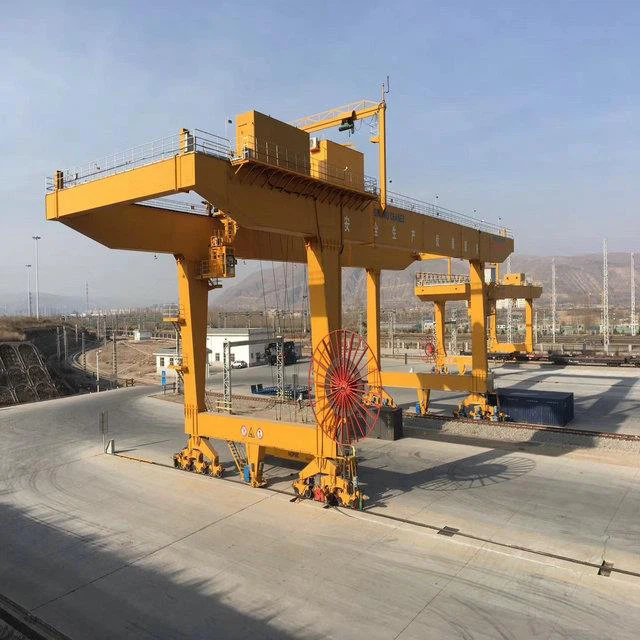
A Rail Mounted Crane travels along fixed rails installed on the ground or on elevated runway beams. The crane moves using wheels that run on these rails, providing stable and precise movement along a predefined path.
Rail-mounted cranes are widely used in environments where heavy loads, high precision, and frequent operations are required. Because the crane follows a fixed track, it offers excellent stability and reliability.
Typical applications include:
- Manufacturing factories
- Steel plants
- Container terminals
- Large warehouses
- Rail freight yards
Rail mounted cranes are especially suitable for heavy-duty lifting operations and continuous industrial production.
Rubber Tyred Crane
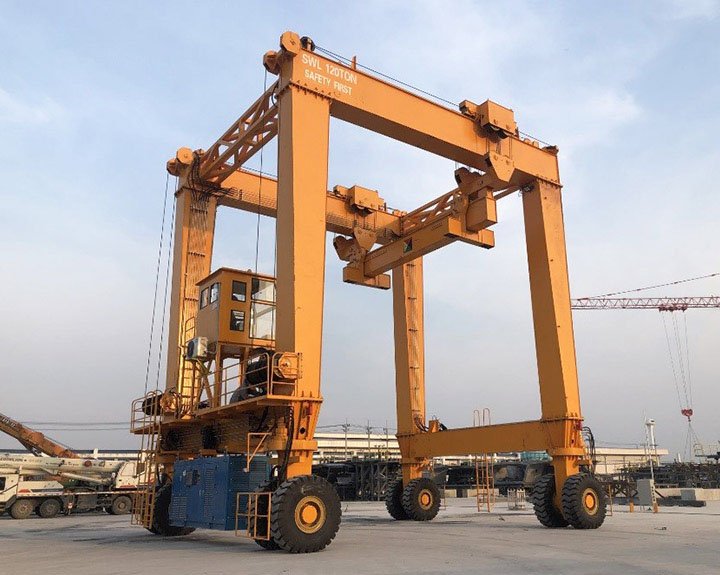
A Rubber Tyred Crane moves using rubber tires instead of fixed rails. This design provides greater flexibility because the crane can move freely across a yard or working area without relying on a fixed rail system.
Rubber tyred cranes are commonly used in logistics yards and container terminals, where mobility and operational flexibility are important.
Typical applications include:
- Container yards
- Port logistics terminals
- Large outdoor storage areas
- Construction sites
Because of their high mobility and flexible movement, rubber tyred cranes are ideal for environments where the working area changes frequently.
Classification by Drive Type
Overhead cranes can also be classified according to their drive type, which refers to the power source used to operate the crane’s lifting and travelling mechanisms. The drive system directly affects the crane’s lifting capacity, operating efficiency, and level of automation.
Based on the driving method, cranes are generally divided into Electric Overhead Cranes, Manual Cranes, and Hydraulic Cranes. Each type is designed for different operational requirements and industrial environments.
Electric Overhead Crane
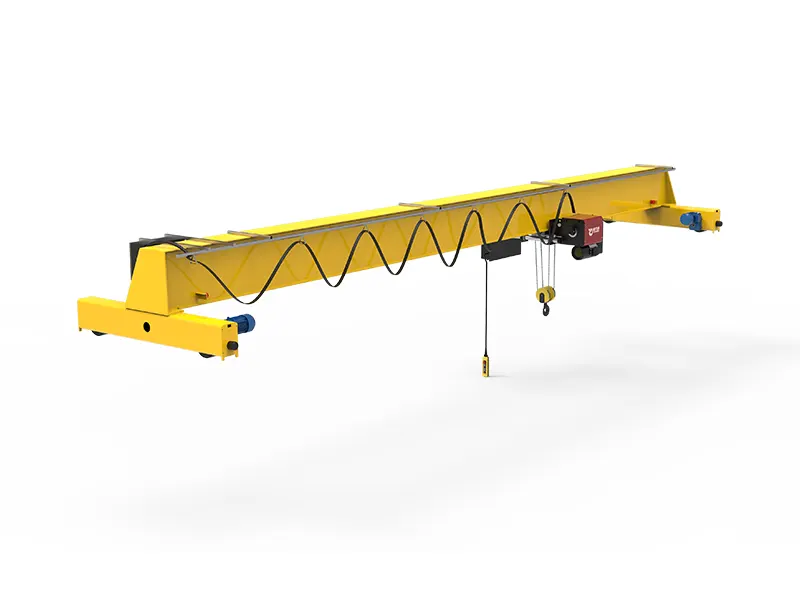
An Electric Overhead Crane is the most widely used type of crane in modern industry. It uses electric motors to drive the hoisting mechanism, trolley movement, and crane travel along the runway rails.
Electric cranes provide high efficiency, precise control, and strong lifting capacity, making them suitable for continuous industrial operations. They are commonly equipped with electric wire rope hoists or chain hoists.
Typical applications include:
- Manufacturing plants
- Warehouses and logistics centers
- Steel fabrication workshops
- Heavy machinery factories
Because of their high performance and automation capability, electric cranes are the standard choice for most industrial lifting applications.
Manual Crane
A Manual Crane operates using human power rather than electric motors. The lifting and travelling motions are usually performed using hand chains or manual push mechanisms.
Manual cranes are generally used for light-duty lifting tasks and environments where power supply is limited or where crane usage is infrequent.
Typical applications include:
- Small workshops
- Maintenance operations
- Equipment repair areas
- Low-frequency lifting tasks
Manual cranes are valued for their simple structure, low cost, and easy maintenance.
Hydraulic Crane
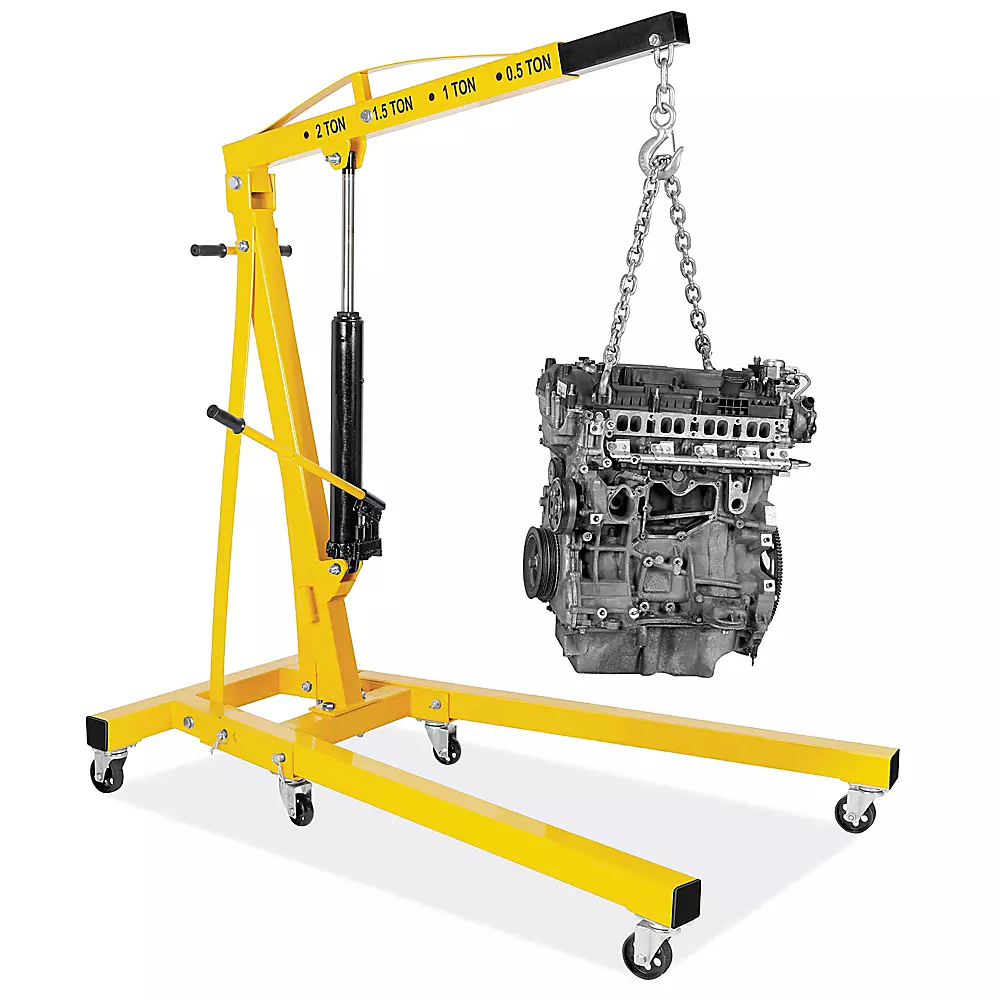
A Hydraulic Crane uses hydraulic systems to generate lifting force through hydraulic cylinders or hydraulic motors. Hydraulic cranes are capable of producing large lifting forces and smooth load control.
They are commonly used in mobile lifting equipment and specialized industrial machinery.
Typical applications include:
- Construction equipment
- Truck-mounted cranes
- Mobile lifting systems
- Heavy equipment installation
Hydraulic cranes are particularly suitable for applications requiring high lifting power and precise load control.
Classification by Control Method
Overhead cranes can also be classified according to their control method, which refers to how the crane operator controls the movement of the lifting, trolley, and bridge travel mechanisms. The control system plays an important role in determining the crane’s operating efficiency, safety level, and degree of automation.
Based on the control method used, overhead cranes are commonly divided into Pendant Control Cranes, Remote Control Cranes, Cabin Control Cranes, and Automated Cranes. Each control method is designed to suit different working environments and operational requirements.
Pendant Control Crane
A Pendant Control Crane is operated using a wired control pendant suspended from the crane. The operator stands on the ground and controls the crane movements through buttons on the pendant.
This is one of the most common control methods for small and medium-sized overhead cranes because it is simple, reliable, and cost-effective.
Typical applications include:
- Manufacturing workshops
- Warehouses
- Assembly plants
- Equipment maintenance areas
Pendant control cranes are widely used for light to medium-duty lifting operations.
Remote Control Crane
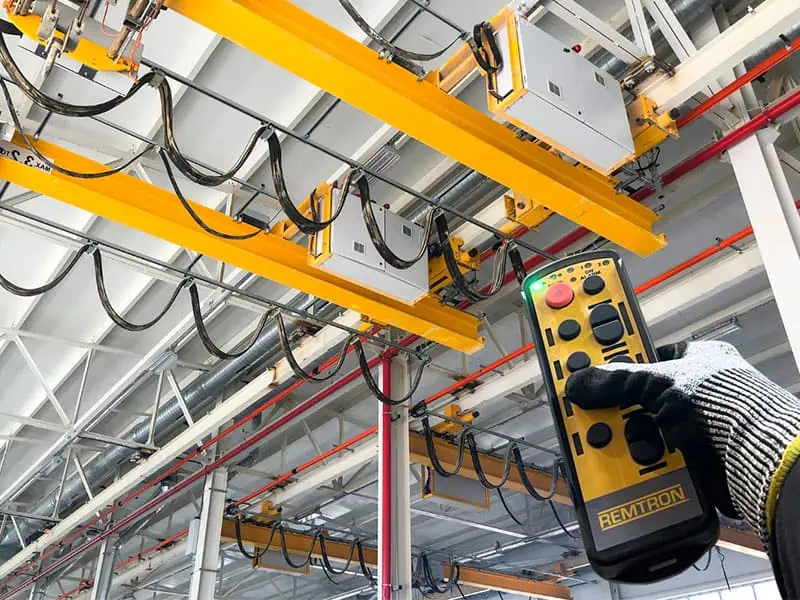
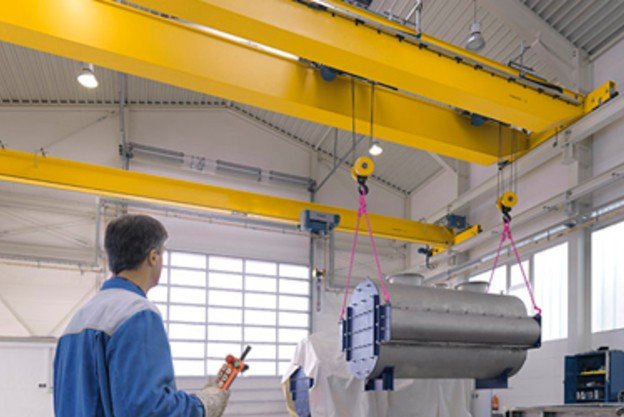
A Remote Control Crane uses a wireless remote control device that allows the operator to control the crane from a distance. This provides greater flexibility and improves visibility of the lifting operation.
Remote control systems enhance operational safety and efficiency, especially in environments where the operator needs to move freely to observe the load.
Typical applications include:
- Steel processing workshops
- Large manufacturing plants
- Construction material handling
- Outdoor lifting operations
Wireless control systems are becoming increasingly popular in modern crane systems.
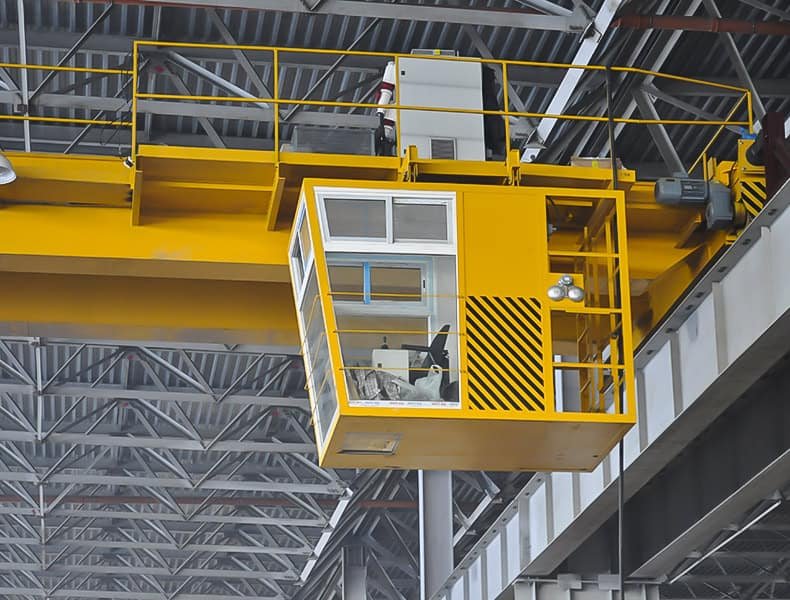
Cabin Control Crane
A Cabin Control Crane is operated by a driver seated inside a cabin mounted on the crane bridge. The operator uses control panels and joysticks to control crane movements.
This type of control system is typically used for large cranes and heavy-duty operations, where precise control and full visibility of the working area are required.
Typical applications include:
- Steel mills
- Shipyards
- Large manufacturing facilities
- Port operations
Cabin-controlled cranes are commonly used for high-capacity and continuous lifting operations.
Automated Crane
An Automated Crane operates using computerized control systems with minimal or no human intervention. These cranes are integrated with automation systems such as sensors, positioning systems, and warehouse management software.
Automated cranes are widely used in smart factories and automated storage systems, where high efficiency and precision are required.
Typical applications include:
- Automated warehouses
- Smart manufacturing facilities
- Container terminals
- High-tech logistics centers
Automated cranes represent the future of industrial material handling, offering higher productivity, improved safety, and reduced labor requirements.
Classification by Lifting Attachment
Overhead cranes can also be classified according to the type of lifting attachment used to handle different materials. The lifting attachment, also known as a lifting device, is the component that directly contacts and lifts the load.
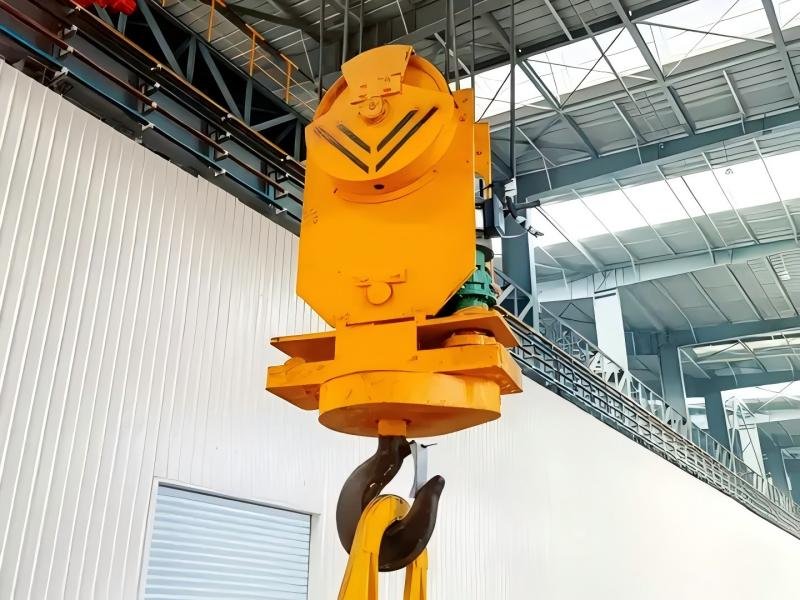
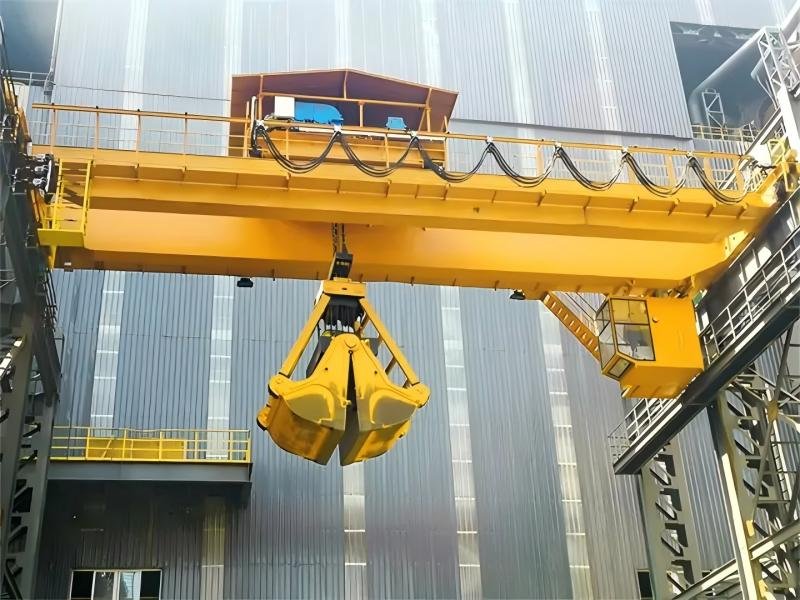
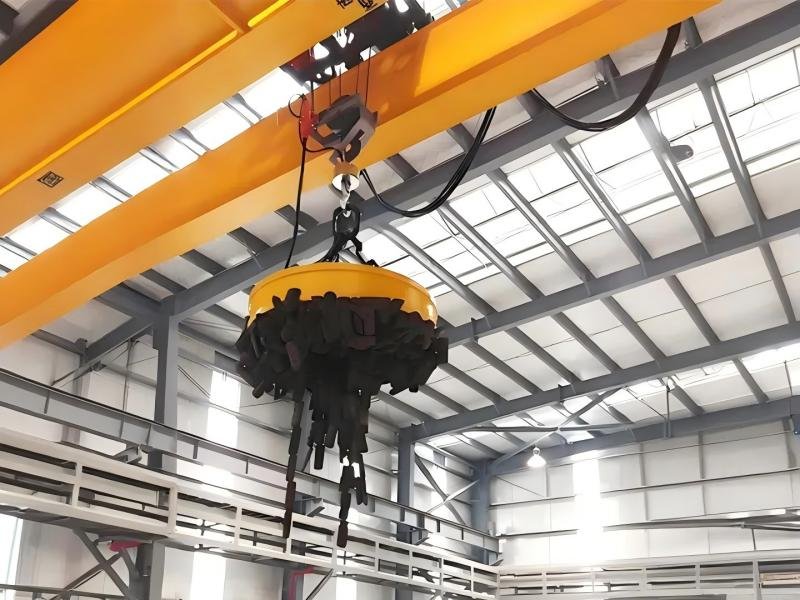
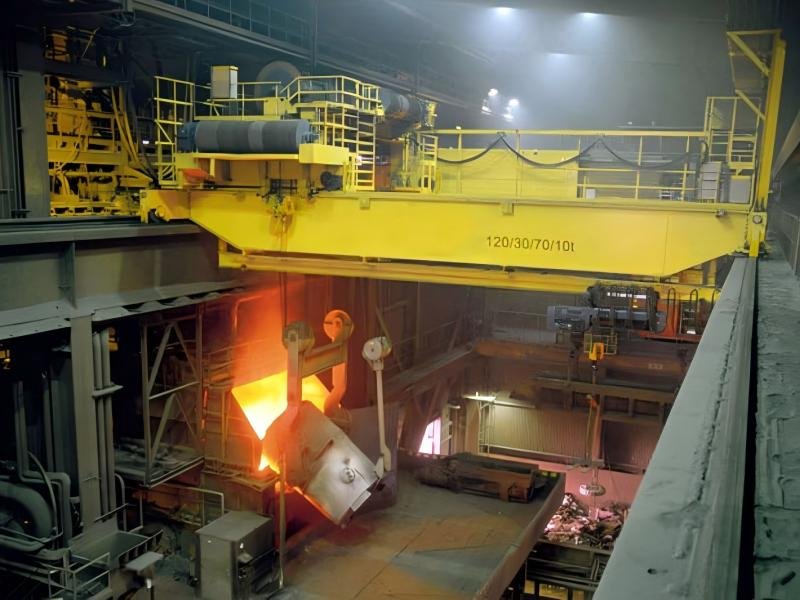
Different industries require different lifting attachments depending on the shape, weight, and characteristics of the materials being handled. Based on the lifting device used, cranes can be categorized into several specialized types such as Hook Cranes, Grab Cranes, Magnetic Cranes, Ladle Cranes, Coil Handling Cranes, Container Cranes, and Vacuum Lifting Cranes.
| Lifting Attachment | Crane Type | Application Industry | Typical Load |
| Hook | Hook Crane | General manufacturing, mechanical workshops, warehouses, equipment installation | Machinery, steel structures, molds, equipment components |
| Grab Bucket | Grab Crane | Ports, mining operations, bulk material handling facilities, power plants | Coal, ore, sand, gravel, grain, bulk materials |
| Electromagnet | Magnetic Crane | Steel mills, scrap yards, metal processing plants | Scrap steel, steel plates, billets, metal scraps |
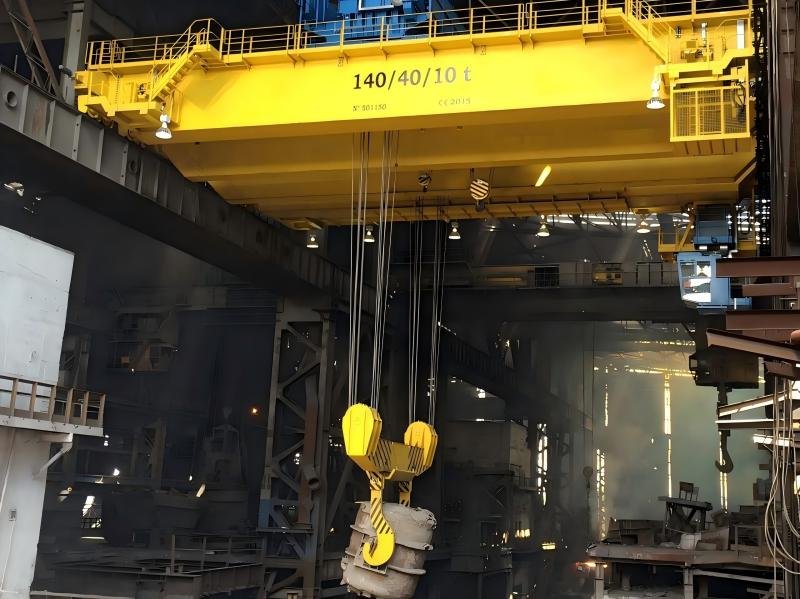
| Ladle | Ladle Crane | Steel plants, metallurgical industry, foundries | Molten steel, molten iron, liquid metal |
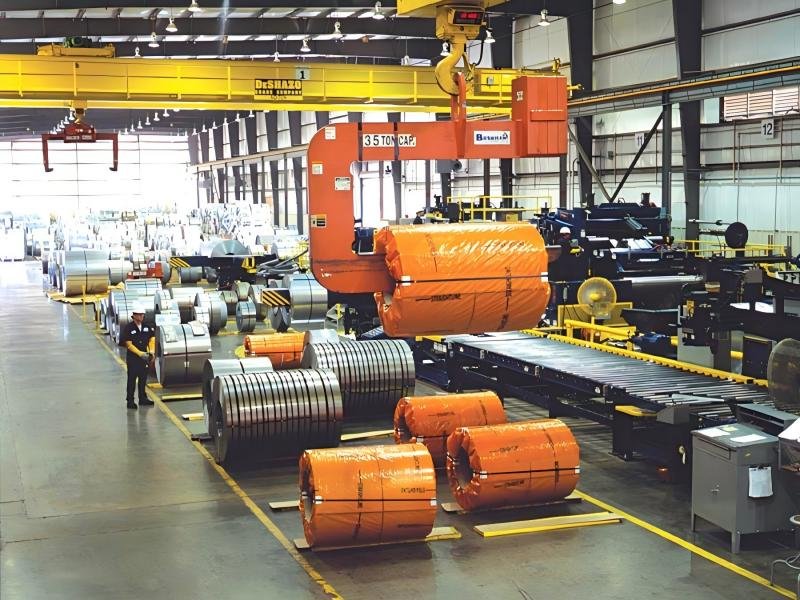
| C-Hook | Coil Crane | Steel mills, metal processing centers, coil warehouses | Steel coils, aluminum coils, copper coils |
| Spreader | Container Crane | Ports, container terminals, logistics yards | ISO containers (20 ft / 40 ft / 45 ft) |
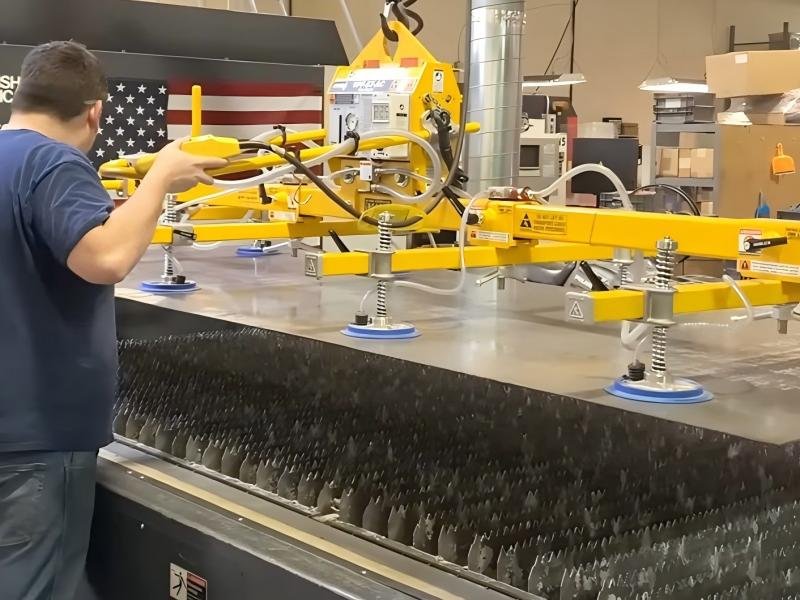
| Vacuum | Vacuum Lifting Crane | Glass manufacturing, sheet processing, electronics industry, building materials industry | Glass panels, metal sheets, stone slabs, composite panels |
Classification by Industry Application
Overhead cranes can also be classified according to the industry in which they are used. Different industries have different requirements for lifting capacity, operating frequency, safety standards, and working environments. As a result, cranes are often designed or optimized to meet the specific needs of particular industrial sectors.
Based on industry applications, cranes are commonly categorized into Steel Mill Cranes, Shipyard Cranes, Warehouse Cranes, Port Cranes, and Construction Cranes. Each type is designed to handle the unique material handling challenges of its industry.
| Industry Application | Crane Type | Typical Use |
| Steel Industry | Steel Mill Crane | Handling molten metal, steel coils, billets, slabs |
| Shipbuilding Industry | Shipyard Crane | Lifting ship blocks, engines, large steel structures |
| Warehousing & Logistics | Warehouse Crane | Material handling, pallet lifting, storage operations |
| Port & Terminal Operations | Port Crane | Container handling, bulk cargo loading and unloading |
| Construction Industry | Construction Crane | Lifting building materials, concrete, steel structures |
Classification by Duty Class
Overhead cranes can also be classified according to their duty class, which indicates the intensity and frequency of crane operation during its service life. The duty class is an important factor in crane design because it affects the strength of the structure, the durability of components, and the expected service life of the equipment.
International standards such as ISO, FEM, and CMAA define crane duty classes to help engineers and users select cranes that match the required working conditions. These standards consider factors such as load spectrum, working cycles, and operating frequency.
Based on these standards, overhead cranes are typically divided into four general duty categories: Light Duty, Medium Duty, Heavy Duty, and Very Heavy Duty.
| Duty Class (ISO / FEM / CMAA) | Duty Level | Operating Characteristics | Applications |
| A1 – A2 | Light Duty | Low working frequency, light loads, occasional lifting | Maintenance workshops, small warehouses, equipment repair areas |
| A3 – A4 | Medium Duty | Moderate operating frequency and load cycles | Manufacturing plants, assembly workshops, logistics warehouses |
| A5 – A6 | Heavy Duty | High operating frequency, heavy loads, regular operation | Steel fabrication plants, metal processing factories, heavy manufacturing |
| A7 – A8 | Very Heavy Duty | Extremely high duty cycles, continuous heavy-load handling | Steel mills, foundries, metallurgical plants, high-intensity industrial operations |
Classification by Installation Environment
Overhead cranes can also be classified according to their installation environment, which refers to the working conditions in which the crane operates. Different environments require different structural designs, protective measures, and safety standards to ensure reliable and safe operation.
Depending on the operating environment, cranes are generally divided into Indoor Cranes, Outdoor Cranes, Explosion Proof Cranes, and Cleanroom Cranes. Each type is designed to meet the specific environmental requirements of various industrial applications.
| Installation Environment | Crane Type | Description | Applications |
| Indoor Environment | Indoor Crane | Designed for operation inside buildings and factories | Manufacturing plants, warehouses, assembly workshops |
| Outdoor Environment | Outdoor Crane | Built to withstand weather conditions such as rain, wind, and temperature changes | Construction sites, shipyards, ports, storage yards |
| Hazardous / Explosive Environment | Explosion Proof Crane | Specially designed to prevent sparks or ignition in hazardous areas | Chemical plants, oil & gas facilities, refineries, paint workshops |
| Cleanroom Environment | Cleanroom Crane | Designed to meet strict cleanliness and contamination control requirements | Semiconductor manufacturing, pharmaceutical plants, precision electronics production |
Classification by Span Range
Overhead cranes can also be classified according to their span range, which refers to the distance between the two runway rails or supporting structures on which the crane travels. The span is an important design parameter because it determines the working coverage area of the crane and influences the structural strength required for the bridge girder.
Based on span size, overhead cranes are generally categorized into Small Span Cranes, Medium Span Cranes, and Large Span Cranes. This classification is often used in crane engineering and factory layout design to match the crane system with the size of the facility and operational requirements.
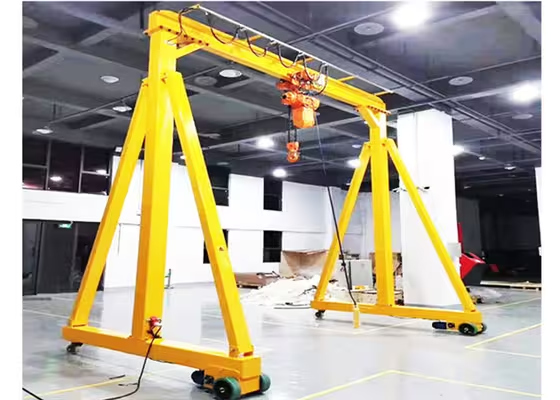
Small Span Crane
A Small Span Crane is designed for facilities with relatively narrow working areas. These cranes typically operate in compact workshops or small production spaces where lifting coverage requirements are limited.
Typical span range: 5–10 meters
Typical applications include:
- Small manufacturing workshops
- Maintenance areas
- Equipment repair stations
- Small warehouses
Small span cranes are often used for light to medium-duty lifting tasks and are valued for their compact design and cost efficiency.
Medium Span Crane
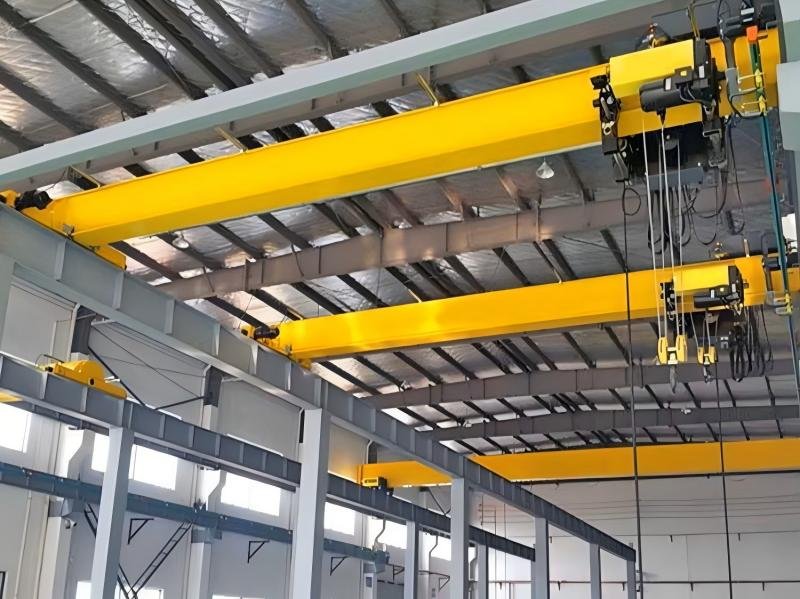
A Medium Span Crane is commonly used in standard industrial facilities where the working area is larger and lifting coverage needs to extend across production lines or storage areas.
Typical span range: 10–25 meters
Typical applications include:
- Manufacturing plants
- Assembly workshops
- Logistics centers
- General industrial facilities
Medium span cranes are the most widely used type because they provide a good balance between coverage area, structural stability, and cost.
Large Span Crane
A Large Span Crane is designed for large industrial facilities where wide working areas require extended crane coverage. These cranes typically require stronger structural components and more robust bridge girders.
Typical span range: 25–40 meters or more
Typical applications include:
- Steel plants
- Shipyards
- Aircraft manufacturing facilities
- Large industrial workshops
Large span cranes are designed to handle wide operational areas and heavy-duty lifting tasks while maintaining stability and safety.
Classification by Lifting Capacity
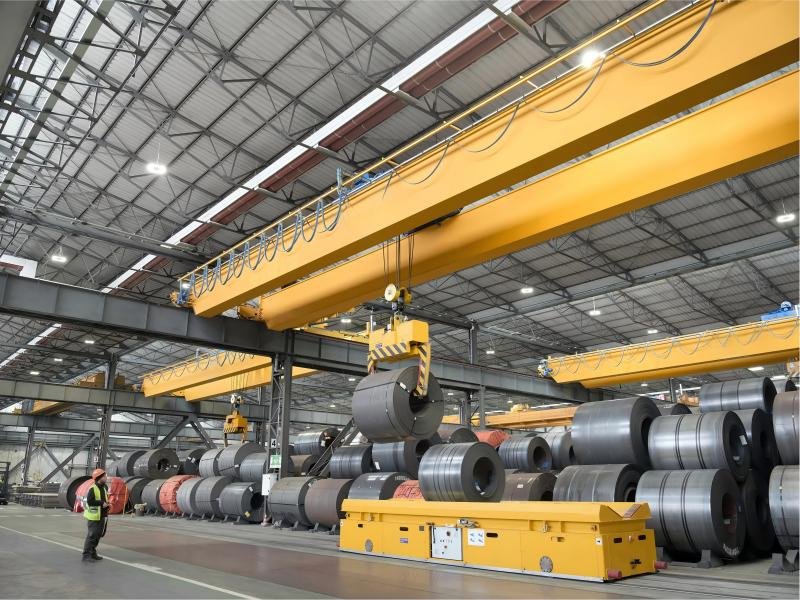
Overhead cranes can also be classified according to their lifting capacity, which refers to the maximum weight a crane is designed to safely lift. Lifting capacity is one of the most important parameters in crane selection because it directly affects the crane’s structural design, hoisting mechanism, and safety requirements.
Based on lifting capacity, cranes are generally divided into Light Duty Cranes, Medium Duty Cranes, Heavy Duty Cranes, and Super Heavy Cranes. This classification helps engineers and operators quickly determine the appropriate crane type for different lifting tasks and industrial environments.
| Lifting Capacity | Crane Type | Description | Applications |
| ≤ 5 tons | Light Duty Crane | Designed for handling small and lightweight loads with relatively low working intensity | Small workshops, maintenance areas, warehouses, light manufacturing |
| 5 – 20 tons | Medium Duty Crane | Suitable for general industrial material handling with moderate loads | Manufacturing plants, assembly lines, logistics warehouses |
| 20 – 100 tons | Heavy Duty Crane | Designed for handling heavy industrial loads with higher operational demands | Steel fabrication plants, heavy machinery factories, shipyards |
| ≥ 100 tons | Super Heavy Crane | Engineered for extremely heavy loads and demanding industrial operations | Steel mills, power plants, large shipyards, heavy industrial construction |
Classification by Design Standard
A FEM / DIN Crane refers to cranes designed according to European engineering standards. FEM (Fédération Européenne de la Manutention) and DIN (Deutsches Institut für Normung) provide detailed guidelines for crane structure design, load classification, and safety requirements.
These standards emphasize modular design, precise load classification, and high engineering reliability.
Typical applications include:
- European manufacturing plants
- Automated production systems
- High-precision industrial environments
FEM / DIN cranes are widely recognized for their advanced design concepts and high manufacturing standards.
| Design Standard | Crane Type | Description | Applications |
| FEM / DIN Standard | FEM / DIN Crane | Designed according to European standards such as FEM and DIN, commonly used in Europe and international markets | European factories, international industrial projects, manufacturing plants |
| CMAA Standard | CMAA Crane | Designed based on the Crane Manufacturers Association of America standards, widely used in North America | Industrial facilities in the USA and North America, heavy manufacturing plants |
| ISO Standard | ISO Crane | Designed following International Organization for Standardization guidelines, ensuring globally recognized safety and quality requirements | International engineering projects, multinational industrial facilities |
| GB Standard | GB Crane | Designed according to Chinese national standards (Guobiao), commonly used in China and many Asian industrial projects | Chinese factories, domestic industrial plants, regional infrastructure projects |
| JIS Standard | JIS Crane | Designed according to Japanese Industrial Standards, emphasizing precision engineering and reliability | Japanese manufacturing plants, precision industry, automotive factories |
Classification by Automation Level
Overhead cranes can also be classified according to their level of automation, which refers to how much human intervention is required during crane operation. As industrial automation and smart manufacturing continue to develop, crane systems are increasingly integrated with digital control technologies, sensors, and automated management systems.
Based on the level of automation, cranes are generally divided into Manual Cranes, Semi-Automatic Cranes, and Fully Automated Cranes. This classification reflects the technological development of modern material handling systems and helps industries choose crane solutions that match their operational needs.
Classification by Hoisting Mechanism
Overhead cranes can also be classified according to their hoisting mechanism, which refers to the lifting device used to raise and lower loads. The hoisting system is one of the most critical components of a crane because it directly determines the crane’s lifting capacity, lifting speed, and operational reliability.
Different hoisting mechanisms are designed to handle different lifting requirements. Based on the type of hoisting device used, cranes are generally categorized into Wire Rope Hoist Cranes, Chain Hoist Cranes, and Winch Cranes.
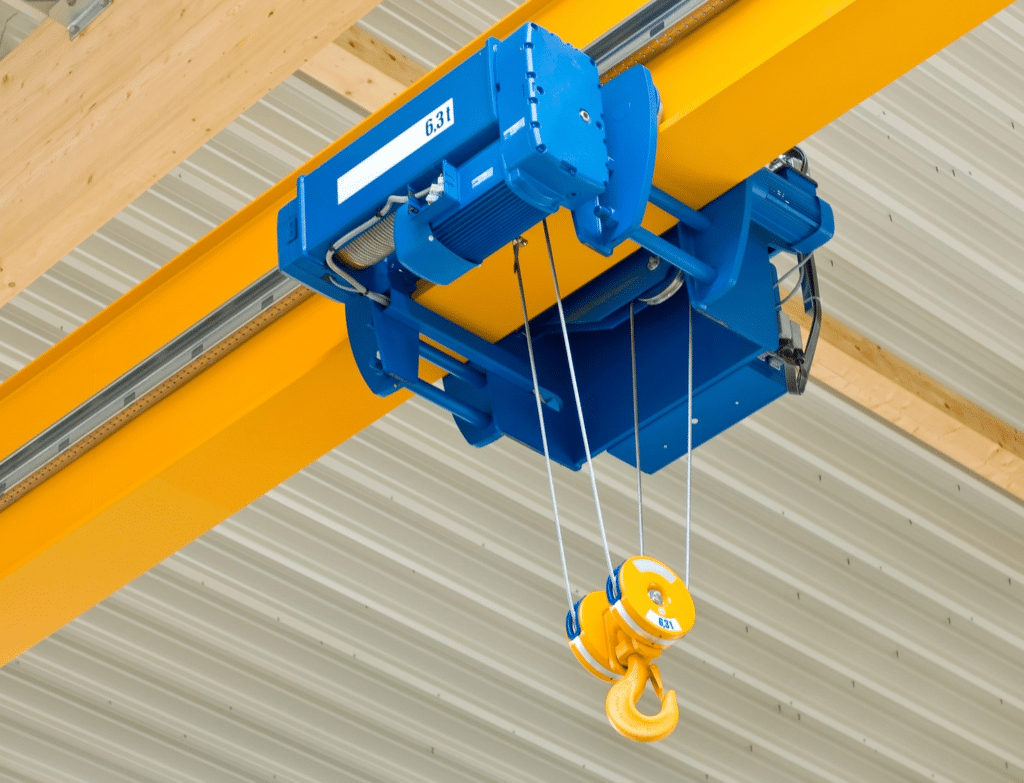
Wire Rope Hoist Crane
A Wire Rope Hoist Crane uses a wire rope wound around a drum to lift and lower loads. This type of hoisting system provides high lifting capacity, smooth operation, and reliable performance, making it suitable for medium and heavy-duty lifting tasks.
Wire rope hoist cranes are widely used in industrial environments where higher lifting capacities and faster lifting speeds are required.
Typical applications include:
- Manufacturing plants
- Steel fabrication workshops
- Heavy equipment factories
- Logistics warehouses
Because of their strength, durability, and efficiency, wire rope hoists are the most commonly used hoisting mechanism in overhead crane systems.
Chain Hoist Crane
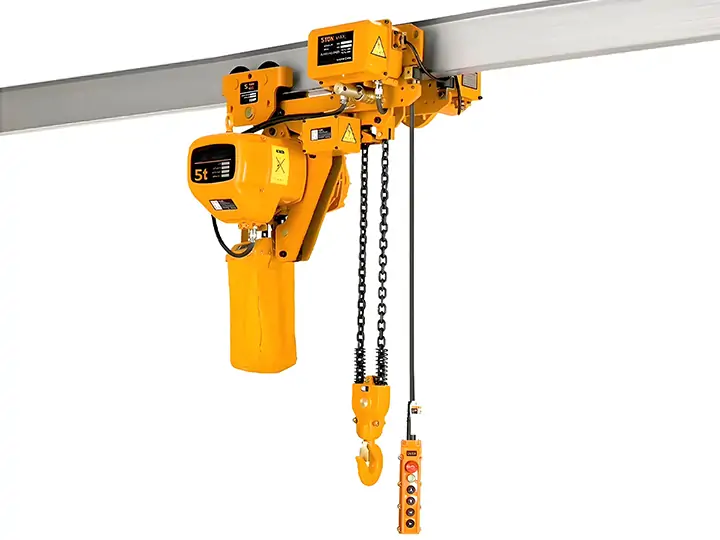
A Chain Hoist Crane uses a lifting chain instead of a wire rope to raise and lower loads. Chain hoists are generally used for lighter lifting capacities and smaller crane systems.
These cranes are commonly used for light-duty lifting operations where compact equipment and lower costs are important.
Typical applications include:
- Small workshops
- Assembly lines
- Equipment maintenance areas
- Workstation crane systems
Chain hoist cranes are known for their compact design, simple structure, and ease of maintenance.
Winch Crane
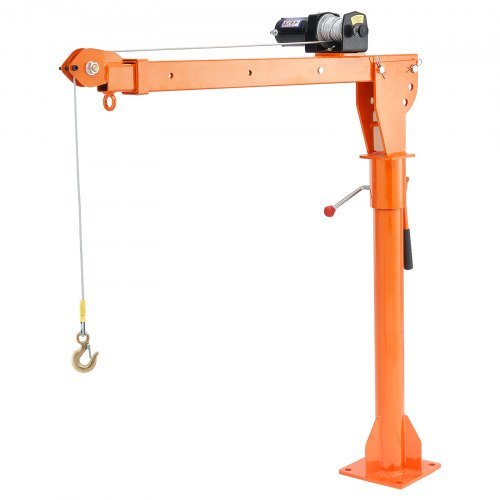
A Winch Crane uses a winch system consisting of a drum and wire rope to lift heavy loads. Winches are typically designed for specialized lifting operations that require very high lifting forces.
Winch cranes are commonly used in large-scale industrial and engineering projects.
Typical applications include:
- Construction sites
- Shipyards
- Heavy equipment installation
- Infrastructure projects
Winch-based cranes are particularly suitable for heavy-duty lifting and specialized engineering applications where powerful lifting capability is required.
Overhead Crane Classification Summary
As we have discussed throughout this guide, overhead cranes can be classified in many different ways depending on their structure, design parameters, operating conditions, and industrial applications. Understanding these classification methods helps engineers, operators, and buyers select the most suitable crane system for their specific needs.
The table below summarizes the 15 main classification methods of overhead cranes.
| Classification Method | Main Types |
| By Structural Design | Bridge Crane, Gantry Crane, Jib Crane, Monorail Crane, Workstation Crane |
| By Girder Structure | Single Girder Overhead Crane, Double Girder Overhead Crane |
| By Runway Installation | Top Running Overhead Crane, Under Running (Underhung) Crane |
| By Travel Mechanism | Rail Mounted Crane, Rubber Tyred Crane |
| By Drive Type | Electric Crane, Manual Crane, Hydraulic Crane |
| By Control Method | Pendant Control, Remote Control, Cabin Control, Automated Crane |
| By Lifting Attachment | Hook Crane, Grab Crane, Magnetic Crane, Ladle Crane, Coil Crane, Container Crane, Vacuum Crane |
| By Industry Application | Steel Mill Crane, Shipyard Crane, Warehouse Crane, Port Crane, Construction Crane |
| By Duty Class | A1–A2 Light Duty, A3–A4 Medium Duty, A5–A6 Heavy Duty, A7–A8 Very Heavy Duty |
| By Installation Environment | Indoor Crane, Outdoor Crane, Explosion Proof Crane, Cleanroom Crane |
| By Span Range | Small Span Crane, Medium Span Crane, Large Span Crane |
| By Lifting Capacity | Light Duty Crane, Medium Duty Crane, Heavy Duty Crane, Super Heavy Crane |
| By Design Standard | FEM/DIN Crane, CMAA Crane, ISO Crane, GB Crane, JIS Crane |
| By Automation Level | Manual Crane, Semi-Automatic Crane, Fully Automated Crane |
| By Hoisting Mechanism | Wire Rope Hoist Crane, Chain Hoist Crane, Winch Crane |
Conclusion
Overhead cranes play a crucial role in modern industrial material handling systems. From light-duty workstation cranes to heavy-duty steel mill cranes, different crane types are designed to meet specific lifting requirements and working environments.
Understanding the various crane classification methods, including structural design, girder configuration, lifting capacity, duty class, and automation level, allows engineers and facility managers to select the most appropriate crane system for their operations.
As industries continue to adopt automation, smart manufacturing, and advanced logistics systems, overhead crane technology will continue to evolve to deliver higher efficiency, greater safety, and improved operational performance.