D-rings are among the most common hardware components used in safety equipment, lifting systems, cargo securement, and rigging applications. Although they share a similar “D” shape, different types of D-rings are designed for specific purposes and should never be used interchangeably without understanding their ratings and intended applications.
This guide explains the major types of D-rings, where they are used, and how to choose the right one for your needs.
- D-rings are used in fall protection, lifting, rigging, and cargo securement.
- Different D-ring designs are engineered for different load directions and applications.
- Fall protection D-rings are not necessarily suitable for lifting.
- Weld-on and forged D-rings are commonly used in rigging and heavy-duty anchor points.
- Cargo-control D-rings are designed to secure loads during transportation.
- Regular inspection is essential to ensure safety and compliance.
Types of D Rings for Fall Protection
Fall protection harnesses often include several D-rings positioned at different locations on the body.
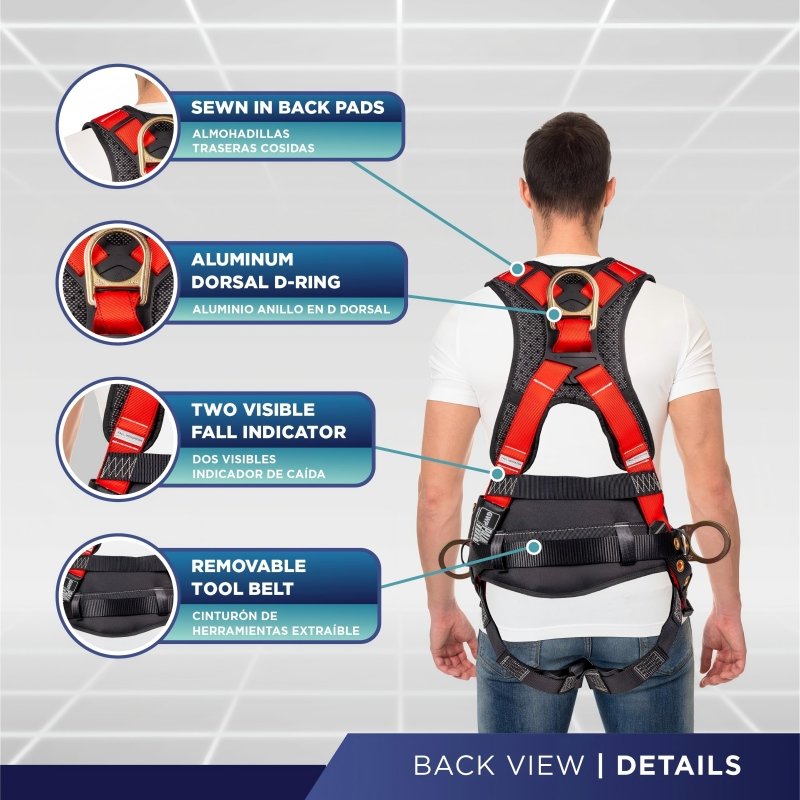
Dorsal D-Rings
A dorsal D-ring is located on the back of a safety harness between the shoulder blades.
Common Uses
- Fall arrest systems
- Shock-absorbing lanyards
- Self-retracting lifelines (SRLs)
- Vertical climbing systems
Benefits
- Keeps workers upright after a fall
- Meets most fall arrest regulations
- Reduces risk of injury during suspension
Sternal D-Rings
Sternal D-rings are located at the center of the chest.
Common Uses
- Ladder climbing systems
- Rope access
- Rescue applications
- Confined-space entry
Benefits
- Better frontal positioning
- Improved climbing comfort
- Easier rescue operations
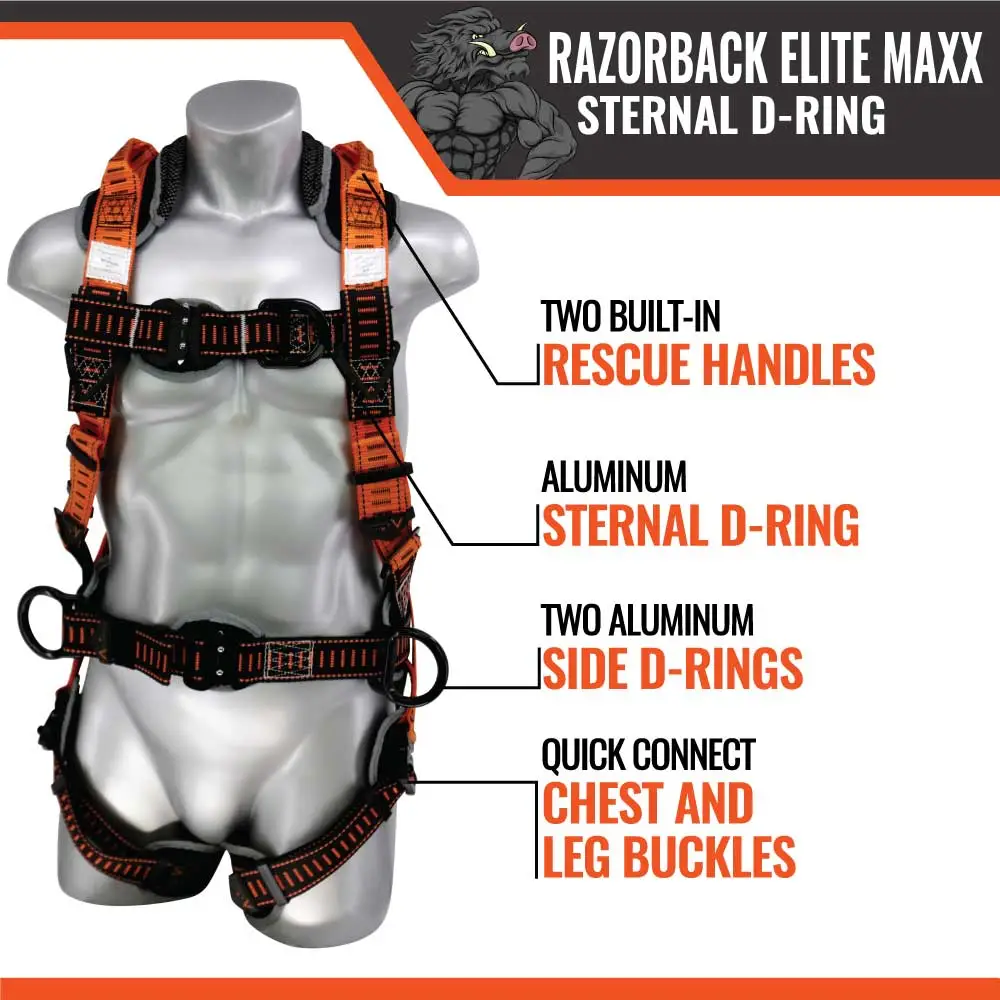
Side D-Rings
Side D-rings are positioned at the hips.
Common Uses
- Work positioning
- Pole climbing
- Tower maintenance
- Utility line work
Benefits
- Hands-free positioning
- Improved stability
- Enhanced worker comfort
Safety Tips
- Always use D-rings according to manufacturer instructions.
- Never connect incompatible hardware.
- Verify fall-protection certification before use.
- Inspect harness hardware before each shift.
- Remove damaged equipment from service immediately.
Types of D Rings for Rigging and Lifting
Rigging D-rings serve as attachment points for lifting, securing, and anchoring loads.
Weld-On D-Rings
Weld-on D-rings are permanently attached to trailers, machinery, and steel structures.
Common Uses
- Trailer anchor points
- Flatbed tie-down systems
- Equipment transport
- Industrial fixtures
Advantages
- Permanent installation
- High load capacity
- Strong attachment point
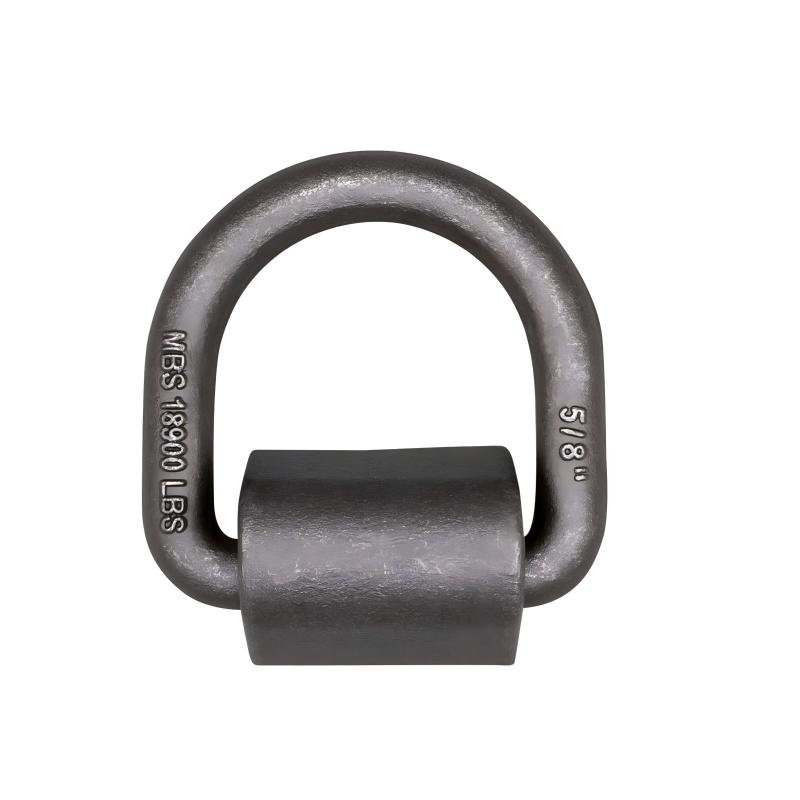
Bolt-On D-Rings
Bolt-on D-rings use mechanical fasteners instead of welding.
Common Uses
- Utility trailers
- Cargo platforms
- Truck beds
- Temporary anchor points
Advantages
- Easy installation
- Replaceable
- No welding required
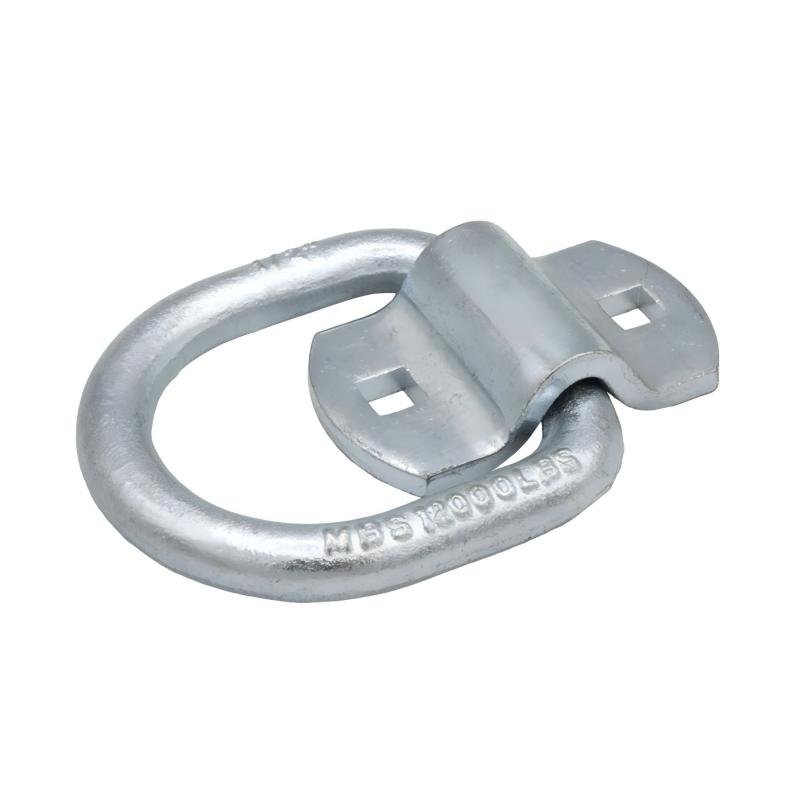
Forged D-Rings
Forged D-rings are manufactured through hot forging processes that improve grain structure and strength.
Common Uses
- Lifting systems
- Heavy rigging
- Marine applications
- Industrial load handling
Advantages
- Superior strength
- High fatigue resistance
- Long service life
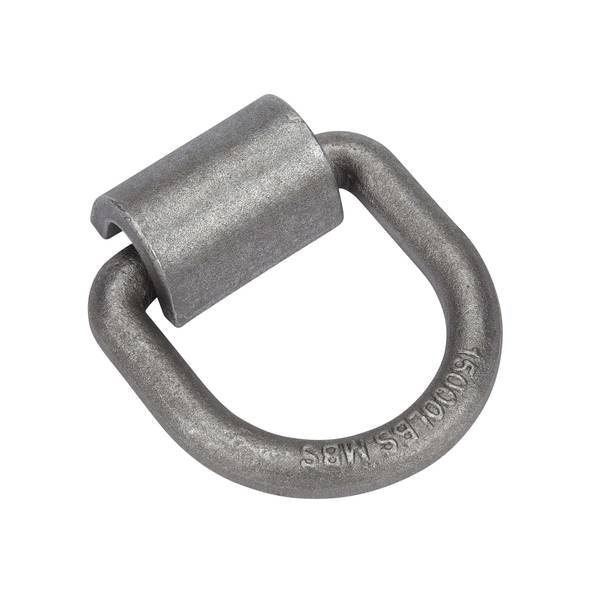
Shackles and D-Rings: Key Differences
| Feature | D-Ring | Shackle |
| Shape | D-shaped ring | U-shaped body with removable pin |
| Connection | Fixed anchor point | Removable connection point |
| Mobility | Limited | Highly flexible |
| Installation | Permanent or semi-permanent | Temporary |
| Typical Use | Anchoring | Connecting lifting components |
A shackle is generally used to connect rigging components, while a D-ring often serves as a fixed attachment point.
Types of D Rings for Cargo Control
Cargo-control D-rings are widely used in trucks, trailers, and shipping containers.
Surface Mount D-Rings
Mounted above the deck surface.
Advantages
- Easy installation
- Cost-effective
- Good accessibility
Applications
- Utility trailers
- Pickup trucks
- Cargo vans
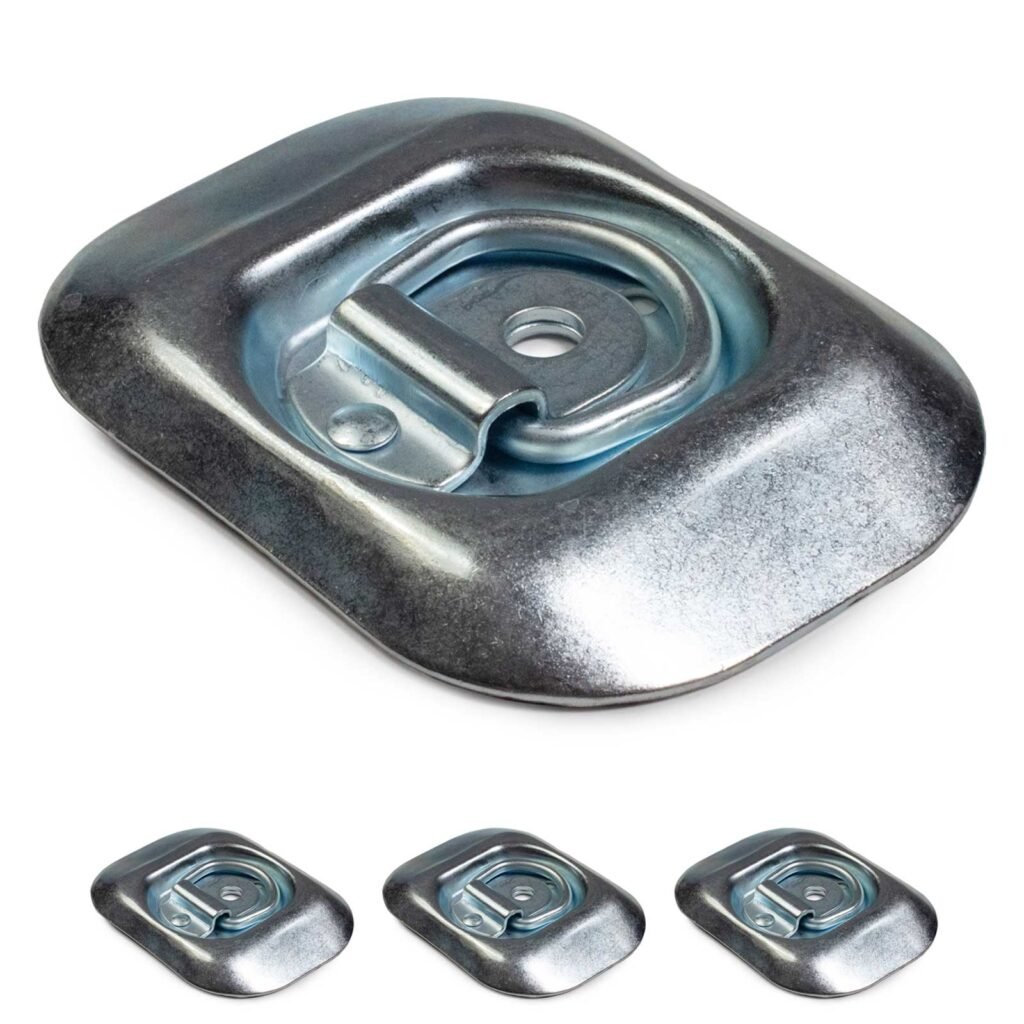
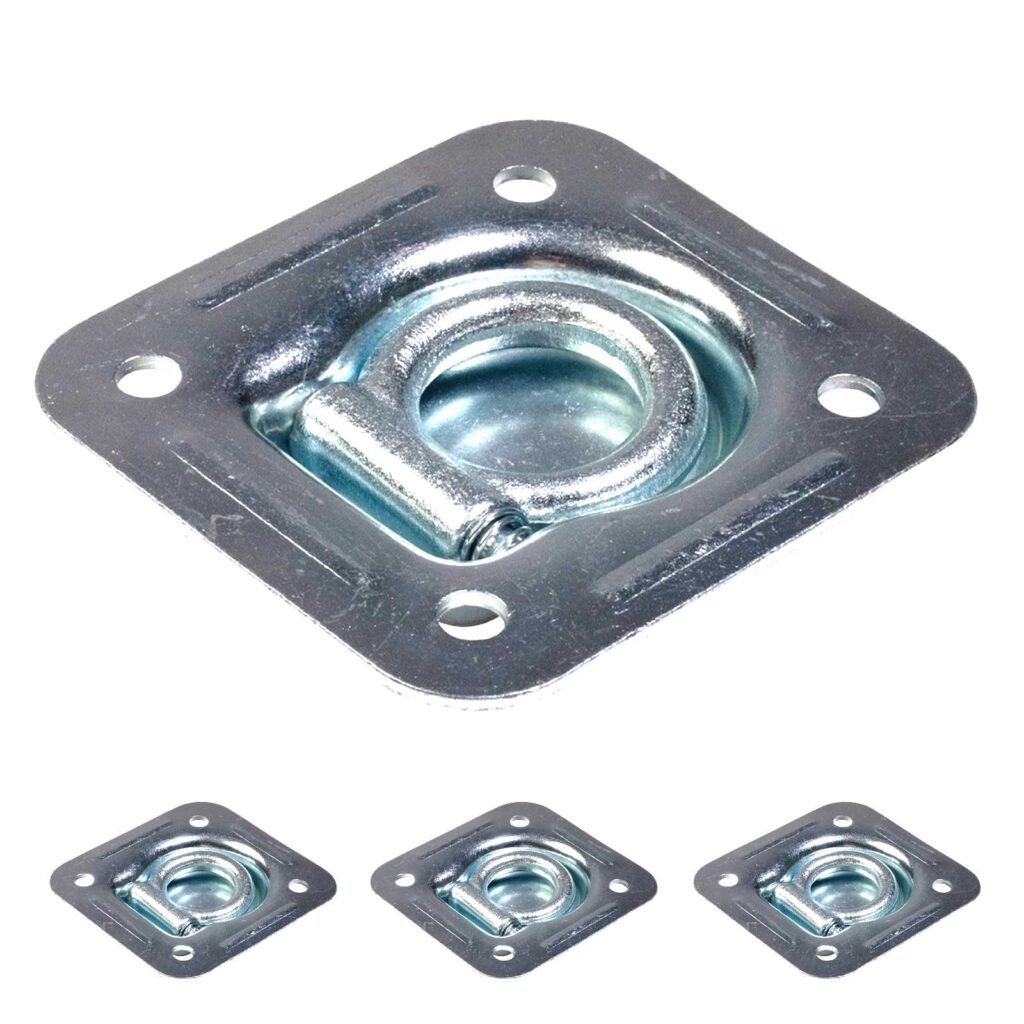
Recessed D-Rings
Installed flush with the floor surface.
Advantages
- Reduced tripping hazards
- Cleaner appearance
- Protected hardware
Applications
- Enclosed trailers
- Cargo floors
- Transport vehicles
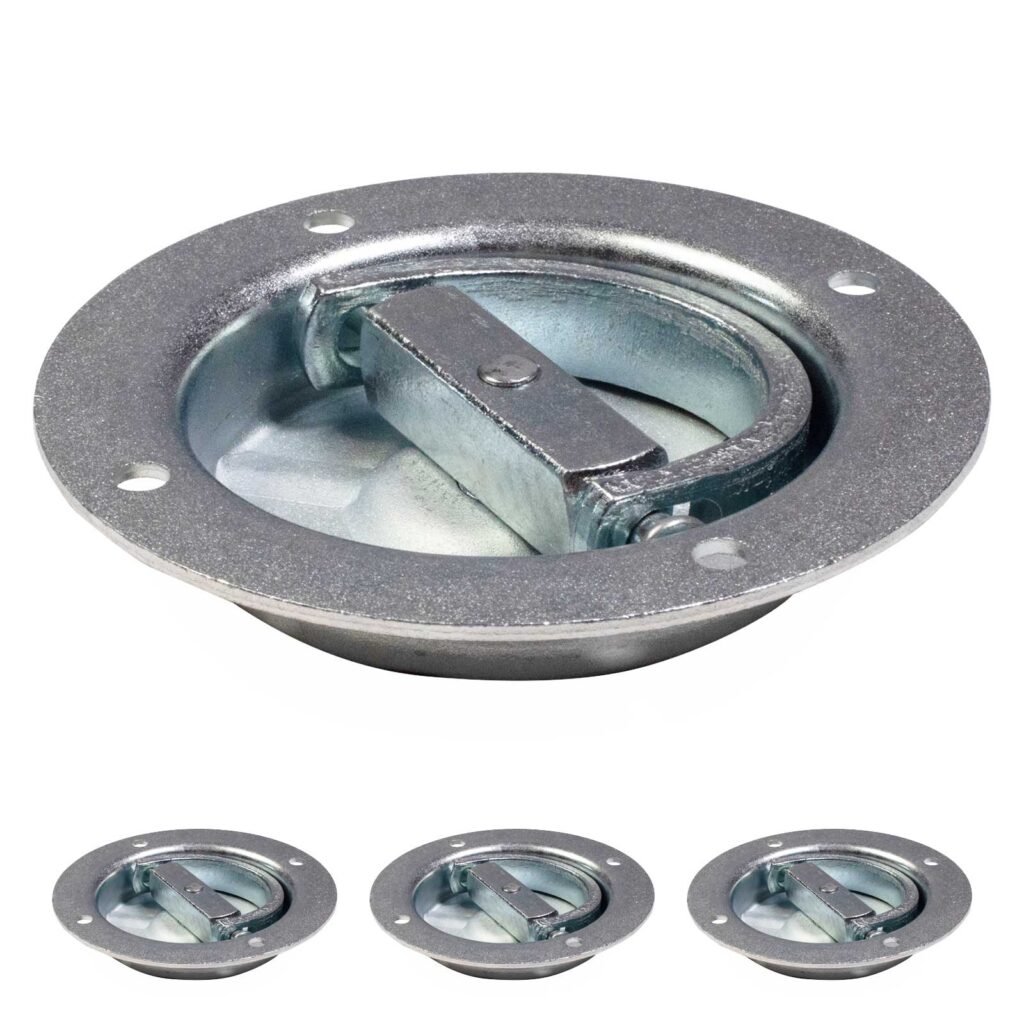
Swivel D-Rings
Swivel D-rings rotate to align with the direction of load.
Advantages
- Better load alignment
- Reduced side loading
- Less hardware wear
Applications
- Cargo securement
- Trailer tie-down systems
- Equipment transport
Choosing the Right D-Ring
Consider the following factors:
Load Rating
Always verify the Working Load Limit (WLL).
Application Type
- Fall protection
- Lifting
- Rigging
- Cargo securement
Installation Method
- Weld-on
- Bolt-on
- Recessed
- Surface-mounted
Material
- Carbon steel
- Alloy steel
- Stainless steel
Environmental Conditions
- Marine environments
- Corrosive chemicals
- Outdoor exposure
- High-temperature applications
Conclusion
D-rings may appear simple, but they play critical roles in safety, lifting, and cargo securement systems. Choosing the correct D-ring depends on the intended application, load requirements, installation method, and industry standards.
Whether you’re selecting a dorsal D-ring for fall protection, a forged D-ring for lifting, or a recessed D-ring for cargo control, always verify the product’s load rating and certification before use.
FAQs About D-ring
A D-ring is typically a fixed attachment point, while a shackle uses a removable pin that allows temporary connections between rigging components.
Choose a D-ring based on its intended application, working load limit, mounting method, material, and applicable industry standards.
- No. Fall-protection D-rings and lifting D-rings are designed and certified for different purposes. Always use hardware specifically rated for the intended application.
- Inspect the webbing for cuts, burns, or abrasion.
- Check hooks and fittings for deformation.
- Verify the WLL tag is legible.
- Ensure the ratchet locking mechanism operates correctly.
- D-rings should be visually inspected before each use and thoroughly inspected according to company safety procedures and applicable regulations. Remove any D-ring showing cracks, deformation, excessive wear, corrosion, or damage.