Designing an efficient warehouse pallet racking system goes far beyond placing rows of racks. It is a complex engineering task that requires finding the optimal balance between storage density, operational efficiency, safety, and return on investment. Whether you are retrofitting an existing facility or designing a new warehouse, carefully considering the following 10 key factors will ensure you get a solution that meets both current needs and future adaptability.
Load Unit: Pallet & Product Characteristics
This is the physical foundation of all design. You need to precisely know:
Pallet dimensions & type: Record the length, width, and height of all pallets (including overhang). While the industry standard 40” x 48” pallet is common, non-standard sizes directly affect rack depth, beam length, and beam level height. Also, confirm the pallet material (wood, plastic, steel) and bottom structure (e.g., stringer or block type), as this determines how weight is distributed on the beams.
Product weight & attributes: Determine the maximum gross weight per pallet – this is the critical data for selecting upright frames and beams. Additionally, whether the product is fragile, has special odors, or requires specific environmental conditions (e.g., light protection) will influence the type of racking system needed.
Inventory Profile: SKU & Pallet Count
Your inventory profile determines the storage strategy.
Pallets per SKU: If most SKUs only require 1–2 pallets, selective racking is ideal as it offers 100% accessibility. If each SKU has many pallets, you should consider high-density storage systems such as drive-in, push-back, or pallet flow racking to significantly improve space utilization.
Total number of SKUs: When SKU variety is high, you need enough aisles and locations to maintain order – this is where a Warehouse Management System (WMS) integrated with the racking becomes essential.
Access Mode: FIFO vs. LIFO
This relates to product shelf life and turnover logic.
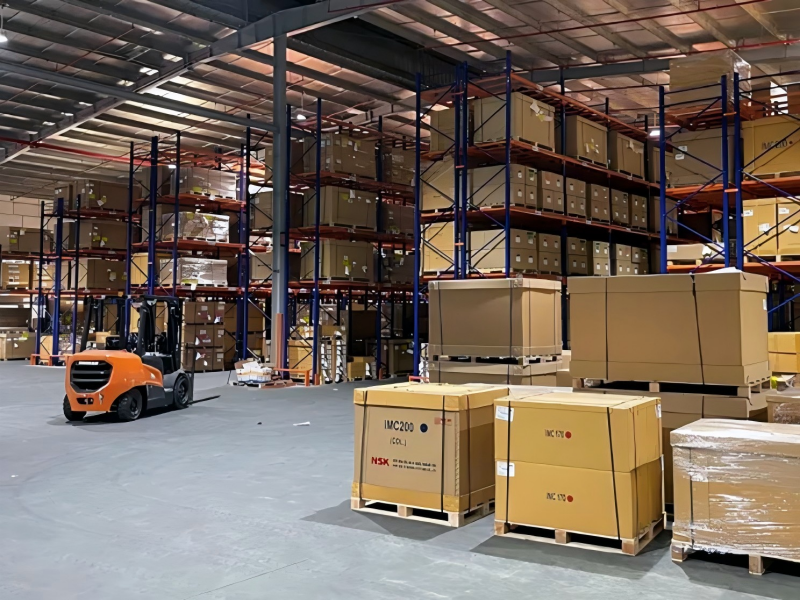
FIFO (First-In-First-Out): Suitable for date sensitive products such as food and pharmaceuticals. Pallet flow racks (gravity flow racks) and selective racks are typical solutions, ensuring that the oldest inventory is used first.
LIFO (Last-In-First-Out): Suitable for products where date sensitivity is not critical, such as steel or raw chemicals. Drive-in and push-back racks allow access from one side, with the last pallet stored being the first retrieved, effectively utilizing the depth of a lane.
Handling Equipment: Forklift Type & Aisle Width
Your material handling equipment directly determines the “road network” of the warehouse.
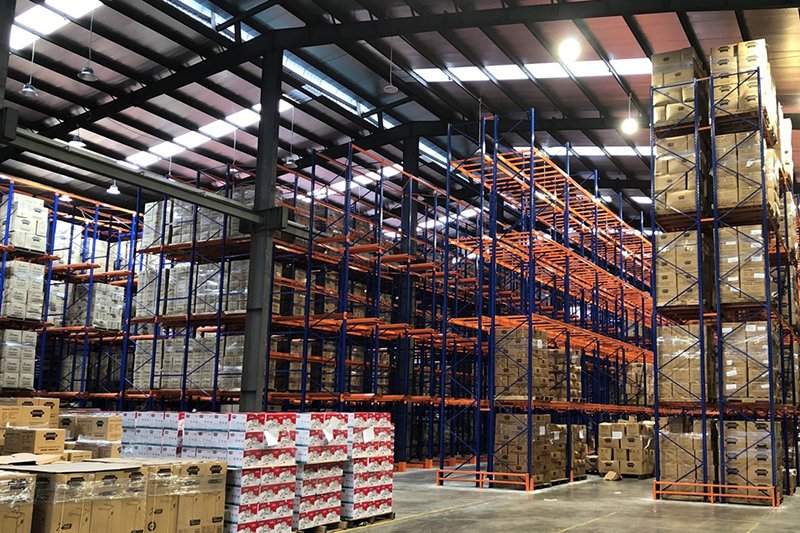
Forklift model & turning radius: A standard counterbalance forklift typically requires aisles of 3.5–4 m (about 12 ft), while reach trucks, Very Narrow Aisle (VNA) trucks, or man up turret trucks can operate in aisles as narrow as 1.6–2.8 m. Every 10 cm reduction in aisle width significantly increases overall storage density.
Lift height: The maximum lift height of the forklift must match the designed rack height.
Building Structure: Physical Site Constraints
The physical conditions of the warehouse are boundaries that must be respected.
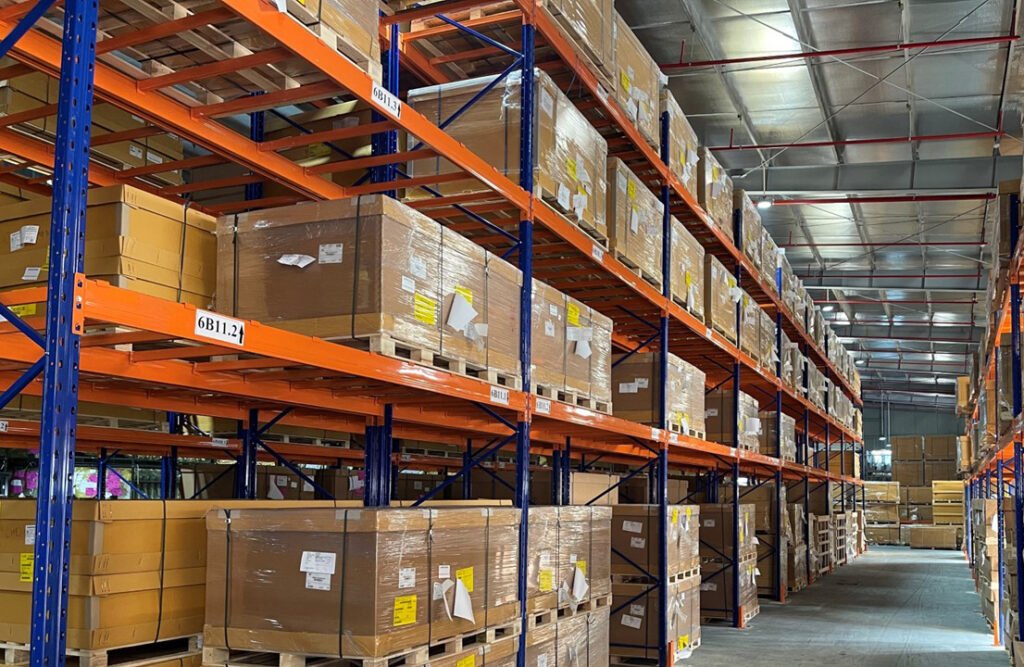
Clear height: The ceiling height (after deducting sprinklers, lighting, and ventilation) determines the maximum rack height.
Columns & obstacles: Precisely measure column locations and spacing. The ideal design “embeds” building columns into the gap between back to back racks to avoid wasted space. Additionally, sprinkler positions, door locations, floor flatness, and load bearing capacity are all critical factors.
Workflow: Product Velocity & Material Flow
Not all products require the same level of attention.
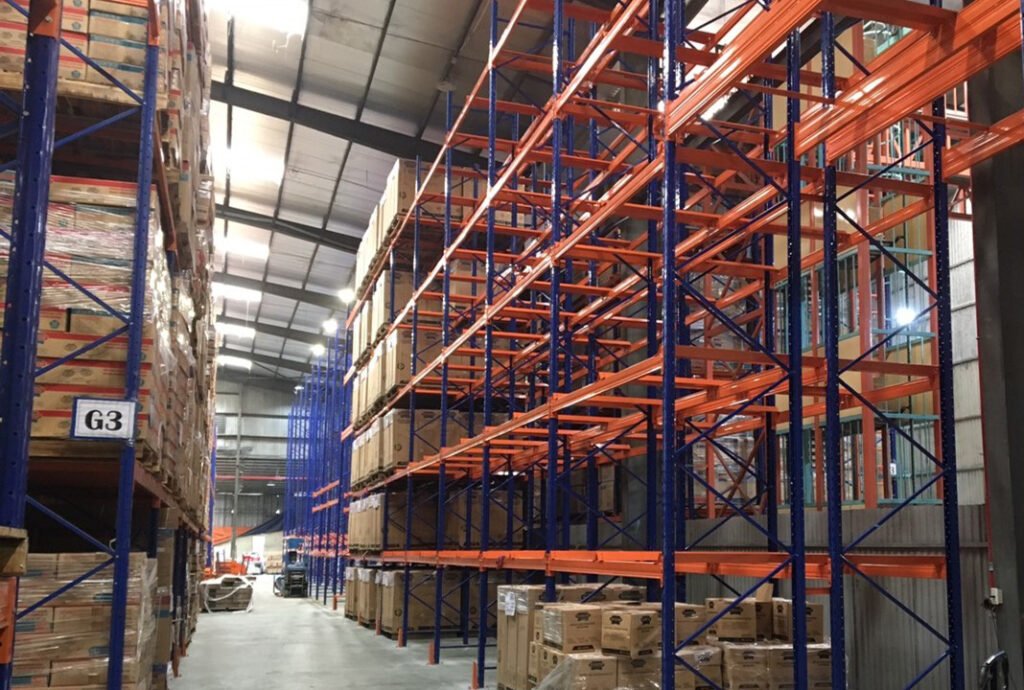
Product velocity: Place fast moving, high turnover items in “golden zones” close to the shipping area and at waist height. Slow moving items can be stored deeper in the warehouse or at higher levels.
Inbound & outbound flow: Analyze receiving and shipping routes to avoid cross traffic and congestion. Setting up a staging area near the loading docks can efficiently handle the quick turnaround of large orders.
Environmental Conditions: Temperature & Special Requirements
Warehouse environment directly affects rack cost and construction.
Ambient warehouses: Lowest cost and relatively simple design.
Cold chain warehouses (cooler/freezer): Costs increase significantly due to the need for low temperature resistant steel, longer installation times (workers require frequent rotation), stricter food grade hygiene requirements (e.g., pallets must be stored at least 12 inches off the floor), and the precise layout required to maximize expensive cold storage space.
Safety & Compliance: Seismic Rating & Structural Standards
Safety is the bottom line of warehouse operations.
Seismic activity: In high seismic zones, racks must use higher grade structural steel (rather than roll formed steel), with wider base plates and additional anchor reinforcements. The higher the seismic requirement, the greater the structural integrity needed – and the higher the cost.
Day to day safety: The design should include end of aisle protectors, column guards, beam locking clips, and other safety accessories. One often overlooked element is to schedule regular third party professional rack inspections from the beginning, providing an unbiased structural safety assessment and avoiding “implicit bias” that may lead to blind spots in internal safety monitoring.
Business Model: Budget & Return on Investment (ROI)
Understanding cost structures helps you make wise decisions.
New vs. used systems: Used racks may seem to save initial investment, but they carry risks such as questionable structural integrity, the need for costly third-party engineering reviews, and lack of customization. New systems offer uncompromised integrity and long-term reliability.
Comparison of system types:
- Selective racking: Lowest cost, fastest delivery, but lowest storage density.
- Drive-in / push-back racking: Moderate cost, high-density LIFO storage.
- Pallet flow racking: Highest cost, but high-density FIFO storage.
- ROI consideration: Can a higher upfront investment (e.g., in automation or high-density systems) deliver better long-term returns through land savings, increased space utilization, and reduced labor costs? This requires a holistic calculation.
Future Perspective: Scalability & System Integration
A good design should grow with your business.
Modularity & scalability: Choose a modular rack system that allows future adjustments to beam levels, additional bays, or extended beam lengths. Reserve space for future expansion in your layout drawings.
Technology integration: Ensure the rack design can integrate seamlessly with your Warehouse Management System (WMS). Even the best physical racks will suffer efficiency losses without a clear management system to direct put away and picking. Employees need to know “where to put it” and “where to find it”.
Conclusion
Designing a warehouse pallet racking system should never be a solitary, closed door process. The most effective approach is to engage an experienced professional team as early as possible, after you have gathered basic information on the 10 factors above. They can turn these pieces of information into a customized solution that meets engineering standards, safety codes, and operational needs – saving you significant time and trial and error costs. The result will be a safe, efficient, and future ready core for your warehouse storage operations.
FAQs About Designing a Warehouse Pallet Racking System
Industry best practice recommends a third-party professional inspection at least once a year. However, if your warehouse operates in a high-traffic environment or uses heavy material handling equipment, more frequent inspections (e.g., quarterly or semi-annually) are advised. Additionally, a formal inspection should always be conducted after any significant impact event, such as a forklift collision.
Structural steel is hot rolled and has higher strength and impact resistance, making it suitable for seismic zones, cold storage, and heavy load applications. It is more expensive but offers superior durability. Roll formed steel is cold formed from sheet steel and is lighter and more economical, ideal for selective racks in ambient warehouses with standard loads. Your choice should be based on load, environment, and seismic requirements.
Yes, absolutely. Many warehouses use a hybrid approach – for example, selective racking for fast moving or low volume SKUs, and drive in or pallet flow racking for high volume, slower moving items. The key is to plan zones based on product velocity, SKU density, and FIFO/LIFO requirements.
Used racks can have lower upfront costs, but they come with significant risks: questionable structural integrity, unknown damage history, lack of customization, and the need for costly third party engineering certification. In many cases, the long term costs (repairs, safety issues, downtime) can exceed the initial savings. For critical applications, investing in new, engineered systems is generally the safer and more cost effective choice.
It depends on your material handling equipment.
Standard counterbalance forklift: 3.5–4.0 m (12–13 ft)
Reach truck: 2.5–3.0 m (8–10 ft)
Very Narrow Aisle (VNA) truck with wire/rail guidance: 1.6–1.8 m (5.5–6 ft)
Man up turret truck: as narrow as 1.6 m (5.5 ft)
Narrower aisles increase storage density but require specialized equipment and more precise floor flatness. Consult your forklift supplier and racking engineer to determine the optimal aisle width for your operation.
Look for the following red flags:
Bent or twisted upright frames or beams
Cracked or missing welds
Loose or missing beam locking clips
Significant rust or corrosion (especially in cold storage)
Impact damage (e.g., forklift strikes) that has deformed any structural member
Anchor bolts that are loose or pulled out of the floor
If you observe any of these, stop using the affected section and contact a qualified rack inspector or engineer immediately.
Yes. Cold storage (especially below −10°C / 14°F) imposes additional requirements:
Steel grade: Use low temperature resistant steel to prevent brittleness.
Coating: Special anti corrosion coating is required due to condensation and freeze thaw cycles.
Installation: Longer installation time because workers need frequent breaks.
Food safety: Pallet supports must keep food products at least 12 inches off the floor for sanitation.
Space efficiency: Cold storage space is expensive, so high density systems (e.g., drive in or pallet flow) are often preferred.
Lead time varies based on system complexity, steel availability, and current manufacturing schedules. Generally:
Selective racking (standard components): 4–8 weeks
High density systems (drive in, push back, pallet flow): 8–12 weeks
Engineered seismic rated or cold storage systems: 12–16 weeks or more
These estimates do not include design consultation, permitting, or installation time. Working with a local manufacturer or supplier can often reduce lead times.