A below-the-hook lifting device is any mechanism that connects the hook of a hoist, crane, or other lifting machine to the load. It serves as the critical link between lifting equipment and the load itself, acting as the “middle man” in the lifting process.
Without such devices, many loads that are oddly shaped, have an unbalanced center of gravity, or feature delicate surfaces would be unsafe or impossible to move.
According to the American Society of Mechanical Engineers (ASME), a below-the-hook lifting device is:
“A device used for attaching a load to a hoist. The device may contain components such as slings, hooks, and rigging hardware.”
These devices can be mechanical, hydraulic, pneumatic, or even electrically powered, depending on the complexity of the lift.
They are designed to secure, support, and balance loads safely and precisely throughout the lifting operation, significantly reducing reliance on manual handling.
In material handling and lifting operations, below-the-hook devices are the unsung heroes that enable difficult and dangerous lifts.
Why Use a Below-the-Hook Lifting Device?
Safety and efficiency are the two main reasons for using a below-the-hook lifting device in conjunction with your crane and rigging equipment.
Sometimes, using a traditional wire rope sling, alloy chain sling, or synthetic sling is not enough to safely and securely move a load from one location to another.
Common situations where a BTH device is particularly beneficial include:
- The load has a complex size, shape, weight, or center of gravity that makes traditional rigging difficult.
- It takes too long to secure and release each load using conventional slings and hardware.
- The load behaves abnormally when lifted – it swings, shifts, or feels unbalanced.
- A rigging accident or near miss has occurred, highlighting the need for a more secure solution.
- The lifting points provided on the load were chosen for convenience by the manufacturer, not for safety and balance.
The major benefits of using a below-the-hook lifter are:
- Increased efficiency – allowing more lifts per shift.
- Proper load securement – ensuring safe transport.
- Precision – loads can be lifted and placed exactly where they need to go without unnecessary adjustments.
- Compliance – meeting strict standards set by regulatory agencies such as OSHA and ASME.
Common Components of a Below-the-Hook Lifting Device
Bail
The opening or attachment point where the crane hook engages. Bails can be plate style or pin style.
Lifting Lug
An attachment point on the device where rigging equipment connects via a shackle or hook.
Gusset
A reinforcing plate welded onto the device to add strength to an area of extreme stress or usage.
Latch
A device used to hold a lifter in an open or closed position.
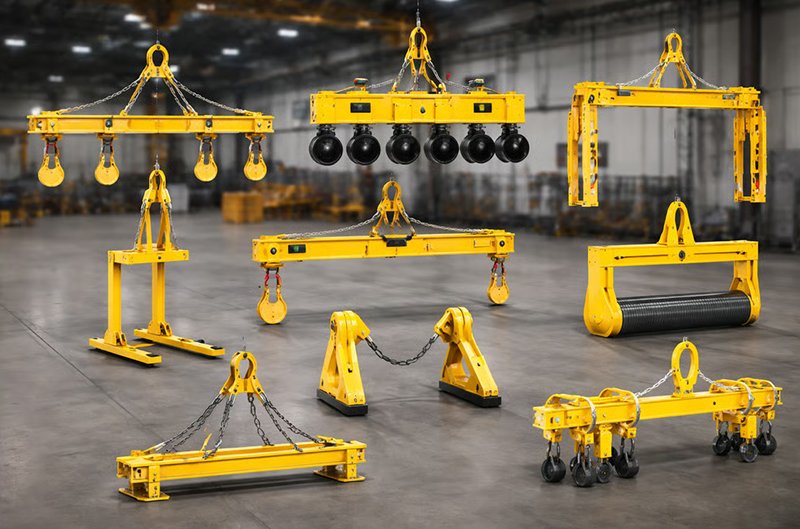
Types of Below-the-Hook Lifting Devices
Beams
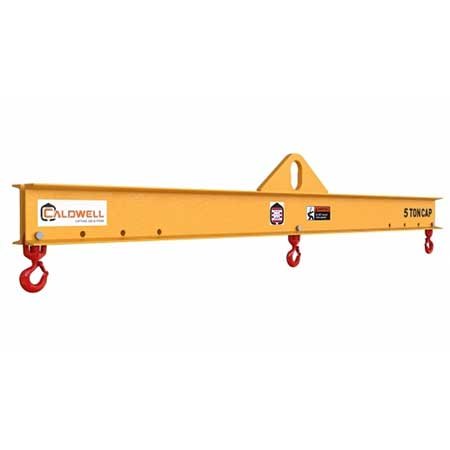
Lifting beams and spreader bars are load-supporting lifters typically made from structural shapes or fabricated metal.
Lifting Beams
Consist of a long beam with one top bail and two or more load lifting points.
They are generally heavier and more expensive than spreader bars, but require substantially less headroom.
Spreader Bars
Consist of a long bar whose function is to hold slings apart to the lifting distance.
They are lighter and cost less than lifting beams, but require much more headroom.
Coil Hooks and Grabs
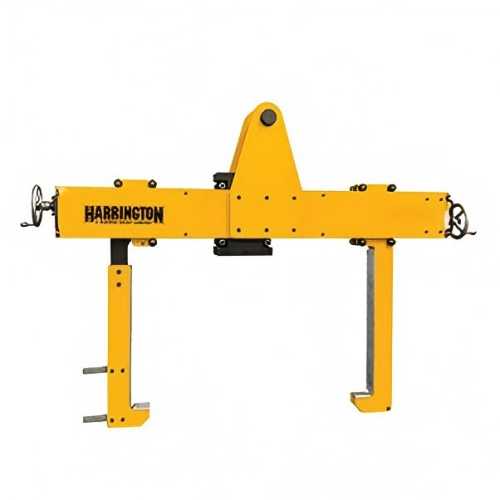
Coil Hook
Enables lifting of a coil through its inner diameter, in a vertical or horizontal orientation.
Motorized Coil Grab
A rack-and-pinion style grab that handles a wide range of coil sizes with minimum manpower.
Optional motorized rotation allows precise positioning.
Gripping Lifters
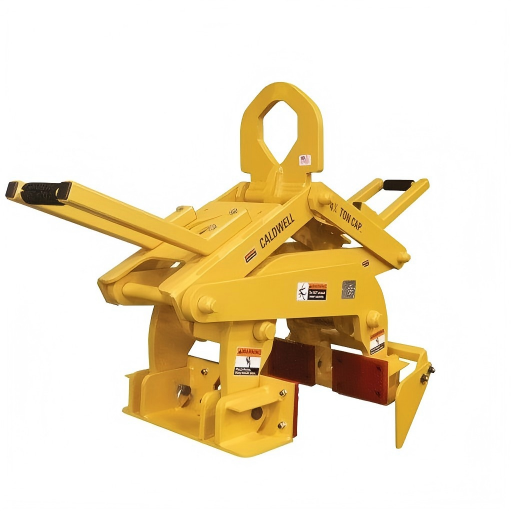
These lifters use either friction or indentation-causing pressure to hold a load.
Tong Grabs
Utilize a scissor-type action to grip a load.
Sheet Lifter
Uses two claws to grab sheet metal or wood by wrapping around the edges.
A lip on the lower portion prevents the sheet from falling out.
Pallet Lifter
Uses forks to lift pallets from underneath, eliminating the need for a forklift and saving space and equipment costs.
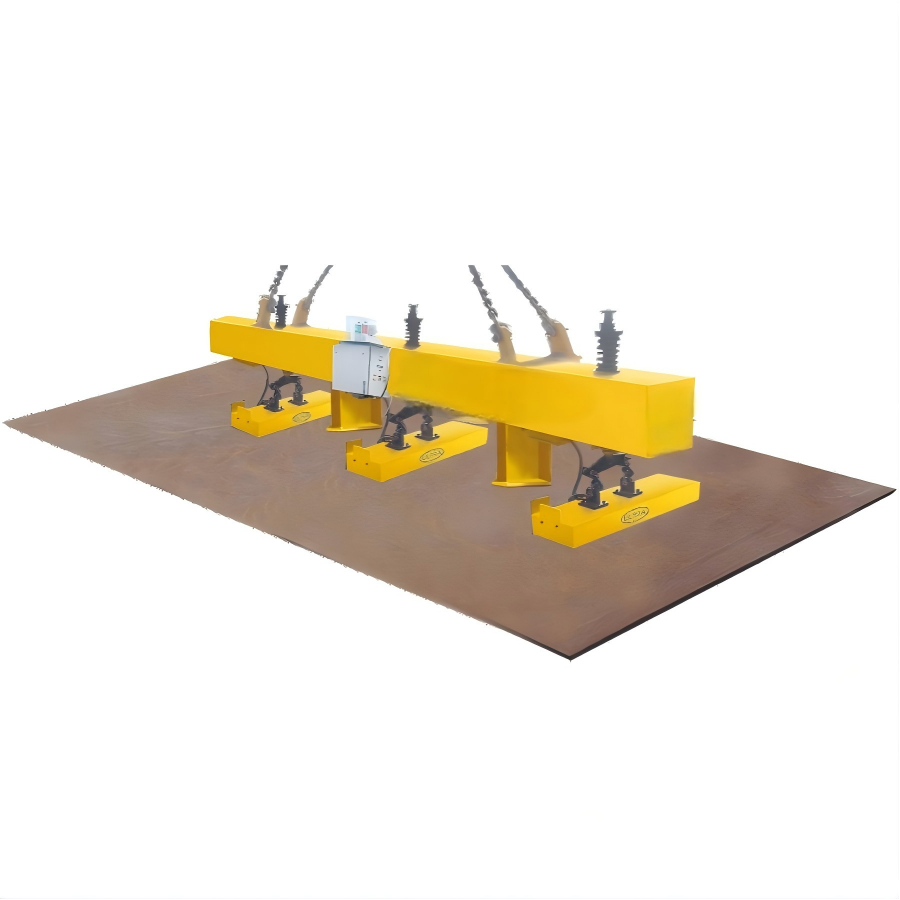
Magnet Lifters
Used to carry or release flat or round ferrous objects with or without an electrical power supply.
They can be permanent or electromagnetic.
They are beneficial when a smooth, non-damaging lift is required.
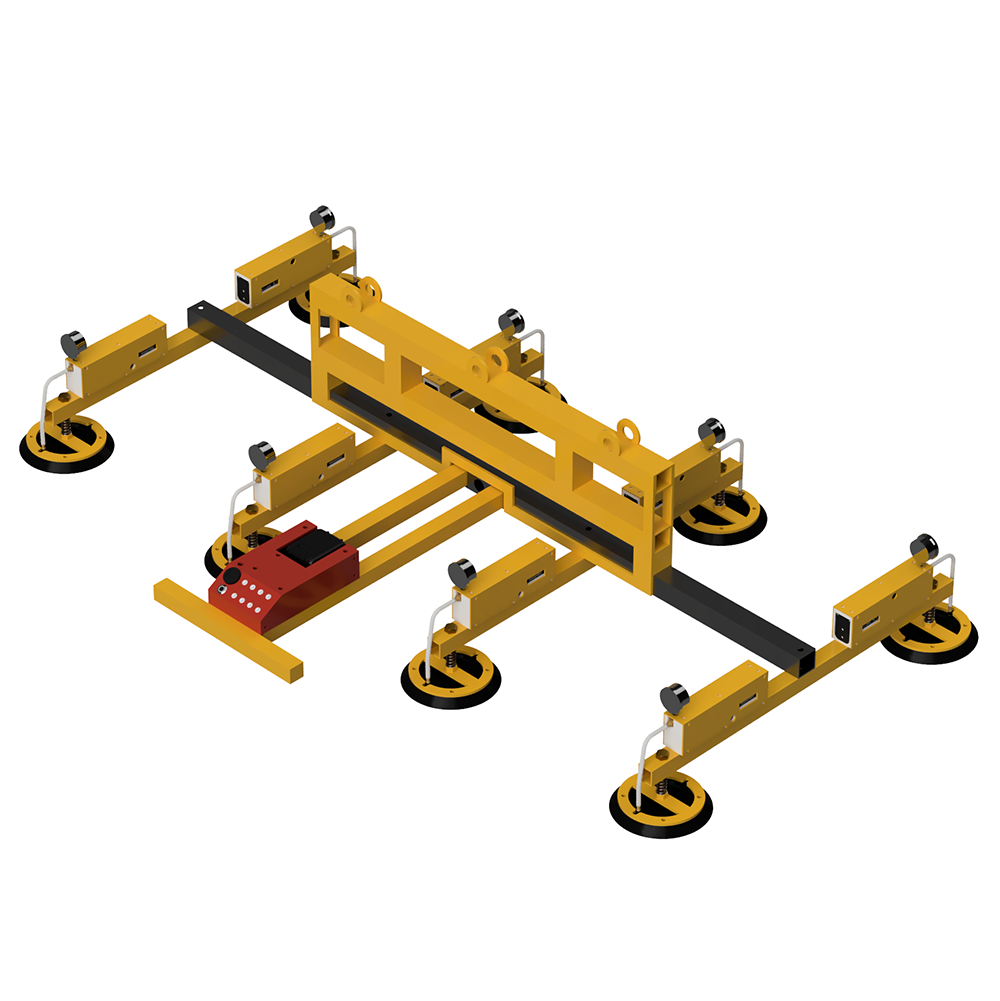
Vacuum Lifters
Utilize an electric-powered extraction pump and sealed pads to create a vacuum to attach the lifter to an object.
Common in industries handling glass, smooth sheet metal, or delicate surfaces.
Turners
Die Turner
Used to rotate or turn large dies safely.
Drum Turner
Used to turn over drums for filling and emptying.
Custom Fixtures
Purpose-built devices engineered specifically for unique or challenging loads when standard devices will not work.
Key Design and Engineering Factors
When choosing or designing a below-the-hook device, several factors need careful consideration:
- Load Characteristics
- Attachment Points
- Geometry & Headroom
- Environmental Factors
- Fatigue & Duty Cycle
- Safety Factors
Standards and Compliance
ASME B30.20
Specifies requirements for construction, marking, inspection, and safe use of below-the-hook lifting devices.
ASME BTH-1
Defines design criteria including load factors, materials, and fatigue life.
Design Categories and Service Classes
Design Category
Devices are classified based on the predictability of their loads and operating environment.
Service Class
Considers frequency of use and total number of lifting cycles expected during service life.
Marking Requirements
Each below-the-hook device must bear permanent markings showing:
- Manufacturer’s name
- Rated capacity
- Serial number
- Weight of the device if it exceeds 100 pounds
- Inspection label
- New rated capacity for re-rated devices
Safe Operation: Do’s and Don’ts
Do’s
- Train operators thoroughly
- Inspect before each use
- Confirm capacity
- Lift smoothly
- Follow inspection schedules
Don’ts
- Never exceed the rated capacity
- Don’t use damaged equipment
- Avoid shock loading
- Don’t modify devices
- Never remove labels
How to Choose the Right Below-the-Hook Device
Define Your Load
Determine the size, weight, shape, and center of gravity.
Understand Your Environment
Consider temperature, weather exposure, and chemical exposure.
Standard vs. Custom Solutions
Evaluate whether a standard product or custom design is more appropriate.
Work with Experts
Collaborate with engineers and manufacturers familiar with ASME and OSHA standards.
Plan Maintenance from Day One
Establish inspection schedules and replacement plans.
Prioritize Training
Ensure all operators understand proper use and safety procedures.
Common Mistakes to Avoid
- Underestimating load weight or balance
- Ignoring dynamic effects
- Overlooking welds and joints
- Operating without labels
- Forgetting about fatigue
Conclusion
Below-the-hook lifting devices are essential tools in industries where heavy, awkward, or specialized loads must be moved safely.
From beams and clamps to magnets, vacuum lifters, and custom-engineered fixtures, these devices enhance safety, boost efficiency, and provide operators with precise control during complex lifts.
They play a critical role in modern material handling and lifting operations.
FAQs About below-the-hook lifting device
A below-the-hook lifting device is any mechanical attachment that connects a crane or hoist hook to a load, helping secure, support, and control the load during lifting operations.
The primary standards are ASME B30.20 for construction and safe operation requirements and ASME BTH-1 for engineering design criteria.
A lifting beam supports the load directly and requires less headroom, while a spreader bar distributes forces through slings and generally requires more vertical clearance.
Yes. Custom lifting devices are commonly engineered to accommodate unique load sizes, shapes, weights, and center-of-gravity requirements.
Inspection frequency depends on usage and service classification, but visual inspections should be conducted before each use and periodic inspections performed by qualified personnel.
Common industries include construction, steel fabrication, manufacturing, mining, shipbuilding, oil and gas, energy, logistics, and heavy equipment maintenance.