The Working Load Limit (WLL) is the maximum load that a lifting device or rigging component (such as a sling, hook, shackle, or wire rope) is designed to safely lift under normal operating conditions. It is sometimes also called the Safe Working Load (SWL).
Key Points About WLL
- Based on Safety Factor
- WLL is calculated by dividing the minimum breaking strength (MBS) of the component by a safety factor.
Example: If a wire rope has a minimum breaking strength of 10,000 kg and a safety factor of 5, then:
WLL=10,000/5=2,000 kgWLL = 10,000 / 5 = 2,000\text{ kg}WLL=10,000/5=2,000 kg
- Not the Same as Breaking Strength
- Breaking strength is the load at which the component will fail under laboratory conditions.
- WLL is much lower to ensure safe operation in real-world conditions.
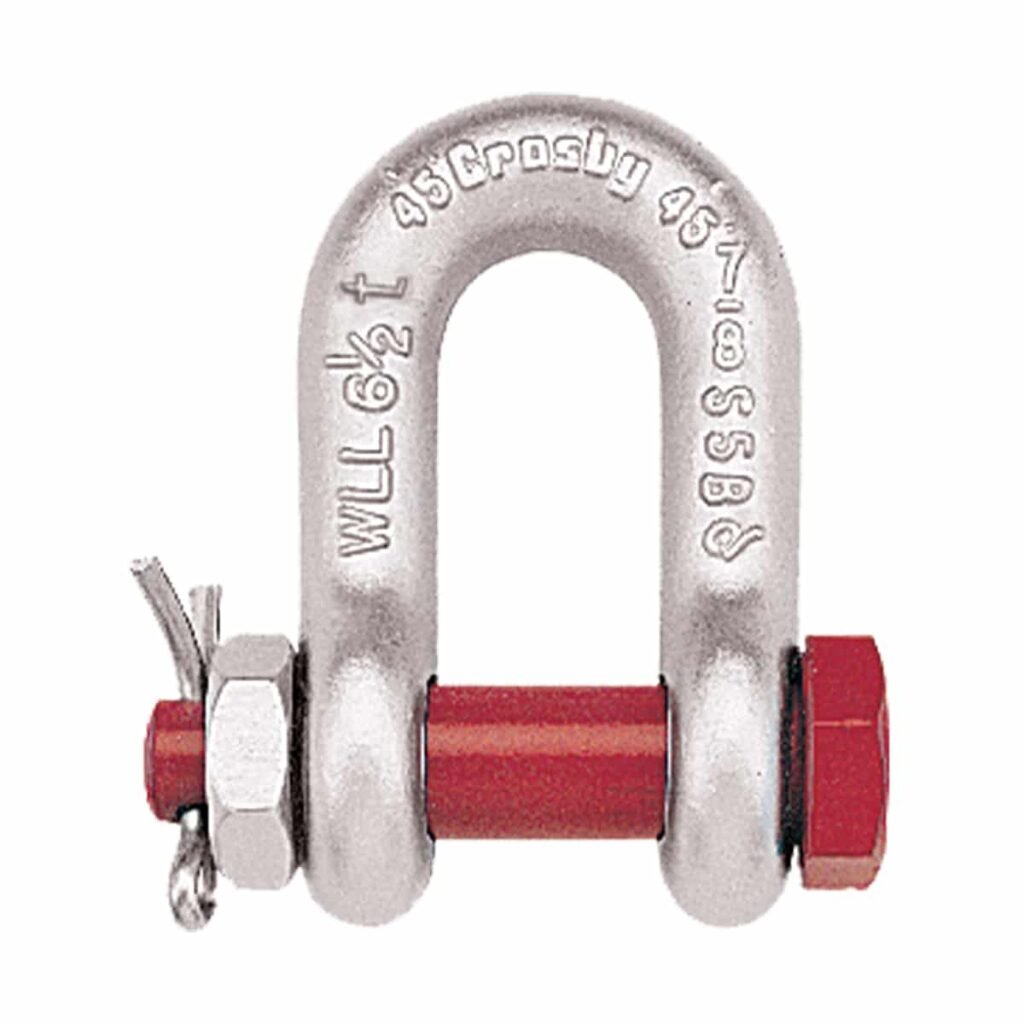
- Marked on Components
- Many rigging components (shackles, hooks, lifting slings) are stamped or labeled with the WLL.
- Always verify the WLL before lifting.
- Applies to All Lifting Conditions
- Includes straight lifts, vertical loads, and angular lifts (with de-rating for angle).
- For side loading or angled lifting, the WLL must be reduced according to manufacturer guidance.
- Safety Compliance
- WLL ensures compliance with industry standards such as:
- ASME B30.9 / B30.26
- OSHA lifting regulations
- EN 1677 / EN 818
- WLL ensures compliance with industry standards such as:
Examples of WLL Usage
| Component | MBS | Safety Factor | WLL |
| Wire rope 6×19, 12 mm | 60 kN | 5 | 12 kN |
| Alloy chain sling, 8 mm | 80 kN | 5 | 16 kN |
| Shackle 10T | 100 kN | 5 | 20 kN |
Important Notes
- Never exceed WLL — overloading is the most common cause of lifting accidents.
- WLL reduction may be needed for:
- Angular lifts
- Side loading
- Dynamic loads
- Always refer to the manufacturer’s lifting tables and engineering guidelines.
Summary
The Working Load Limit (WLL) is the key number you should use to plan lifts safely, select slings, hooks, shackles, and wire rope, and ensure compliance with lifting standards. It provides a safe operational limit far below the failure point.
FAQs About Working Load Limit (WLL)
WLL stands for Working Load Limit, which is the maximum load a lifting device or rigging component can safely handle during normal use.
Breaking Strength is the load at which a component fails under test conditions.
WLL is the safe operating load and is calculated by applying a safety factor to the breaking strength.
For example:
- Breaking Strength = 10,000 kg
- Safety Factor = 5:1
- WLL = 2,000 kg
The basic formula is:
WLL=Minimum Breaking Strength ÷ Safety Factor
The safety factor depends on the equipment type and applicable standards.
WLL helps prevent:
- Equipment overload
- Rigging failures
- Dropped loads
- Worker injuries
- Regulatory violations
It is one of the most important safety ratings in lifting operations.
No.
Lifting equipment should never be loaded beyond its rated WLL. Exceeding the WLL can lead to equipment damage, load loss, or catastrophic failure.
Several factors may require de-rating:
- Angular loading
- Side loading
- Dynamic or shock loading
- Wear and corrosion
- High temperatures
- Damaged equipment
Always follow manufacturer guidelines.
Historically, SWL (Safe Working Load) and WLL were used similarly.
Today, most standards prefer WLL because it is clearly defined and internationally recognized.
Yes.
Wire rope manufacturers provide:
- Diameter
- Minimum Breaking Strength (MBS)
- Recommended WLL
The WLL depends on the rope construction, grade, and safety factor.
Common standards include:
- ASME B30 Series
- OSHA Lifting Regulations
- EN 818
- EN 1677
- ISO 7531
- ISO 2415
These standards establish requirements for design, testing, marking, and safe use of lifting equipment.