Lifting hooks and sling hooks are essential components in lifting and rigging systems. They connect cranes, chain slings, wire rope slings, and synthetic slings to loads during material handling operations.
Selecting the correct hook type is critical because different hooks are designed for different load directions, attachment methods, safety requirements, and lifting applications.
Why Understanding Hook Types Matters
Not all lifting hooks are designed for the same purpose.
Different hook designs offer different:
- Load capacities
- Safety features
- Connection methods
- Rotation capabilities
- Release mechanisms
Using the wrong hook can lead to:
- Load instability
- Accidental disengagement
- Hook deformation
- Rigging failure
- Serious lifting accidents
Common Types of Lifting Hooks
Lifting hooks and sling hooks can be classified by connection type, function, and safety mechanism. The most common types include eye hooks, clevis hooks, swivel hooks, grab hooks, self-locking hooks, foundry hooks, sorting hooks, J-hooks, and barrel hooks.
Eye Hooks
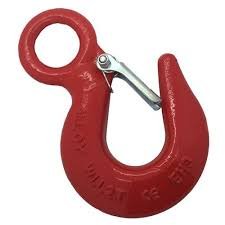
An eye hook has a fixed eye or loop at the top. It is usually connected to a chain sling, wire rope sling, synthetic sling, shackle, or master link.
Common uses:
- General lifting
- Chain sling assemblies
- Wire rope sling assemblies
- Hoist and crane lifting
Key point: Eye hooks are strong and simple, but they normally require a connector such as a shackle, link, or welded coupling.
Clevis Hooks
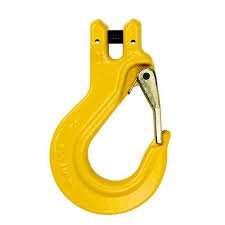
A clevis hook has a clevis pin at the top, allowing it to connect directly to chain without a separate coupling link.
Common uses:
- Chain slings
- Transport chain
- Rigging assemblies
- Load securement
Key point: Clevis hooks are convenient for chain because they are easy to install and replace.
Swivel Hooks
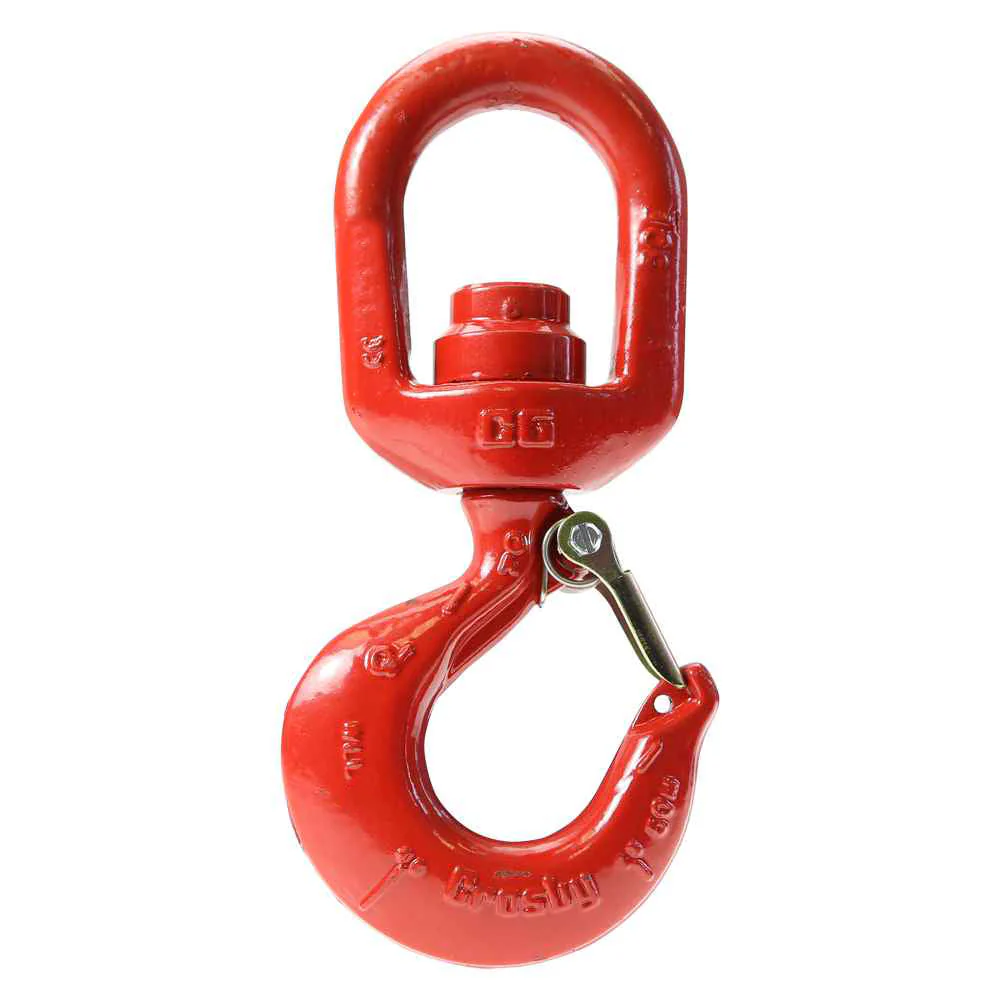
A swivel hook can rotate under controlled conditions, helping align the load and reduce twisting in the sling assembly.
Common uses:
- Hoists
- Cranes
- Lifting points where rotation or alignment is needed
Important: Not every swivel hook is designed to rotate while loaded. Some are for positioning only, so the manufacturer’s instructions must be checked. Crosby notes that some swivel jaw products are suitable for positioning before lifting.
Sling Hooks
A sling hook is a general-purpose hook designed for use with lifting slings. It often has a wider throat than a grab hook and may include a latch.
Common uses:
- Wire rope slings
- Chain slings
- Synthetic web slings
- Round slings
Key point: Sling hooks are probably the most common hook style used in rigging and overhead lifting.
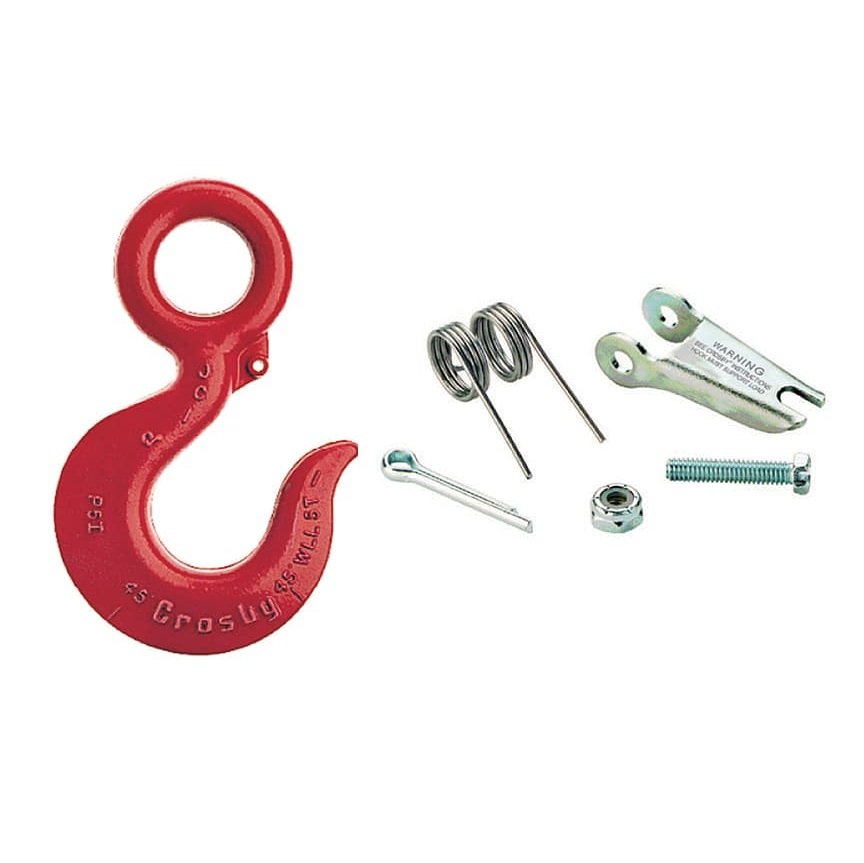
Hooks with Safety Latches
Many lifting hooks include a spring-loaded latch to help keep the sling, shackle, or lifting point from accidentally coming out of the hook throat.
Common uses:
- General overhead lifting
- Crane hooks
- Hoist hooks
- Rigging slings
Important: A latch is not a load-bearing component. The load must sit properly in the bowl or saddle of the hook, not on the latch.
Self-Locking Hooks
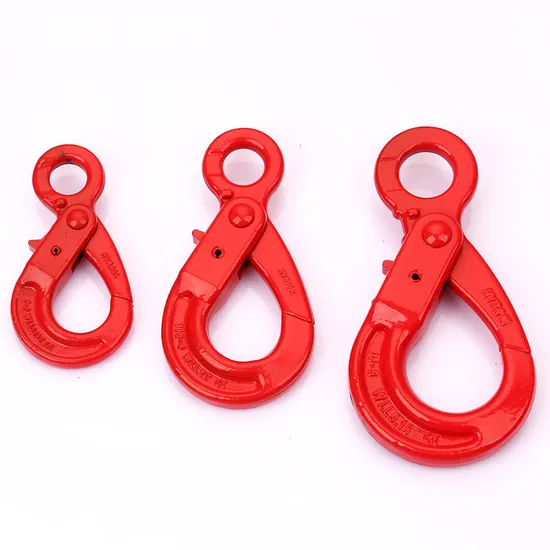
A self-locking hook has a positive locking mechanism. Once the hook is loaded, the latch or lock is designed to remain closed until intentionally released.
Common uses:
- Higher-safety lifting applications
- Chain slings
- Wire rope sling assemblies
- Critical lifts
Crosby’s SHUR-LOC® hooks, for example, use a positive lock latch that is self-locking when loaded.
Foundry Hooks
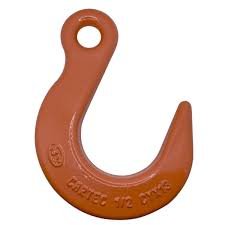
A foundry hook has a wide throat opening and usually does not have a latch.
Common uses:
- Foundries
- High-temperature environments
- Lifting molds, castings, or large industrial parts
Key point: Because foundry hooks often have no latch, they should only be used where the application is appropriate and the load is properly seated.
Sorting Hooks
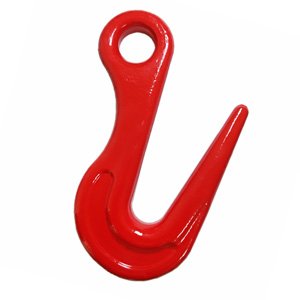
A sorting hook, also called a lay-out hook or shake-out hook, is used to handle items such as plates, pipes, tubes, or structural materials.
Common uses:
- Steel mills
- Pipe handling
- Plate handling
- Sorting and positioning materials
Sorting hooks are commonly used where the hook must fully engage the load or lifting point.
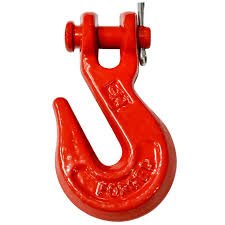
Grab Hooks
A grab hook is designed to grab a chain link and shorten or secure the chain. It has a narrow throat that fits around chain links.
Common uses:
- Chain shortening
- Load binding
- Transport chain
- Chain sling adjustment
Important: Grab hooks are usually intended for chain, not for wire rope or synthetic slings. Some standard grab hook configurations may require a reduced working load limit depending on manufacturer guidance.
J-Hooks
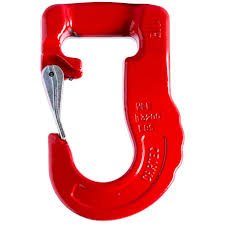
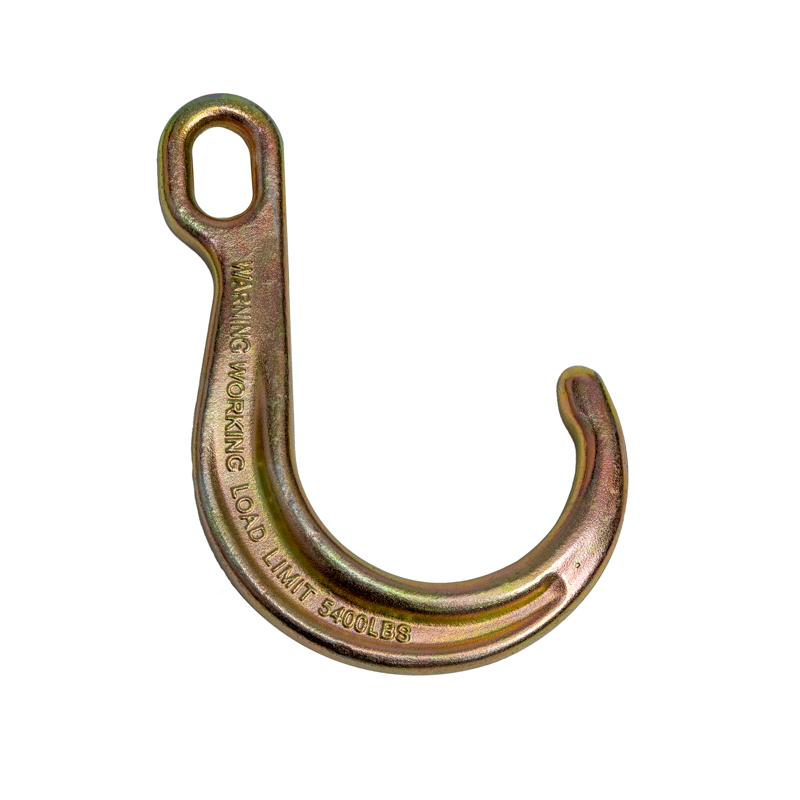
A J-hook has a J-shaped profile and is often used for special lifting, towing, or handling applications.
Common uses:
- Vehicle recovery
- Special lifting fixtures
- Material handling
- Custom rigging applications
Key point: J-hooks are application-specific and should not be used for general overhead lifting unless they are rated and designed for that purpose.
Barrel Hooks
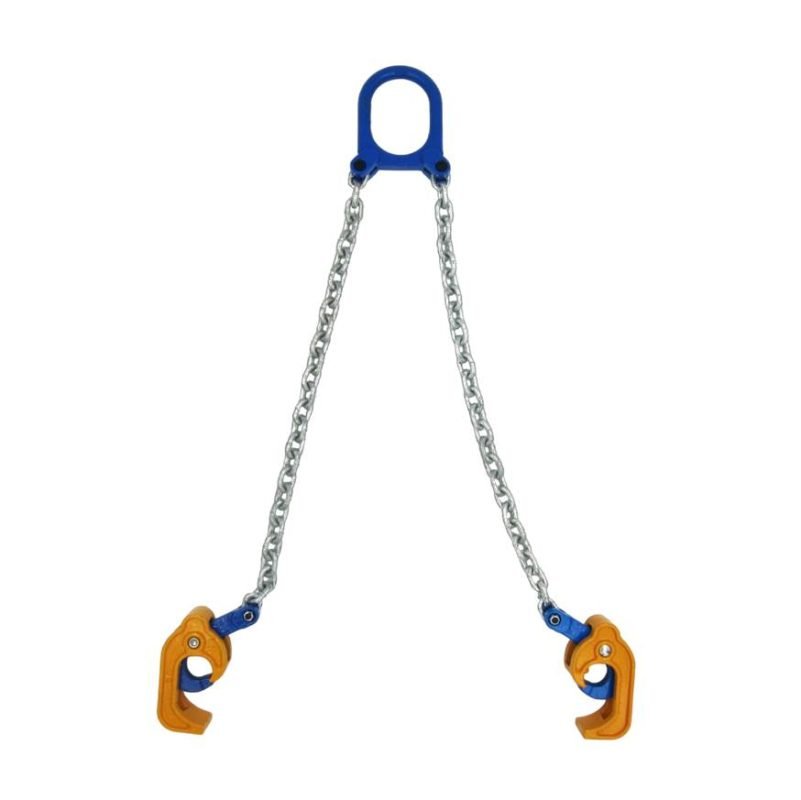
Barrel hooks are specialty hooks designed to lift barrels, drums, or cylindrical objects.
Common uses:
- Drum handling
- Barrel lifting
- Industrial material handling
Crosby lists barrel hooks as a specialty hook type in its hooks and swivels product range.
Crane Hooks / Hoist Hooks
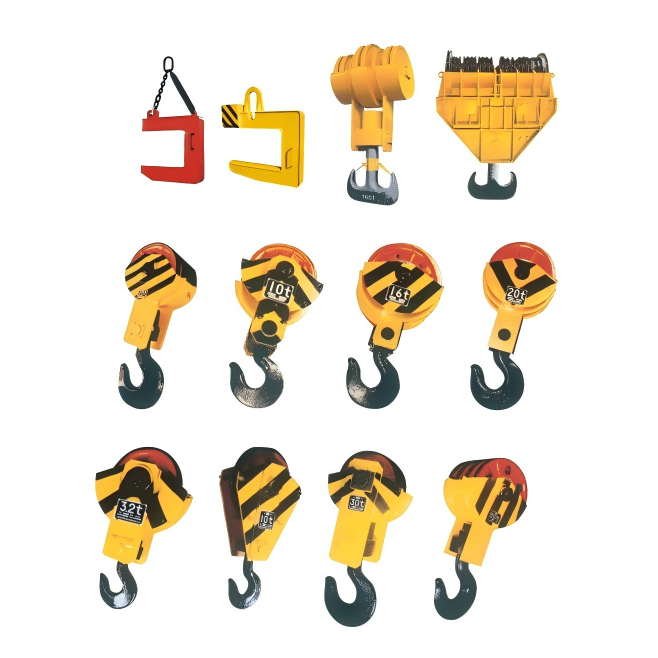
A crane hook or hoist hook is the main hook attached to a crane block, electric hoist, manual hoist, or lifting machine.
Common uses:
- Overhead cranes
- Gantry cranes
- Jib cranes
- Chain hoists
- Wire rope hoists
Crane hooks may be single hooks, double hooks, swivel hooks, or self-locking hooks, depending on the lifting equipment and application.
Simple Selection Guide
| Hook Type | Best For | Main Feature |
| Eye hook | General lifting | Fixed eye connection |
| Clevis hook | Chain slings | Direct chain connection |
| Swivel hook | Alignment | Rotating top connection |
| Sling hook | General sling lifting | Wide throat, often with latch |
| Self-locking hook | Higher safety lifts | Positive locking latch |
| Grab hook | Chain shortening | Grabs chain links |
| Foundry hook | Foundry/heavy industrial work | Wide throat, often no latch |
| Sorting hook | Pipe, plate, steel handling | Large open hook design |
| J-hook | Special handling/recovery | J-shaped profile |
| Barrel hook | Drum/barrel lifting | Designed for cylindrical loads |
| Hoist/crane hook | Crane or hoist lifting | Main lifting hook |
Safety Notes
Always check the working load limit, hook grade, sling compatibility, latch condition, throat opening, wear, deformation, and manufacturer instructions before use. The hook should never be side-loaded, tip-loaded, overloaded, or used with a damaged latch. ASME maintains standards for lifting and construction equipment, and hook selection should follow the applicable safety standard and manufacturer requirements.
Hook Classification by Safety Feature
| Type | Safety Level |
| Open Hook | Low |
| Safety Latch Hook | Medium |
| Self-Locking Hook | High |
| Positive Lock Hook | Highest |
Common Hook Materials
| Material | Application |
| Carbon Steel | General lifting |
| Alloy Steel | Heavy-duty lifting |
| Stainless Steel 304 | Corrosion resistance |
| Stainless Steel 316 | Marine and offshore environments |
Critical Safety Considerations
Never exceed WLL
Every lifting hook is marked with a:
- WLL (Working Load Limit)
Never exceed this rating.
Inspect Before Use
Look for:
- Cracks
- Deformation
- Excessive throat opening
- Corrosion
- Damaged latches
Never Side Load a Hook
Hooks are generally designed for loading in line with the hook bowl.
Side loading can:
- Reduce capacity
- Cause bending
- Lead to failure
Use Self-Locking Hooks for Critical Lifts
Many industries require self-locking hooks for:
- Offshore lifting
- Oil & Gas operations
- High-risk lifting environments
Summary
For modern industrial lifting operations, especially in construction, offshore, and Oil & Gas industries, self-locking swivel hooks are often considered the safest and most versatile option due to their secure locking mechanism and ability to align with the load direction.
FAQs About Types of Lifting Hooks and Sling Hooks
A lifting hook is a general term for hooks used to connect loads to lifting equipment such as cranes, hoists, and rigging systems.
A sling hook is specifically designed as an end fitting on a sling assembly, including chain slings, wire rope slings, and synthetic slings.
In short, all sling hooks are lifting hooks, but not all lifting hooks are sling hooks.
In many lifting applications, safety latches are strongly recommended and may be required by company procedures or industry regulations.
Safety latches help:
- Prevent sling disengagement
- Improve load retention
- Reduce accidental release risks
For critical lifting operations, self-locking hooks are often preferred over standard safety latch hooks.
Generally, self-locking hooks are considered among the safest lifting hooks because they:
- Automatically lock when loaded
- Require deliberate action to open
- Reduce the risk of accidental load release
For critical lifts, self-locking swivel hooks provide both load security and rotational flexibility.
No. Most lifting hooks are designed to be loaded in line with the hook bowl.
Side loading can:
- Reduce hook capacity
- Cause deformation
- Damage the latch
- Lead to catastrophic failure
Always follow the manufacturer's load direction recommendations.
Common lifting hook standards include:
- ASME B30.10
- OSHA lifting regulations
- EN 1677
- EN 818
- AS 3775
These standards cover hook design, inspection, testing, marking, and safe use requirements.
Lifting hooks should be inspected:
- Before each use
- During routine lifting equipment inspections
- After overload incidents
- During scheduled maintenance programs
Inspect for:
- Cracks
- Excessive throat opening
- Corrosion
- Wear
- Bent or twisted components
- Damaged safety latches
Any hook showing signs of damage or deformation should be removed from service immediately.