A turnbuckle is a mechanical tensioning device used to tighten, adjust, or fine-tune tension in cables, wire ropes, rods, tie rods, and rigging systems.
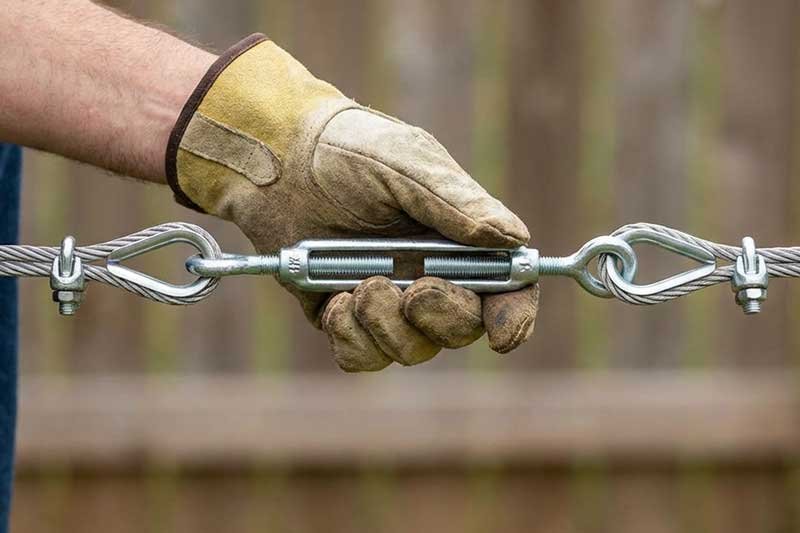
It has a central body with opposite internal threads on each end. When the body is rotated, the two end fittings move inward or outward at the same time, allowing the connected cable or rod to be tightened or loosened without twisting the cable itself.
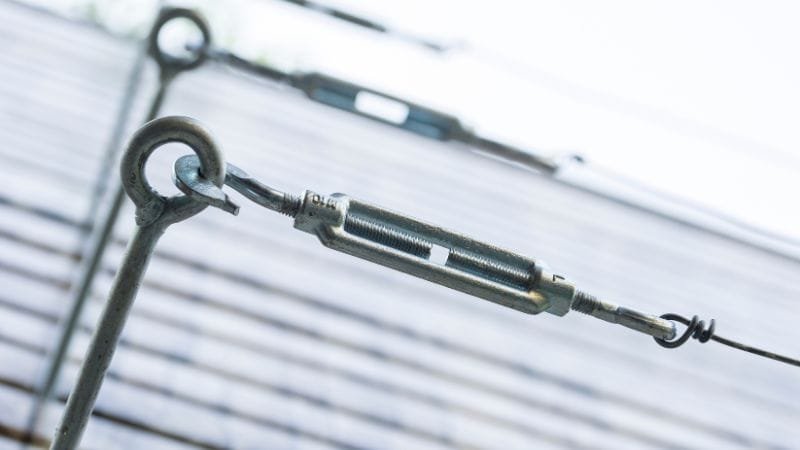
Main Parts of a Turnbuckle
1. Body / Frame
The middle section of the turnbuckle. It may be:
- Open body
- Closed body / pipe body
- Forged body
The body is rotated to adjust tension.
2. End Fittings
These are attached to both ends of the body. Common end fittings include:
- Eye
- Hook
- Jaw
- Stub end
- Threaded rod end
3. Threads
One end has right-hand threads, and the other has left-hand threads. This allows both ends to move together when the body is turned.
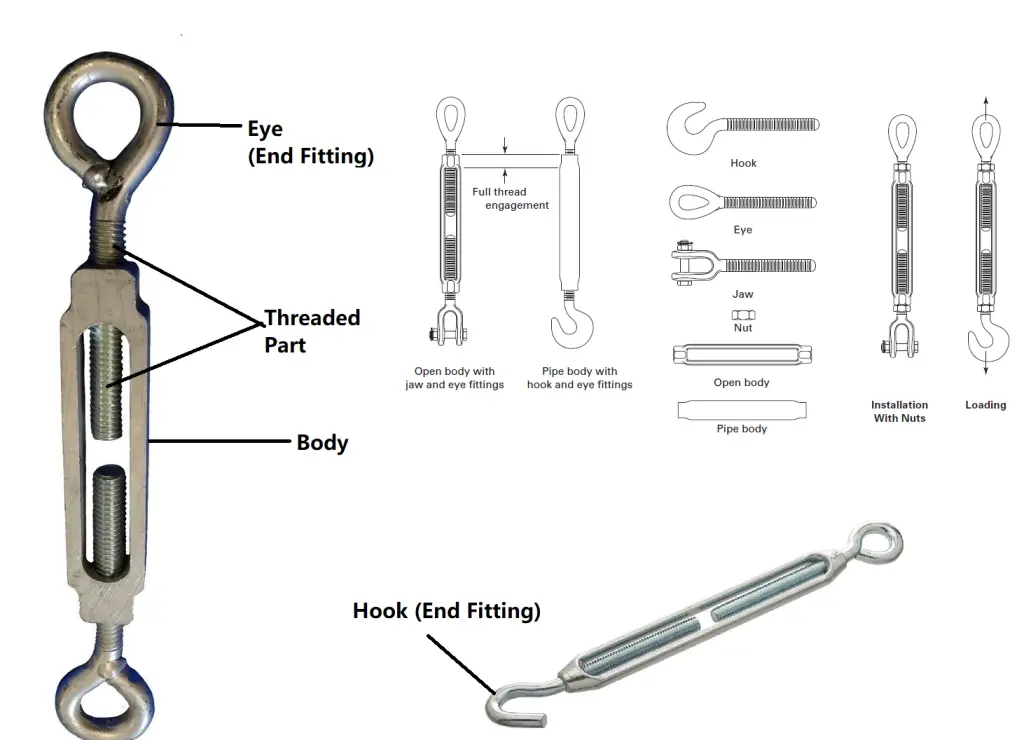
Common Types of Turnbuckles
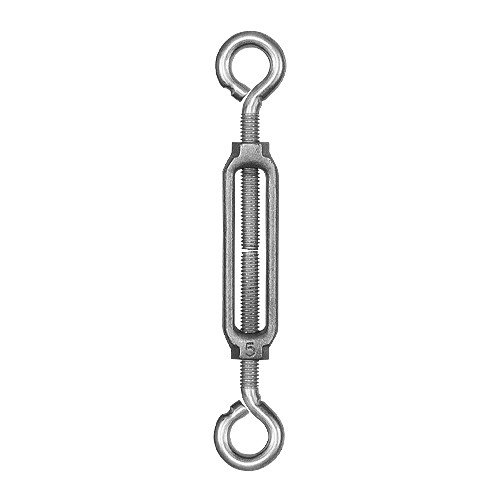
1. Eye and Eye Turnbuckle
Both ends have closed eyes.
Common uses:
- Wire rope assemblies
- Guy wires
- Fencing
- Light to medium tensioning applications
This type is secure because both ends are closed, but it usually requires shackles or other connectors.
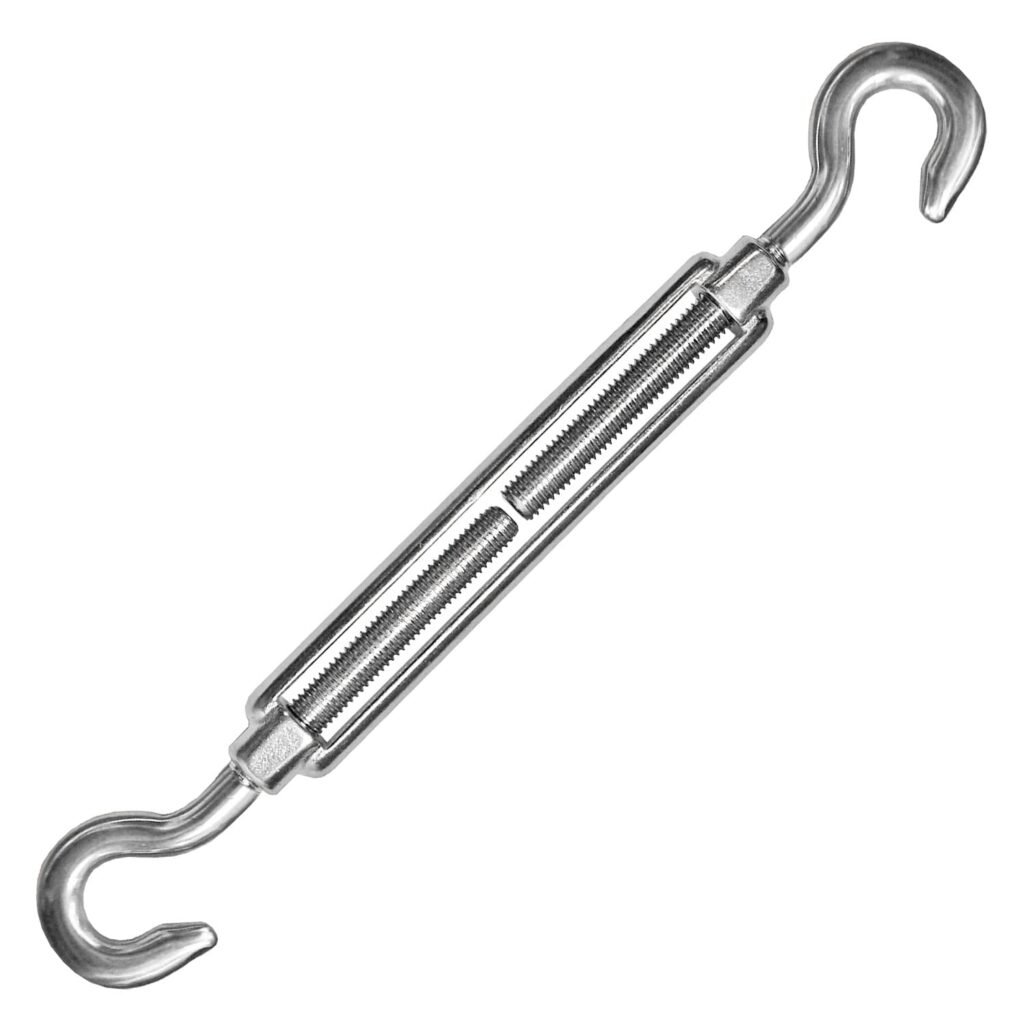
2. Hook and Hook Turnbuckle
Both ends have hooks.
Common uses:
- Temporary rigging
- Light-duty tensioning
- Quick connection applications
Hooks are easy to attach and remove, but they are less secure than eyes or jaws. They are generally not preferred for critical lifting or high-vibration applications.
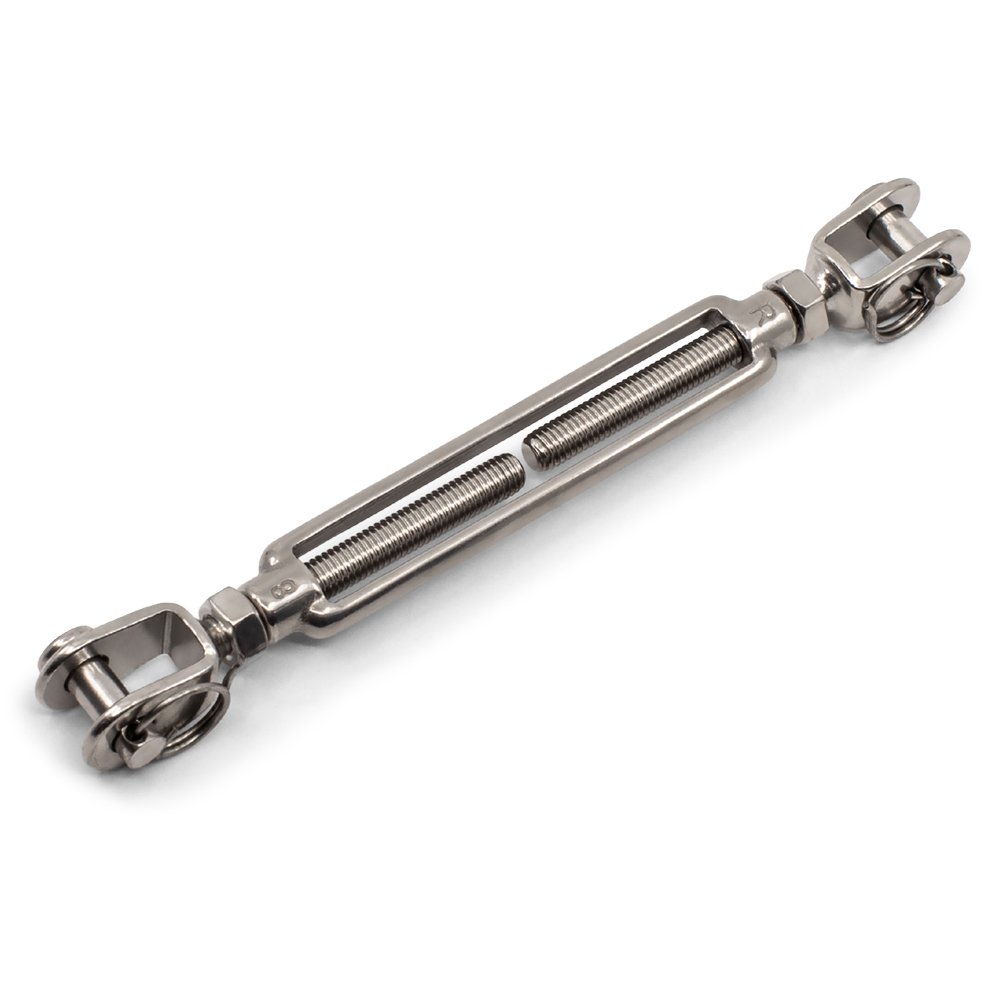
3. Jaw and Jaw Turnbuckle
Both ends have clevis jaws with pins.
Common uses:
- Structural bracing
- Marine rigging
- Tie rods
- Applications requiring secure pin connections
Jaw ends are more secure than hooks and are commonly used where movement or vibration may occur.
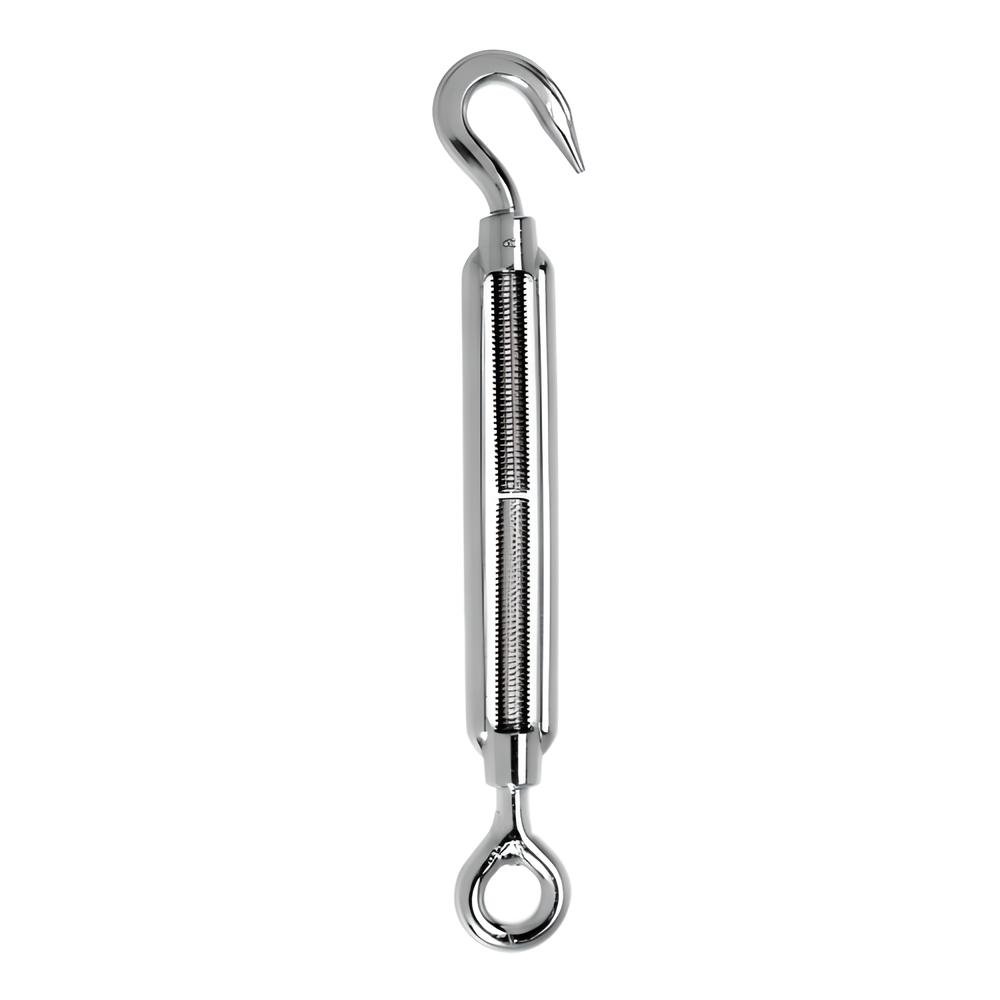
4. Eye and Hook Turnbuckle
One end has an eye, and the other end has a hook.
Common uses:
- Adjustable cable systems
- Light-duty rigging
- Temporary support applications
It gives flexibility when one side needs a permanent connection and the other side needs easy removal.
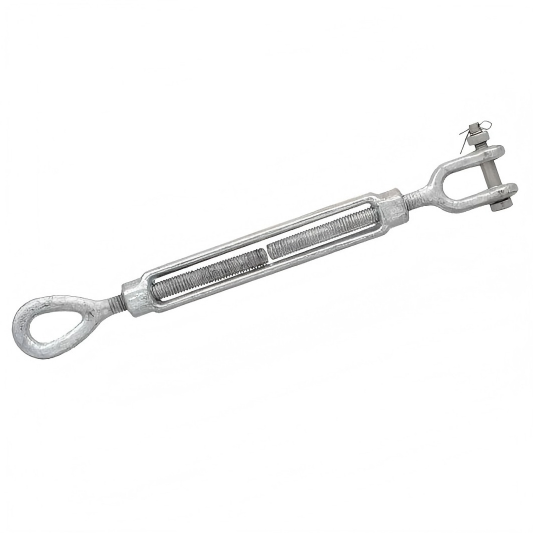
5. Jaw and Eye Turnbuckle
One end has a jaw, and the other has an eye.
Common uses:
- Wire rope bracing
- Structural tensioning
- Marine and industrial applications
This is useful when one side connects to a pin or lug, while the other side connects to a shackle or wire rope eye.
Common Materials
Turnbuckles are available in different materials depending on the environment and load requirement.
Carbon Steel
Used for general industrial applications.
Galvanized Steel
Provides corrosion resistance and is commonly used outdoors.
Stainless Steel
Used in marine, food-grade, chemical, and corrosive environments.
Alloy Steel
Used for higher-strength applications.
How to Install a Turnbuckle
1. Select the Correct Type and Size
Choose the turnbuckle based on:
- Required load capacity
- End connection type
- Working environment
- Thread size
- Safety factor
- Whether it is for lifting, tensioning, or support
For lifting applications, always use turnbuckles rated for lifting and follow the relevant standard.
2. Fully Engage the Threads
Before loading, make sure both threaded ends are properly engaged inside the body.
A common rule is that the threaded end should be engaged at least by the full diameter of the thread, but always follow the manufacturer’s requirement.
3. Connect Both Ends Securely
Attach each end fitting to the cable, wire rope, rod, shackle, pad eye, or structural point.
Make sure:
- Pins are properly secured
- Hooks are seated correctly
- Eyes are connected with suitable shackles
- There is no side loading
4. Apply Tension by Rotating the Body
Turn the body of the turnbuckle to tighten or loosen the assembly.
- Rotate one direction to shorten the assembly and increase tension
- Rotate the opposite direction to lengthen the assembly and reduce tension
Do not twist the cable or wire rope itself.
5. Lock the Turnbuckle
After adjustment, secure the turnbuckle to prevent loosening.
Common locking methods include:
- Lock nuts
- Safety wire
- Cotter pins
- Jam nuts
- Manufacturer-approved locking devices
This is especially important where vibration, movement, or dynamic loading is present.
Common Uses of Turnbuckles
Turnbuckles are widely used in:
- Wire rope tensioning
- Guy wires
- Fencing
- Marine rigging
- Structural bracing
- Suspension systems
- Tie rods
- Shade structures
- Stage rigging
- Tower and mast support
- Pipe support systems
- Construction and industrial rigging
Important Safety Notes
Turnbuckles should not be overloaded. Always check the working load limit, not just the breaking strength.
Avoid:
- Side loading
- Shock loading
- Using damaged threads
- Mixing incompatible end fittings
- Using unrated turnbuckles for lifting
- Insufficient thread engagement
- Using hooks where secure closed connections are required
- Using corroded, bent, cracked, or deformed parts
For overhead lifting, use only turnbuckles specifically rated and approved for lifting service.
Summary
A turnbuckle is an adjustable device used to control tension in cables, rods, and wire rope systems. It consists of a central body with opposite threaded ends. By rotating the body, the assembly becomes tighter or looser. Different end fittings, such as eye, hook, and jaw types, allow turnbuckles to be used in many industrial, marine, construction, and rigging applications.
FAQs About Turnbuckles
A turnbuckle is a tensioning device used to adjust the tension or length of cables, wire ropes, rods, and rigging assemblies. It has a central body with right-hand and left-hand threaded ends, allowing tension to be increased or reduced by rotating the body.
Turnbuckles are commonly used for wire rope tensioning, structural bracing, guy wires, fencing, marine rigging, construction supports, tie rods, and industrial rigging applications.
The main parts of a turnbuckle include the body, threaded end fittings, and the right-hand and left-hand internal threads. The end fittings may be eyes, hooks, jaws, or threaded rod ends.
Common turnbuckle types include:
- Eye and eye turnbuckle
- Hook and hook turnbuckle
- Jaw and jaw turnbuckle
- Eye and hook turnbuckle
- Jaw and eye turnbuckle
- Stub end turnbuckle
A turnbuckle works by using opposite threads on each end. When the body is rotated, both end fittings move inward or outward at the same time. This shortens or lengthens the assembly and changes the tension.
Turnbuckles are commonly made from carbon steel, galvanized steel, stainless steel, and alloy steel. Galvanized and stainless steel turnbuckles are often used outdoors or in corrosive environments.
An eye turnbuckle has a closed loop end, a hook turnbuckle has an open hook end, and a jaw turnbuckle has a clevis end with a pin. Eye and jaw types provide more secure connections, while hook types are easier to attach and remove.
Turnbuckles can be used for lifting only if they are specifically rated and approved for lifting applications. For overhead lifting, always check the working load limit and follow the manufacturer’s instructions and applicable safety standards.
To install a turnbuckle, select the correct size and type, connect both ends securely, ensure proper thread engagement, rotate the body to adjust tension, and lock the turnbuckle after adjustment to prevent loosening.
To tighten a turnbuckle, rotate the body so that both threaded ends move toward the center. This shortens the assembly and increases tension in the connected cable, wire rope, or rod.
To loosen a turnbuckle, rotate the body in the opposite direction so that both threaded ends move away from the center. This lengthens the assembly and reduces tension.
Yes. A turnbuckle should be locked after adjustment, especially in applications with vibration or movement. Lock nuts, jam nuts, safety wire, cotter pins, or other approved locking methods may be used.
Galvanized steel turnbuckles have a zinc coating that provides corrosion resistance and are commonly used outdoors. Stainless steel turnbuckles offer better corrosion resistance and are often used in marine, chemical, or highly corrosive environments.
Before use, check the turnbuckle for correct size, proper working load limit, thread engagement, cracks, deformation, corrosion, damaged threads, bent fittings, and secure pins or locking devices.
Yes. A turnbuckle can fail if it is overloaded, side-loaded, shock-loaded, improperly installed, corroded, damaged, or used with insufficient thread engagement. Always inspect the turnbuckle before use.
The working load limit, or WLL, is the maximum load a turnbuckle is designed to handle during normal use. It depends on the size, material, design, and manufacturer. Always use the rated WLL, not the breaking strength, when selecting a turnbuckle.
Yes. Galvanized steel and stainless steel turnbuckles are suitable for outdoor use. Stainless steel is preferred for marine or highly corrosive environments, while galvanized steel is often used for general outdoor applications.
A jaw and jaw turnbuckle is used where secure pinned connections are required. It is common in structural bracing, marine rigging, tie rods, and applications where movement or vibration may occur.
An eye and eye turnbuckle is used for secure tensioning applications where both ends connect through shackles, hooks, or wire rope eyes. It is common in wire rope assemblies, guy wires, fencing, and general rigging.