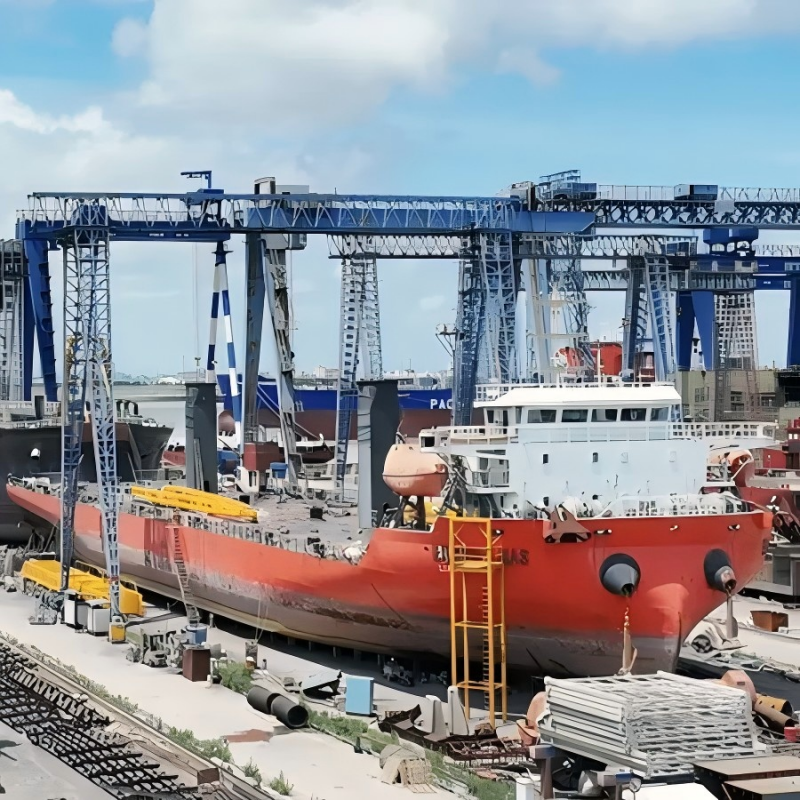
Shipyard Gantry Cranes: Heavy-Duty Lifting Solutions for Modern Shipbuilding
Shipyard gantry cranes are essential lifting systems used in shipyards, dry docks, offshore fabrication yards, and marine engineering projects. Designed for handling extremely heavy hull blocks and large steel structures, these cranes provide exceptional lifting capacity, long-span coverage, precise positioning, and reliable performance in harsh coastal environments.
At MecBase, we specialize in manufacturing high-capacity shipyard gantry cranes for global shipbuilding and offshore industries. Our solutions include rail-mounted goliath cranes, rubber-tyred gantry cranes, and fully customized heavy-duty lifting systems for shipyards and dry dock operations.
What Is a Shipyard Gantry Crane?
A shipyard gantry crane is a large-scale gantry lifting system specifically engineered for shipbuilding applications. Unlike standard industrial gantry cranes, shipyard cranes are designed to handle:
- Hull block transportation
- Section assembly
- Ship block flipping
- Dry dock operations
- Offshore module handling
- Heavy marine equipment installation
These cranes typically feature extremely large spans, high lifting heights, multiple trolley systems, and advanced anti-sway technologies for precise and safe operation.
Key Features of Shipyard Gantry Cranes
Extreme Lifting Capacity and Large Span
Modern shipyard gantry cranes can handle loads ranging from 100 tons to over 2,000 tons. Depending on shipyard layout requirements, spans can exceed 160 meters.
Key advantages include:
- Heavy-duty dual-girder structures
- Box girder or truss girder designs
- Optimized variable cross-section beams
- Excellent rigidity under eccentric loads
These features make them ideal for large hull block assembly and mega-structure lifting.
Multi-Trolley Lifting System
Advanced shipyard cranes often include:
- Upper trolley
- Lower trolley
- Horizontal trolley
- Auxiliary hoists
This configuration enables:
- Tandem lifting
- Aerial turnover (block flipping)
- Precise positioning
- Horizontal micro-rotation
Such flexibility greatly improves efficiency during ship section assembly.
Precision Positioning and Anti-Sway Technology
Shipbuilding operations require extremely accurate positioning. Modern cranes therefore integrate:
- VVVF variable frequency drives
- Electronic anti-sway systems
- Mechanical rope guides
- Micro-motion control
These technologies improve safety while reducing assembly errors during hull alignment.
Heavy-Duty Marine Environment Design
Shipyard gantry cranes operate in highly corrosive coastal environments. Therefore, marine-grade protection systems are critical.
Typical configurations include:
- ISO 12944 C5-M corrosion protection
- Reinforced wheel assemblies
- Typhoon-resistant rail clamps
- High-duty classifications (A6–A9)
This ensures reliable 24/7 operation even under severe weather conditions.
Main Structural Components of a Shipyard Gantry Crane
A typical shipyard gantry crane consists of the following systems:
| Component | Function |
| Main Girder System | Supports the primary structural load |
| Rigid & Flexible Legs | Maintain stability and compensate for rail settlement |
| Hoisting Mechanism | Handles vertical lifting operations |
| Traveling Mechanism | Enables crane movement along rails |
| Electrical Control System | Coordinates lifting and positioning |
| Safety Devices | Provides overload and anti-collision protection |
Technical Specifications
Typical shipyard gantry crane specifications include:
| Parameter | Range |
| Lifting Capacity | 100–2,000 tons |
| Span | 30–160 meters |
| Lifting Height | 20–80 meters |
| Hoisting Speed | 0.5–15 m/min |
| Duty Class | A6–A9 |
| Protection Level | IP55–IP66 |
| Working Temperature | -20°C to +55°C |
Types of Shipyard Gantry Cranes
Shipyard gantry cranes are generally classified into three main types: Single Girder Shipyard Gantry Cranes, Double Girder Shipyard Gantry Cranes, and Goliath Gantry Cranes. Each type is designed for different lifting capacities, shipyard scales, and operational requirements. From light auxiliary lifting to ultra-heavy hull block assembly, these cranes play a critical role in modern shipbuilding, dry dock construction, and offshore engineering projects. Understanding the differences between these crane types helps shipyards select the most suitable lifting solution for efficiency, safety, and long-term operational reliability.
Single Girder Shipyard Gantry Crane
A single girder shipyard gantry crane has one main girder. It features a relatively simple structure, lighter self-weight, and lower cost.
It is suitable for:
- Medium-duty lifting
- Auxiliary lifting operations
- Small and medium-sized shipyards
- Handling steel plates, components, and small hull sections
In simple terms, it is mainly used for lighter shipyard lifting tasks.
Double Girder Shipyard Gantry Crane
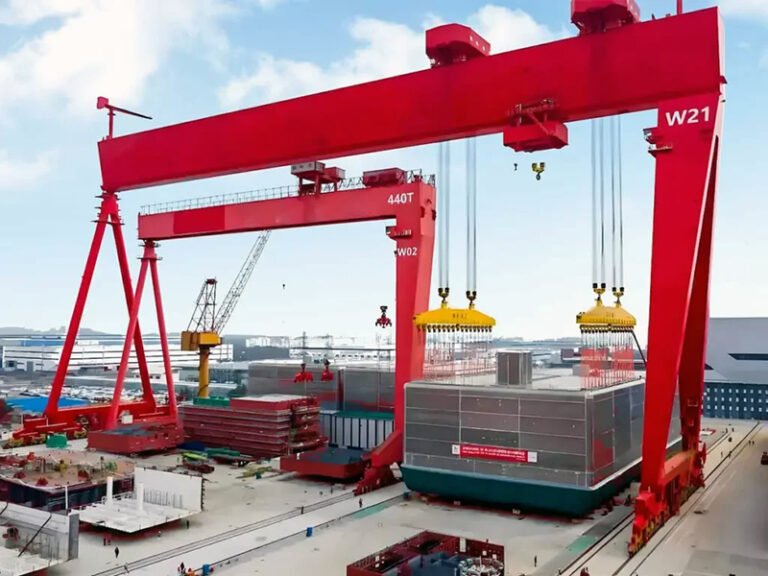
A double girder shipyard gantry crane uses two main girders, providing greater structural stability, higher lifting capacity, and stronger torsional resistance.
It is suitable for:
- Large shipyards
- Heavy hull block lifting
- Heavy structural components
- High-frequency operations
This is the most common type used in modern large shipbuilding yards due to its superior performance and reliability.
Goliath Gantry Crane
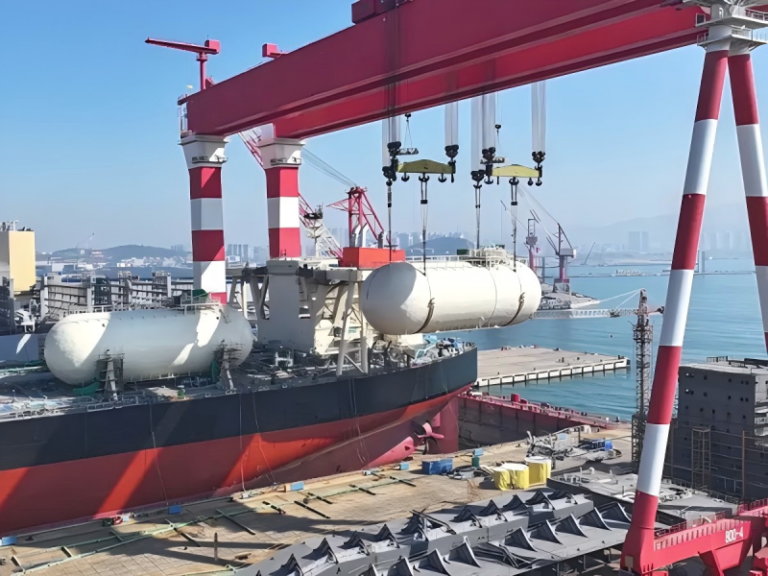
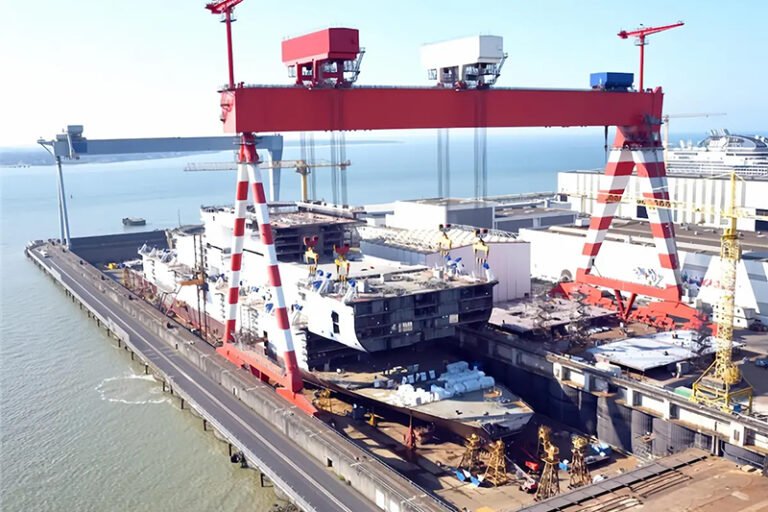
A Goliath gantry crane is an ultra-large shipyard gantry crane designed for extremely heavy lifting operations.
Its main features include:
- Extremely large span
- Ultra-heavy lifting capacity
- Massive structural size
- Advanced multi-trolley lifting systems
It is commonly used for:
- Large hull block assembly
- Dry dock operations
- FPSO and offshore module lifting
- Mega shipbuilding projects
In large shipyards in China, Korea, and other major shipbuilding countries, the huge gantry cranes seen over dry docks are typically called Goliath Gantry Cranes.
Applications of Shipyard Gantry Cranes
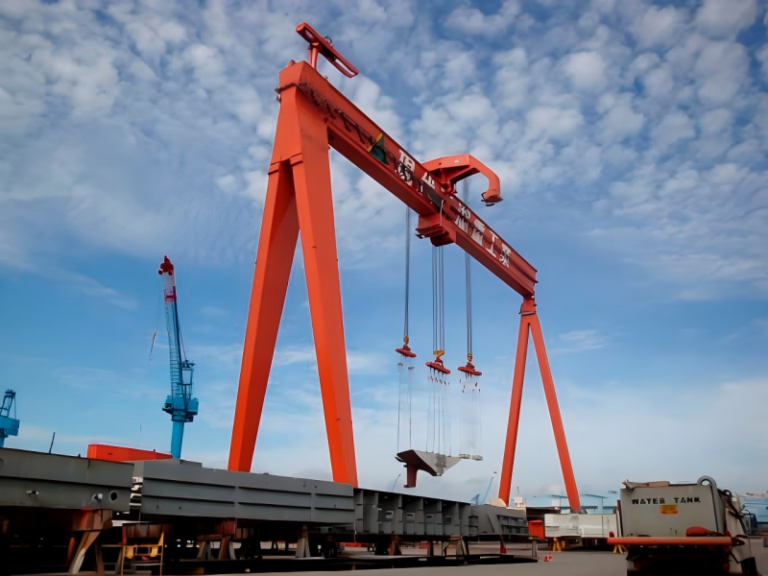
Shipyard gantry cranes are widely used in:
- Dry dock hull assembly
- Ship block transportation
- Offshore platform construction
- Heavy machinery installation
- Ship repair and conversion projects
- FPSO module handling
Their ability to safely handle oversized marine structures makes them indispensable in modern shipbuilding.
Shipyard Gantry Crane vs Standard Gantry Crane
Compared with ordinary industrial gantry cranes, shipyard cranes provide:
| Feature | Shipyard Gantry Crane | Standard Gantry Crane |
| Lifting Capacity | 100–2,000 tons | 5–100 tons |
| Span | Up to 160 m | Smaller spans |
| Environment | Marine/coastal | General industrial |
| Duty Class | A6–A9 | Lower duty |
| Customization | Highly customized | Standardized |
Shipyard cranes are specifically engineered for heavy marine construction and complex lifting operations.
Why Choose MecBase Shipyard Gantry Cranes?
Fully Customized Engineering
We provide customized solutions based on:
- Shipyard layout
- Block dimensions
- Production workflow
- Wind conditions
- Automation requirements
Advanced Safety Systems
Our cranes include:
- Anti-collision radar
- Load moment limiters
- Wind speed monitoring
- Remote diagnostics
Reliable Marine Corrosion Protection
We use premium marine-grade coatings and corrosion-resistant components for long service life.
Turnkey Installation and Global Support
MecBase offers:
- Foundation design
- Rail alignment
- Load testing
- Operator training
- Spare parts supply
- 24/7 after-sales support
Customization Options
Available customization options include:
- Lifting capacity
- Span and height
- Number of trolleys
- Control systems
- Wind protection systems
- Corrosion protection levels
- Automation functions
- Power supply configurations
Get a Quote for Shipyard Gantry Cranes
If you are looking for a reliable shipyard gantry crane manufacturer for shipbuilding, dry dock expansion, or offshore fabrication projects, MecBase can provide fully customized lifting solutions tailored to your operational requirements.
Contact us today for:
- Technical consultation
- Crane design proposals
- Budget quotations
- OEM manufacturing support
- Global project delivery
FAQs About Shipyard Gantry Cranes
Shipyard gantry cranes have much higher lifting capacity (typically 100–2,000 tons vs. 10–100 tons), larger spans (up to 160 m), higher duty class (A6–A9), marine-grade corrosion protection, and often feature rigid+flexible leg design and multi-trolley systems for block turning. Standard gantry cranes are designed for general cargo handling with lower intensity.
Yes. With the upper and lower trolleys and double main hooks, we offer aerial turnover (flipping) functionality. The system allows safe 180° flipping of heavy hull blocks with coordinated load control and anti-sway logic.
For spans exceeding 60 m, temperature changes, structural deflection, and rail settlement can cause misalignment. The flexible leg (hinged connection) compensates for these movements, preventing binding and reducing wheel/rail wear.
We include an elevator inside the rigid leg for easy access to the main beam, a jib crane on top of the main beam for servicing trolleys, full-length walkways, and optional centralized lubrication. This significantly reduces downtime and improves safety.
We install rail clamps, wheel brakes, ground anchors, and anchor chains. Wind speed sensors trigger automatic safe parking procedures when wind exceeds set thresholds (typically 25 m/s for operations and 55 m/s for survival).
Typical lead time is 10–14 months from design approval to load test for a standard 500-ton class crane. Larger capacities (1,000+ tons) may require 14–18 months.