
Welding Rotators
Welding Turning Rolls for Tanks, Pipes & Pressure Vessels
MecBase Welding Rotators, also known as welding turning rolls, are designed to support and rotate cylindrical workpieces during welding, assembly and fabrication.
By rotating the workpiece at a controlled speed, welding rotators help maintain a stable welding position for circumferential seams and reduce the need to manually reposition large and heavy components.
Our range includes light-duty, screw-adjustable and self-aligning welding rotators, with available load capacities from 1 to 100 tons for pipes, tanks, pressure vessels and other cylindrical structures.
LOAD CAPACITY: 1–100 TONS
WORKPIECE DIAMETER: UP TO Ø5500 MM on available models
TYPES: LIGHT-DUTY / SCREW-ADJUSTABLE / SELF-ALIGNING
Welding Rotators for Cylindrical Workpieces
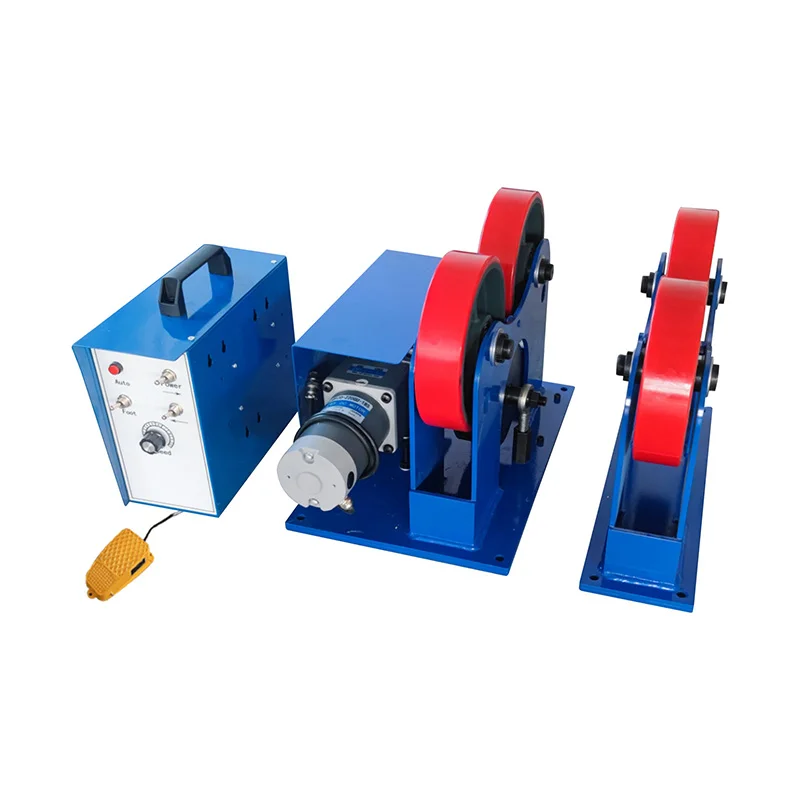
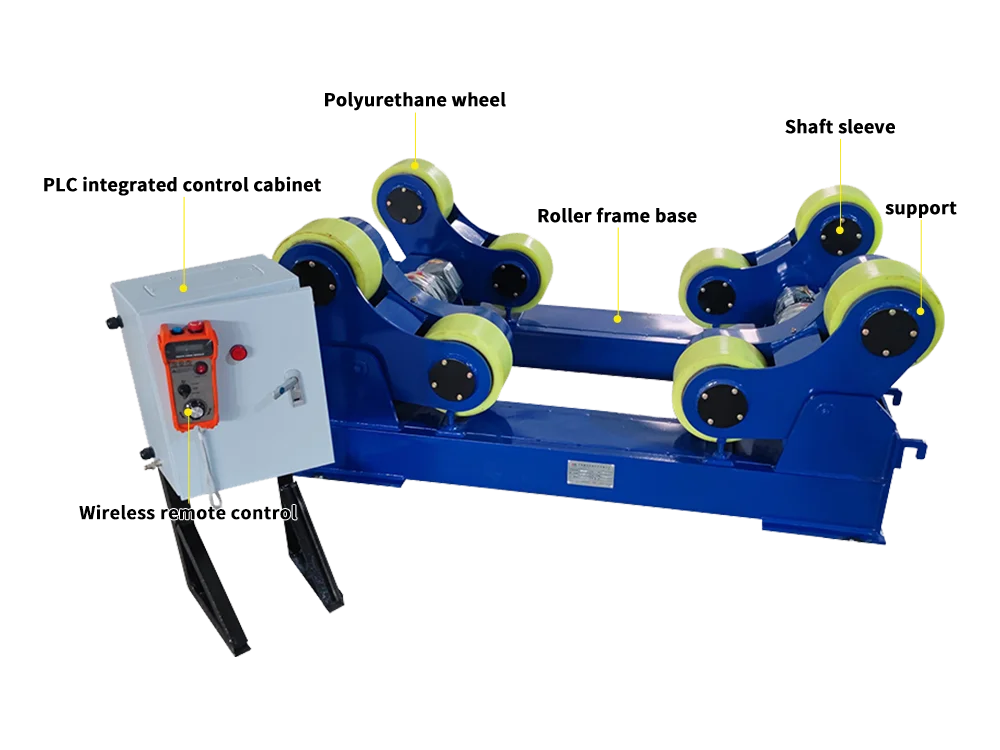
A welding rotator typically consists of a drive unit and an idler unit that support a cylindrical workpiece on rollers.
The powered rollers rotate the workpiece through friction, allowing the welding torch to remain in a controlled welding position while the circumferential weld passes underneath it.
Typical system:
Drive Unit + Workpiece + Idler Unit
For longer workpieces, additional idler units can be used to provide extra support.
Welding rotators are commonly used for:
Pressure Vessels · Storage Tanks · Large Pipes · Boilers · Wind Towers · Cylindrical Structures
Our Welding Rotator Range
Light-Duty Welding Rotators
Compact Turning Rolls for Pipes & Small Cylindrical Workpieces
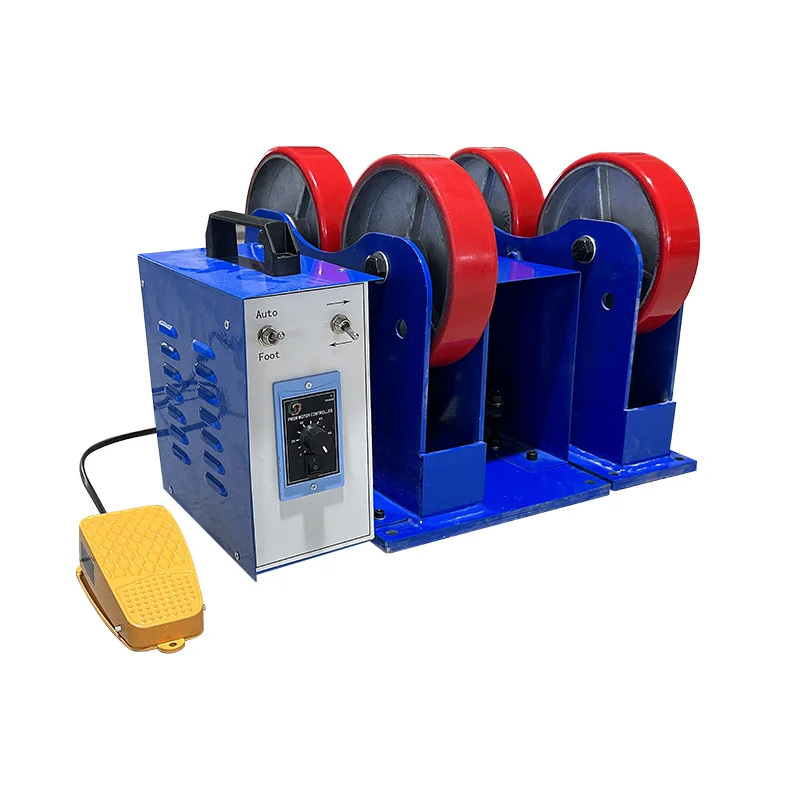
Light-duty welding rotators provide a compact solution for rotating pipes and smaller cylindrical components during welding.
Available models cover loads from approximately 1 to 6 tons, with adjustable roller spacing to accommodate different workpiece diameters.
| Model | Load Capacity | Workpiece Diameter | Rotation Speed |
| XH-1T | 1,000 kg | Ø20–600/800 mm | 150–1000 mm/min |
| XH-3T | 3,000 kg | Ø70–1200 mm | 150–1000 mm/min |
| XH-6T | 6,000 kg | Ø200–3500 mm | 150–1000 mm/min |
Key Features
- 1–6 Ton Load Capacity
For pipes and relatively light cylindrical components. - Adjustable Roller Spacing
Allows the roller position to be adapted to different workpiece diameters. - Variable Rotation Speed
Controlled workpiece rotation for different welding requirements. - Forward & Reverse Rotation
Allows the rotation direction to be changed according to the welding operation. - Foot Control Available
Convenient control during welding.
Screw-Adjustable Welding Rotators
Adjustable Turning Rolls for Different Workpiece Diameters
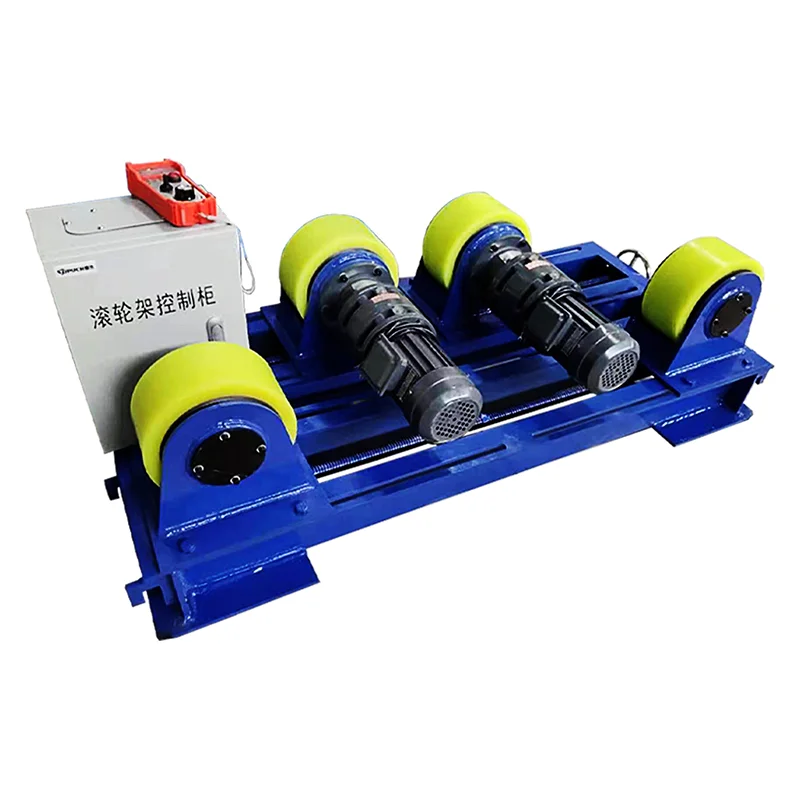
Screw-adjustable welding rotators use a screw adjustment mechanism to change the distance between the rollers.
This allows one rotator to accommodate cylindrical workpieces of different diameters while maintaining stable support during rotation and welding.
| Model | Load Capacity | Workpiece Diameter | Roller Size |
| KT-5S | 5 T | Ø250–2500 mm | Ø220 × 120 mm |
| KT-10S | 10 T | Ø350–3800 mm | Ø250 × 120 mm |
| KT-20S | 20 T | Ø350–3800 mm | Ø300 × 140 mm |
Key Features
- Screw-Adjustable Roller Distance
- Adjust the roller spacing according to the diameter of the workpiece.
- 5–20 Ton Load Capacity
- Suitable for medium and heavy cylindrical components.
- Variable-Speed Rotation
- Controlled rotation helps match workpiece speed with welding requirements.
- Polyurethane Rollers
- Available configurations use polyurethane rollers for workpiece support and rotation.
- Suitable for Multiple Diameters
- One system can accommodate a range of tank, vessel and pipe diameters.
Self-Aligning Welding Rotators
5–100 Ton Self-Aligning Turning Rolls
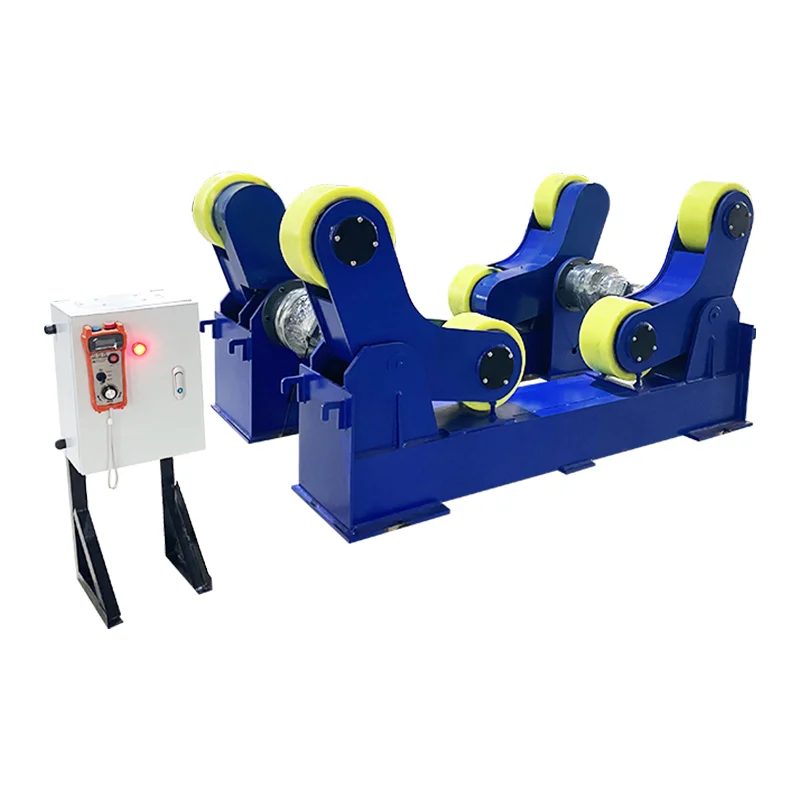
Self-aligning welding rotators are designed to accommodate different cylindrical workpiece diameters with reduced manual roller-position adjustment.
The roller assemblies adapt to the workpiece diameter as the cylindrical component is placed onto the rotator, making this design particularly suitable for production environments handling vessels or tanks of varying sizes.
| Model | Load Capacity | Workpiece Diameter | Rotation Speed |
| ZT-5 | 5 T | Ø350–2500 mm | 100–1000 mm/min |
| ZT-10 | 10 T | Ø400–3700 mm | 100–1000 mm/min |
| ZT-20 | 20 T | Ø600–4000 mm | 100–1000 mm/min |
| ZT-30 | 30 T | Ø600–4500 mm | 100–1000 mm/min |
| ZT-40 | 40 T | Ø600–4500 mm | 100–1000 mm/min |
| ZT-50 | 50 T | Ø750–5000 mm | 100–1000 mm/min |
| ZT-60 | 60 T | Ø800–5000 mm | 100–1000 mm/min |
| ZT-100 | 100 T | Ø800–5500 mm | 100–1000 mm/min |
Key Features
- Self-Aligning Roller Design
- Accommodates different workpiece diameters with less manual adjustment than conventional adjustable roller stands.
- Heavy-Duty Capacity
- Available configurations cover loads up to 100 tons.
- Large Diameter Range
- Suitable models can support cylindrical workpieces up to approximately Ø5500 mm.
- Controlled Rotation
- Variable rotation speed supports different workpiece diameters and welding requirements.
- For Large Cylindrical Fabrication
- Particularly suited to tanks, pressure vessels and other large cylindrical structures.
How Does a Welding Rotator Work?
1. Position the Workpiece
The cylindrical workpiece is placed between the rollers of the drive and idler units.
2. Adjust the Rollers
For adjustable models, the roller spacing is set according to the workpiece diameter. Self-aligning models adapt to the workpiece automatically through their roller-arm arrangement.
3. Set the Rotation Speed
The required linear rotation speed is selected according to the workpiece diameter and welding process.
4. Rotate the Workpiece
The drive rollers transmit rotational movement to the workpiece through friction.
5. Start Welding
As the workpiece rotates, the welding torch remains positioned at the required seam location for continuous circumferential welding.
Drive Unit & Idler Unit
How a Welding Rotator Set Is Configured
A typical welding rotator set consists of:
1 × Drive Unit + 1 × Idler Unit
The Drive Unit contains the drive system that powers the rollers and rotates the workpiece.
The Idler Unit supports the workpiece and rotates freely as the workpiece turns.
For long vessels or structures, additional idler units may be used:
1 Drive + 2 Idlers
or
1 Drive + Multiple Idlers
depending on workpiece length, weight distribution and support requirements.
How to Select a Welding Rotator
Workpiece Weight
Provide the maximum total workpiece weight.
Workpiece Dimensions
Specify both minimum and maximum outside diameter.
Workpiece Length
Long workpieces may require additional idler units.
Weight Distribution
The workpiece load must be properly distributed between the supporting rotator units.
Workpiece Material
Provide the material and surface requirements where relevant to roller selection.
Rotation Speed
The required welding speed determines the suitable roller rotation range.
Diameter Adjustment
Choose between manually/screw-adjustable and self-aligning configurations.
Welding Process
Provide the intended welding process and automation requirements.
Welding Rotator Applications
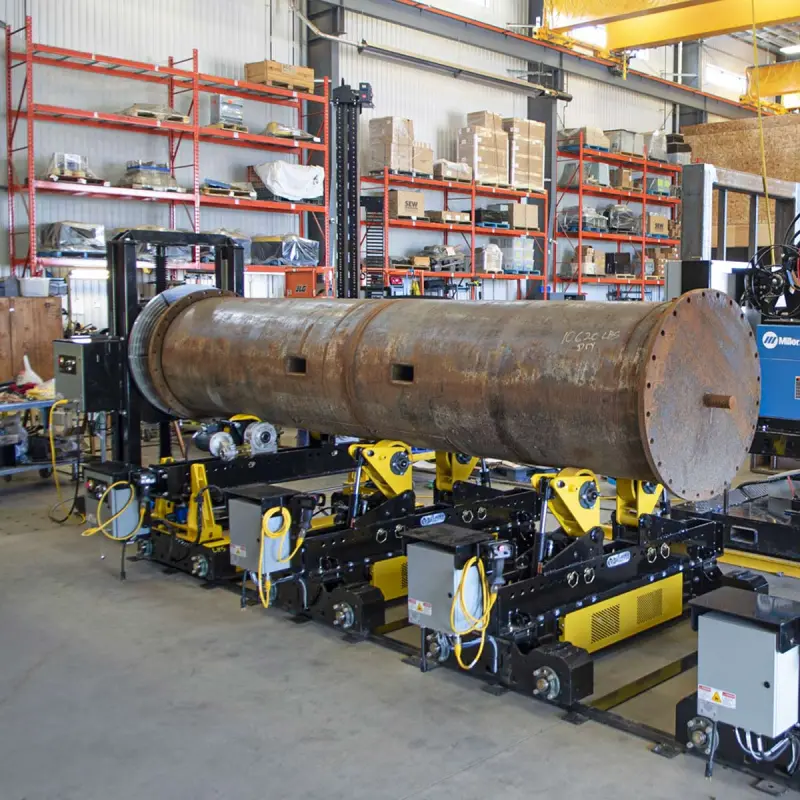
- Pressure Vessel Welding
- Controlled rotation of pressure-vessel shells during circumferential welding.
- Tank Fabrication
- Supports cylindrical tanks during welding, assembly and fabrication.
- Pipe Welding
- Suitable for rotating large-diameter pipes during circumferential welding.
- Boiler Fabrication
- Supports suitable cylindrical boiler components during welding operations.
- Wind Tower Fabrication
- Heavy-duty rotators can be configured for large cylindrical tower sections within the rated load and diameter range.
- Cylindrical Structure Welding
- Used for fabrication where large round workpieces require controlled rotation.
Screw-Adjustable vs. Self-Aligning Welding Rotators
| Feature | Screw-Adjustable | Self-Aligning |
| Roller Adjustment | Screw mechanism | Self-aligning roller mechanism |
| Diameter Change | Requires adjustment | Automatically adapts within rated range |
| Typical Capacity | 5–20 T | 5–100 T |
| Frequent Diameter Changes | Suitable | Better suited |
| Large Vessel Fabrication | Yes | Yes |
| Operating Convenience | Good | Higher |
| Typical Application | Pipe / Tank / Vessel | Tank / Pressure Vessel / Large Cylinder |
Choose screw-adjustable rotators when simple, controlled roller-spacing adjustment is preferred. Choose self-aligning rotators when workpiece diameters change frequently and faster setup is required.
Welding Rotator vs. Welding Positioner
| Welding Rotator | Welding Positioner | |
| Workpiece Support | Rollers | Table / Fixture / Chuck |
| Typical Workpiece | Cylindrical | Various shapes |
| Rotation | Roller-driven | Rotary table |
| Tilting | Normally No | Usually Available |
| Large Tanks & Vessels | Ideal | Limited by configuration |
| Pipes & Flanges | Large pipes | Small/medium pipes & flanges |
| Welding Chuck | Normally not required | Commonly used |
Which One Do I Need?
Use a Welding Rotator when a large cylindrical workpiece can rest directly on rollers and needs to rotate around its longitudinal axis.
Use a Welding Positioner when the workpiece needs to be mounted on a table or chuck and may also need to be tilted into different welding positions.
Welding Rotators for Automatic Welding
Build a Complete Vessel Welding System
A welding rotator can operate independently or be integrated with other welding automation equipment.
A typical automated vessel welding system may include:
Welding Rotator
↓
Welding Manipulator / Column & Boom
↓
Welding Torch
↓
Welding Power Source
↓
Control System
This configuration allows the workpiece to rotate while the welding head is maintained at the required seam position.
Request a Quote
Need Help Selecting a Welding Rotator?
Send us your workpiece and welding requirements. We can evaluate a suitable load capacity, roller configuration and number of support units.
| Required Information | Customer Input |
| Workpiece Type | |
| Minimum Diameter | mm |
| Maximum Diameter | mm |
| Workpiece Length | mm |
| Total Weight | kg / ton |
| Material | |
| Required Rotation Speed | mm/min |
| Adjustable / Self-Aligning | |
| Number of Drive Units | |
| Number of Idler Units | |
| Welding Process | |
| Automation Required | Yes / No |
| Power Supply | V / Hz / Phase |
| Quantity |
Frequently Asked Questions
A welding rotator is a workpiece-handling system that supports and rotates cylindrical components on rollers during welding and fabrication. It is also commonly called a welding turning roll or welding roller stand.
The drive unit uses powered rollers to rotate the workpiece. The idler unit provides additional support and rotates freely with the workpiece.
A self-aligning welding rotator uses an articulated roller arrangement that adapts to different workpiece diameters within its rated range, reducing the need for manual roller-spacing adjustment.
A typical set uses one drive unit and one idler unit. Longer or differently distributed workpieces may require additional idler units.
Yes. They can be integrated with welding manipulators, welding torches, power sources and control systems to create automated circumferential welding systems.
A welding rotator supports cylindrical workpieces directly on rollers. A welding positioner normally mounts the workpiece to a rotating table, fixture or chuck and can also provide tilting depending on the model.