As a key piece of equipment in road, municipal, and landscape engineering, concrete curb machines are reshaping the construction methods for linear concrete products with their efficient and precise continuous molding capabilities. This article provides a comprehensive analysis of this mechanized solution—from its core working principles and multi-scenario applications to material and site requirements during construction. It also offers a systematic procurement decision-making guide to help you achieve both efficiency and quality improvements in selection and usage.
What is a Concrete Curb Machine?
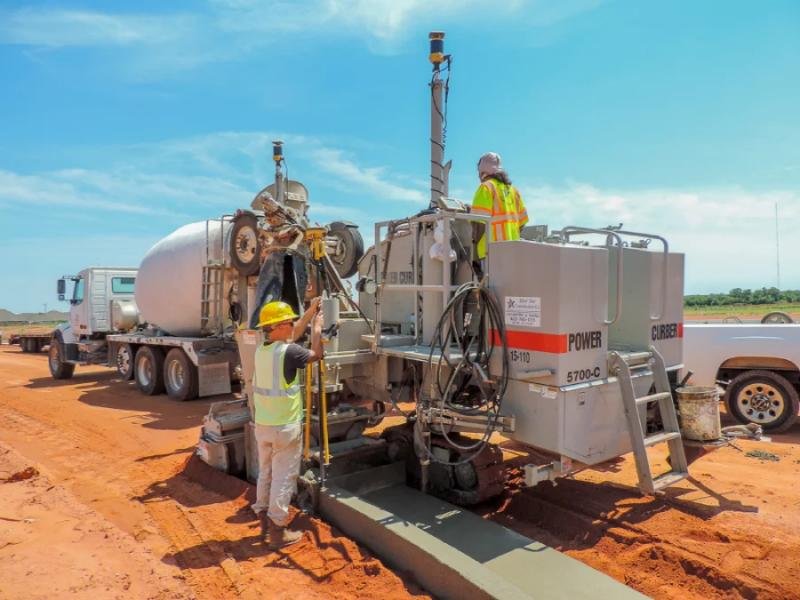
A concrete curb forming machine (also referred to as a concrete curb machine) is a specialized construction equipment designed for the continuous, efficient, and high-precision production of linear concrete products such as curbs, gutters, and medians. It replaces traditional methods like precast block installation or on-site wooden formwork casting, achieving “in-place, single-pass” forming, which significantly enhances construction quality and efficiency.
What are Common Uses for Concrete Curbing Machines?
- Road engineering: Installing curbs and flat stones along highways and urban roads.
- Traffic management facilities: Producing lane dividers, crash barriers, and speed bumps.
- Drainage systems: Laying street gutters, drainage channels, and V-shaped or U-shaped troughs.
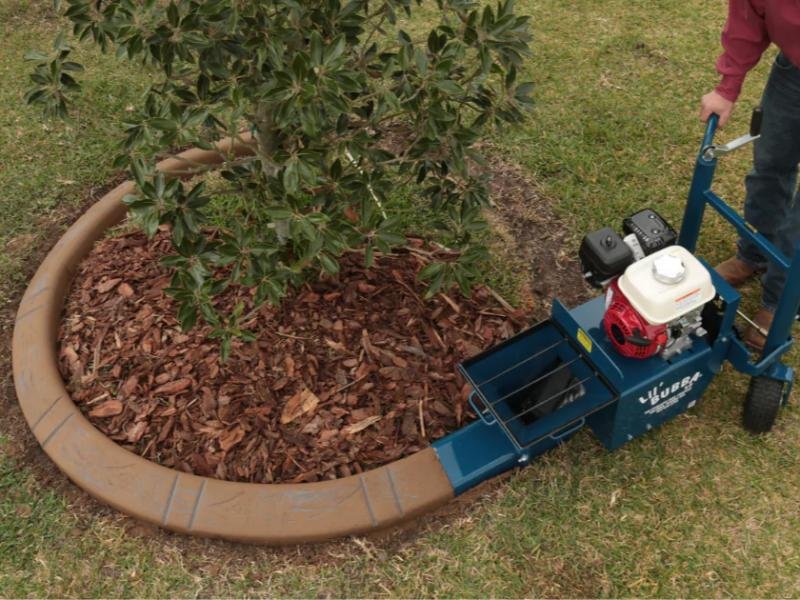
- Landscape and municipal projects: Creating borders for park walkways, plaza edging, garden borders, and parking lot boundary stones.
- Special shapes: By replacing molds, it can produce composite curbs with cable ducts or curbs with tactile paving features.
Concrete Curbing Machine Working Principle
Using the Most Common Slip-Form Method as an Example
The core of the process is “slip-form molding”:
- Feeding: Concrete is unloaded from a transport vehicle into the machine’s hopper.
- Conveying and Metering: A screw conveyor or belt transports the concrete uniformly and continuously to the forming chamber (the front end of the mold).
- Vibration and Compaction: High-frequency vibrators in the forming chamber thoroughly consolidate the concrete, removing air bubbles and increasing density.
- Extrusion and Forming: Driven by the machine’s forward thrust, the vibrated and compacted concrete is continuously extruded through a steel mold with a specific cross-sectional shape.
- Finishing and Shaping: The surface of the formed concrete is smoothed and finished using attached troweling plates to create a smooth surface.
- Curing: The formed curb is left in place and cured through methods such as covering or applying curing agents.
Requirements for Concrete (Key Factors)
The quality of concrete directly determines the forming effect and final strength.
- Mix Design: Typically, low-slump, dry-mix concrete with a low water-cement ratio (generally between 0.28 and 0.35).
- Aggregates: Maximum particle size generally does not exceed 10-15 mm (depending on mold size). Aggregates must be well-graded and low in clay content to ensure smooth surfaces and smooth passage through the mold.
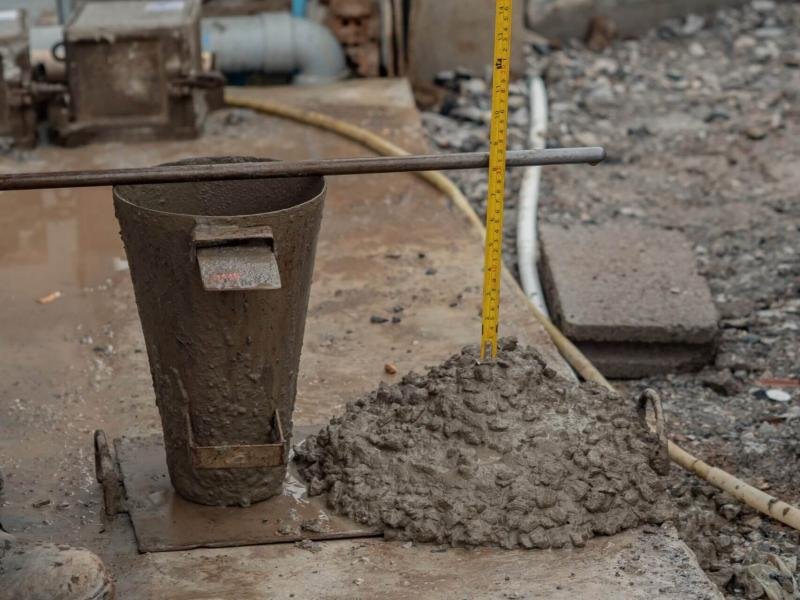
- Workability: Must have sufficient cohesion and internal bonding to resist segregation during vibration and extrusion and maintain shape after forming.
- Strength: Design strength is typically no less than C30.
- Additives: Admixtures such as water reducers, accelerators, or fibers can be added as needed to improve workability, early strength, or crack resistance.
Requirements for the Construction Site
- Foundation: Must provide a solid, level, and uniform subbase (typically well-compacted graded gravel or stabilized soil). The elevation and slope of the subbase determine the final alignment of the formed curb.
- Layout and Guidance: Precise layout must be completed in advance, providing clear guidance benchmarks for the machine (e.g., setting guide lines, using laser or GPS base stations).
- Space: The machine requires operational space, and consideration must be given to the movement and feeding coordination of concrete transport vehicles.
- Environment: Avoid construction during rainy or extreme weather conditions. Construction temperatures should generally be above 5°C, with special measures required for low temperatures.
Operational Requirements for Personnel
- Operator: Requires professional training, familiarity with the machine’s structure, hydraulic principles, and control systems. Must skillfully control direction, speed, and forming thickness and make fine adjustments based on concrete conditions.
- Support Personnel: Tasks include guiding concrete transport vehicles for unloading, monitoring forming quality, addressing local defects (e.g., manual patching, edge trimming), and conducting initial curing.
- Management Personnel: Must understand construction processes and coordinate concrete supply, equipment movement, and personnel collaboration to ensure continuous construction.
- Safety Requirements: All personnel must wear safety gear and stay away from moving parts of the machine, especially the forming mold and vibration areas.
Key Considerations for Procurement
1. Project Requirements Alignment:
- Output: Choose the appropriate model (small, medium, or large) based on daily or total construction length.
- Mold Compatibility: Confirm whether the machine can produce all required cross-sectional shapes and whether mold replacement is convenient.
- Power: Diesel engines (strong power, suitable for field use) vs. electric motors (quiet, environmentally friendly, suitable for indoor use).
2. Core Configuration and Technology:
- Guidance System: Basic mechanical, high-precision laser, or fully automatic 3D GPS control systems? The latter offers the highest precision and requires the least manpower.
- Vibration System: The number, power, and arrangement of vibrators affect concrete compaction.
- Travel System: Track-type (low ground pressure, suitable for soft ground) vs. wheel-type (fast movement speed, suitable for hard surfaces).
- Control System: Whether it is easy to operate and includes fault diagnostics.
3. Manufacturing and After-Sales Service:
- Brand and Reputation: Choose a brand with mature experience and positive market feedback.
- Structural Quality: Strength of the machine’s steel body, brand, and quality of key components (e.g., hydraulic pumps, vibrators).
- After-Sales Service: Whether the supplier can provide timely repairs, spare parts, and technical support.
4. Economic Considerations:
- Procurement Cost: Initial investment.
- Operating Costs: Fuel/electricity consumption, frequency of replacing wear parts, and maintenance costs.
- Return on Investment: Comprehensively consider the efficiency improvements, labor savings, and quality premiums brought by the machine.
Summary and Recommendations:
For large-scale, linear, and standardized curb construction projects, concrete curb forming machines are an irreplaceable and efficient tool. Before procurement, clearly define your project characteristics, conduct on-site inspections and trials of multiple brands, and prioritize the supplier’s long-term service capabilities over price alone. A reliable forming machine is an asset capable of creating long-term value.