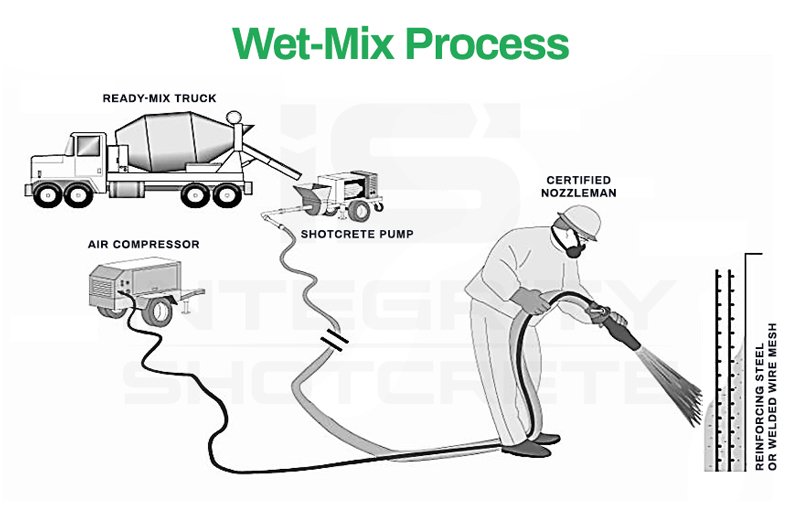
A wet shotcrete machine is a critical piece of equipment used in shotcrete construction. Its core feature is the transportation of pre-mixed concrete (i.e., “wet mix”)—prepared in a batching plant or mixer according to the specified design ratio—through pipelines. The machine then utilizes compressed air or mechanical pumping force to project the concrete at high speed and continuously onto rock surfaces or structural substrates, enabling instant compaction and formation.
In simpler terms, it is a specialized mechanical device designed for conveying and spraying already-mixed wet concrete. In contrast, the “dry shotcrete machine” separately transports dry mix materials and water, which are combined only at the nozzle.
To ensure construction safety, quality, efficiency, and equipment longevity, operating a wet shotcrete machine must strictly adhere to the following precautions:
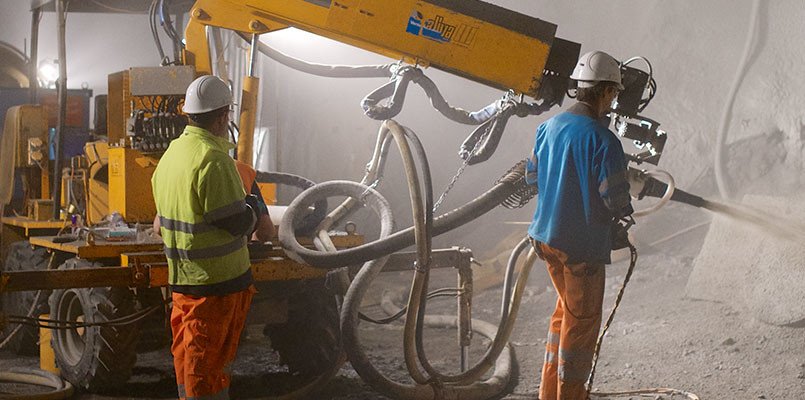
I. Pre-Construction Preparation
1. Equipment Inspection and Debugging
- Comprehensive Check: Before startup, inspect all hydraulic, electrical, and pneumatic system pipelines and connections for tightness and any leaks.
- Lubrication and Cleaning: Ensure all lubrication points are filled with the specified grease. The hopper and pipelines must be free of hardened concrete residue from previous operations.
- No-Load Test Run: Start the equipment for a no-load test run. Check that the main motor, hydraulic pump, and accelerator pump operate normally, and that all pressure gauge readings are within the reasonable range.
- Air/Water Pipeline Test: Check that the compressed air pressure (typically required to be 0.5-0.7 MPa) and water supply are sufficient and stable. Test the accelerator pump and calibrate its flow rate to match the concrete pumping speed.
2. Workface Preparation
- Surface Treatment of the Substrate: Clean the rock or structural surface of loose stones, soil, oil stains, etc., to ensure a solid base. For areas with water seepage, drainage measures should be implemented first.
- Surveying and Marking: Mark indicators for shotcrete thickness (e.g., inserting rebar stakes) to facilitate thickness control.
3. Material Preparation
- Concrete Quality Control: Ensure the slump of the ready-mixed concrete strictly meets equipment requirements (typically 12-18cm for pump-type machines). Slump that is too low easily causes pipe blockage; slump that is too high affects strength and increases rebound and sagging.
- Aggregate Control: The maximum aggregate size must not exceed the equipment’s allowable limit and 2/3 of the rebar spacing (typically ≤15mm) to prevent pipe blockage.
- Accelerator Verification: Confirm the type of accelerator (alkali-free or low-alkali is preferred) and its compatibility with the cement. Conduct setting time tests.
II. During Shotcreting Operations
1. Key Spraying Techniques
- Nozzle Operator Skills:
- Distance: Maintain a 0.8 – 1.5 meter perpendicular distance between the nozzle and the substrate. Too close causes material flow rebound and slurry splashing; too far reduces impact force, leading to poor compaction and increased rebound.
- Angle: The nozzle should be kept as perpendicular as possible to the substrate. For recessed areas, aim directly into the corners.
- Movement: Use a spiral or “S” pattern with slow, steady movement, overlapping each pass by half to ensure uniform thickness. Avoid unidirectional or random sweeping.
- Layered Application: The thickness per layer should not be excessive (5-10cm for arches, 10-15cm for walls) to prevent concrete from sagging under its own weight. When multiple layers are required, the next layer should be applied after the previous one has initially set.
- Application Sequence: Apply from bottom to top, starting from the wall footings to the crown, to avoid contaminating the clean, unsprayed base surface with rebound material.
2. Equipment Operation Monitoring
- Close Auditory Monitoring: Pay attention to equipment operating sounds. Immediately stop and inspect if abnormal noises occur (e.g., hydraulic system squealing, dull impact sounds).
- Pressure Monitoring: Constantly monitor the delivery pressure gauge. A sudden, sustained pressure increase is the clearest sign of a pipe blockage. Immediately stop pumping, reverse to clear the blockage. Never force pumping at high pressure!
- Flow Rate Matching: Ensure the accelerator dosage is synchronized with the concrete pumping rate according to the set ratio. Avoid spraying without accelerator or using excessive accelerator.
3. Quality and Rebound Control
- Controlling Rebound: Adjust air/water pressure, spraying angle, and distance to the optimal state. Rebound material must never be collected and reused as shotcrete material, as its water-cement ratio and mix proportions have changed, compromising strength.
- Visual Inspection: The sprayed surface should be even, exhibit a moist sheen, and be free of dry patches or sagging/slumping.
III. Post-Operation Cleaning and Maintenance
1. Pipeline Cleaning (Crucial!)
- Prompt and Thorough Cleaning: Upon job completion or if operation is halted for any reason exceeding 30 minutes, the concrete pump, delivery lines, and nozzle must be thoroughly cleaned immediately.
- Correct Cleaning Procedure: First, pump clean using water + sponge balls (or cleaning pistons), then purge with compressed air to dry. Residual concrete, once hardened, will cause permanent damage to pipelines and core components.
- Accelerator Lines: These also require cleaning with water to prevent accelerator crystallization from clogging the precision metering pump and nozzles.
2. Equipment Maintenance
- Inspect Wear Parts: Daily, check the condition of wear parts such as wear plates, cutting rings, screws, seals, etc., and replace them promptly.
- Rust Prevention and Storage: Apply anti-rust grease to all moving parts. Store the equipment on a dry, level surface.
IV. Safety and Environmental Precautions
1. Personnel Safety
- Personal Protective Equipment (PPE): All personnel, especially nozzle operators, must wear dust masks, goggles, splash-proof suits, hard hats, gloves, and high-top rubber boots.
- Preventing Nozzle Injury: Never point the nozzle at anyone. When clearing blockages, ensure no one is in front of the nozzle.
- Working at Heights: When working on scaffolds or platforms, use safety harnesses and ensure the platform is stable.
2. Electrical and Pneumatic Safety
- Check cables for damage and ensure proper grounding.
- Check air hoses to prevent them from detaching and whipping dangerously.
3. Environmental Protection
- Promptly clean up rebound material and construction waste to maintain a tidy site.
- Properly handle wash water to avoid direct discharge into natural water bodies.
Summary Key Points Mnemonic:
- Before work: Check equipment, verify materials, clean base.
- During work: Control distance, maintain perpendicular angle, monitor pressure, match flows.
- After shutdown: Clean immediately and thoroughly; preventing blockages is the top priority.
- For safety: Full PPE, never point at people, follow procedures for safety.
Adhering to these precautions maximizes the performance advantages of the wet shotcrete machine, ensuring the quality, safety, and efficiency of the shotcrete engineering project.